
Essential Checklist Before You Buy Car Insurance
Learn what information, documents, and coverage choices you need ready before requesting car insurance quotes from any insurer.
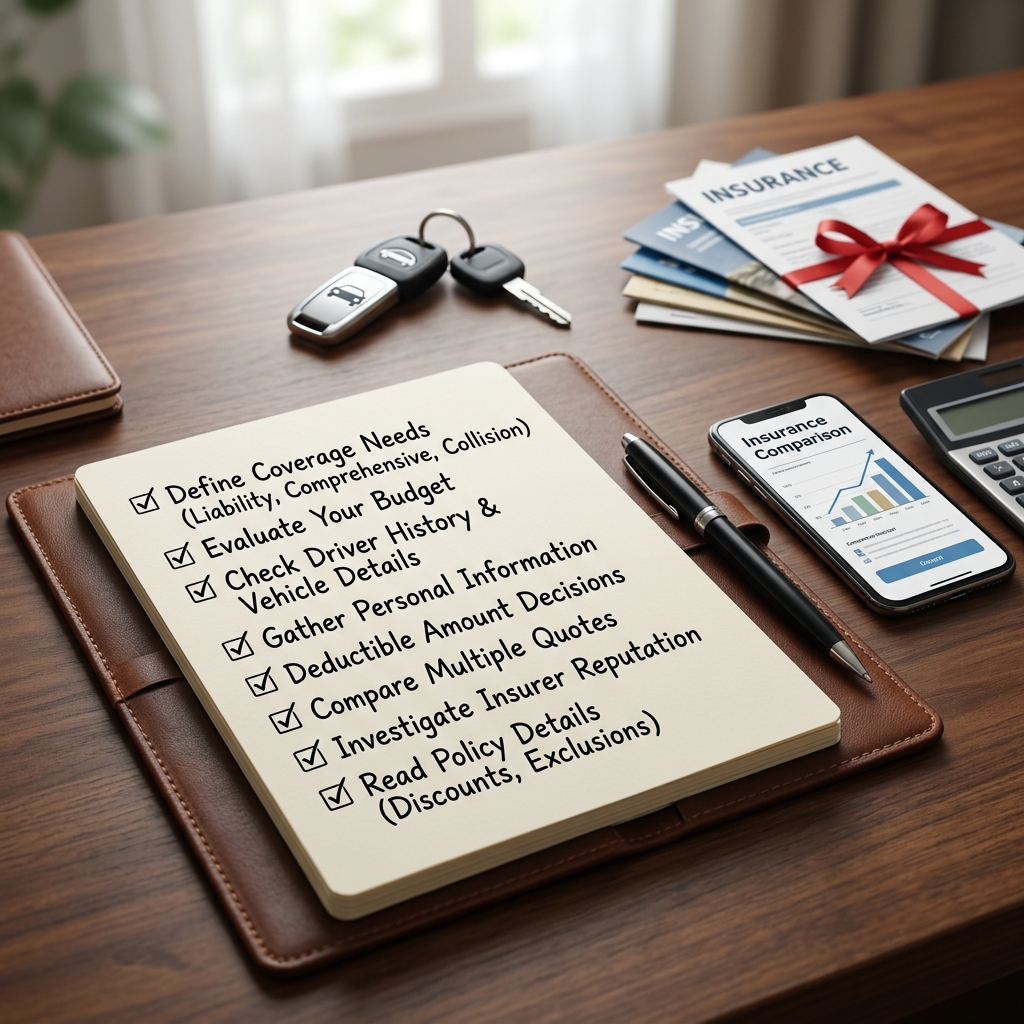
Buying car insurance is much easier when you prepare in advance. Instead of scrambling for details while you are on the phone or online with an insurer, you can collect key information, understand your coverage options, and decide on realistic budget limits ahead of time. This preparation not only saves time, it also helps you compare quotes more accurately and avoid gaps in protection.
This guide walks you through a complete checklist of what to gather and what to think about before you request quotes. It also explains basic coverage types, legal requirements, and common discounts so you can make informed choices.
Why Preparation Matters Before Requesting Quotes
Auto insurers evaluate risk using personal information, driving history, and detailed data about your vehicle. Having this ready means:
- Faster quote process – You can complete applications in one sitting.
- More accurate pricing – Insurers can give precise rates instead of estimates.
- Better comparison shopping – You can request identical coverage limits from multiple companies and compare like for like.
- Fewer surprises – You are less likely to discover missing coverage or hidden exclusions after a claim.
Step 1: Gather Personal and Household Driver Information
Insurers price policies based on everyone who regularly drives your vehicle. Be prepared to provide information about yourself and any other household members who might be covered.
Key details about each driver
- Full legal name for each driver on the policy.
- Current address where the vehicle is garaged (kept overnight). Rates are often influenced by neighborhood risk, traffic patterns, and local claim statistics.
- Phone number and email for communication and electronic policy documents.
- Date of birth – Age can affect premiums because insurers analyze claim patterns by age group.
- Driver’s license number and issuing state for each driver.
Additional background information
- Social Security number (often requested) so the insurer can verify identity and, in some cases, obtain a credit-based insurance score where permitted by state law.
- Occupation and employer – Some insurers use job type as a rating factor, and certain professions may qualify for discounts.
- Driving history – A list of accidents, tickets, or claims from the last 3–5 years, including dates and brief descriptions.
Household considerations
Most insurers want to know about all licensed drivers living in your household, not just the person who owns the vehicle. In some situations, they may require these drivers to be listed on the policy or formally excluded, depending on their driving history and your state’s rules.
- Identify teen drivers and whether they have driver education certificates.
- Note any drivers who live temporarily away from home (for example, students at college) and how often they use the vehicle.
- Clarify if anyone should be explicitly excluded from coverage (where permitted), understanding that excluded drivers generally have no coverage if they drive the car.
Step 2: Collect Detailed Vehicle Information
The car you insure can have as much impact on premium as the drivers. Insurers consider the vehicle’s value, safety features, repair costs, theft rates, and how it is used.
Essential vehicle data
- Year, make, and model of the vehicle.
- Vehicle Identification Number (VIN), typically found on the dashboard near the windshield or on the driver’s side door jamb.
- License plate number and state of registration.
- Current odometer reading (mileage) – Vehicles with high mileage may be cheaper to insure than newer, high-value cars, especially for comprehensive and collision coverage.
- Purchase price or current value – Insurers often use this to help determine the maximum they might pay if the vehicle is totaled.
Vehicle features and modifications
Tell your insurer about any features that increase safety or change the car’s value:
- Factory safety equipment such as anti-lock brakes, airbags, lane departure alerts, or automatic emergency braking. Some insurers provide discounts for these features.
- Anti-theft devices like alarms, immobilizers, GPS tracking, or steering wheel locks, which can also reduce theft risk and premiums.
- Aftermarket customizations (new sound system, specialty rims, performance parts, custom paint, or accessibility modifications). These can increase the vehicle’s replacement cost and may require special endorsements.
How you use the vehicle
Insurers distinguish between personal and commercial use because business activities can increase exposure to accidents.
- Primary use – commuting, pleasure driving, business use, or a combination.
- Estimated annual mileage, including average daily commute distance.
- Whether you use the vehicle for app-based work such as rideshare or delivery services. Standard policies often exclude coverage while you are logged into an app or transporting passengers, so you may need special rideshare or commercial coverage.
Step 3: Understand the Main Types of Coverage
Before shopping, it helps to know the core components of an auto policy. Most policies combine several coverage types, each protecting you from different kinds of losses.
| Coverage Type | What It Typically Covers | Common Requirement |
|---|---|---|
| Liability | Injuries to others and damage to their property when you are legally responsible. | Required in nearly every state, with minimum limits set by law. |
| Collision | Damage to your own car from a crash with another vehicle or object, regardless of fault. | Optional, but often required by lenders for financed or leased vehicles. |
| Comprehensive | Non-collision damage such as theft, vandalism, fire, severe weather, and animal strikes. | Optional; usually paired with collision, especially for newer or high-value vehicles. |
| Uninsured/Underinsured Motorist | Your injuries and sometimes property damage if an at-fault driver lacks enough insurance. | Required or strongly recommended in many states. |
| Medical Payments / PIP | Medical expenses (and in some states lost income) for you and passengers, regardless of fault. | Personal Injury Protection (PIP) is mandatory in most no-fault states. |
| Gap Coverage | The difference between what you owe on a loan or lease and your car’s actual cash value if it is totaled. | Optional; often recommended for new or heavily financed vehicles. |
Step 4: Research Your State’s Legal Requirements
Every state sets its own minimum auto insurance requirements, usually focused on liability coverage for bodily injury and property damage. Driving without required coverage can lead to fines, license suspension, and vehicle impoundment according to many state motor vehicle agencies.
Before you pick limits, find out:
- The minimum liability limits for bodily injury per person, bodily injury per accident, and property damage in your state.
- Whether uninsured/underinsured motorist coverage is required or may be declined only with written waiver.
- If your state follows a no-fault system that requires Personal Injury Protection (PIP) or medical payments coverage.
Official state motor vehicle department websites typically publish up-to-date insurance requirements and penalties for non-compliance.
Step 5: Decide on Coverage Limits and Deductibles
Once you know the legal minimums, decide how much protection you want to buy beyond those levels. Minimum coverage may satisfy the law, but it often does not fully protect your assets if you cause a serious crash.
Choosing liability limits
When selecting liability limits, consider:
- The value of your home, savings, and other assets that could be at risk in a lawsuit.
- Typical medical and repair costs in your area; serious injuries and vehicle totals can easily exceed state minimums.
- Whether you want higher limits to reduce the chance of paying out of pocket after an accident.
Setting deductibles
A deductible is the amount you pay before your insurer covers the rest of a covered claim. It applies mainly to collision and comprehensive coverage.
- Higher deductibles usually mean lower premiums, but larger out-of-pocket costs if you file a claim.
- Lower deductibles increase your premium but reduce what you pay when damage occurs.
- Choose a deductible level you could realistically pay on short notice without financial strain.
Step 6: Prepare Your Insurance History and Claims Record
Insurers look at your prior insurance history to evaluate risk and continuity of coverage.
- Names of current or previous insurers and your policy numbers.
- Coverage dates and whether there have been any lapses in insurance.
- Details of recent claims or accidents, even if you were not at fault, including dates and approximate payouts.
Having a stable insurance history with few claims may result in lower premiums or eligibility for preferred programs, according to consumer guidance from many insurers and regulators.
Step 7: Identify Possible Discounts and Savings Opportunities
Most insurers offer discounts that can substantially reduce your premium if you qualify. Before you request quotes, make a list of potential savings to ask about.
Common discount categories
- Safe driver discounts for maintaining a clean driving record for a specified number of years.
- Multi-policy discounts for bundling auto with homeowners, renters, or umbrella insurance.
- Multi-vehicle discounts if you insure more than one car with the same company.
- Good student discounts for young drivers with high grades, where offered.
- Low-mileage discounts if you drive fewer miles per year than average.
- Telematics or usage-based programs that track driving behavior and may reward safe habits with lower rates.
Financial responsibility and credit
In many states, insurers may use credit-based insurance scores as one factor in pricing, based on research linking credit information with claim likelihood. Some states restrict or prohibit this practice, so check your state’s rules through its insurance department or motor vehicle agency.
Step 8: Compare Quotes Effectively
When you are ready to request quotes, use your checklist to ensure consistency. To make fair comparisons:
- Request the same coverage types, limits, and deductibles from each insurer.
- Confirm that each quote includes any optional coverage you want, such as roadside assistance, rental reimbursement, or gap insurance.
- Check whether the quote is based on monthly, semi-annual, or annual billing and whether there are fees for paying in installments.
- Review the insurer’s claims process, customer service ratings, and financial strength through reputable consumer reports or state insurance department complaint data.
Step 9: Review the Policy Before You Finalize
After choosing a company, read the policy documents carefully before you pay and sign. Many consumers do not realize what is excluded until after a claim is denied, which can lead to disputes and complaints to regulators.
- Verify that all drivers and vehicles are correctly listed.
- Confirm coverage limits, deductibles, and optional coverages match what you requested.
- Look for exclusions related to commercial use, racing, off-road driving, or using your car for fee-based transportation.
- Check the policy’s cancellation and nonrenewal terms, including required notice periods and potential fees.
Quick Car Insurance Readiness Checklist
Use this brief overview to confirm you are ready to shop for coverage:
- Personal information for all household drivers collected.
- Vehicle details (VIN, mileage, features, usage) recorded.
- State minimum insurance requirements identified.
- Desired coverage types and limits chosen.
- Deductible levels that fit your budget decided.
- Prior insurance and claims history summarized.
- List of potential discounts to ask about prepared.
- Plan to compare at least two or three quotes established.
Frequently Asked Questions About Preparing for Car Insurance
Do I have to include every driver in my household on my policy?
Insurers generally want to know about all licensed drivers in your household because they may occasionally use your car, even if they do not own it. In some states, a company can require you to list a driver or sign an exclusion form if you refuse to cover them. Excluded drivers are typically not insured when driving your car, so read any exclusion agreements carefully and check with your state’s insurance regulator for specific rules.
Can I get a quote without my VIN or exact mileage?
Many insurers can provide a rough estimate with only the year, make, and model of your vehicle, but they generally need the VIN and current mileage before binding coverage. Having this information at the quote stage allows for more accurate pricing and avoids adjustments later.
Is the state minimum coverage enough?
State minimums are designed to satisfy legal requirements, not necessarily to fully protect you financially. Medical costs, lawsuits, and vehicle repairs can quickly exceed low liability limits. Consumer protection agencies and many legal guides recommend considering higher limits when possible, especially if you have significant assets or drive frequently.
What happens if I use my car for rideshare or delivery work?
Standard personal auto policies often exclude coverage while you are logged into a transportation or delivery app or actively transporting passengers or goods. Many insurers now offer rideshare endorsements or separate commercial policies to fill this gap. If you plan app-based work, disclose it when requesting quotes so your coverage matches your real-world use.
Why do insurers care about my previous insurance history?
Companies use prior insurance and claims data to evaluate how likely you are to file future claims and whether you maintain continuous coverage. Frequent claims, serious violations, or gaps in insurance may lead to higher premiums or stricter underwriting standards. State insurance regulators often encourage drivers to avoid coverage lapses to keep more favorable options available.
References
- How To Choose Car Insurance: Checklist and Resources — FindLaw. 2024-05-07. https://www.findlaw.com/consumer/lemon-law/checklist-obtaining-car-insurance.html
- New Jersey Lemon Law & Insurance Requirements — New Jersey Motor Vehicle Commission. 2023-03-01. https://www.nj.gov/mvc/vehicletopics/lemonlaw.htm
- Texas Lemon Law & Consumer Protections — Texas Department of Motor Vehicles. 2023-06-15. http://www.txdmv.gov/motorists/consumer-protection/lemon-law
- Vehicle Lemon Laws by State — Kelley Blue Book. 2023-10-10. https://www.kbb.com/car-advice/vehicle-lemon-laws-by-state/
- Lemon Car Law — Nationwide Insurance. 2022-09-20. https://www.nationwide.com/lc/resources/auto-insurance/articles/lemon-car-law
Similar Articles








Read full bio of medha deb




