
Voting Leave Laws: Employer Guide To Compliance, State-By-State
Understand how U.S. employers must handle employee requests for time off to vote, from legal obligations to practical policy design.
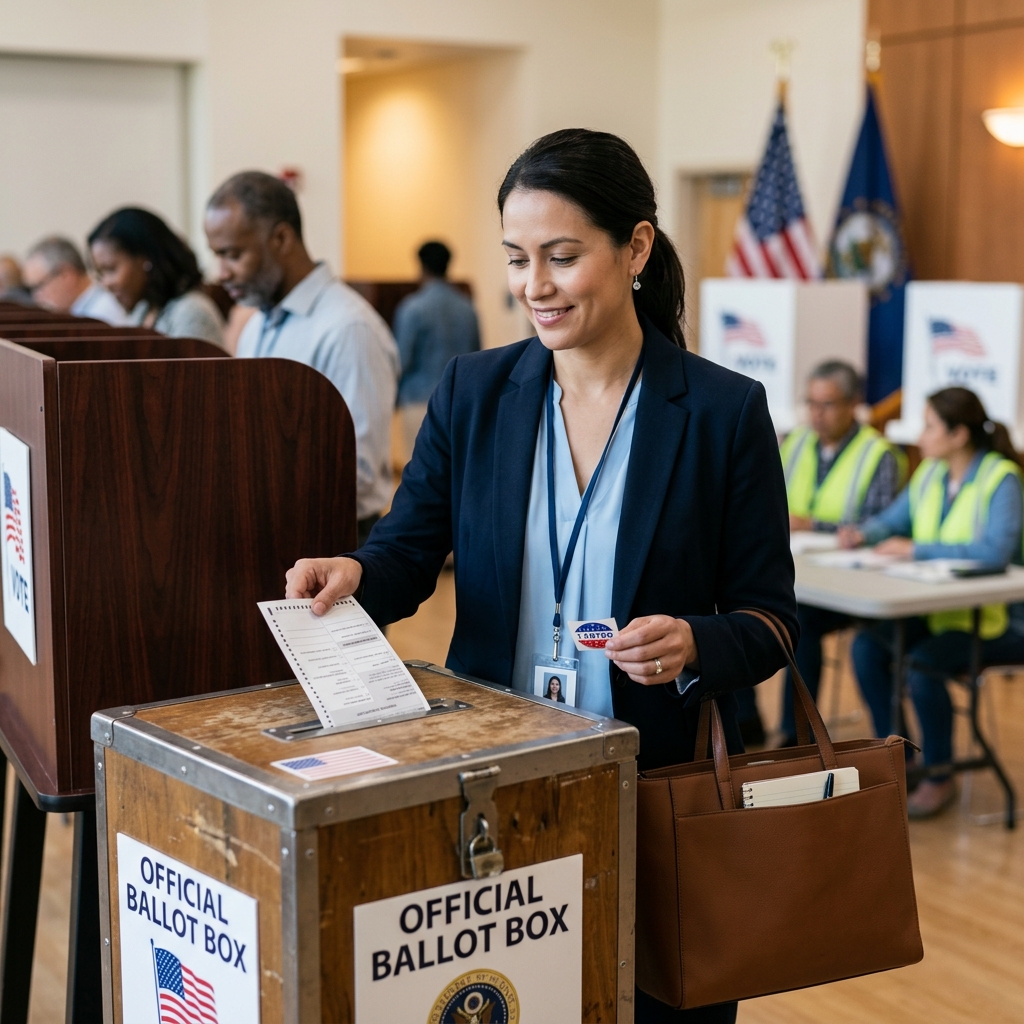
U.S. elections often fall on regular workdays, which means employers play a critical role in ensuring that employees can vote without facing workplace barriers. While federal law does not set a single national standard, many states and the District of Columbia have enacted specific voting leave requirements that employers must follow. This guide explains the core concepts, legal obligations, and practical steps for building compliant and employee-friendly policies on time off to vote.
Why Voting Leave Matters for Employers
Voting is a foundational democratic right, and work schedules can make it difficult for some employees to reach the polls, particularly in industries with long or inflexible shifts. State voting leave laws are designed to prevent employees from having to choose between keeping their job and exercising the right to vote.
- Legal compliance: In at least 28 states and the District of Columbia, employers are legally required to provide some form of time off for voting.
- Reputation and culture: Supporting civic participation can strengthen an organization’s public image and internal culture of respect and engagement.
- Risk mitigation: Non-compliance may expose employers to wage-and-hour claims, penalties, or reputational harm if employees complain to regulators or the media.
Key Concepts in Time Off to Vote Laws
Although details vary by jurisdiction, most voting leave laws address similar issues: whether leave must be paid, how much time can be taken, employee notice obligations, and employer scheduling rights.
Paid vs. Unpaid Voting Leave
States differ on whether time off to vote must be paid, and under what conditions:
- Paid leave when no sufficient outside time: States like California, New York, and Texas require employers to provide paid time off if an employee does not have enough time to vote outside work hours.
- Unpaid leave permitted: Other states allow employers to deduct pay for the absence but prohibit additional discipline or penalties, such as Wisconsin, which allows up to three hours off with a permissible pay deduction.
Definition of “Sufficient Time” Outside Work
Many laws only trigger employer obligations when employees lack adequate non-working time during polling hours. For example:
- New York considers an employee to have sufficient time if they have at least four consecutive hours to vote either before or after their shift while polls are open.
- Texas requires paid leave when employees lack two consecutive hours outside working time to vote.
Notice and Scheduling Requirements
Voting leave statutes often specify how employees should request time off and how employers may schedule that leave.
- Advance notice by employees: Some states require employees to notify employers a day or more before the election.
- Employer scheduling rights: Laws commonly allow employers to decide whether the leave occurs at the start, middle, or end of the shift, provided the employee retains a meaningful opportunity to vote.
How State Laws Differ: Overview Table
The following table provides a simplified comparison of selected jurisdictions. Employers should always consult official state sources or counsel for specific requirements.
| Jurisdiction | Time Off Requirement | Paid or Unpaid | Employee Notice | Key Employer Duties |
|---|---|---|---|---|
| California | Up to 2 hours during working time if insufficient time outside polling hours. | Paid (up to 2 hours). | Employee must give at least 2 working days’ notice. | Post “Time Off to Vote” notice 10 days before statewide election; schedule leave at start or end of shift where possible. |
| New York | Up to 2 hours if employee lacks 4 consecutive outside-work hours while polls are open. | Paid. | Notice at least 2 but not more than 10 working days before election. | Cannot require use of other leave; must permit adequate time based on local voting conditions. |
| Texas | Leave when employee lacks 2 consecutive non-working hours to vote. | Paid to the extent it cuts into normal working hours. | Notice recommended; specifics in Texas Election Code and administrative guidance. | Permit at least 2 hours off; treat overtime time off according to state rulings. |
| Wisconsin | Up to 3 successive hours each election day. | Unpaid (employer may deduct pay but cannot discipline). | Employee must notify employer before election day. | Employer chooses the time of day the employee is excused to vote. |
| District of Columbia | Time off to vote; specific requirements in local law. | Generally paid (subject to statute details). | Posting notice at least 60 days before scheduled elections. | Post mandatory notice and comply with local scheduling and pay rules. |
This table is not exhaustive. Employers with multi-state operations should consult authoritative state election or labor agency resources for each location.
Employer Responsibilities in Practice
Beyond understanding the statutes, employers must translate legal requirements into operational policies. The following responsibilities are common across jurisdictions.
1. Providing Access to Time Off
When a law requires voting leave, employers must ensure employees can take that time without retaliation. In many states, this means:
- Allowing the required number of hours off when the employee lacks sufficient time outside their shift.
- Avoiding disciplinary action, threats, or subtle pressure that discourages employees from using their rights.
2. Paying Employees When Required
Where statutes mandate paid voting leave, employers must correctly calculate and pay wages for the time taken. Typical requirements include:
- Maintaining regular pay for up to the statutory maximum hours (e.g., up to two hours in California, New York, and Texas, under specified conditions).
- Ensuring payroll systems are configured to capture and compensate voting leave accurately.
3. Posting and Notice Obligations
Some states require employers to inform employees of their voting leave rights through workplace postings or written notices. For example:
- California employers must post a “Time Off to Vote” notice at least 10 days before each statewide election.
- The District of Columbia has its own posting timeline and notice content requirements.
4. Coordinating Scheduling and Coverage
Voting leave laws typically allow employers to maintain orderly operations while respecting employee rights. Common approaches include:
- Requesting advance notice from employees, consistent with statute requirements.
- Designating preferred time windows for voting leave (such as the beginning or end of shifts) to reduce disruptions, where permitted by law.
- Arranging coverage for essential functions so voting leave does not compromise safety or critical services.
Designing a Voting Leave Policy
A written policy helps standardize practices, support compliance, and communicate expectations. When creating or updating a voting leave policy, employers should address the following elements.
Policy Essentials
- Scope: Identify which employees are covered (e.g., all employees working in jurisdictions with voting leave laws).
- Eligibility criteria: Define what “insufficient time to vote” means for your workforce, referencing applicable statutes.
- Amount of leave: Specify how many hours are available and whether the time is paid or unpaid for each jurisdiction.
- Request process: Explain how and when employees must request voting leave.
- Scheduling guidance: Outline how managers should schedule and approve time off to balance coverage and legal compliance.
- Non-retaliation clause: Affirm that employees will not be disciplined or penalized for using lawful voting leave.
Sample Best Practice Approaches
While legal requirements set minimum standards, many organizations adopt more generous practices as part of their civic engagement initiatives:
- Offering a standard block of paid time off to vote (e.g., up to 3 hours) in all locations, even where not legally mandated, to simplify administration.
- Encouraging early voting or mail voting and offering scheduling flexibility throughout the voting period.
- Promoting awareness of voting leave policies through employee communications, intranet posts, and manager training.
Special Considerations: Election Officials and Volunteers
Some employees may serve as election workers or volunteers on election day, which can require extended absences. Certain states provide specific protections:
- California law protects employees from discipline when serving as election officials, though employers are not required to pay them for that time.
- In Virginia, employees appointed as officers of election must be allowed time off to fulfill their duties, and employers cannot force them to use vacation or sick leave for that service.
Employers should check relevant election codes and labor statutes to understand whether special protections apply when employees participate in running elections rather than only voting.
Multi-State Employers: Managing Complexity
Organizations with operations in multiple states face additional complexity. Voting leave rules can differ in subtle ways, such as notice deadlines, definitions of sufficient outside time, and whether proof of voting is allowed.
- Centralized guidance, localized rules: Create a national framework but include jurisdiction-specific appendices or guidance for HR and managers in each state.
- Use official sources: Rely on official election agencies, labor departments, and statutory text for updates, as requirements can change over time.
- Training: Train HR and managers on how to respond to voting leave requests, focusing on states with stricter or more detailed statutes.
Common Mistakes and How to Avoid Them
Employers trying to balance operational needs and compliance sometimes fall into avoidable errors. Awareness of common pitfalls can help prevent problems.
- Assuming a single national rule exists: In reality, voting leave is primarily governed by state law, so practices must be tailored by location.
- Ignoring posting requirements: Failing to post required notices in states like California and the District of Columbia can lead to violations even if time off is provided.
- Requiring employees to use vacation or PTO when the law forbids it: Some jurisdictions, such as New York for voting leave, explicitly prohibit employers from forcing employees to use other forms of earned leave instead of dedicated voting leave.
- Penalizing employees indirectly: Cutting scheduled hours, changing shifts unfavorably, or denying promotion opportunities because employees exercised voting leave rights can be seen as retaliation.
Frequently Asked Questions (FAQs)
1. Are employers in every state required to give time off to vote?
No. As of recent data, 28 states and the District of Columbia have explicit voting leave requirements, while others do not. However, even in states without a statutory mandate, many employers choose to provide voting leave as a matter of policy.
2. How can employers determine whether an employee has “sufficient time” to vote?
Employers must look at state-specific definitions. For example, New York uses a four-consecutive-hour standard, while Texas uses two consecutive hours. A practical approach is to review the employee’s schedule, polling hours, and applicable state law, then decide if voting outside work is realistically possible.
3. Can employers require proof that an employee voted?
Some states, such as Maryland and Oklahoma, allow or require employers to request evidence that an employee voted after taking voting leave. In other states, this may not be permitted or may raise privacy concerns. Employers should consult local law before imposing such requirements.
4. Is it permissible to deduct pay for voting time?
This depends entirely on state law. In Wisconsin, employers may deduct pay for voting leave but cannot otherwise penalize the employee. In states like California, New York, and Texas, certain voting leave periods must be paid under specified conditions.
5. What should multi-state employers do to stay compliant?
Multi-state employers should create a baseline policy that supports voting but then layer in state-specific requirements. Consulting official election and labor agency resources, and periodically reviewing statutes and administrative guidance, is essential.
Strategic Benefits of Supporting Voting Leave
Beyond legal compliance, proactively supporting voting can deliver strategic benefits:
- Employee engagement: Employees may feel more valued and respected when their employer supports civic participation.
- Brand positioning: Publicly communicating supportive voting policies can enhance the organization’s reputation with customers and communities.
- Workplace equity: Structured voting leave helps ensure that employees in demanding jobs or long shifts are not effectively disenfranchised due to work schedules.
When employers understand and embrace their responsibilities around time off to vote, they support both compliance and democratic participation. By relying on clear policies, training, and authoritative legal sources, organizations can help ensure that every eligible employee has a fair opportunity to cast a ballot.
References
- California Elections Code Sections 14000–14001 — California Secretary of State. 2024-06-01. https://www.sos.ca.gov/elections/time-vote-notices
- Time Off to Vote — New York State Board of Elections. 2023-09-15. https://elections.ny.gov/time-vote
- Voting – Time Off — Texas Workforce Commission, Texas Guidebook for Employers. 2023-01-10. https://efte.twc.texas.gov/voting_time_off.html
- Time Off for Voting — Wisconsin Department of Workforce Development. 2022-11-01. https://dwd.wisconsin.gov/er/laborstandards/voting.htm
- Time Off to Vote: 8 Facts Employers Should Know — ADP SPARK Blog. 2024-10-18. https://www.adp.com/spark/articles/2024/10/time-off-to-vote-8-facts-employers-should-know.aspx
- Time Off Work for Voting — Ballotpedia. 2025-09-01. https://ballotpedia.org/Time_off_work_for_voting
- Alert: Employers Take Note: Employee Voting Rights in Virginia — Gentry Locke Attorneys. 2020-10-07. https://www.gentrylocke.com/news/alert-employers-take-note-employee-voting-rights-in-virginia/
Similar Articles








Read full bio of medha deb




