
DUI Without a License: Legal Risks and Consequences
Understand how driving under the influence without a valid license multiplies legal exposure, penalties, and long‑term consequences.
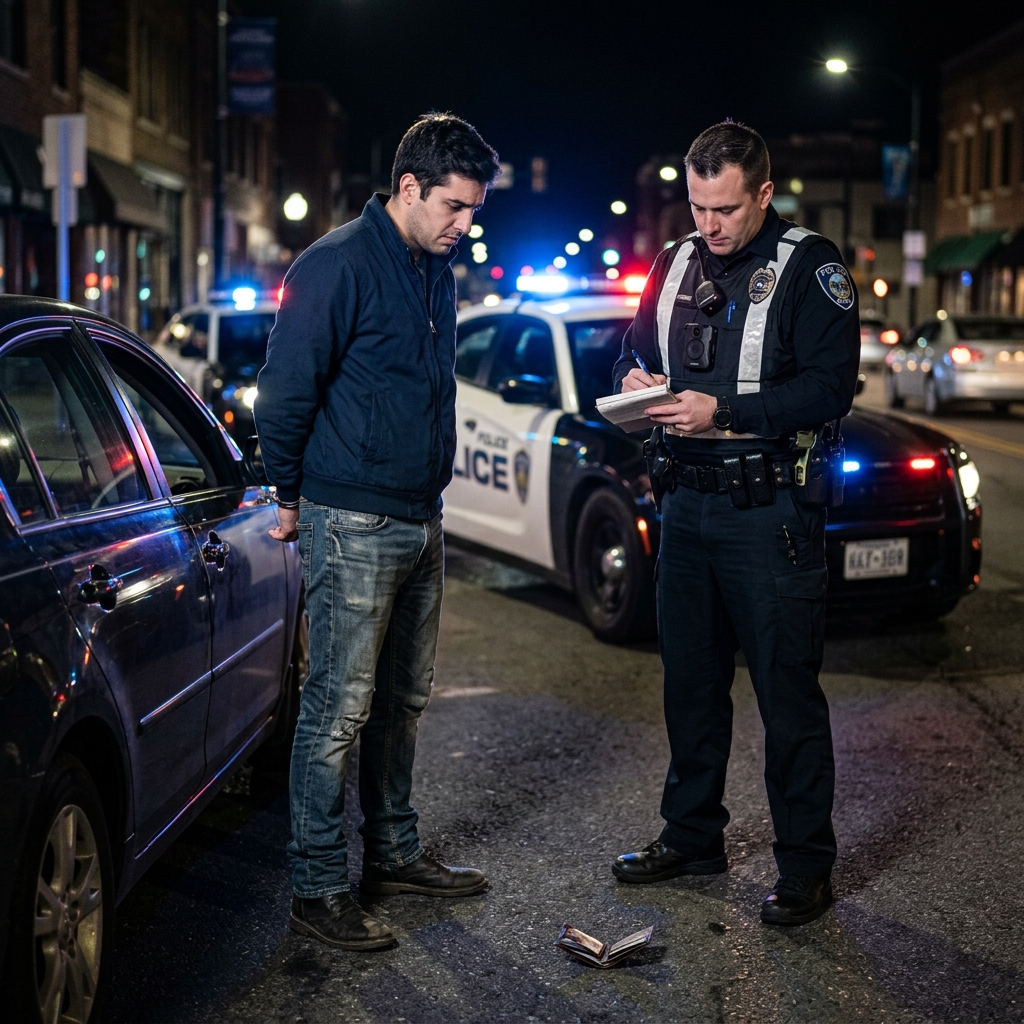
Driving under the influence is serious on its own, but the situation becomes far more complex and dangerous when the driver does not have a valid license. A single traffic stop can turn into multiple criminal charges, steep fines, and long-term barriers to lawful driving. This article explains what happens legally when someone is accused of a DUI while unlicensed, how the charges interact, and what this means for future driving privileges.
What It Means to Drive Unlicensed and Impaired
Every state requires most individuals who operate motor vehicles on public roads to hold a valid driver’s license, issued by the relevant licensing authority (often the Department or Registry of Motor Vehicles). Driving without a license and driving under the influence are separate offenses, but when they occur together in the same incident, prosecutors commonly file both charges.
In many jurisdictions, the government must prove three basic elements to convict someone of unlicensed operation:
- The person operated a motor vehicle.
- The operation occurred on a public way or highway open to the public.
- The person did so without a valid driver’s license issued by the proper authority.
These elements are reflected in state laws such as Massachusetts General Laws chapter 90, section 10, which prohibits operating a motor vehicle on a public way without being properly licensed. Similar requirements appear in California Vehicle Code section 12500, which makes it a crime to drive on a highway without a valid California license, subject to certain exceptions for new residents and visitors.
DUI laws add another layer. Most states prohibit operating a vehicle with a blood alcohol concentration (BAC) above a statutory limit (commonly 0.08 for adults) or while impaired by alcohol or drugs. Massachusetts law, for example, treats operating under the influence (OUI) of alcohol or drugs as a serious offense, with escalating penalties for repeat convictions.[10]
Separate Charges: How DUI and Unlicensed Driving Stack
When the police stop a driver and discover both impairment and the lack of a valid license, they usually charge the driver with both offenses. This means the person may face:
- A DUI/OUI charge for impaired driving.
- An unlicensed operation charge for driving without proper authorization.
Courts treat these as separate crimes because each protects a different public interest. DUI statutes focus on preventing impairment-related crashes and injuries, while licensing requirements are designed to ensure that drivers meet minimum standards of knowledge, skill, and responsibility.
As a result, penalties for each offense can be imposed independently. For example, in Massachusetts, unlicensed operation is generally a misdemeanor that can lead to fines and potentially jail, especially with repeated violations. In California, driving without a license can be charged either as a misdemeanor or an infraction, with penalties ranging from a small fine to up to six months in jail when prosecuted as a misdemeanor.
Illustrative Penalty Comparison
The table below gives a general sense of how penalties for unlicensed driving and DUI can differ. Exact outcomes depend on the state and the details of the case.
| Offense Type | Typical Classification | Potential Penalties (Illustrative) |
|---|---|---|
| Unlicensed driving (first offense, MA) | Misdemeanor | Fine up to about $500 for a first offense; higher fines for later offenses. |
| Unlicensed driving (CA Vehicle Code 12500) | Infraction or misdemeanor | Up to $250 as an infraction, or up to six months jail and $1,000 fine if charged as a misdemeanor. |
| DUI/OUI (state-specific) | Misdemeanor or felony | License suspension, fines, mandatory programs, probation, and possible jail; penalties grow with prior offenses.[10] |
When DUI and unlicensed operation are charged together, the court can impose penalties for each, sometimes consecutively. This is why being both impaired and unlicensed dramatically increases total exposure.
How Prior Licensing History Affects the Case
The legal analysis changes depending on why the person is unlicensed. Common scenarios include:
- Never licensed: The driver has never held a license in any jurisdiction.
- Expired license: The driver previously held a license, but it is now expired.
- Suspended or revoked license: The person’s license has been taken away due to prior violations or financial issues.
- Out-of-state license: The driver holds a valid license from another state or country.
Many states treat driving without ever having been licensed more harshly than driving with a recently expired license. Massachusetts, for instance, recognizes driving without ever being licensed as a criminal offense, and penalties can include fines, potential jail, additional license-related consequences, and a criminal record. On the other hand, someone with a valid license from another state may be exempt from the in-state licensing requirement for a limited time, particularly if they are just visiting or have recently moved. California law explicitly allows certain nonresidents and new residents a grace period before they must obtain a California license.
When a driver’s license is already suspended or revoked—for example, due to prior DUI convictions—the new DUI and unlicensed driving charges can be especially damaging. Courts and licensing agencies may interpret this as a pattern of disregard for the law, which can lead to longer suspensions, mandatory ignition interlock devices, or even permanent revocation in severe cases.
Administrative vs. Criminal Consequences
It is important to distinguish between what happens in criminal court and what happens at the licensing agency. A single DUI incident often triggers both:
- Criminal proceedings: Prosecutors pursue DUI and unlicensed operation charges, leading to potential fines, probation, or jail.
- Administrative actions: The licensing authority can suspend or revoke driving privileges, sometimes even if the criminal case is still pending or ultimately dismissed.
For example, the Mississippi Driver Service Bureau describes a process in which a driver’s license can be seized at the time of a DUI arrest, with a temporary permit issued for 30 days. After that, an administrative suspension of 90 days is imposed, which is separate from whatever criminal sentence the court may later order. This illustrates how a person’s ability to drive can be curtailed before the criminal case is resolved.
When the driver is unlicensed at the time of the DUI, administrative consequences can look different. Instead of suspending an existing license, authorities may delay or restrict the person’s ability to obtain a license in the future. Some states require proof of successful completion of alcohol education programs, payment of fines, and compliance with probation before a new license will be issued or an old one reinstated.[10]
Risk Factors That Make the Situation Worse
Not all DUI–unlicensed cases are treated equally. Certain circumstances can lead to harsher penalties or enhanced charges, including:
- Prior DUI or unlicensed driving convictions: Repeat offenses can elevate penalties from fines to mandatory jail time, longer suspensions, and even felony charges.[10]
- Accidents causing injury or property damage: A crash can result in additional charges such as reckless driving or vehicular assault, especially if someone is hurt.
- High BAC or refusal of testing: Elevated BAC levels or refusal of chemical testing can trigger enhanced penalties or separate administrative consequences, such as longer suspensions for CDL holders.[10]
- Driving while already suspended for DUI: This is often considered a serious aggravating factor and may carry mandatory incarceration in some jurisdictions.[10]
These aggravating features are part of why legal counsel is so important. Even seemingly minor facts, such as having passengers under a certain age or driving in a school zone, can influence how prosecutors charge and how judges sentence.
Insurance, Employment, and Long-Term Impact
A DUI combined with unlicensed driving does more than create immediate legal problems; it can ripple through many aspects of a person’s life:
- Auto insurance premiums: Insurers may view the combination of impairment and unlicensed operation as high risk, leading to steep premium increases or cancellation.
- Job opportunities: Positions that involve driving or require a clean criminal record can be harder to obtain after such convictions.
- Professional licenses: In some fields, criminal convictions related to impaired driving can affect professional licensing or disciplinary proceedings.
- Future licensing hurdles: Rebuilding driving privileges can require multiple steps—paying fines, completing courses, passing exams, and possibly installing ignition interlock devices—depending on state law.[10]
Because of these extended consequences, legal advice is not only about the immediate case; it also helps individuals understand and plan for long-term impacts on work, family, and daily life.
Common Defenses and Legal Strategies
Every case is fact-specific, but some defense themes recur in DUI and unlicensed driving prosecutions. Attorneys frequently explore issues such as:
- Validity of the traffic stop: If police lacked lawful grounds to stop the vehicle, evidence gathered afterward may be challenged.
- Proof of operation on a public way: Some statutes require proof that the vehicle was operated on a public road; operation on private property may raise different legal questions.
- License status verification: Errors in agency records or misunderstandings about out-of-state licenses can sometimes be corrected, changing the unlicensed charge.
- Accuracy of chemical tests: For the DUI component, defense counsel may question whether breath or blood tests were properly administered and calibrated.[10]
- Procedural protections: Defendants are entitled to basic rights such as notice of the charges and the opportunity to contest administrative suspensions, as reflected in many state procedures.
Additionally, defense lawyers often negotiate with prosecutors to reduce charges or recommend alternative dispositions. In some cases, a plea agreement might involve dismissing the unlicensed count if the defendant demonstrates steps toward proper licensing, or reducing DUI penalties in exchange for treatment participation.
Practical Steps If You Face DUI While Unlicensed
Anyone charged with DUI while unlicensed should act quickly. While laws and procedures vary by state, several practical steps are commonly advisable:
- Review the citation or complaint carefully: Identify all charges listed, including any separate allegations of unlicensed driving or operating after suspension.
- Note deadlines for hearings: Some states allow drivers to request administrative hearings to contest a suspension, but only within strict time limits.
- Consult a qualified attorney: Because these cases involve overlapping criminal and administrative systems, local legal guidance is crucial.
- Gather documentation of your license status: If you hold a valid license from another jurisdiction or believe records are incorrect, collect proof such as license cards, renewal notices, or correspondence from licensing agencies.
- Consider risk reduction steps: Voluntary enrollment in alcohol education or treatment programs may demonstrate responsibility to the court.
Legal outcomes can differ dramatically depending on whether someone appears in court prepared and represented. Even first-time offenders may benefit from professional advice to avoid avoidable consequences.
Frequently Asked Questions (FAQs)
Is driving without a license always a crime?
Not always, but it often is. In some jurisdictions, driving without a license can be treated as a criminal misdemeanor; in others, it may be an infraction for first-time or minor violations. Massachusetts treats driving without ever having been licensed as a criminal offense, with potential fines and other sanctions. California allows driving without a license to be prosecuted either as an infraction or a misdemeanor. The classification affects whether jail time is possible.
Can I be charged with DUI if I never had a license?
Yes. DUI laws focus on the act of operating a vehicle while impaired, not on whether the person holds a license. Driving while impaired without a license simply adds another charge. The prosecution may pursue DUI and unlicensed operation simultaneously, and courts can impose penalties for both.
What if I have a valid license from another state?
Many states recognize nonresident licenses, at least for a certain period. For example, California law provides that out-of-state drivers visiting or maintaining a primary residence elsewhere may be excused from the requirement to obtain a California license, within specific limits. However, if your license is suspended in the issuing state or if you become a resident and fail to obtain a local license within the grace period, you could still face unlicensed driving charges.
How does a DUI affect my ability to get a license later?
A DUI can delay eligibility for a new or reinstated license. State licensing agencies often require proof of completion of court-ordered programs, payment of fines, and compliance with any ignition interlock requirements before approving a license. In Mississippi, for instance, repeated DUI convictions lead to longer suspensions and interlock-restricted licenses after release. Similar systems exist elsewhere, sometimes with different timeframes and conditions.[10]
What should I do if I receive a citation for unlicensed driving along with DUI?
Read the citation and related paperwork thoroughly to identify court dates and hearing deadlines. Some states allow drivers to request preliminary hearings, such as clerk magistrate hearings in certain Massachusetts cases, to contest or address unlicensed operation charges. Contact a lawyer promptly to discuss options, potential defenses, and whether requesting such hearings is advisable in your situation.
References
- Massachusetts Law About Drunk or Drugged Driving — Mass.gov. 2024-01-10. https://www.mass.gov/info-details/massachusetts-law-about-drunk-or-drugged-driving
- Mississippi Driver Service Bureau – DUI Department — Mississippi Department of Public Safety. 2023-06-15. https://www.driverservicebureau.dps.ms.gov/DriverRecords/DUI_Department
- Unlicensed Operation of Motor Vehicle — J.B. Simons Law. 2022-09-01. https://jbsimonslaw.com/practice-areas/criminal-defense/motor-vehicle-crimes/unlicensed-operation-of-motor-vehicle/
- Operating a Motor Vehicle Without a License — Law Offices of Gerald J. Noonan. 2021-11-10. https://www.noonanlawma.com/brockton-criminal-defense-attorney/traffic-offenses/operating-a-motor-vehicle-without-a-license/
- Is Driving Without a License a Criminal Offense in Massachusetts? — Geraghty Law LLC. 2023-04-18. https://www.geraghtylawllc.com/is-driving-without-a-license-a-criminal-offense-in-massachusetts/
- California Vehicle Code Section 12500 VC: Driving Without a License — Los Angeles Criminal Lawyer. 2022-07-05. https://www.losangelescriminallawyer.pro/california-vehicle-code-section-12500-vc-driving-without-a-licen.html
- Massachusetts Unlicensed Operation of a Motor Vehicle Lawyer — Ellison Law LLC. 2023-02-20. https://www.dellisonlaw.com/massachusetts-unlicensed-operation-of-a-motor-vehicle-lawyer/
Similar Articles








Read full bio of Sneha Tete




