
Do Reporters Have First Amendment Protection
A clear look at what the First Amendment does and does not do when reporters face assault, exclusion, or retaliation.
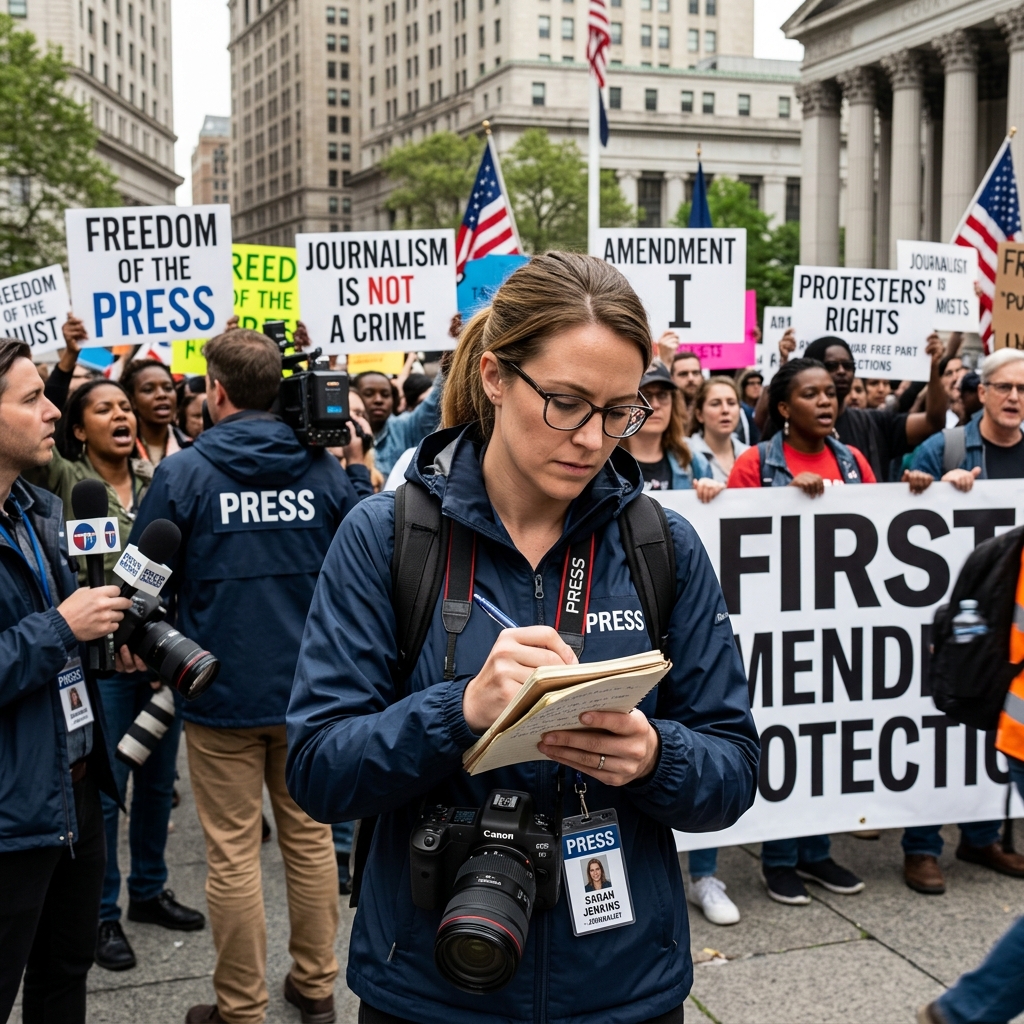
The First Amendment protects the freedom of the press, but it does not make reporters immune from physical danger, and it does not by itself create a special criminal offense for attacking a journalist. In practice, legal protection for reporters after an assault usually comes from ordinary assault statutes, civil rights laws, and, in some situations, constitutional claims against government actors.
What the First Amendment Actually Covers
The constitutional guarantee of a free press is aimed at preventing government censorship and retaliation, not at turning every attack on a reporter into a separate First Amendment crime. That means the amendment is essential to press freedom, but its role is indirect when the issue is violence. It helps protect the act of newsgathering, publication, and access to information, while criminal liability for an attack still depends on other laws.
In many situations, the key question is not whether the victim is a journalist, but who committed the assault and why. If the attacker is a private person, law enforcement will generally rely on the same assault, battery, or disorderly conduct statutes that apply to any victim. If the attacker is a public official, additional constitutional protections may come into play because government conduct can trigger civil rights claims.
When Assault on a Reporter Becomes a Legal Issue
Physical attacks on journalists often arise during protests, breaking-news scenes, courthouse coverage, or police interactions. The legal response depends on the facts, including whether the reporter was lawfully present, whether the attacker was acting under color of law, and whether the conduct was meant to stop reporting or simply injure the victim. If the incident happens while the journalist is collecting news in a public place, the First Amendment may strengthen a later claim that officials interfered with press activity.
Still, the immediate criminal charge is usually a standard one. Prosecutors typically file assault-related charges based on the harm or threat involved, not because the victim works for the media. The press status of the victim may matter as an aggravating fact in public discussion, but it is not usually a separate element of the offense.
Why the Constitution Does Not Create a Special Assault Crime
The Constitution limits government action; it does not itself define every criminal offense. For that reason, the First Amendment cannot by itself transform an assault into a press-specific crime. Criminal statutes are created by legislatures, and unless a statute specifically identifies journalists as a protected class for enhanced penalties, an attack on a reporter is normally prosecuted like any other assault.
This is important because many people assume that constitutional status automatically brings criminal protection. The reality is narrower. The First Amendment can support a claim that the government interfered with reporting, but the actual violence is addressed through criminal law, while constitutional law becomes relevant only when government conduct is involved.
Private Attacks Versus Government Misconduct
There is a major difference between an attack by a private individual and an assault by police, security personnel, or another public official. Private violence is typically handled through state criminal law and, sometimes, a civil lawsuit against the attacker. Government violence can support a constitutional claim because the state is not allowed to punish or suppress protected press activity through force.
If an officer strikes, shoves, detains, or arrests a reporter without lawful justification, the reporter may have claims under the Fourth Amendment for unreasonable force or seizure. If the official acted to stop reporting, retaliate for criticism, or block coverage, the reporter may also have a First Amendment retaliation claim. Those claims are separate from the criminal case, and they can be brought in civil court.
Civil Rights Remedies for Journalists
One of the most important legal tools for reporters is 42 U.S.C. § 1983, a federal civil rights statute that allows people to sue state and local officials who violate constitutional rights. A journalist who is assaulted by a police officer or another government actor may use this statute to seek damages and, in some cases, injunctive relief.
These claims do not depend on the reporter being treated as a special class. Instead, they depend on showing that the government actor violated a constitutional right. If the assault was connected to news gathering, the reporter may argue both that the force was unreasonable and that the official was trying to interfere with protected press activity.
Hate Crime Laws Usually Do Not Help in Press-Attack Cases
Another common misunderstanding is that hate crime laws automatically cover attacks on journalists. In most jurisdictions, they do not. Hate crime statutes usually protect against bias based on race, religion, national origin, sex, disability, or similar protected traits. “Reporter” or “journalist” is generally not one of those categories.
That means an attacker who targets a reporter because of anger at the media usually faces ordinary assault charges, not a separate hate crime charge. Unless the facts also involve a protected characteristic covered by the applicable statute, the law does not treat anti-media hostility as a hate crime by itself.
Access, Retaliation, and Press Credentials
Physical assault is not the only way the First Amendment matters for reporters. The same constitutional principles also protect against retaliation, selective exclusion, and arbitrary denial of access. Government officials cannot punish a reporter simply because they dislike the outlet’s coverage or the viewpoint expressed in a story.
Problems often arise when officials revoke credentials, refuse entry to public proceedings, or block a journalist from covering a matter open to other members of the press. If those actions are motivated by disagreement with the reporting, they may create a First Amendment issue even when no physical injury occurs. In that sense, assault and access restrictions are different harms, but they can be part of the same pattern of interference with press freedom.
What Reporters Can Do After an Assault
After an attack, the first priority is safety and medical care. Once the scene is secure, the reporter should document the incident as thoroughly as possible. Photos, video, witness names, badge numbers, timestamps, and original notes can become critical evidence later in a criminal complaint or civil case.
It is also important to distinguish between the immediate police report and any later civil rights action. The police may investigate the assault as a criminal matter, while a lawyer may later assess whether the facts support a lawsuit under federal or state law. A prompt consultation can help preserve claims before deadlines expire.
Key Legal Paths in a Typical Reporter-Assault Case
| Type of claim | Who it targets | What it may provide |
|---|---|---|
| Criminal assault | Private attacker or public official | Prosecution, fines, jail, probation |
| Fourth Amendment claim | Government actor | Damages for unreasonable force or seizure |
| First Amendment retaliation claim | Government actor | Damages or injunctive relief for interference with reporting |
| Section 1983 lawsuit | State or local official | Federal civil rights remedy |
Why the Distinction Matters for the Press
For journalists, the practical lesson is that the First Amendment is powerful, but it is not a universal shield against violence. It protects the work of gathering and publishing news, and it gives reporters a basis to challenge government retaliation or obstruction. It does not, however, replace the criminal code or automatically punish every attack on the press more harshly than a similar attack on any other person.
This distinction helps explain why legal remedies are often layered. A reporter may have a criminal complaint against the attacker, a civil rights claim against the official, and a broader constitutional argument that the incident was meant to suppress lawful newsgathering. The available remedies depend on who acted and what the conduct was designed to accomplish.
How Courts Tend to View Press-Related Violence
Courts generally recognize that the press has a vital role in democratic oversight, but they also require proof of specific legal violations. That means a reporter cannot rely on press status alone. There must be evidence of unlawful force, unlawful retaliation, or another recognized constitutional violation.
When the record shows that officials used force to stop coverage, courts may treat the case seriously because the harm goes beyond bodily injury. It can affect public access to information and discourage future reporting. But when the attacker is simply a private person, the constitutional issue is usually weaker, and the case turns mainly on criminal and tort law.
Practical Lessons for Newsrooms
- Train reporters to recognize when a scene is becoming unsafe and to leave early if needed.
- Preserve video, audio, and written notes immediately after any confrontation.
- Record identifying details about officers, agencies, and witnesses whenever possible.
- Separate the criminal complaint from any later civil rights analysis.
- Contact counsel quickly if the assailant is a government official or if access was denied because of coverage.
Frequently Asked Questions
Does the First Amendment itself punish someone for assaulting a reporter? No. The amendment protects press freedom, but criminal punishment for assault comes from ordinary criminal statutes, not from the First Amendment alone.
Can a reporter sue if police attacked them while covering a story? Yes. Depending on the facts, the reporter may have claims under the Fourth Amendment, the First Amendment, and 42 U.S.C. § 1983.
Are reporters covered by hate crime laws? Usually not. Most hate crime statutes do not list journalists or reporters as a protected category.
What if a private citizen assaults a journalist because they dislike the media? The case is still usually handled as a standard assault matter, though the motive may be relevant to the facts and public response.
Can the government bar a reporter from a public event because of critical coverage? In general, viewpoint-based exclusion can raise a First Amendment problem, especially if access is granted to others but denied to the reporter for retaliatory reasons.
References
- What Criminal Laws Protect Reporters From Assault? — FindLaw. 2024-07-09. https://www.findlaw.com/legalblogs/criminal-defense/what-criminal-laws-protect-reporters-from-assault/
- First Amendment 101: Freedom of the Press — ACLU of Arizona. 2024-07-09. https://www.acluaz.org/news/first-amendment-101-the-freedom-of-the-press/
- Guide to legal rights in the U.S. — Committee to Protect Journalists. 2024-07-09. https://cpj.org/2024/07/guide-to-legal-rights-in-the-u-s-2/
- First Amendment Fight Matters for Journalists and for Those We Serve — RTDNA. 2024-07-09. https://www.rtdna.org/news/first-amendment-fight-matters-for-journalists-and-for-those-we-serve
- Reporter’s Privilege — The First Amendment Encyclopedia, Middle Tennessee State University. 2024-07-09. https://firstamendment.mtsu.edu/article/reporters-privilege/
Similar Articles








Read full bio of Sneha Tete




