
Divorcing While Living Abroad: A Practical Legal Guide
Understand jurisdiction, service of process, and recognition of foreign divorce decrees when you or your spouse live outside the United States.
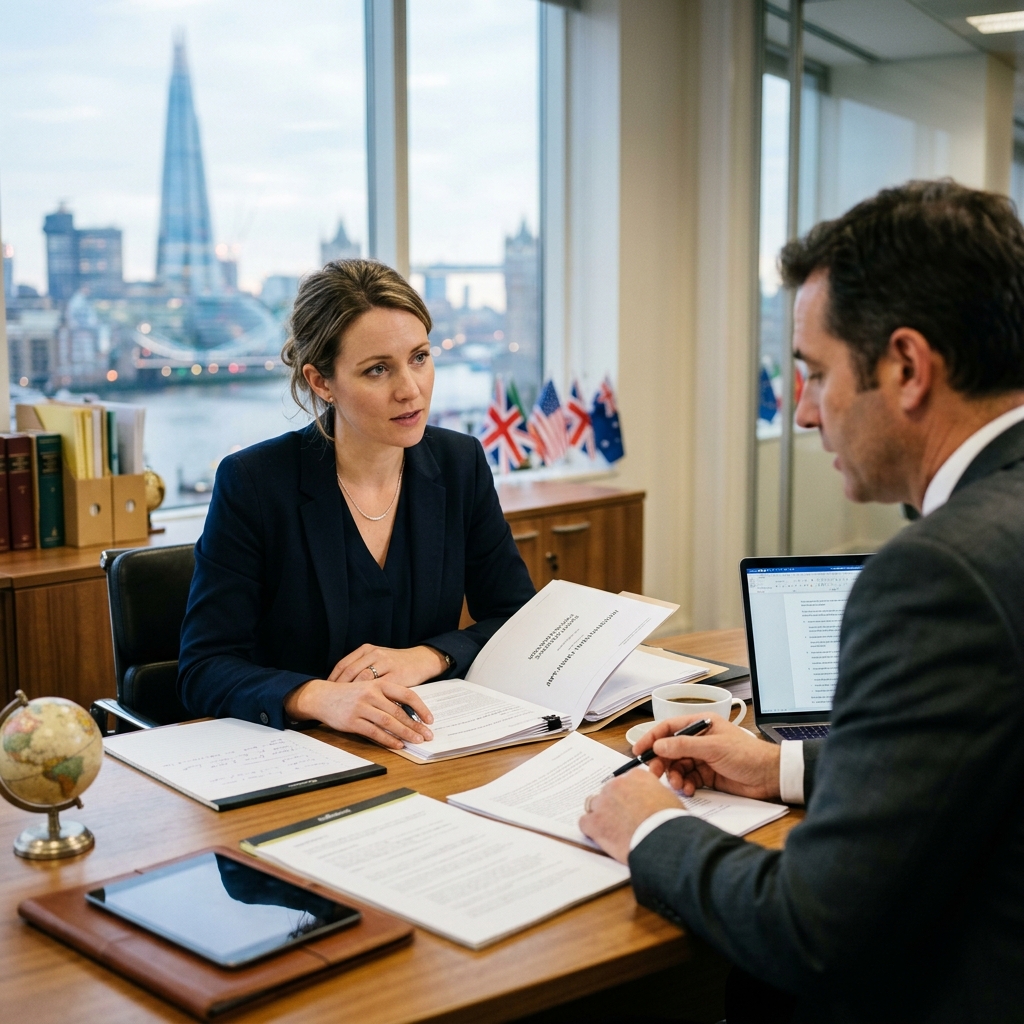
Ending a marriage is rarely simple, and it becomes even more complex when one or both spouses are living outside the United States. Whether you are an American expatriate, a military service member stationed overseas, or a spouse who has moved abroad for work or family reasons, international divorce raises unique legal questions that you cannot ignore.
This guide explains the core legal issues involved in divorcing while living abroad, including where you can file, how to meet residency rules, how to serve your spouse in another country, and how to ensure that a foreign divorce is recognized in the United States. It is for informational purposes only and is not a substitute for advice from a qualified attorney.
1. Key Concepts in International Divorce
Before deciding where and how to file, it helps to understand several basic legal concepts that affect any divorce with an international element.
1.1 Jurisdiction and Domicile
Jurisdiction is a court’s legal authority to hear your case and issue binding orders. In divorce matters, jurisdiction is usually based on where you or your spouse are legally considered to live—your domicile or home state.
- Domicile generally means the place you treat as your permanent home, where you vote, pay state income taxes (if applicable), and intend to return when away.
- Most U.S. states allow a divorce if either spouse is domiciled in that state, even if the other spouse is abroad.
- Foreign countries also have their own rules for when their courts can hear a divorce involving foreign nationals.
1.2 Residency Requirements
In addition to domicile, many U.S. states require that you be physically present for a minimum period before filing for divorce.
- States commonly require around six months of residence before filing, although exact rules vary.
- Some jurisdictions, such as Minnesota, specify 180 days of residence before the court will accept a divorce petition.
- If you have recently moved back to the U.S. from abroad, you may need to wait until you meet these residency requirements.
1.3 Service of Process Across Borders
Service of process is the formal delivery of court papers that notifies your spouse of the divorce and gives them a chance to respond. When your spouse lives in another country, service must comply with both U.S. rules and relevant international procedures.
- Improper service can delay your case or even invalidate the divorce.
- International service may rely on treaties, diplomatic channels, or local foreign procedures, depending on where your spouse lives.
2. Choosing Where to File: U.S. Court or Foreign Court?
One of the most important decisions in an international divorce is whether to file in a U.S. court or seek a divorce in the foreign country where you or your spouse currently live.
2.1 Filing for Divorce in a U.S. State
For many Americans living abroad, filing in a U.S. state court is legally simpler and more predictable than pursuing a foreign divorce.
- You can generally file in the U.S. if you meet the residency and domicile requirements of the state, even if your spouse lives overseas.
- Once filed, the court can issue orders on property division, spousal support, and—if jurisdiction rules are satisfied—child custody and support.
- U.S. divorces tend to be easier to recognize and enforce in other U.S. states.
For military families and other Americans stationed abroad, laws often provide flexible filing options:
- You may be able to file in the state where the service member is stationed, the state of their legal residence, or the state where the non-military spouse lives.
2.2 Seeking a Divorce in a Foreign Country
In some situations, it may be possible or even advantageous to seek a divorce in the foreign country where you are living.
- You must meet that country’s requirements for jurisdiction and residency, which may be very different from U.S. rules.
- Foreign courts might offer faster procedures, lower filing costs, or more favorable laws regarding property or support.
- However, divorces obtained abroad can be difficult to have recognized or enforced in the United States if requirements are not carefully followed.
If you obtain a divorce overseas, you need to consider whether U.S. courts will treat the foreign decree as valid, especially if you later need to resolve property, custody, or support in the United States.
2.3 Comparison: U.S. vs. Foreign Filing
| Factor | Filing in U.S. State Court | Filing in Foreign Court |
|---|---|---|
| Jurisdiction & Residency | Must meet state domicile and residency (often 6 months). | Must satisfy foreign country’s rules, which may differ significantly. |
| Recognition in U.S. | Generally straightforward within the U.S. | May require careful documentation and may not always be recognized. |
| Service of Process | Uses U.S. procedures plus international service rules. | Follows foreign procedural rules; may involve translations and consular steps. |
| Complexity | More predictable for U.S. citizens familiar with U.S. law. | Requires understanding foreign law, language, and court practices. |
3. Filing a U.S. Divorce When a Spouse Is Abroad
If you decide to file in a U.S. state court while your spouse is living overseas, you will go through the usual steps of a U.S. divorce, with added attention to international service and jurisdiction.
3.1 Preparing and Filing the Petition
The divorce process in the United States generally begins with filing a petition for divorce in the local court.
- You must satisfy the state’s residency requirement at the time of filing.
- The petition identifies the parties, states grounds for divorce (such as no-fault incompatibility), and asks the court to decide issues like property division, support, and custody.
- Supporting documents may include your marriage certificate and any existing agreements between the spouses.
3.2 Serving a Spouse Who Lives Overseas
After filing, you must ensure that your spouse receives official notice of the divorce. This can be done in several ways, depending on their location and willingness to cooperate.
3.2.1 Waiver of Personal Service
The simplest method is for your spouse to waive personal service by signing a notarized statement confirming they received the divorce papers.
- You send them a file-stamped copy of the petition and a waiver form.
- They sign and return the waiver, which you then file with the court.
- This often speeds the process and may indicate that they accept the court’s jurisdiction.
3.2.2 Service Under International Treaties
If your spouse does not agree to a waiver, you may need to rely on formal methods of international service.
- Many countries are party to the Hague Service Convention, which provides standardized procedures for serving court documents abroad.
- Some countries in the Americas participate in the Inter-American Convention on Letters Rogatory, which also governs service.
- These treaty-based processes often require transmitting documents through designated central authorities and may take several months.
3.2.3 Letters Rogatory and Diplomatic Channels
If the foreign country is not a party to a relevant treaty, you may have to use letters rogatory, which are formal requests from a U.S. court asking a foreign court to assist with service.
- Letters rogatory usually travel through diplomatic channels (such as U.S. embassies or consulates) and foreign ministries.
- This route can be slow and technically demanding, often requiring translation and strict adherence to foreign procedural law.
3.3 Establishing Jurisdiction Over the Spouse
Even after service, the U.S. court must determine whether it has authority to issue orders that bind your spouse.
- If your spouse signs a waiver and actively participates in the case, that typically signals consent to the court’s jurisdiction.
- Without consent, the court will examine factors such as your domicile, your spouse’s ties to the state, and where marital property and children are located.
- In some situations, the court may be able to dissolve the marriage but have limited ability to decide property or custody that is primarily connected to another jurisdiction.
4. Managing Foreign Divorce Decrees and U.S. Recognition
If you pursue a divorce in a foreign court, or if your spouse files abroad, you must address the question of whether that foreign divorce will be recognized in the United States.
4.1 Documentation Needed for Recognition
U.S. authorities and courts usually require clear, authenticated documentation before treating a foreign divorce as valid.
- Certified copies of your foreign marriage certificate and divorce decree issued by the foreign court or civil registrar.
- Translations of all documents into English if they were issued in another language, prepared by a qualified translator.
- Information about the foreign divorce laws, often provided by the attorney who handled the case.
4.2 Authentication and Apostilles
Authentication confirms that foreign public documents are genuine.
- If the foreign country participates in the Apostille Convention, you may obtain an Apostille, which is an internationally recognized certificate attached to the document.
- If not, the local U.S. embassy or consulate can authenticate the documents by placing a seal over the foreign court’s seal, verifying their origin.
- Authentication is not a registration of your divorce; it is simply a verification of the documents’ authenticity.
4.3 Where to Seek Guidance on Foreign Divorces
Because recognition rules can differ by state and circumstance, it is important to consult appropriate authorities.
- State Attorney General’s offices can answer general questions about foreign divorces and recognition within that state.
- A private family law attorney in the state where you reside can provide tailored advice and help present foreign documents to local courts.
- Embassies and consulates of the foreign country in the United States can assist in obtaining official copies and explaining local procedures.
5. Special Considerations for Military Families and Expats
International divorce issues often arise for military service members, government employees, and private-sector expats who spend extended periods overseas.
5.1 Military Personnel Stationed Abroad
- Service members and their spouses may choose among several U.S. jurisdictions for filing, such as the service member’s home state, current station state (subject to state law), or the spouse’s residence.
- Military legal assistance offices can explain basic rights and options, though you will usually need a private attorney to file in state court.
- Planning ahead is critical when family members and property are located abroad, especially as tours of duty change.
5.2 Civilian Expats and Dual Nationals
- Civilian Americans overseas may have the choice to file either in a U.S. state or in the host country, depending on domicile and residency.
- Dual nationals may face overlapping legal obligations and should consider how both countries’ courts might treat divorce, property, and custody orders.
- Legal advice from attorneys familiar with both U.S. and local foreign law is particularly valuable in these situations.
6. Practical Tips for a Smoother International Divorce
Cross-border divorces require careful planning and thorough documentation. The following strategies can help manage complexity.
6.1 Organize Documents Early
- Gather foreign marriage certificates, local registration records, and any previous court orders relating to your marriage.
- Collect property deeds, bank statements, pension information, and tax records from each country where you hold assets.
- Keep copies of passports, visas, and proof of residence to help establish domicile and jurisdiction.
6.2 Coordinate With Legal Counsel
- Retain a family law attorney in the U.S. state where you plan to file, and, if necessary, a lawyer in the foreign country.
- Maintain clear, regular communication—time zones, language differences, and distance make misunderstandings more likely.
- Discuss strategic choices early, such as which jurisdiction to use and how to handle service of process.
6.3 Anticipate Enforcement Issues
- Even if you obtain a favorable order, enforcing it across borders can be challenging, particularly for property located abroad or child custody arrangements involving multiple countries.
- Ask your attorney how local courts typically respond to foreign divorce orders and what steps might be needed to domesticate or reinforce them.
- Consider alternative dispute resolution, such as mediation, which may lead to more cooperative arrangements that are easier to honor internationally.
7. Frequently Asked Questions (FAQs)
7.1 Can I file for divorce in the U.S. if my spouse is living abroad?
In many cases, yes. As long as you meet the residency and domicile requirements of a U.S. state, you can file there even if your spouse lives overseas. The challenge will be properly serving them and establishing jurisdiction for issues like property and custody.
7.2 Will a foreign divorce automatically be recognized in the United States?
No. Recognition depends on state law and whether the foreign court had proper jurisdiction, followed basic due process, and issued a final decree. You will usually need certified, authenticated, and translated copies of your foreign marriage and divorce documents to seek recognition.
7.3 What if my spouse refuses to cooperate with service while abroad?
If your spouse will not sign a waiver, you may have to serve them using international treaty procedures or letters rogatory through diplomatic channels. If they still do not respond, some U.S. courts may eventually grant a default judgment, but this requires strict adherence to service rules and careful judicial review.
7.4 Do I always need separate lawyers in both countries?
Not always, but it is common. If your case involves only a U.S. divorce and your spouse lives abroad, a U.S. attorney may be sufficient. If you are also dealing with foreign property or considering a foreign divorce, retaining a local lawyer in that country is strongly recommended.
7.5 How do child custody rules apply when children live in another country?
Child custody jurisdiction is often based on where the child has lived for the six months before filing, and international treaties may affect relocation and enforcement. Because these cases are complex and can involve the risk of international abduction disputes, parents should seek specialized legal advice.
References
- How to File for Divorce While Living Abroad — DivorceNet/Nolo. 2023-06-01. https://www.divorcenet.com/resources/divorce/marital-property-division/how-file-divorce-while-living-abroad
- Overseas Divorce Issues – Far East — North Carolina State Bar (Legal Eagle). 2019-04-15. https://www.ncbar.gov/for-the-public/legal-assistance-for-military-personnel/general-military-law-articles-legal-eagle/overseas-divorce-issues-far-east/
- Divorce — U.S. Department of State, Bureau of Consular Affairs (Travel.gov). 2022-08-10. https://travel.state.gov/en/international-travel/living-abroad/divorce.html
- Managing Divorce When One Spouse Is Living Abroad: Jurisdiction and Service Challenges — Nouskalaw. 2024-02-20. https://www.nouskalaw.com/blog/managing-divorce-when-one-spouse-is-living-abroad-jurisdiction-and-service-challenges/
- How can I divorce my spouse married abroad, now back in U.S., with spouse overseas? — Justia Ask a Lawyer. 2025-07-15. https://answers.justia.com/question/2025/07/15/how-can-i-divorce-my-spouse-married-abro-1068270
Similar Articles








Read full bio of Sneha Tete


