
Deportation and Child Custody: Legal and Family Impacts
How deportation affects child custody, parental rights, and children’s well‑being, plus practical steps families can take to prepare.
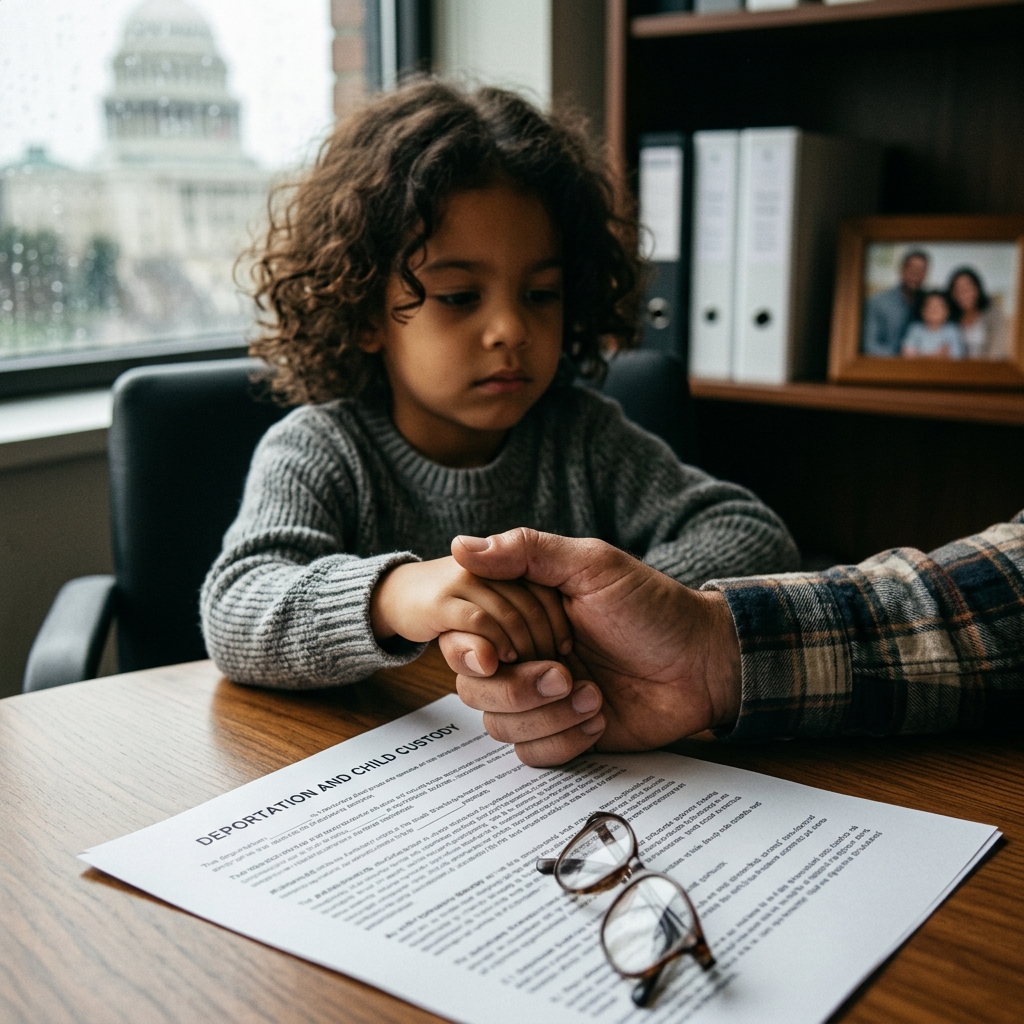
When a parent faces detention or deportation, existing child custody arrangements and the daily lives of children can be disrupted in profound ways. Deportation itself does not automatically terminate a parent’s rights, but it often makes exercising those rights significantly harder and can trigger involvement by the child welfare system.
Understanding the Intersection of Immigration and Custody
Immigration enforcement and family law operate in different legal arenas, yet they frequently collide when a parent is detained or removed from the country. Family courts focus primarily on the best interests of the child, while immigration authorities are concerned with enforcing federal immigration laws.
Key realities to keep in mind include:
- Immigration status or deportation generally does not by itself end parental rights.
- Children who are citizens usually remain citizens regardless of a parent’s immigration case.
- Courts and agencies may still modify custody or initiate child welfare cases if there are concerns about safety, neglect, or abandonment.
How Deportation Can Disrupt Existing Custody Orders
A formal custody order may specify where a child lives, who makes major decisions, and how parenting time is shared. When a parent is suddenly detained or deported, they may be unable to comply with schedules, transport the child, or participate in court hearings, which can lead to requests for modification of custody.
Practical Obstacles After Deportation
- Loss of physical access: The deported parent may be thousands of miles away, making in‑person parenting time impractical.
- Communication barriers: Limited phone or internet access, time zone differences, or language difficulties can interfere with contact.
- Participation in court: Attending hearings or providing testimony is harder from abroad, although remote participation is sometimes possible.
- Travel constraints for children: Children may need passports, birth certificates, and explicit permission from the other parent or a court if they are to leave the country to live with or visit the deported parent.
Modifying Custody After a Parent Leaves the Country
In many cases, the remaining parent or another caregiver must ask a court to adjust the existing order. Typical scenarios include:
- The parent remaining in the country seeks primary or sole custody because the other parent cannot be physically present.
- Relatives or close friends petition to become guardians or custodians if neither parent is available.
- A deported parent formally consents to changes in custody to ensure the child has a legal caregiver in the country.
Judges typically assess these requests under the best‑interest standard, weighing safety, stability, and the child’s need for ongoing contact with both parents when feasible.
Children Who Stay in the Country When Parents Are Deported
Many children in mixed‑status families are citizens or lawful permanent residents, and they often remain in the United States when a parent is deported. This creates a complex situation in which the child’s legal status is secure, but their caregiving arrangements may be fragile.
Role of Immigration Authorities and Child Welfare Agencies
Under recent directives, immigration officers are instructed to consider and document a parent’s wishes for the care of their children, as long as there are no safety concerns. If a parent cannot make arrangements or if a child’s safety appears at risk, local child welfare agencies may be contacted.
Important points include:
- Immigration agencies do not take custody of citizen children.
- Child welfare agencies may investigate for abuse, neglect, or abandonment if no safe caregiver is identified.
- When necessary, children might be placed with relatives, non‑relative foster homes, or other out‑of‑home settings.
Economic and Housing Instability
The removal of a wage‑earning parent often results in sharp declines in household income. Research has found that deportation can slash mixed‑status families’ income by almost half, increasing the risk of housing instability, food insecurity, and related stress on children.
- Income loss may force the remaining caregiver to work longer hours or multiple jobs.
- Older children may assume caregiving roles or work to help support the family, affecting school performance.
- Residential instability can uproot children from familiar schools, peers, and communities.
Emotional and Developmental Effects on Children
A large body of research shows that children separated from a parent due to detention or deportation face serious emotional and behavioral challenges. These effects can emerge quickly and persist for months or years.
Common Psychological Reactions
- Anxiety and fear about the parent’s safety and the child’s own future.
- Sadness and depression, including persistent crying, withdrawal, or loss of interest in activities.
- Sleep and eating disruptions, such as insomnia, nightmares, or changes in appetite.
- Anger and aggression directed at peers, caregivers, or authorities.
- Academic decline and difficulty concentrating at school.
Studies of citizen‑children in families affected by immigration enforcement have documented enduring behavioral changes, self‑stigma, social isolation, and reduced educational achievement.
Long‑Term Health and Developmental Risks
Experts describe detention, deportation, and chronic fear of family separation as significant childhood adversities that can disrupt physical and psychological development. Long‑term risks include:
- Elevated stress hormones that may contribute to chronic health conditions.
- Increased vulnerability to anxiety disorders and depression later in life.
- Potential impacts on brain development, especially when stress is prolonged and unbuffered.
Legal Options for Parents Facing Deportation
Parents who anticipate possible detention or removal can take concrete steps to protect their children and preserve their role in legal decisions.
Planning for Temporary Care
One priority is identifying who will care for the child if a parent cannot. Options may include another parent, relatives, or trusted friends.
- Temporary guardianship: A court‑approved guardian can make decisions about healthcare, education, and everyday needs.
- Power of attorney: In some jurisdictions, parents can grant a trusted adult power of attorney for temporary custody and decision‑making.
- Written care plans: Families can create detailed plans that list emergency contacts, consent for medical care, and instructions about schooling.
Arranging for Children to Travel Abroad
If a parent wants a child to join them after deportation, legal documentation is usually required. Authorities may ask to see proof that the traveling parent has the right to take the child out of the country.
Common documents include:
- A notarized letter from the other parent granting permission for international travel.
- A court order showing that the traveling parent has sole custody.
- The child’s birth certificate or other documentation proving legal custody.
If the other parent objects or if joint legal custody exists, a court order may be needed to authorize the child’s departure.
Child Welfare Involvement and Parental Rights
Deportation does not automatically trigger termination of parental rights, but it can lead to child welfare cases if children are left without safe care or are thought to be abused or neglected.
When Children Are Considered at Risk
Child welfare agencies typically step in when they receive a report that children may be unsafe or abandoned. After an assessment, possible outcomes include:
- Placement with other family members or trusted adults.
- Placement in foster care or other out‑of‑home settings.
- Efforts to reunify children with parents, including those who have been deported, when safe and feasible.
Preserving Parental Rights from Abroad
Courts generally do not end parental rights solely because a parent has been deported. However, parents may need legal assistance to:
- Participate in case planning and court hearings from outside the country.
- Demonstrate ongoing interest and involvement in their child’s life.
- Arrange safe caregiving options consistent with child welfare requirements.
Comparing Care Options for Children Left Behind
Different custody and caregiving arrangements carry distinct advantages and trade‑offs. Courts and families must weigh legal stability, emotional continuity, and practical feasibility.
| Care Arrangement | Key Benefits | Potential Challenges |
|---|---|---|
| Custody with remaining parent | Maintains parental care; familiar home environment; clear legal authority. | Income strain; caregiver may work long hours; less time for parenting. |
| Relative or kinship care | Preserves family ties; often more culturally familiar for child; less disruptive. | Relatives may lack financial resources or formal legal authority at first. |
| Foster or non‑relative care | Structured oversight; access to services; legal protections through child welfare system. | Emotional impact of living with strangers; potential separation from siblings; cultural adjustments. |
| Child relocates abroad with deported parent | Ongoing contact with deported parent; reduced uncertainty about reunification. | Legal and travel hurdles; changes in schooling, language, and healthcare; loss of U.S. community support. |
Practical Steps Families Can Take Before a Crisis
Advance planning does not eliminate the risks of deportation, but it can reduce chaos and help protect children’s rights and well‑being.
- Gather critical documents: Keep birth certificates, passports, medical records, and school records in a safe, accessible place.
- Identify trusted caregivers: Decide who can take temporary custody and discuss expectations clearly.
- Create a family protection plan: Include emergency contacts, check‑in procedures, and instructions for accessing important documents.
- Consult legal professionals: Family law and immigration attorneys can advise on guardianship, custody modifications, and immigration relief options.
- Support children emotionally: Age‑appropriate conversations, routines, and access to counseling can help children cope with uncertainty.
FAQs: Deportation and Child Custody
Does deportation automatically terminate parental rights?
No. Deportation alone does not automatically end parental rights. Termination of parental rights typically requires a separate legal process based on specific grounds, such as severe or ongoing abuse or neglect, not simply immigration status.
Can my child stay in the United States if I am deported?
In most cases, yes. Citizen children and many lawfully present children may remain in the country even if a parent is deported. The key issue is identifying a safe and legally authorized caregiver to assume day‑to‑day responsibility.
Who decides where my child lives after I am deported?
If there is another legal parent in the country, that parent often becomes the primary caregiver, either informally or through a court‑approved modification of custody. If no parent is available, relatives or other adults may petition for guardianship, or child welfare agencies may place the child in care.
Can I take my child with me when I am deported?
It may be possible, but you will likely need appropriate documentation and, in joint custody situations, consent from the other parent or a court order. Requirements vary, so it is important to seek legal advice before making plans for your child to relocate abroad.
How can I stay involved in my child’s life from another country?
Parents can remain involved by maintaining regular communication (phone, video calls, letters), participating in school and medical decisions when possible, and working with attorneys to appear remotely in custody or child welfare proceedings. Demonstrating consistent interest can help protect parental rights over time.
References
- What Will Deportations Mean for the Child Welfare System? — Brookings Institution. 2024-03-07. https://www.brookings.edu/articles/what-will-deportations-mean-for-the-child-welfare-system/
- What Will Deportations Mean for the Child Welfare System? — Center for Migration Studies (background research). 2017-09-06. https://cmsny.org/what-will-deportations-mean-for-the-child-welfare-system/
- Deportation Threatens the Psychological, Physical, and Socioeconomic Well‑Being of Children — Society for Research in Child Development. 2025-03-01. https://www.srcd.org/sites/default/files/2025-03/Child%20Policy%20Brief_Deportation_032025.pdf
- The Distress of Citizen‑Children with Detained and Deported Parents — Anita K. F. et al., Journal of Child and Adolescent Psychiatric Nursing (via PubMed Central). 2015-11-01. https://pmc.ncbi.nlm.nih.gov/articles/PMC4667551/
- The Effects of Deportation on Families and Communities — Community Psychology, Society for Community Research and Action. 2017-01-01. https://www.communitypsychology.com/effects-of-deportation-on-families-communities/
- Child Welfare FAQs Regarding Family Detention or Deportation — Colorado Office of Children, Youth and Families (CO4Kids). 2019-08-01. https://co4kids.org/community-blog/faqs_regarding_detention_deportation/
- Options for Parents Facing Deportation: Child Custody — Deportation Preparation Online Resource. 2016-06-01. https://deportationpreparation.org/chapter/1-child-custody/1-5-options-for-parents-facing-deportation/
Similar Articles








Read full bio of medha deb


