
Defending Healthcare: Legal Battles Over Reproductive Rights
Examining the legal battles shaping state-level reproductive healthcare access.
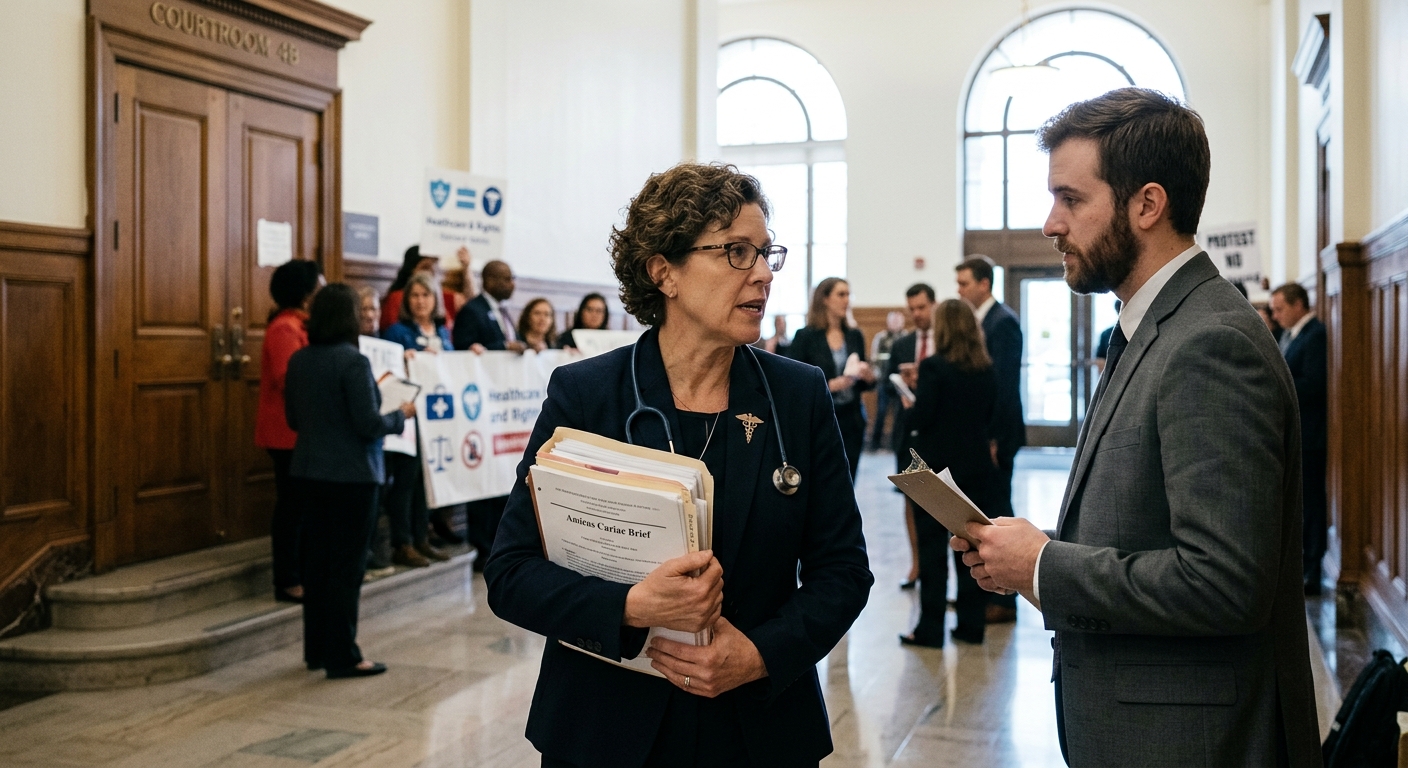
The Shifting Landscape of Healthcare Litigation
The landscape of reproductive healthcare in the United States is increasingly defined by fierce legal conflicts taking place within state and federal courthouses. When state legislatures enact sweeping regulatory changes designed to restrict access to reproductive services, the judicial system often becomes the final backstop for preserving clinical care. In jurisdictions where medical facilities face imminent closure due to hyper-specific legislative mandates, civil liberties organizations routinely intervene to challenge the constitutionality and medical necessity of these laws. This ongoing judicial tug-of-war illustrates a broader struggle to balance state regulatory authority with the fundamental human right to access safe, evidence-based medical treatments.
Litigation is no longer merely a reactionary measure; it has become a proactive, essential pillar of healthcare advocacy. As lawmakers continue to pass complex statutes aimed at micromanaging the operations of medical facilities, the burden of proof frequently shifts to the courtroom. Here, judges must carefully weigh political objectives against established scientific realities and constitutional protections. The outcomes of these legal battles do not just dictate the survival of individual clinics; they shape the entire regional infrastructure of maternal and reproductive health for millions of individuals.
Understanding these legal battles requires an examination of the strategies employed by state legislatures, the counter-arguments presented by medical and legal professionals, and the profound real-world consequences that unfold when healthcare access is suspended or permanently revoked. By dissecting the anatomy of these restrictive laws and the subsequent courtroom dramas they inspire, we can better comprehend the precarious state of healthcare access in heavily regulated regions.
Demystifying the Targeted Regulation of Medical Providers
At the center of many high-stakes legal showdowns are statutes broadly classified as the Targeted Regulation of Abortion Providers, known in policy circles as TRAP laws. These legislative frameworks single out specific reproductive health clinics, applying stringent, highly specific, and often insurmountable operational requirements that are conspicuously absent from regulations governing other medical facilities providing procedures of similar or even greater risk. Rather than improving the quality of patient care, these regulations are frequently designed to create administrative and financial bottlenecks that force clinics to cease operations.
TRAP laws represent a highly sophisticated legislative strategy. By cloaking restrictions in the language of patient safety and bureaucratic compliance, lawmakers attempt to circumvent direct constitutional challenges while achieving the practical effect of limiting healthcare access. These mandates generally fall into three distinct categories: structural facility requirements, arbitrary staffing credentials, and mandated hospital relationships.
The Weaponization of Facility and Structural Mandates
One of the most common forms of TRAP legislation involves forcing outpatient reproductive clinics to meet the architectural and structural standards of ambulatory surgical centers (ASCs) or full-scale hospitals. These laws might dictate the precise width of hallways, the size of janitorial closets, the specifications of HVAC systems, or the dimensions of procedure rooms. For existing clinics, retrofitting a building to meet these arbitrary standards often requires millions of dollars in renovations. Because the procedures performed in these clinics do not require the acute infrastructure of a major hospital, medical experts widely regard these structural mandates as financially punitive rather than medically beneficial.
Admitting Privileges and Transfer Agreements
Another prevalent regulatory hurdle involves mandatory relationships with local hospitals. Many state laws require clinic physicians to obtain admitting privileges at a hospital within a specific geographic radius (often 30 miles). Alternatively, clinics may be forced to secure written transfer agreements with nearby hospitals. While these requirements sound reasonable to the layperson, they function as an effective veto power over clinic operations. Hospitals often refuse to grant admitting privileges to physicians who perform abortions due to political pressure, religious affiliations, or bureaucratic quotas regarding the number of patients a doctor must admit annually. When a clinic cannot secure these impossible-to-get agreements, the state forces them to shut down, triggering immediate and severe public health crises.
The Medical Consensus on Procedure Safety
To fully grasp the arbitrary nature of these targeted regulations, it is critical to look at the global medical consensus regarding the safety of reproductive healthcare. The World Health Organization (WHO) explicitly recognizes comprehensive abortion care as a common, extremely safe health intervention when performed using recommended methods by appropriately trained practitioners. The data overwhelmingly demonstrates that early-term reproductive procedures carry a fraction of the complication risk associated with carrying a pregnancy to term or undergoing other routine outpatient surgeries, such as wisdom tooth extraction or colonoscopies.
Despite this clear global medical consensus, state-level regulations deliberately ignore empirical data. Major medical associations, including the American Medical Association (AMA) and the American College of Obstetricians and Gynecologists (ACOG), have repeatedly condemned TRAP laws. They argue that these mandates interfere with the physician-patient relationship and impose requirements that have no foundation in evidence-based medicine. When civil rights attorneys take these laws to court, their primary witnesses are often leading medical experts who testify that the regulations actively harm public health by shuttering safe, functioning facilities.
Furthermore, the WHO emphasizes that restricting access does not eliminate the need for healthcare; it merely forces individuals into unsafe, unregulated environments or delays care until it becomes a more complex medical emergency. Thus, the legal battles defending clinics are not just about keeping doors open—they are about preventing the completely avoidable maternal morbidity and mortality that inevitably rise when safe clinics are legislated out of existence.
The Mechanics of Civil Rights Litigation in Healthcare
When a state passes a burdensome healthcare regulation, the transition from legislation to litigation is often swift and dramatic. Civil rights organizations and legal advocacy groups serve as the primary defense mechanism, stepping in to file immediate lawsuits in state or federal courts. The core of their legal strategy relies on demonstrating that the state’s actions are arbitrary, punitive, and impose an unjustifiable burden on patients seeking lawful medical care.
Emergency Injunctions and Restraining Orders
The immediate goal of any legal challenge to a TRAP law is to prevent the law from taking effect while the case is being heard. Attorneys will file for a Temporary Restraining Order (TRO) or a Preliminary Injunction. To secure an injunction, plaintiffs must prove to a judge that allowing the law to be enforced would cause immediate, irreparable harm to the clinic and its patients. They must also demonstrate a strong likelihood of ultimately winning the case on its merits. In jurisdictions with only one or two remaining clinics, the argument for irreparable harm is stark: if the clinic is forced to close even for a few weeks, patients will be completely denied care, and the clinic may never financially recover.
The Evidentiary Phase and Expert Testimony
If an injunction is granted, the lawsuit moves into the discovery and trial phases. This is where the battle of medical evidence takes place. State attorneys will argue that the laws fall under the state’s legitimate interest in regulating the medical profession and protecting patient safety. In response, plaintiffs’ attorneys present a mountain of statistical evidence and expert testimony proving that the laws provide no actual medical benefit.
During these trials, clinic administrators take the stand to explain the logistical impossibility of complying with the state’s mandates. Physicians explain the actual protocols for handling medical emergencies, demonstrating that mandatory transfer agreements are redundant because hospitals are already required by federal law (under EMTALA) to accept and stabilize emergency patients regardless of pre-existing agreements. Ultimately, the judge must decide if the state’s purported interest in safety is genuine or merely a pretext for shutting down healthcare facilities.
Socioeconomic Consequences of Clinic Closures
The implications of these legal battles extend far beyond the walls of the courtroom. When courts uphold targeted regulations and clinics are subsequently forced to close, the resulting healthcare deserts have profound socioeconomic impacts on the surrounding communities. The burden of these closures does not fall equally; it disproportionately harms the most vulnerable populations, creating a tiered system of healthcare access based entirely on geography and wealth.
The Burden of Travel and Logistical Hurdles
When a local clinic closes, patients are forced to travel much greater distances to access care. In large or rural states, this can mean driving hundreds of miles to a different city or crossing state lines. This travel requirement introduces a cascade of logistical hurdles. Patients must secure reliable transportation, take time off from work (often losing vital wages), find childcare, and potentially pay for overnight accommodations. For low-income individuals, these cumulative costs quickly become prohibitive, effectively denying them access to care even if the procedure itself remains theoretically legal in their state.
Disproportionate Harm on Marginalized Populations
The fallout from clinic closures intersects heavily with systemic inequalities. Women of color, undocumented immigrants, and individuals living below the poverty line are disproportionately impacted by the loss of local healthcare infrastructure. Furthermore, clinics that provide reproductive care often serve as primary care providers for marginalized communities, offering essential services such as cancer screenings, contraceptive counseling, and STI testing. When a TRAP law forces a clinic to close, the community loses access to this entire spectrum of preventative care, leading to broader public health declines and widening health disparities.
The Future of Reproductive Health Advocacy
As the jurisprudential landscape surrounding reproductive rights continues to fracture, the strategies employed by civil rights advocates are evolving. With federal protections shifting, much of the legal battleground has moved into state supreme courts, where attorneys argue that state constitutions offer broader privacy and bodily autonomy protections than the federal constitution. This state-by-state patchwork means that the legality and accessibility of basic healthcare will remain in flux for the foreseeable future.
Advocates are also looking beyond traditional litigation. There is a growing focus on supporting independent clinics through community funding, expanding access to telehealth services where legally permissible, and mobilizing voters to challenge restrictive laws at the ballot box. However, as long as state legislatures continue to weaponize medical regulations, the courtroom will remain the primary arena for defending the right to accessible, evidence-based healthcare.
Frequently Asked Questions (FAQ)
What exactly is a TRAP law?
TRAP stands for Targeted Regulation of Abortion Providers. These are state-level laws that single out reproductive health clinics and subject them to burdensome, medically unnecessary regulations that are not applied to other similar medical practices. Their primary function is to make it logistically and financially impossible for clinics to operate, thereby restricting healthcare access under the guise of patient safety.
Why is it difficult for clinics to get hospital transfer agreements?
Transfer agreements require a formal contract between a clinic and a local hospital to transfer patients in case of an emergency. However, hospitals may refuse to sign these agreements due to ideological opposition, pressure from anti-abortion groups, or religious affiliations. Because federal law already requires hospitals to accept emergency patients, medical experts consider these agreements legally redundant and medically unnecessary.
How do clinic closures impact local communities?
When clinics close, communities lose critical healthcare infrastructure. Patients are forced to travel vast distances, which increases the financial and logistical burden of receiving care. Furthermore, communities lose access to other preventative services often provided by these clinics, such as STI testing, pap smears, and contraceptive counseling, disproportionately harming low-income and marginalized groups.
Are the procedures performed in these clinics safe?
Yes. According to the World Health Organization and major medical associations like the AMA and ACOG, comprehensive reproductive and abortion care is an extremely safe medical intervention. The complication rates are exceedingly low, and the stringent structural regulations imposed by states offer no quantifiable improvement to patient outcomes.
What role do civil liberties organizations play in this issue?
Organizations like the ACLU and various legal advocacy groups act as the primary defense against unconstitutional healthcare restrictions. They monitor state legislation, file immediate lawsuits to block harmful laws from taking effect, and represent clinics and physicians in court, presenting the necessary medical evidence to prove that the laws impose an unjustifiable burden on patients.
References
- Targeted Regulation of Abortion Providers — Guttmacher Institute. 2024-03-01. https://www.guttmacher.org/fact-sheet/targeted-regulation-abortion-providers
- A Surge of State Abortion Restrictions Puts Providers—and the Women They Serve—in the Crosshairs — Guttmacher Institute. 2014-03-01. https://www.guttmacher.org/gpr/2014/03/surge-state-abortion-restrictions-puts-providers-and-women-they-serve-crosshairs
- Abortion Fact Sheet — World Health Organization (WHO). 2025-12-08. https://www.who.int/news-room/fact-sheets/detail/abortion
Similar Articles








Read full bio of medha deb


