
Day Laborer Rights In California: Essential Legal Guide In 2025
A practical guide to wage, safety, and injury protections for short-term workers.
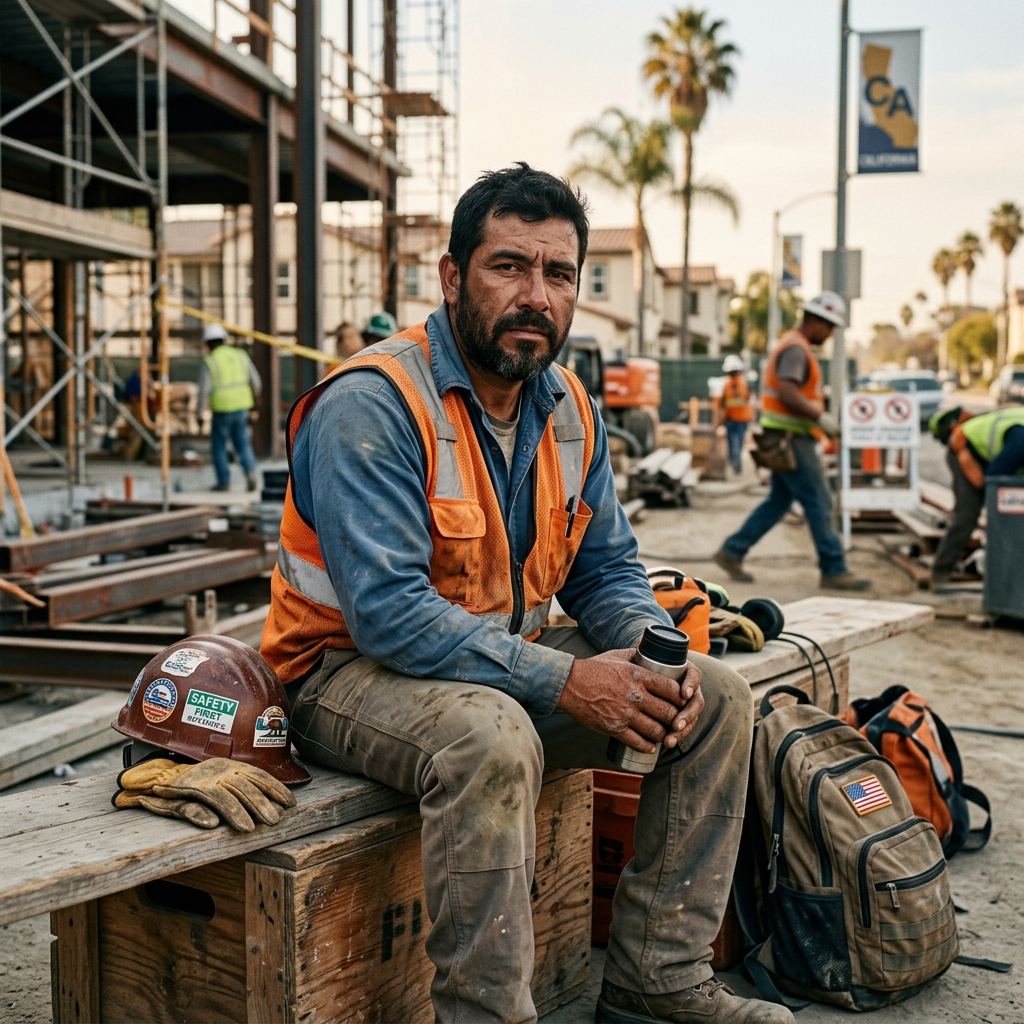
Day laborers and temporary workers often move in and out of jobs quickly, but their legal protections do not disappear because the work is short-term. In California, many of the same core workplace rules that apply to other workers also apply to people hired for a day, a week, or a limited assignment. That includes rules about pay, workplace safety, discrimination, retaliation, and, in many situations, access to workers’ compensation benefits.
The most important idea is simple: a short work arrangement does not give an employer permission to ignore labor laws. California and federal protections can still apply even when a worker is hired informally, paid cash, or lacks a written contract. The details depend on how the worker is classified and who hired them, but temporary status alone does not erase legal rights.
Who counts as a day laborer or temporary worker?
Day laborers are generally workers hired on a day-by-day basis for immediate or short-term jobs. Temporary workers are usually brought in for a limited period, often through an agency or staffing arrangement. The practical difference matters because the employer relationship can affect which laws apply and who is responsible for pay, safety, and injury coverage.
These workers may be used for construction, landscaping, moving, warehouse tasks, cleaning, event support, or other jobs that need extra labor for a short period. Some workers are hired directly by a business or homeowner, while others are placed through a staffing company. In either situation, the law may still treat the worker as an employee rather than an independent contractor depending on the real nature of the work relationship.
Pay rules still apply, even for very short jobs
One of the most important rights for any worker is the right to be paid for all work performed. The U.S. Department of Labor states that day laborers must receive at least the federal minimum wage for all hours worked, whether they are paid by the hour, by the day, or by piece rate. California law is often even more protective because the state minimum wage and overtime rules may be higher than federal standards.
Employers cannot avoid wage obligations by calling a worker “temporary” or by paying in an informal way. If a person works, the employer generally owes lawful wages for that time. That includes time spent performing assigned tasks and, in some circumstances, waiting time that is controlled by the employer. A worker who is required to remain available at a designated place may be entitled to payment for that waiting period.
| Common wage issue | General rule |
|---|---|
| Minimum wage | Must be paid for all covered work hours |
| Overtime | May apply when a worker exceeds daily or weekly limits under California law |
| Waiting time | May be compensable if the worker is under the employer’s control |
| Piece-rate pay | Still must satisfy wage and hour rules |
Temporary status does not erase workplace protections
Temporary workers are entitled to workplace protections that go beyond the paycheck. California and federal law can protect them from unsafe conditions, discrimination, harassment, and retaliation. A worker does not lose these rights simply because the assignment is short or because the job was arranged through a staffing company.
For example, temporary workers are generally protected by workplace safety laws and may raise concerns if a jobsite is dangerous. They are also protected by anti-discrimination rules that prohibit unfair treatment based on characteristics such as race, color, religion, sex, national origin, disability, and other protected categories. If a worker complains about violations or asks for lawful wages, retaliation may also be unlawful.
Safety obligations matter on every jobsite
Unsafe work is one of the biggest risks for short-term workers, especially in physically demanding jobs. Employers still have a duty to provide a safe workplace and to follow applicable safety rules. That means proper equipment, reasonable training, hazard awareness, and safe procedures should not be optional just because the worker is only there for one shift.
Temporary workers may be especially vulnerable when they are sent to unfamiliar job sites without enough instruction. If a worker is expected to use machinery, climb, lift heavy materials, work near traffic, or handle chemicals, the employer should provide appropriate guidance and protective measures. A worker injured because of unsafe conditions may have more than one possible legal remedy depending on the facts.
What happens if a day laborer is injured?
Injury rights are a major issue for day laborers, and California law can provide meaningful protection. The general rule is that workers’ compensation is available to many employees, including temporary workers and day laborers, even when the job is short-term. A key issue is whether the person qualifies as an employee under the law and whether any special exceptions apply.
For day laborers injured while working for contractors on residential projects, the law can provide workers’ compensation coverage more broadly. When the hiring party is a homeowner, California has special eligibility rules that may depend on the worker’s hours and wages during the preceding 90 days. Research from UCLA notes that, for homeowner-employers, a day laborer may need to have worked at least 52 hours and earned at least $100 during the relevant period to qualify under that homeowner’s policy. If those thresholds are not met, coverage may be unavailable through the homeowner’s workers’ compensation arrangement, even though other legal claims may still exist.
By contrast, when a contractor hires the worker for residential work, eligibility is generally broader and may not depend on those same homeowner thresholds. Because these rules can be technical, injured workers should preserve records, report the injury promptly, and seek medical attention right away.
Immigration status usually does not remove basic labor rights
Many day laborers worry that immigration status will prevent them from asserting workplace rights. In practice, federal and state labor protections often still apply regardless of immigration status. That includes wage protections and, in many cases, workers’ compensation rights. A worker’s status may create fear or practical barriers, but it does not automatically eliminate legal protections for work already performed.
That said, workers may be hesitant to come forward because of retaliation fears. Employers are not allowed to use threats, intimidation, or punishment to silence lawful complaints. If a worker believes a supervisor is withholding pay, denying safety equipment, or retaliating after an injury report, the worker should document the conduct and seek legal help or assistance from the appropriate labor agency.
How wage problems often arise in short-term work
Day labor jobs can create wage disputes because they are often informal. Common problems include being paid less than promised, not being paid for all hours worked, improper deductions, or being told to wait for the next job without compensation. These disputes are especially common when workers are paid in cash and no clear time records are kept.
Workers should keep their own notes about when they started, when they ended, where they worked, and what they were promised. If possible, they should save text messages, photos, receipts, pay envelopes, or witness information. Records can become very important if the employer later denies the hours or the amount of pay owed.
Practical steps after an injury or pay dispute
When a workplace problem happens, speed matters. A worker who is injured should report the injury as soon as possible and get medical care. If the issue involves unpaid wages, the worker should gather proof of the schedule, the work performed, and any pay arrangement that was discussed. Delays can make it harder to show what happened.
- Report the injury or wage problem promptly.
- Write down dates, times, job locations, and the names of supervisors or witnesses.
- Save pay stubs, text messages, photos, and any written instructions.
- Request the proper claim form or wage records if they are available.
- Get legal guidance if the employer refuses to pay, files no insurance paperwork, or retaliates.
Can a worker be treated as an independent contractor?
Some employers try to label workers as independent contractors to reduce costs or avoid workplace obligations. The label alone is not always controlling. What matters is the actual working relationship, including the level of control the hiring party exercises and the realities of the job. If the worker functions like an employee, employee protections may apply.
This distinction is critical because employee status can affect minimum wage enforcement, overtime, unemployment protections, and workers’ compensation. A temporary assignment does not automatically make someone an independent contractor, and an informal job arrangement does not automatically remove employee rights.
Common questions about day laborer protections
- Are day laborers entitled to minimum wage?
- Yes. Federal guidance states that day laborers must receive at least the federal minimum wage for all covered hours worked, and California law may require more depending on the job and location.
- Do temporary workers get safe working conditions?
- Yes. Temporary workers are protected by workplace safety rules and can raise concerns about hazardous conditions.
- Can an undocumented worker claim workplace rights?
- In many situations, yes. Immigration status does not automatically erase wage, safety, or injury protections.
- Does a short job mean no workers’ compensation?
- No. Temporary workers and day laborers may still qualify, although some homeowner-based claims in California have special eligibility rules.
Why documentation is especially important in informal jobs
Because many day labor assignments are arranged quickly and without paperwork, documentation becomes the worker’s best protection. A written contract is helpful, but even without one, a worker can build evidence through messages, photos, notes, and witness accounts. That information can support a claim for unpaid wages or a workplace injury.
Documentation also helps establish who controlled the work, what was promised, and whether the worker was truly an employee. In disputes over classification, safety, or injury coverage, those details can make a major difference. Workers who regularly accept short-term jobs should consider keeping a simple record of employers, dates worked, pay received, and any problems encountered.
When legal help may be necessary
Some workplace problems can be resolved informally, but many cannot. Legal help may be necessary when an employer refuses to pay, denies a valid injury claim, threatens retaliation, or argues that the worker was not an employee. A lawyer or labor advocate can help determine whether wage claims, injury claims, or retaliation claims are available and how to pursue them.
For day laborers and temporary workers, the challenge is often not whether rights exist, but how to enforce them. Understanding the rules early can help workers respond more effectively when a job goes wrong.
Frequently Asked Questions
Do day laborers have to be paid for waiting time?
Sometimes. If the employer requires the worker to remain available and under control, that waiting time may be compensable.
Can a temporary worker get overtime in California?
Yes, if the worker meets the legal requirements for overtime under California law.
What if I was paid in cash?
Cash payment does not remove wage rights. A worker may still be able to prove unpaid wages using records, witnesses, or other evidence.
What if my employer says I am not an employee?
The employer’s label is not the final word. The actual facts of the working relationship matter more than the title used by the employer.
Do I lose rights if I lack immigration papers?
Not necessarily. Many labor protections still apply regardless of immigration status.
References
- Day Laborers — U.S. Department of Labor, Wage and Hour Division. 2024-11-08. https://www.dol.gov/agencies/whd/workers/day-laborers
- Can Day Laborers Get Workers Compensation in California? — Scher and Bassett. 2024-05-14. https://scherandbassett.com/can-day-laborers-get-workers-compensation-in-california/
- On-The-Job Injuries And Day Laborers — UCLA Labor Occupational Safety and Health Program. 2017-04-01. https://losh.ucla.edu/wp-content/uploads/sites/37/2016/01/On-The-Job-Injuries-And-Day-Laborers-April-2017.pdf
- Day Laborers’ Rights under Federal Law: Waiting Time and Deductions — National Employment Law Project. 2015-03-01. https://www.nelp.org/app/uploads/2015/03/Day-Laborers-Rights-under-Federal-Law-Waiting-Time-and-Deductions.pdf
- Day Laborers – California Employment Lawyer — Law Office of Ronald P. Ackerman. 2024-02-01. https://lawofficeofronaldpackerman.com/day-laborers/
Similar Articles








Read full bio of medha deb




