
CTE and Criminal Liability: Can Brain Injury Excuse Crime?
Exploring how chronic traumatic encephalopathy intersects with intent, insanity defenses, and responsibility in modern criminal courts.
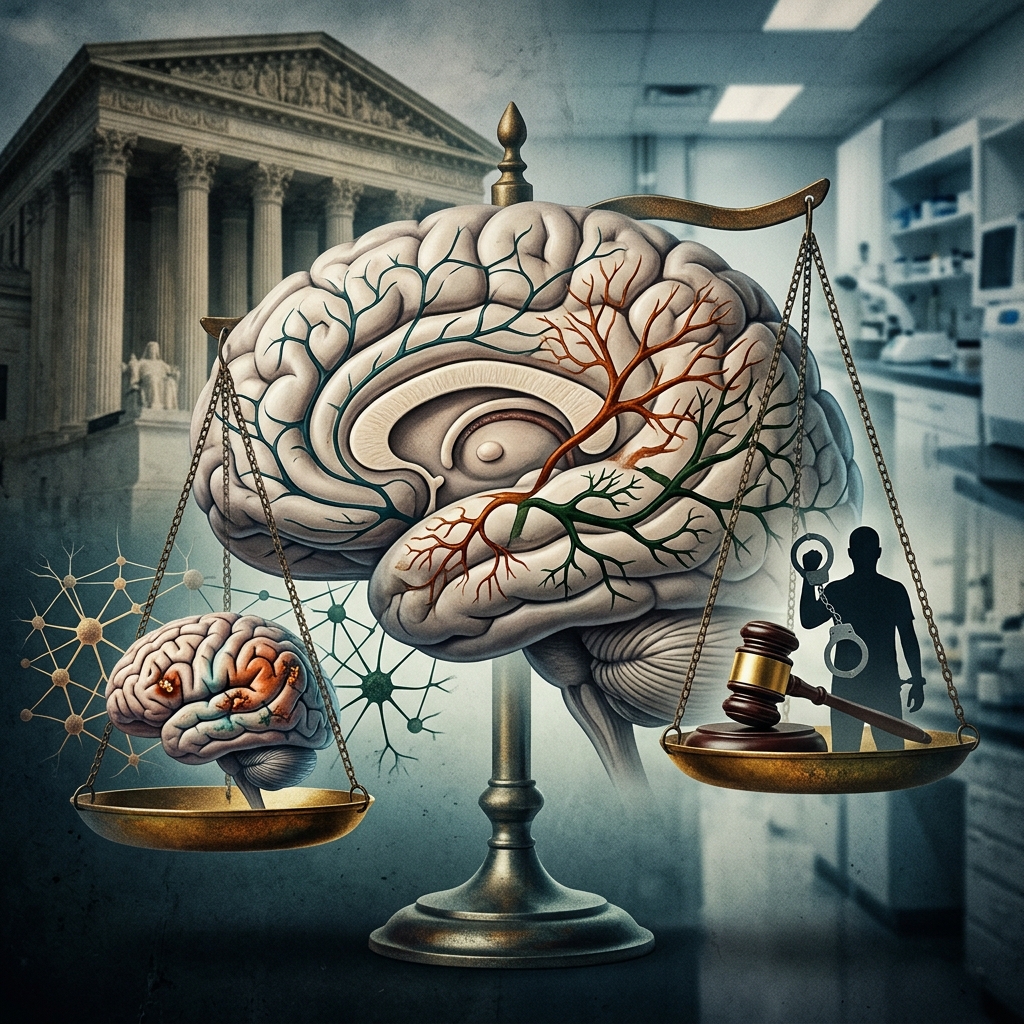
Chronic traumatic encephalopathy (CTE) has moved from medical journals to sports pages and, increasingly, into courtrooms. As high-profile criminal cases involving former athletes and others with histories of repeated head trauma make headlines, defense lawyers are asking a hard question: can CTE be used to excuse or reduce criminal responsibility?
This article examines how science, law, and ethics collide when brain injury is offered as an explanation for violent or impulsive behavior. It draws on current medical research, legal practice, and policy debates to explore where CTE may fit within criminal defense strategies—and where its limits clearly lie.
Understanding CTE: The Medical Backdrop
CTE is a progressive degenerative brain disease associated with repeated head impacts, including concussions and sub-concussive blows. It has been documented in contact sport athletes, military veterans exposed to blasts, and others with significant histories of brain trauma.
Core Features of CTE
- Cause: Repetitive head impacts are believed to trigger abnormal accumulation of tau protein in the brain, forming clumps that spread and damage neurons.
- Course: The condition appears to worsen over time, with symptoms often emerging years after the period of greatest exposure to trauma.
- Diagnosis: At present, definitive diagnosis is possible only by examining brain tissue after death.
Clinicians can identify symptoms consistent with CTE—such as mood changes and cognitive decline—but they cannot conclusively confirm the disease in living patients using standard, universally accepted tests.
Common Symptoms Relevant to Criminal Cases
Research suggests that individuals with CTE or similar trauma-related brain conditions may show changes that could influence behavior and decision-making:
- Impaired impulse control and greater tendency toward risky or aggressive actions.
- Mood disturbances, including depression, anxiety, irritability, and belligerence.
- Cognitive problems, such as poor attention, memory difficulties, and slowed thinking.
- Personality shifts, including increased paranoia or social withdrawal.
These symptoms are critical to legal arguments because criminal liability often turns on whether a person could control their actions, appreciate consequences, and form the required criminal intent.
How Criminal Law Evaluates Culpability
To understand where CTE may fit in, it is important to know how criminal law measures responsibility. Most offenses require two elements:
- Actus reus – the prohibited act (for example, striking someone or taking property).
- Mens rea – a culpable mental state, such as intent, knowledge, recklessness, or negligence.
Brain-based defenses typically target the mental element of crime: they argue either that the defendant could not form the required mens rea or that their mental condition justifies an insanity or diminished capacity defense.
Key Legal Doctrines Potentially Implicated by CTE
| Legal Doctrine | Core Question | Possible Role for CTE |
|---|---|---|
| Insanity | Was the defendant unable to appreciate the wrongfulness of their conduct or conform it to the law due to a severe mental disease? | CTE may be argued as the underlying disease impairing judgment or reality testing, if severe enough. |
| Diminished capacity / specific intent | Could the defendant form a particular, higher-level mental state (such as premeditated intent)? | Evidence of impulsivity or cognitive impairment associated with CTE could be used to challenge specific intent. |
| Mitigation at sentencing | Should punishment be reduced due to mental or neurological problems? | Courts may consider CTE as a factor reducing moral blameworthiness, even if it does not meet insanity standards. |
CTE as a Defense: Emerging Strategies
So far, using CTE as a stand-alone defense remains rare and experimental, but several defense strategies have emerged.
1. CTE-Framed Insanity Defense
Some lawyers argue that severe brain damage from CTE effectively created a mental disease or defect that prevented their clients from understanding right and wrong or controlling their conduct.
In jurisdictions using formulations similar to the Model Penal Code or traditional insanity standards, expert witnesses may testify that:
- The defendant’s history of head trauma is consistent with serious neurodegenerative disease.
- Symptoms such as paranoia, emotional volatility, or cognitive decline significantly distorted perception and reasoning at the time of the offense.
- These impairments reached the level of a qualifying mental disease or defect.
However, courts are cautious, especially because CTE cannot yet be conclusively diagnosed in living defendants, and insanity standards generally require convincing medical evidence.
2. Challenging Specific Intent
In some cases, defense attorneys use CTE-related evidence not to excuse the crime entirely, but to attack specific intent. For example:
- Arguing that explosive, impulsive behavior is inconsistent with premeditation.
- Claiming that cognitive deficits made it impossible for the defendant to deliberately plan complex criminal acts.
- Contending that mood instability and disorganized thinking interfered with forming the precise mens rea required for certain charges.
This strategy may lead to convictions for lesser offenses that require only recklessness or negligence, rather than purposeful or knowing conduct.
3. Sentencing Mitigation
Even when courts reject CTE-based insanity or intent defenses, they may still consider brain injury as a mitigating factor at sentencing.
- Judges can weigh neurological evidence when deciding between harsher and more lenient sentencing options.
- Defense teams may argue that punishment should emphasize treatment and supervision rather than lengthy incarceration.
- Evidence of long-term brain damage can support requests for specialized medical care in custody.
In this way, CTE may influence outcomes even without formally absolving the defendant of responsibility.
Scientific and Legal Obstacles
Despite growing interest, CTE is far from a settled or straightforward defense. Several major obstacles limit its current use.
Diagnostic Limitations
One of the most challenging problems is diagnostic certainty. The standard criteria for CTE are based on postmortem neuropathological examination—microscopic evaluation of brain tissue after death.
- Living patients can only receive a clinical suspicion of CTE based on symptoms and history.
- Other conditions, such as depression, post-traumatic stress disorder, substance use disorders, or different dementias, can produce similar symptoms.
- Courts often require reliable and generally accepted medical evidence before allowing expert testimony on a novel diagnosis.
These uncertainties make judges wary of treating CTE as a definitive explanation for criminal acts.
Establishing Causation
Even if a defendant is believed to have CTE or another traumatic brain injury, the legal question is not simply whether they have a disease, but whether that disease caused or substantially contributed to the crime.
- Defense teams must connect specific neurological impairments with the behavior at issue.
- Prosecutors may point to alternative explanations, such as long-standing antisocial traits, substance use, or situational pressures.
- Courts often demand more than correlation; they look for concrete evidence that brain damage undermined intent or understanding in a way recognized by legal standards.
This causal link can be difficult to draw, especially when multiple factors shape human behavior.
Standards for Expert Evidence
In many jurisdictions, the admissibility of expert testimony on CTE is governed by standards that require reliable methods and general acceptance in the scientific community.
- Judges may exclude speculative opinions that lean too heavily on evolving or contested science.
- Experts need to show that their diagnostic criteria and reasoning are consistent with mainstream neurology and psychiatry.
- Legal systems are generally conservative when incorporating emerging neuroscientific evidence.
As a result, CTE-based defenses often hinge on careful selection and rigorous examination of expert witnesses.
Policy and Ethical Considerations
The prospect of a “CTE defense” raises broader questions about fairness, social protection, and responsibility.
Balancing Compassion and Public Safety
On one hand, many defendants with suspected CTE became vulnerable due to occupational or service-related exposure—for example, years of playing contact sports or military service.
- There is concern that punishing them harshly may ignore the role of systemic factors that contributed to their brain injury.
- Families and advocates argue for more rehabilitative, treatment-focused responses.
On the other hand, courts must protect the community and uphold the rule of law.
- If CTE were widely accepted as a defense, some worry it could undermine deterrence and accountability.
- Victims and survivors often seek clear recognition that harm was wrong, regardless of the defendant’s medical condition.
Consistency with Other Brain-Based Defenses
CTE does not exist in a vacuum; courts have long confronted claims based on dementia, traumatic brain injury, intellectual disability, and other neurological problems.
- Many defendants with advanced dementia or other serious brain diseases have not been fully excused from liability.
- Legal systems generally require evidence of extreme impairment—such as profound lack of understanding or control—before granting insanity verdicts.
Any approach to CTE must fit within this broader framework, avoiding special treatment that is inconsistent with how other neurological conditions are handled.
Practical Guidance for Defense Teams
Attorneys considering CTE-related arguments need to approach cases strategically and ethically. The American Bar Association emphasizes that defense counsel must investigate potential mental health issues and present them effectively where relevant to criminal responsibility and sentencing.
Key Steps When CTE May Be an Issue
- Thorough history gathering: Document sports participation, military service, prior head injuries, and behavioral changes over time.
- Comprehensive medical evaluation: Seek neurological, psychiatric, and neuropsychological assessments to characterize cognitive and emotional functioning.
- Careful expert selection: Retain experts familiar with both the science of brain injury and the legal standards applicable to insanity, capacity, and intent.
- Focused legal theory: Decide whether evidence is strongest for insanity, diminished capacity, or mitigation, and tailor arguments accordingly.
- Ethical communication: Avoid overstating the certainty of CTE diagnosis or promising outcomes that current science cannot support.
Frequently Asked Questions About CTE and Criminal Responsibility
Is CTE currently recognized as a formal legal defense?
CTE is not a separate, universally recognized legal defense category. Instead, it is used as underlying medical evidence to support existing doctrines such as insanity, diminished capacity, or mitigation at sentencing.
Can a living defendant be definitively diagnosed with CTE?
As of now, definitive diagnosis requires postmortem brain examination. Clinicians can identify symptoms and histories that strongly suggest trauma-related neurodegeneration, but they cannot conclusively confirm CTE in living individuals under widely accepted medical standards.
Does having symptoms associated with CTE automatically reduce criminal responsibility?
No. Courts look at the severity of impairment and whether it specifically affected the defendant’s ability to understand the wrongfulness of their actions or form the required intent. Mild or moderate symptoms rarely lead to full exoneration.
Are CTE-based arguments only used for violent crimes?
Most publicized cases involve violent offenses such as assault or homicide, where impulsivity and aggression are central issues. However, in principle, CTE-related evidence could be relevant to any crime where intent, impulse control, or judgment is contested.
Will CTE defenses become more common as research advances?
Analysts expect that CTE and related brain injury evidence will appear more frequently in criminal cases as diagnostic tools improve and awareness grows. Whether courts will accept these arguments broadly remains uncertain and will depend on future scientific developments and legal standards.
Looking Ahead: Evolving Science, Evolving Law
CTE sits at the intersection of neuroscience and criminal justice, a space where both knowledge and doctrine are changing. As research into trauma-related brain disease accelerates and diagnostic techniques evolve, lawyers and judges will continue to reassess when—and how—these conditions should influence criminal liability.
For now, CTE is not a guaranteed defense. It is a complex, often contested piece of evidence that may support insanity claims, weaken specific intent allegations, or justify more nuanced sentencing. Navigating this terrain requires close collaboration between legal professionals and medical experts, and a careful balance between compassion for injured defendants and protection of the public.
References
- CTE AS A DEFENSE TO CRIMINAL CHARGES IN TEXAS — Overhulser, J. (Law Firm). 2021-01-15. https://www.overhulslaw.com/hello-world-5/
- A Review of the Role of Chronic Traumatic Encephalopathy in Criminal Court — Graby, S. et al., Journal of the American Academy of Psychiatry and the Law. 2020-11-24. https://jaapl.org/content/early/2020/11/24/JAAPL.200054-20
- CTE might be used as a legal defense more often as research into the disorder evolves — NPR, S. Pfeiffer. 2022-02-11. https://www.npr.org/2022/02/11/1080204831/cte-might-be-used-as-a-legal-defense-more-often-as-research-into-the-disorder-ev
- Is CTE a Defense for Criminal Behavior? — FindLaw Legal Blog. 2019-09-25. https://www.findlaw.com/legalblogs/tarnished-twenty/is-cte-a-defense-for-criminal-behavior/
- Criminal Justice Standards: Defense Function — American Bar Association. 2017-11-01. https://www.americanbar.org/groups/criminal_justice/resources/standards/defense-function/
Similar Articles








Read full bio of medha deb




