
Creating a Quitclaim Deed: A Practical Homeowner Guide
Learn how quitclaim deeds work, when to use them, and how to prepare and record one safely for a property transfer.
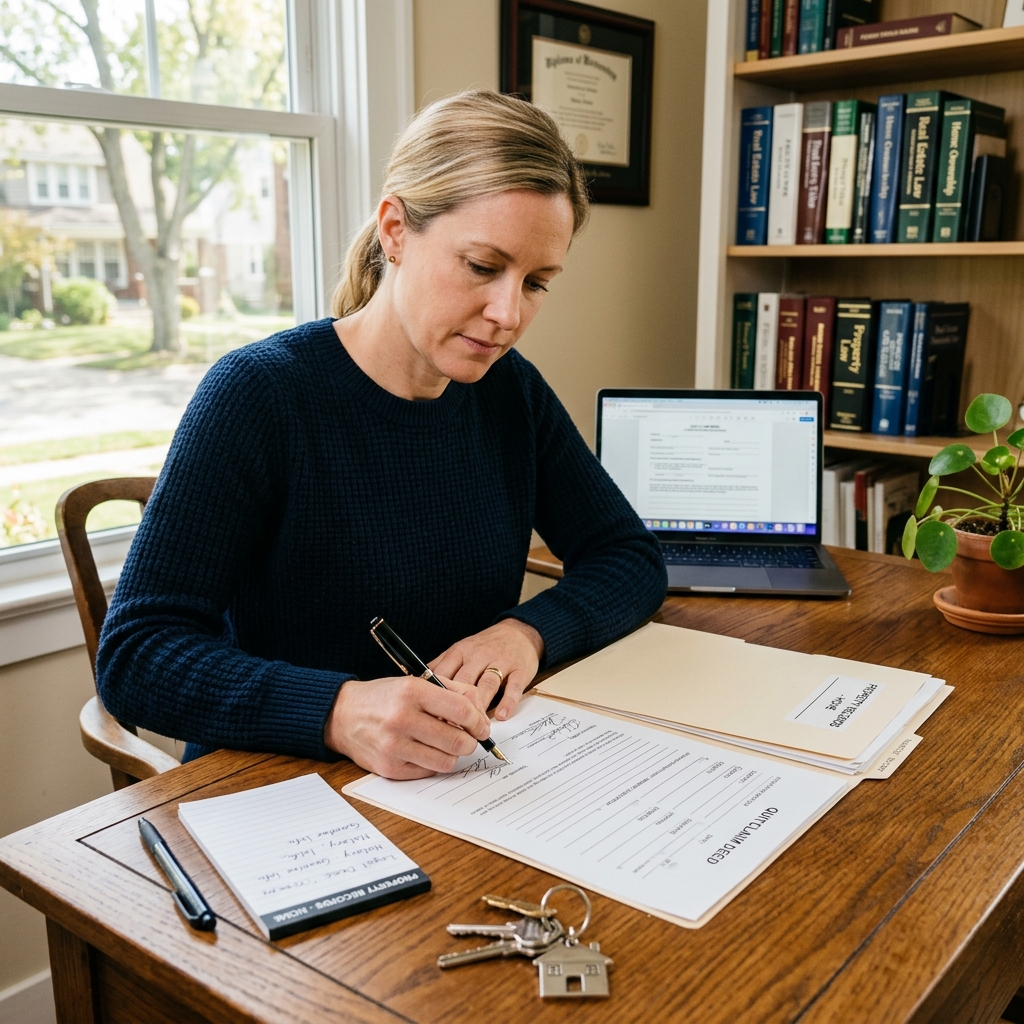
A quitclaim deed is one of the fastest ways to transfer whatever ownership interest you have in a piece of real estate to someone else, but its simplicity also comes with important risks. This guide explains what a quitclaim deed does, when it is typically used, and how to prepare, sign, and record one properly so the transfer is legally effective.
Understanding What a Quitclaim Deed Does and Does Not Do
Every deed used to transfer real estate has a specific legal function. A quitclaim deed is different from other deeds because it transfers only the interest the grantor currently has, without making any promises about the quality of that title.
In a typical quitclaim transaction:
- Grantor: The person who is giving up their interest in the property.
- Grantee: The person who is receiving the grantor’s interest.
- Subject property: The parcel of real estate described in the deed.
By signing a quitclaim deed, the grantor is essentially saying, “I transfer to you whatever rights I have in this property,” but is not promising that they actually own the property free and clear of other claims.
| Feature | Quitclaim Deed | Warranty Deed (for comparison) |
|---|---|---|
| Guarantee of clear title | None; transfers only what the grantor currently owns. | Grantor generally guarantees clear title and may defend against claims. |
| Common use cases | Family transfers, divorce, adding/removing a spouse, transfers to a trust. | Most arm’s-length sales between buyers and sellers. |
| Speed and simplicity | Usually quick and straightforward to prepare. | More formal, often involves title searches and insurance. |
| Risk to grantee | Higher; grantee may receive a title with liens or defects. | Lower; deed includes promises about title status. |
Typical Situations Where Quitclaim Deeds Are Used
Because quitclaim deeds provide no guarantee about title, they are rarely used in ordinary home purchases between unrelated buyers and sellers. Instead, they are mostly used when the parties already know and trust each other or when the transfer is not a traditional sale.
Common examples include:
- Changes in family ownership: One spouse adds the other to the title, or removes an ex-spouse after a divorce.
- Estate planning transfers: A property owner moves real estate into a living trust or transfers an interest to a child or relative.
- Correction of title issues: Cleaning up a misspelled name, updating marital status, or clarifying an ownership interest when records are inconsistent.
- Transfers between business entities and owners: Moving property between a person and an LLC they own, or between closely related entities.
In all of these situations, the grantee is often less concerned with getting formal title guarantees because they already have information about the property’s history or are not paying a market purchase price.
Key Risks and Limitations of Quitclaim Deeds
Although quitclaim deeds are useful tools, relying on them without understanding their limits can cause serious problems for the person receiving the property.
No Promises About Title Quality
A quitclaim deed does not promise that:
- The grantor is the true legal owner.
- The property is free of liens, mortgages, tax debts, or other encumbrances.
- Past title defects have been resolved.
As a result, the grantee could receive an interest that is limited, shared with others, or subject to debts or prior claims. For this reason, quitclaim deeds are generally considered inappropriate for most arms-length real estate sales where buyers need full protection.
Importance of Title Research
If you are receiving property by quitclaim, it is wise to investigate the title before accepting the deed. A basic title search can reveal:
- Existing mortgages and lines of credit secured by the property.
- Recorded liens, judgments, or tax claims.
- Recorded easements or covenants that limit use of the property.
Grantors may also choose to run a title search before signing, especially when they are not fully familiar with the property’s history. Professional title companies commonly perform these searches, and many counties make land records available online through the local clerk or recorder.
Essential Elements That Belong in a Quitclaim Deed
While the exact wording and format of a quitclaim deed varies by state, most forms include certain basic elements so that the document clearly identifies the transaction and can be accepted for recording.
- Names and addresses of the grantor and grantee, using full legal names.
- Clear identification of the property, including the street address, county, state, and legal description from a prior deed or tax record.
- Language indicating a quitclaim transfer, typically stating that the grantor transfers or quitclaims all right, title, and interest to the grantee.
- Consideration (if any), such as the amount paid or a statement that the transfer is made for nominal consideration or other value.
- Signature lines for the grantor, and often, a section for a notary public and any required witnesses.
- Space for recording details, such as the date, document number, and name/address for future tax statements.
Because counties and states may have very specific formatting expectations, some local governments provide sample forms or templates to help residents prepare deeds that meet recording standards.
Step-by-Step Process for Preparing a Quitclaim Deed
Preparing a quitclaim deed can be broken down into a series of practical steps. The process may differ slightly depending on your state’s law, but the general sequence is similar across many jurisdictions.
1. Confirm That a Quitclaim Deed Is Appropriate
- Evaluate whether the transfer involves trusted parties, such as relatives or spouses.
- Consider whether a warranty deed or other form might provide better protection for the grantee.
- If the transfer is part of a divorce judgment or estate plan, review the court order or planning documents to ensure a quitclaim deed is consistent with those instructions.
2. Gather Key Information About the Property and Parties
Before filling out a form, collect the essential details:
- Legal names and mailing addresses of the grantor and grantee.
- Property street address and county and state where the land is located.
- Legal description and parcel or tax identification number, usually taken from a prior recorded deed or property tax records.
- Any consideration (payment) involved, if applicable.
This information is critical because recording offices rely on precise identifying details to index deeds properly in the land records.
3. Obtain a Suitable Quitclaim Deed Form
You generally do not need to draft a quitclaim deed from scratch. Instead, you can usually:
- Download a standard form from a trusted legal resource or form provider.
- Use a template offered by your state or local county clerk, if available.
- Work with a licensed attorney who prepares a custom deed tailored to your situation.
Forms from official government sites or reputable legal providers are more likely to reflect current recording requirements and state law.
4. Complete the Deed Carefully
Fill in every required blank on the form, including:
- Names and addresses of the grantor and grantee.
- Accurate legal description copied exactly from the prior deed or county records.
- Language describing the consideration, such as a dollar amount or other value.
- County and state where the property is located and where the deed will be recorded.
Do not alter core legal clauses unless a lawyer advises you to do so. Even small changes in wording can affect how the deed is interpreted under state law.
5. Arrange for Signature, Notarization, and Witnesses
Most states require that deeds be signed in the presence of a notary public, and many also require one or more witnesses.
- Have the grantor sign the deed in front of the notary.
- Ensure any required witnesses also sign at the same time, if your state law requires them.
- Confirm that the notary completes the notary block, including seal, date, and jurisdiction.
Some service providers now offer electronic notarization and electronic signatures where permitted by state law, which can make the process faster for parties who cannot attend in person.
6. Record the Quitclaim Deed with the Proper Office
A quitclaim deed transfer is generally considered effective once the grantor signs and the grantee accepts the deed, but recording it promptly is critical for protecting the grantee’s interest and giving public notice.
- Submit the original signed and notarized deed to the county clerk, recorder, or equivalent land records office in the county where the property is located.
- Pay the required recording fee, which is often under $100 but varies by location.
- Provide any additional documents your jurisdiction requires, such as transfer tax forms or property disclosure statements.
Once recorded, the deed becomes part of the official land records, and the transfer is visible to other parties, including lenders, buyers, and tax authorities.
Practical Tips for Safe and Effective Use of Quitclaim Deeds
Because quitclaim deeds affect ownership rights in property that may be worth hundreds of thousands of dollars, careful preparation and planning are crucial.
- Consult a lawyer for complex situations, such as transfers involving multiple owners, substantial debts, or contested divorces. Legal advice can help ensure the deed matches court orders or settlement agreements.
- Keep copies of all documents, including prior deeds, the new quitclaim deed, and any title reports, for future reference.
- Address mortgages and liens separately; transferring title does not automatically remove a grantor’s obligation to a lender or wipe out liens.
- Coordinate with lenders if the property is subject to a mortgage. Some loan documents restrict transfers, and unauthorized deeds can trigger default or acceleration clauses.
- Consider tax implications, especially for transfers that may be treated as gifts or that change how the property is reported on income or property tax returns.
Frequently Asked Questions About Quitclaim Deeds
Do quitclaim deeds guarantee that I own the property free and clear?
No. A quitclaim deed only transfers whatever interest the grantor has at the time of the transfer and provides no guarantee that the title is free from defects, liens, or competing claims.
Is a quitclaim deed valid without recording it?
In many states, a deed can be legally effective between the grantor and grantee once it is signed and delivered, even if not recorded. However, recording is strongly recommended because it protects the grantee against subsequent claims and ensures the transfer appears in public land records.
Can I use a quitclaim deed to sell my home to a stranger?
Quitclaim deeds are generally not recommended for ordinary, arm’s-length sales where the buyer needs assurance of clear title. Standard warranty deeds or similar instruments are typically used instead, along with title insurance.
Does a quitclaim deed remove a grantor from the mortgage?
No. Deeds transfer ownership interests, not loan obligations. Even if a quitclaim deed removes the grantor’s name from the property’s title, the lender may still hold that person responsible for the mortgage unless the loan is refinanced or otherwise modified.
Where do I file a quitclaim deed?
You file a quitclaim deed with the official land records office—often called the county clerk, recorder, or register of deeds—in the county where the property is located.
References
- Quitclaim Deed: What It Is + How To Use One — LegalShield. 2023-05-10. https://www.legalshield.com/blog/quitclaim-deed
- Do-It-Yourself Quitclaim Deed (after Divorce) — Michigan Legal Help. 2022-04-01. https://michiganlegalhelp.org/resources/family/do-it-yourself-quitclaim-deed-after-divorce
- Quitclaim deed: A complete guide — Rocket Mortgage. 2024-02-15. https://www.rocketmortgage.com/learn/quitclaim-deeds
- Quit Claim Deed (Individual Form) — Rogers County Clerk. 2020-01-01. https://www.rogerscounty.org/DocumentCenter/View/1258/Quit-Claim-Deed-Individual-
- Forms: Quit Claim Deed — Tulsa County Clerk’s Office. 2021-06-01. https://countyclerk.tulsacounty.org/Home/Forms
- How To Make a Quitclaim Deed — FindLaw (via YouTube description). 2021-03-01. https://www.youtube.com/watch?v=i96nKyqdznc
Similar Articles








Read full bio of medha deb




