
Court Fight Over Student Loan Forgiveness
A closer look at the legal battle over repayment plans, forgiveness rights, and federal education policy.
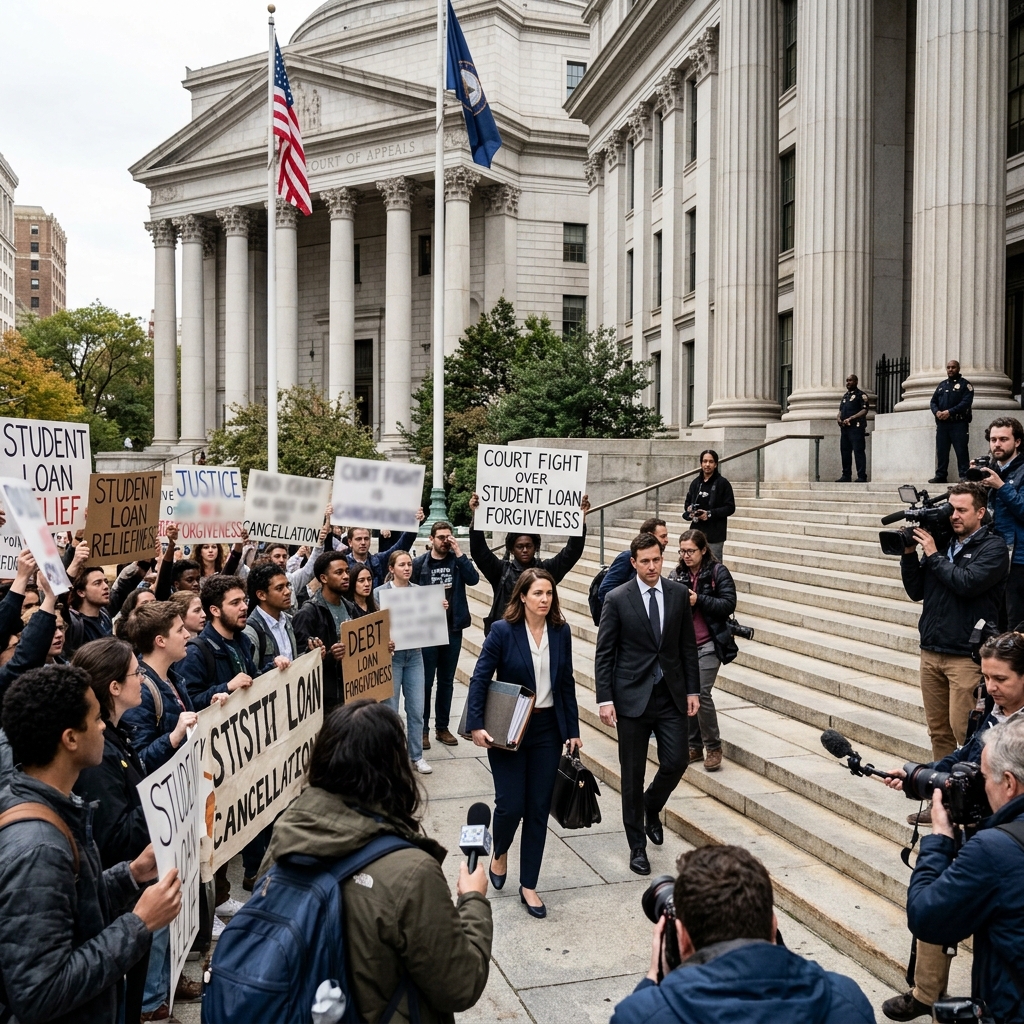
Student loan borrowers are once again in the middle of a fast-moving legal conflict over repayment options and forgiveness benefits. A new lawsuit argues that the U.S. Department of Education has unlawfully blocked relief tied to income-driven repayment plans, while the department says the dispute is effectively over and borrowers should prepare to move to other plans.
The case matters because it affects both monthly affordability and the path to eventual loan cancellation for borrowers who depend on federal repayment programs. It also illustrates how quickly student loan policy can shift when courts, agencies, and changing administrations collide.
Why the lawsuit matters
The core issue is whether eligible borrowers can still receive the benefits promised under certain repayment plans, especially when those plans are being phased out or challenged in court. According to reporting on the amended complaint, the borrowers argue that the Education Department must continue to honor the terms of the repayment framework they entered, including access to forgiveness once required payments are made.
The department’s opposing view is more blunt: it argues that the legal and administrative basis for those plans has now been resolved, making the transition to alternatives unavoidable. That clash has left borrowers trying to decide whether to wait, switch, or prepare for a forced migration to a different repayment structure.
What borrowers are asking the court to do
At the center of the dispute are borrowers who say they were promised a pathway to affordable payments and eventual cancellation, but were later cut off from those benefits. In the lawsuit described by borrower-advocacy reporting, plaintiffs seek restoration of repayment relief and continuation of access to the program features that made the plan valuable in the first place.
- They want the department to keep administering the repayment benefits tied to the program.
- They argue that eligible borrowers should not lose forgiveness opportunities because of later policy reversals.
- They also contend that borrowers should not be forced into a new repayment plan before their legal claims are resolved.
In practical terms, the plaintiffs are asking the court to preserve the promises embedded in the repayment system rather than allow the government to unwind them while litigation is still unfolding.
How the Education Department is responding
The Education Department is seeking dismissal of the lawsuit and insisting that the underlying issue is no longer live in the way the borrowers claim. In the reporting available, the department’s position is that the termination of the challenged plans has effectively been finalized and that current law no longer supports keeping them in place.
That position is important because it changes the legal framing of the case. If the court agrees with the department, the borrowers may lose not only the immediate fight over the existing plan but also the chance to preserve those benefits during the litigation process. If the borrowers succeed, the agency could be required to restore or continue treatment that it has already begun to dismantle.
Where the SAVE plan fits into the dispute
The dispute is tied closely to the SAVE plan, a repayment option designed to make monthly bills more manageable for many federal borrowers. Reporting on the case indicates that the department is preparing to move borrowers out of SAVE and into other repayment plans, including standard repayment if they do not make a choice within a set period.
That transition is not just administrative. For borrowers relying on low monthly payments, the plan switch can change the amount owed each month, the length of repayment, and the timing of any forgiveness benefit. The legal challenge therefore concerns both immediate cash flow and the broader promise of future debt relief.
| Issue | Borrowers’ position | Department’s position |
|---|---|---|
| Plan access | Eligible borrowers should retain the repayment benefits they were promised | The plan has been ended and can no longer be treated as ongoing |
| Forgiveness | Qualifying borrowers must still receive cancellation benefits | The legal basis for those benefits is disputed or concluded |
| Transition to other plans | Borrowers should not be forced to switch while litigation continues | Borrowers should prepare to move to other repayment options |
Why the court history matters
This dispute did not arise in a vacuum. The reporting indicates that legal conflict over the plan has already gone through major developments, including settlement activity and appellate direction that shaped the current posture of the case. Those earlier events matter because they help explain why the department now says the controversy is resolved, even while borrowers argue that the effects of the changes are still unfolding.
Student loan litigation often moves in overlapping layers: a rule is issued, challenged, paused, revised, or vacated, and then borrowers have to adjust again. That pattern creates real uncertainty for people trying to manage their finances month to month. It also means that even a “final” government decision may still be contested if borrowers believe that decision was unlawful or exceeded agency authority.
How this affects borrowers right now
For borrowers, the practical question is what to do while the case remains active. The available reporting suggests that borrowers in forbearance or in the process of being moved out of SAVE should monitor official notices closely and evaluate other income-driven repayment options if they want to keep affordable monthly payments.
- Borrowers may be required to select a different repayment plan within a limited window.
- If they do nothing, they could be placed into a standard repayment plan automatically.
- Switching plans can affect monthly payment size and the pace toward forgiveness.
That combination of legal uncertainty and administrative deadlines can be especially disruptive for borrowers who planned their household budgets around lower income-based payments.
The bigger legal question behind the case
Although the case focuses on one repayment program, the broader question is how much flexibility the federal government has when it changes or ends student loan benefits. Borrowers argue that once relief is promised through a lawful program, the government cannot simply erase it without consequence. The department, by contrast, appears to argue that policy and legal developments have removed the underlying authority for the challenged benefits.
That issue is not unique to student loans. Courts often have to decide whether an agency may alter benefits that affected people have already relied on, especially when the program in question was created through regulation rather than statute alone. Here, the stakes are unusually high because the financial consequences spread across millions of borrowers.
How this compares with other forgiveness disputes
The current fight fits into a larger national pattern of legal battles over federal forgiveness programs. Other cases have challenged how the Education Department handles borrower defense claims, PSLF eligibility, and the rules governing access to cancellation. Those cases show that student debt relief is often shaped as much by litigation as by legislation.
In one recent example, a federal court struck down an Education Department rule affecting Public Service Loan Forgiveness eligibility, finding the agency’s approach unlawful. In another context, borrower-advocacy groups have sued over access to affordable repayment and forgiveness pathways. Together, these disputes show that the legal status of federal relief programs can change quickly, often leaving borrowers caught in the middle.
What the lawsuit could mean going forward
If borrowers succeed, the ruling could slow or block the transition out of the challenged repayment plan and preserve access to forgiveness benefits for those who qualify. If the department prevails, borrowers may have to move into alternative repayment arrangements and rely on those plans for any future relief.
Either outcome would likely influence future litigation over student debt policy. A ruling in favor of borrowers could strengthen arguments that the government must honor repayment promises once they are embedded in a lawful program. A ruling for the department could reinforce the view that agencies have broad discretion to unwind contested initiatives once the legal foundation shifts.
Questions borrowers are asking
Many borrowers are focused on the same practical issues: whether they will lose their current payment amount, whether they can still qualify for forgiveness, and whether they must act quickly to avoid defaulting into a less favorable plan. Because the legal landscape is changing, these questions do not have simple answers.
The safest approach is to watch official notices from the Education Department and compare available repayment options carefully. Borrowers who are already on an income-driven plan may need to think not only about immediate affordability, but also about how each option affects the long-term timeline for cancellation.
Frequently asked questions
Is the dispute only about one repayment plan?
No. While the current fight centers on a specific repayment framework, the dispute also raises broader questions about how the government can change student loan forgiveness rules after borrowers have already relied on them.
Can borrowers be forced into another plan?
According to the reporting, the department plans to move borrowers into other repayment options if they do not choose one themselves within the stated transition period.
Does the lawsuit guarantee forgiveness will return?
No. The lawsuit asks the court to require continued access to relief, but the outcome depends on how the judge interprets the department’s authority and the status of the challenged plans.
Why is this case important beyond student loans?
It shows how federal agencies can reshape major benefits through rule changes and litigation, and how courts decide whether those changes are lawful when people have already begun relying on the original rules.
References
- Student Loans Must Be Forgiven And Cannot Be Kicked Off SAVE, Says Amended Lawsuit — Forbes. 2026-06-25. https://www.forbes.com/sites/adamminsky/2026/06/25/student-loans-must-be-forgiven-and-cannot-be-kicked-off-save-plan-says-amended-lawsuit/
- AFT v. U.S. Department of Education — Protect Borrowers. 2025-03-18. https://protectborrowers.org/litigation/aft-v-u-s-department-of-education/
- Court Declares Unlawful the Department of Education’s Rule Restricting Public Service Loan Forgiveness Eligibility — American Immigration Council. 2026-05-??. https://www.americanimmigrationcouncil.org/press-release/court-declares-unlawful-the-department-of-educations-rule-restricting-public-service-loan-forgiveness-eligibility/
- Lawsuit Seeks to Force Department of Education to Implement SAVE Student Loan Plan — Student Debt Crisis Center. 2025-??-??. https://www.studentdebtcrisis.org/post/lawsuit-seeks-to-force-department-of-education-toimplement-save-student-loan-plan
- Borrower Defense Updates — Federal Student Aid, U.S. Department of Education. 2026-??-??. https://studentaid.gov/announcements-events/borrower-defense-update
- Sweet v. McMahon Settlement — Federal Student Aid, U.S. Department of Education. 2026-??-??. https://studentaid.gov/announcements-events/sweet-settlement
Similar Articles








Read full bio of Sneha Tete




