
Contractor or Employee? Understanding Worker Classification
Learn how to distinguish independent contractors from employees, why classification matters, and how to reduce costly legal and tax risks.
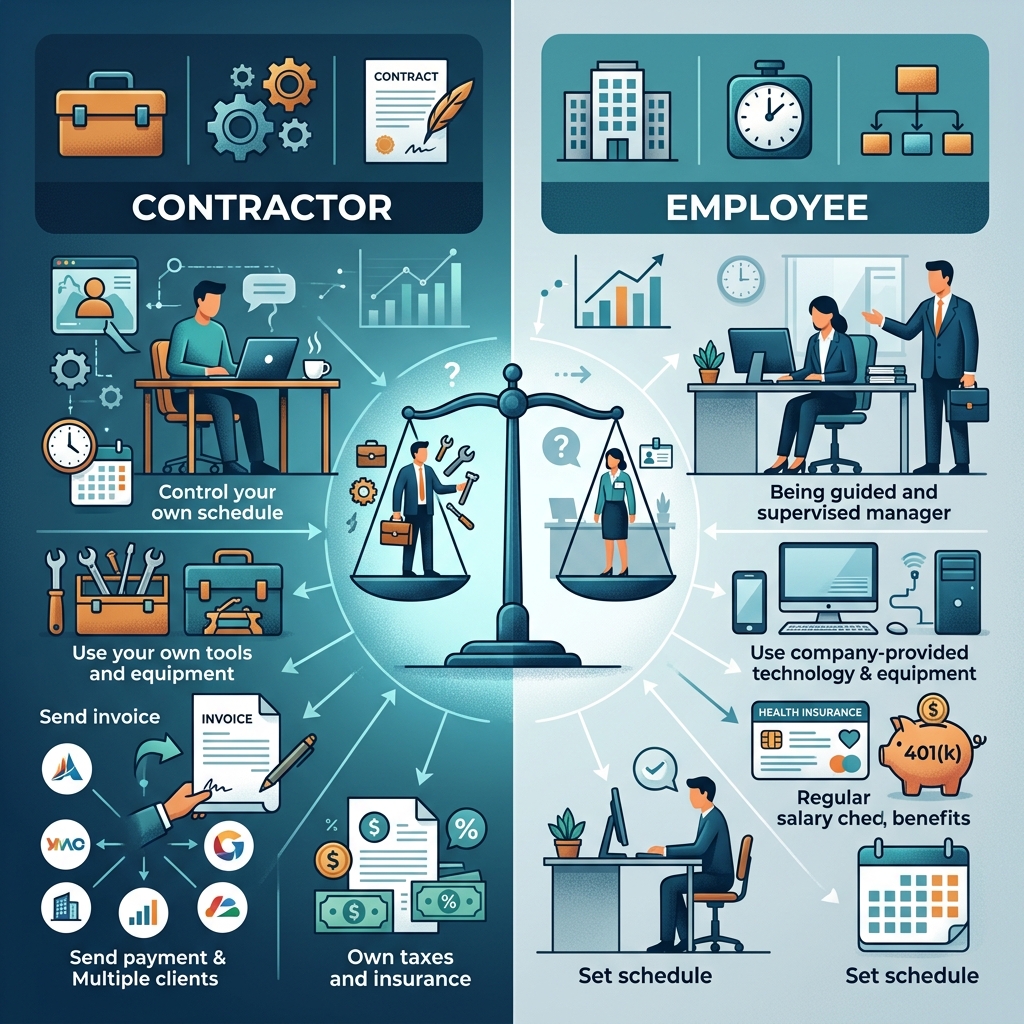
Correctly deciding whether a worker is an employee or an independent contractor is one of the most important compliance tasks for any business. Misclassification can trigger back taxes, wage claims, penalties, and even litigation from workers and government agencies. This guide explains how regulators look at worker status, how misclassification happens, and what you can do to reduce your risk.
Why Worker Classification Matters
At the federal level, the U.S. Department of Labor, the Internal Revenue Service, and state agencies all use worker classification to decide which laws apply and who is responsible for taxes and benefits. If a worker is legally an employee, your business may owe minimum wage, overtime, payroll taxes, unemployment insurance, and other protections. Independent contractors generally do not receive these protections or benefits and handle their own tax obligations.
- Employees are covered by minimum wage and overtime rules under the Fair Labor Standards Act (FLSA).
- Independent contractors are not covered by the FLSA’s wage and hour provisions.
- Employee status impacts payroll tax withholding, Social Security and Medicare contributions, and unemployment insurance obligations.
- Misclassification can lead to back wages, unpaid taxes, interest, and penalties.
Because no single factor controls the outcome, classification is often complex. Regulators look at the overall relationship between the business and the worker rather than job titles or contract labels.
Core Legal Frameworks for Worker Status
Different agencies apply different tests, but they are all designed to answer a similar question: Is the worker economically dependent on the business like an employee, or are they truly in business for themselves like an independent contractor?
Department of Labor: Economic Realities Test
The U.S. Department of Labor’s FLSA guidance focuses on the economic realities of the working relationship. It considers whether the worker depends on the employer for work or operates an independent business.
Key economic realities factors include:
- Opportunity for profit or loss based on the worker’s own managerial skill.
- Investments by the worker compared to the employer (e.g., tools, equipment, marketing).
- Permanence of the relationship—ongoing, indefinite work suggests employee status.
- Nature and degree of control the employer exerts over the work.
- Whether the work is integral to the business’s core operations.
- Skill and initiative—whether the worker uses specialized skills with business initiative or simply follows employer training.
No single factor is decisive; regulators look at the entire working arrangement to decide whether someone is an employee or contractor.
IRS: Control and Independence Framework
The Internal Revenue Service focuses on whether the business has the right to direct and control how work is performed. It groups evidence into three categories:
- Behavioral control: Does the company direct what the worker does and how they do the job?
- Financial control: Who sets pay, reimburses expenses, and provides tools and equipment?
- Type of relationship: Are there employee-type benefits, long-term expectations, or work that is central to the business?
Even if a contract calls someone a “contractor,” the IRS may treat them as an employee if the business controls the details of their work and the relationship looks like traditional employment.
| Category | Indicative of Employee | Indicative of Contractor |
|---|---|---|
| Behavioral control | Detailed instructions, required training, set schedule | Worker chooses methods, minimal supervision, sets own schedule |
| Financial control | Paid salary or hourly wage; expenses reimbursed; employer tools | Paid per project or invoice; unreimbursed expenses; worker-owned tools |
| Type of relationship | Benefits, ongoing relationship, work core to business | Short-term or project-based relationship; no benefits |
Employees vs Contractors: Practical Differences
Understanding day-to-day differences can help you spot misclassification risks. These differences are general patterns, not strict rules, but they reflect how regulators view worker status.
Common Characteristics of Employees
- Work regularly for a single employer, often full-time or on a steady schedule.
- Follow employer policies, procedures, and instructions about when, where, and how to work.
- Perform work that is integrated into the company’s core operations.
- Receive employee benefits such as health insurance, paid leave, or retirement plans.
- Have federal employment taxes withheld from wages reported on a W-2.
Common Characteristics of Contractors
- Operate an independent business and often work for multiple clients.
- Control how to complete the work and may set their own schedule.
- Provide their own tools, equipment, or specialized services.
- Are typically paid per project, milestone, or invoice rather than a salary.
- Receive a Form 1099-NEC and manage their own tax withholding.
- Are usually not covered by employee benefit plans or unemployment insurance.
When a Contractor Starts Looking Like a Full-Time Employee
Many businesses engage long-term contractors and gradually integrate them into daily operations. Over time, a worker who started on a project basis may appear indistinguishable from an employee. This is where misclassification risk is highest.
Warning signs that a contractor may actually be an employee under the law include:
- Full-time commitment: The worker devotes substantially full time to your business, limiting their ability to serve other clients.
- Long-term or indefinite relationship: Engagements continue for years without clear project end dates.
- Central role: The worker performs tasks integral to your core services or production.
- Managerial supervision: A manager directs daily tasks, hours, and work methods.
- Use of company systems: The worker uses employer email, systems, and badges like regular staff.
- Exclusive work: The contractor does not maintain other clients and relies on your business for income.
Even if both parties prefer a contractor label, regulators can reclassify the worker as an employee based on these factors.
Compliance Checklist for Businesses
While only a legal analysis can definitively determine worker status, businesses can use a practical checklist to identify potential issues and prepare for consultation with counsel or government agencies.
Key Questions to Ask
- Do you control how the worker performs their tasks, or only the end result?
- Is the worker free to take on other clients, including your competitors?
- Does the worker invest in their own tools, training, and marketing, or rely entirely on you?
- Is the relationship tied to a specific project with clear start and end dates, or is it ongoing?
- Is the work central to your core business services or more peripheral?
- Do you provide employee-like benefits or treat the worker similarly to staff in practice?
If you answer “yes” to several questions indicating control, permanence, or integration, you may need to treat the worker as an employee and adjust payroll, benefits, and compliance practices accordingly.
Documentation and Proactive Steps
Regulators expect businesses to carefully evaluate and document worker classification decisions. Good documentation can help demonstrate that you took reasonable steps to comply.
- Keep written agreements describing the nature of the work and degree of independence.
- Document who provides tools, sets schedules, and controls work methods.
- Review long-term contractor relationships annually for signs of de facto employment.
- Consult legal counsel when roles change or when contractors take on core responsibilities.
- Consider filing IRS Form SS-8 if you need an official determination of worker status.
Risks and Consequences of Misclassification
Misclassifying employees as independent contractors can have serious legal and financial consequences. Agencies may audit payroll records and reclassify workers, leading to back payments and penalties.
Common consequences include:
- Back wages: Payment of unpaid minimum wage or overtime if workers were treated as contractors but legally qualify as employees.
- Retroactive taxes: Liability for unpaid federal employment taxes, Social Security, and Medicare contributions.
- Unemployment insurance: Retroactive unemployment insurance taxes owed if workers were actually employees under state law.
- Penalties and interest: Additional costs assessed by tax authorities and labor agencies.
- Civil claims: Lawsuits from workers seeking benefits and wage protections denied due to misclassification.
Some state laws include strong presumptions that workers are employees unless strict conditions for independent contractor status are met, further increasing the importance of careful classification.
Balancing Flexibility and Compliance
Independent contractors can provide valuable flexibility, specialized expertise, and project-based support. However, the more closely a contractor’s role resembles a standard employee, the greater the compliance risk. Businesses must balance operational needs with legal requirements.
Good practices for managing this balance include:
- Use contractors for clearly defined projects, not ongoing core roles.
- Avoid requiring contractors to work set hours on-site unless truly necessary.
- Ensure contractors retain freedom to choose how to accomplish tasks.
- Review whether the contractor markets services to other clients and maintains an independent business presence.
- Regularly audit your workforce mix with HR, finance, and legal teams.
Frequently Asked Questions
1. Can someone be a contractor even if they work full-time?
Full-time hours alone do not automatically decide worker status. The IRS notes that hiring for either a full-time or part-time position does not by itself determine classification; it depends on control and the overall relationship. However, if a worker devotes substantially full time to your business and is subject to day-to-day direction, regulators may treat them as an employee.
2. Does a written contract calling someone a “contractor” settle the issue?
No. Contracts matter, but regulators look beyond labels to the actual working arrangement. If you control how work is performed, provide benefits, and maintain an ongoing relationship, the worker may be considered an employee regardless of contract language.
3. Are independent contractors ever protected by labor laws?
Independent contractors are not considered employees under the FLSA and therefore are not covered by its wage and hour provisions. However, they may have rights under other laws, can negotiate contract terms, and in some cases can join unions even though they are not employees under federal labor statutes.
4. What should I do if I am unsure how to classify a worker?
You can review the Department of Labor’s economic realities factors and the IRS control framework, then document how each factor applies. If uncertainty remains, the IRS allows businesses or workers to file Form SS-8 to request an official determination of worker status for federal employment tax purposes. Consulting an employment-law attorney can also help you interpret overlapping federal and state rules.
5. Can a misclassified worker challenge their status?
Yes. Workers can file complaints with the Department of Labor or state agencies if they believe they are wrongly treated as contractors, and they may also raise classification issues with the IRS or through private legal claims. Agencies can then investigate and, if warranted, reclassify the worker and assess back wages and taxes.
References
- Fact Sheet #13: Employment Relationship Under the Fair Labor Standards Act (FLSA) — U.S. Department of Labor, Wage and Hour Division. 2024-01-10. https://www.dol.gov/agencies/whd/fact-sheets/13-flsa-employment-relationship
- Independent Contractor (Self-Employed) or Employee? — Internal Revenue Service. 2023-09-28. https://www.irs.gov/businesses/small-businesses-self-employed/independent-contractor-self-employed-or-employee
- Employee or Independent Contractor? — Tennessee Department of Labor & Workforce Development. 2022-06-15. https://www.tn.gov/workforce/employers/tax-and-insurance-redirect/unemployment-insurance-tax/employee-or-contractor.html
- Independent Contractor vs. Employee: Updated IRS Rules — Cherry Bekaert LLP. 2021-03-16. https://www.cbh.com/insights/articles/employee-vs-contractor-rules-updated-by-irs/
- My Employer Says I Am an Independent Contractor. What Does This Mean? — Communications Workers of America. 2018-05-01. https://cwa-union.org/about/rights-on-job/legal-toolkit/my-employer-says-i-am-independent-contractor-what-does-mean
Similar Articles








Read full bio of Sneha Tete




