Drug Screening in the Age of Legal Marijuana
How legalization is reshaping workplace testing, hiring decisions, and impairment rules.
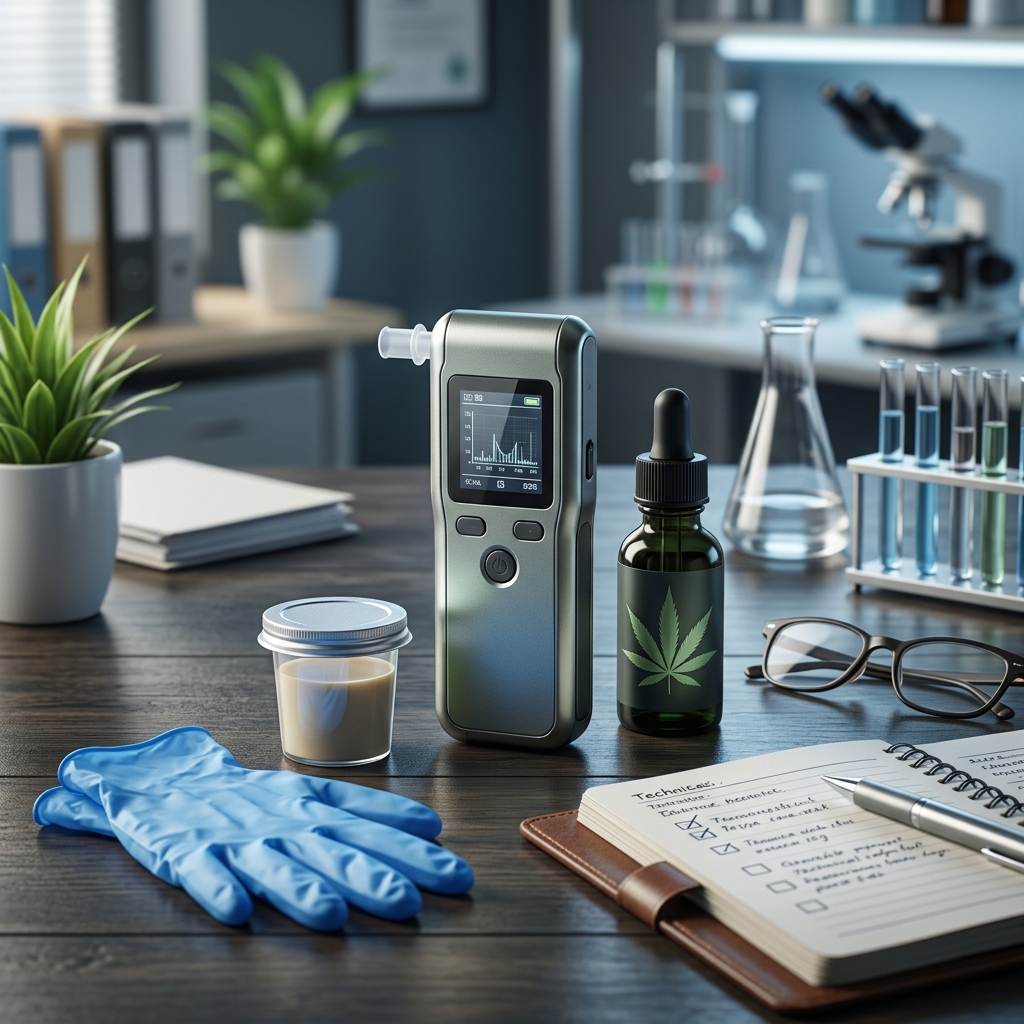
As marijuana laws have changed across the United States, workplace drug screening has become more complicated for both employers and employees. A test result that once seemed straightforward can now raise difficult questions about off-duty conduct, workplace safety, and what counts as impairment.
Employers still have strong interests in maintaining safe, productive workplaces. At the same time, many states now limit how far an employer can go when a screening test only shows past cannabis use rather than actual on-the-job impairment. The result is a legal landscape that is more fragmented, more state-specific, and more dependent on the details of the testing method itself.
Why marijuana testing became a legal gray area
Traditional workplace drug screens were built around the idea that a positive result could be treated as a sign of current use or misconduct. That approach worked more easily when marijuana was broadly illegal. Once states began legalizing medical and recreational cannabis, however, a positive test no longer told the full story.
Many common tests detect non-psychoactive metabolites, which can remain in the body long after the effects of cannabis have worn off. In practical terms, that means an employee may test positive even when the person is not impaired at work and may have used cannabis lawfully outside work hours. California’s employment protections for off-duty cannabis use, for example, specifically limit adverse action based only on non-psychoactive metabolites. New York and New Jersey likewise protect off-duty use while preserving employer authority to address impairment on the job.
What employers can still control
Legalization does not eliminate workplace authority over drug and alcohol rules. Employers can still prohibit employees from being impaired at work, using marijuana during work time, or bringing cannabis onto the job in violation of policy. They can also require testing where state law permits it and where the employer has a legitimate workplace reason, such as post-accident review or reasonable suspicion of impairment.
In regulated or safety-sensitive industries, the rules are often stricter. Federal requirements may still override state legalization, especially for transportation, aviation, or jobs tied to federal security or licensing requirements. For those workers, marijuana use can remain disqualifying even in states with broad recreational cannabis laws.
Testing positive is not the same as being impaired
One of the most important distinctions in modern cannabis policy is the difference between use and impairment. A test can identify prior exposure, but it may not reliably show whether a person was unable to perform the job safely at the time the test was taken. That gap is the reason many employers and lawmakers have shifted toward standards that focus on observable behavior rather than a lab result alone.
New Jersey law, for instance, allows employers to act when cannabis use is tied to documented workplace impairment, not merely because a worker used cannabis off duty or tested positive for metabolites. New York similarly permits action when a worker is impaired on the job and shows specific articulable symptoms that reduce performance.
State laws now differ more than ever
There is no single national rule for marijuana screening in employment. Instead, employers must navigate a patchwork of state protections and exceptions. Some states broadly protect off-duty cannabis use, while others continue to allow employers to rely on positive THC tests in hiring and discipline decisions.
| State approach | Typical rule | Common exception |
|---|---|---|
| Protective states | Off-duty use cannot be the sole basis for refusal to hire or discipline | Impairment at work, safety-sensitive roles, or federal requirements |
| Moderate restriction states | Testing may be limited to specific circumstances such as accidents or suspicion | Documented impairment or regulated positions |
| Permissive testing states | Employers may still rely on positive cannabis tests more freely | Medical protections or anti-discrimination rules may still apply |
California has moved strongly toward employee protection by restricting adverse action based on off-duty use and certain metabolite tests. Washington, New York, and New Jersey also recognize limits on employer reliance on off-duty cannabis use, while still allowing action for on-duty impairment or specific high-risk jobs.
Choosing the right testing method matters
Not all drug tests are equally useful in a legalized-marijuana workplace. Some methods are better at detecting historical use, while others are better suited to identifying recent use. Employers concerned about current intoxication increasingly look to tools that have a shorter detection window, because these are more likely to reflect recent consumption rather than lawful weekend use.
Oral fluid testing is one example of a shorter-window method that may be more closely tied to recent use. Even so, no test perfectly measures impairment. That means the smartest testing program is usually one that combines testing with supervisor observation, written policy language, and a documented process for responding to safety concerns.
Building a policy that can survive legal scrutiny
A modern workplace policy should be written with precision. Vague language about “impairment” can create confusion if the policy does not explain how impairment will be identified, who will make that judgment, and what happens after a positive result. Employers also need to make sure policies reflect current state law and are updated whenever legislation changes.
- State clearly which workers are covered by the policy.
- Explain when testing may occur, such as after an accident or based on reasonable suspicion.
- Define prohibited conduct, including use during work hours or possession on company property.
- Describe what signs supervisors should document before requesting a test.
- Identify the consequences of policy violations and the review process before discipline.
Employers should also train managers to recognize signs of possible impairment and to record facts carefully. Common signs may include coordination problems, unusual behavior, slowed reaction time, or the odor of cannabis, but any response should be tied to documented observations rather than assumptions.
When safety-sensitive work changes the rules
Some jobs justify more restrictive drug policies because the risks of impairment are much higher. These positions may involve public safety, heavy equipment, driving, aviation, or environments where a lapse in judgment can cause serious harm. In such settings, employers often have more legal room to test and to require a drug-free standard, especially when federal law applies.
That said, safety-sensitive does not mean employers can act without structure. Policies should still identify the job categories involved and explain why a stricter standard applies. A blanket rule applied carelessly across the entire workforce can create unnecessary legal exposure if the law only supports more limited testing for certain roles.
How employees should read a cannabis testing policy
Workers should not assume that legalization gives them full protection in every workplace. The rules depend on the state, the employer’s industry, the job duties, and whether federal law is involved. An employee who uses marijuana legally off duty may still face discipline if the position is safety-sensitive or if the worker is visibly impaired on the job.
Employees who are subject to a test should ask several practical questions:
- Does the employer test only after accidents or also before hiring?
- Does the policy distinguish between off-duty use and on-duty impairment?
- Are confirmatory retests or second opinions available?
- Does the role fall under a state exemption or federal requirement?
Understanding the policy before an incident happens is often the best way to avoid confusion later.
Common mistakes employers make
Many workplace disputes over cannabis testing come from outdated policies rather than deliberate wrongdoing. Employers often rely on old forms, broad zero-tolerance language, or testing rules written before legalization became widespread. Those policies may no longer match current law.
Another common mistake is treating every positive result as proof of misconduct. Because cannabis metabolites can remain detectable long after use, a positive result alone may not justify termination where state law requires some showing of impairment or on-duty conduct. Employers also run into trouble when supervisors are not trained to document actual signs of impairment before sending an employee for testing.
What a balanced approach looks like
The most defensible marijuana screening strategy is not necessarily the most aggressive one. It is the one that aligns testing with real workplace risk. That usually means focusing on safety-sensitive roles, using clear written standards, training supervisors, and reserving discipline for documented impairment or lawful policy violations.
A balanced approach protects productivity without pretending that every positive cannabis result tells the same story. It also gives employers a better chance of staying compliant as more states continue to revise their employment laws.
Frequently asked questions
Can an employer still test for marijuana if it is legal in the state?
Yes, but the answer depends on state law, the type of test, the job involved, and whether the test is tied to a lawful reason such as reasonable suspicion or a post-accident investigation.
Does a positive THC test always mean an employee was impaired?
No. Many standard tests detect metabolites that can remain in the body long after the effects have faded, so a positive result may show prior use rather than current impairment.
Can employers prohibit cannabis use during work hours?
Yes. Even in states with strong employee protections, employers generally may bar use during work time and may discipline workers who are impaired while on duty.
Are safety-sensitive jobs treated differently?
Often yes. Safety-sensitive and federally regulated roles frequently allow stricter testing and stronger limits because the risk to the public or to operations is greater.
What should employers update first?
They should start with the written policy, then train supervisors, review testing vendors, and confirm that disciplinary procedures match current state and federal law.
Practical takeaways for modern workplaces
The rise of legalized marijuana has not ended workplace drug screening, but it has changed what screening can fairly prove. Employers now need to distinguish between lawful off-duty use, test results that reflect older exposure, and true on-the-job impairment. Employees, meanwhile, need to understand that legalization does not erase every workplace restriction.
In practice, the safest course is for employers to keep policies current, use the least ambiguous testing methods available, and respond to documented workplace behavior rather than relying on outdated assumptions about cannabis results.
References
- New Rules For California Employers Testing for Marijuana Use Are Approaching Fast — CDF Labor Law LLP. 2023-10-18. https://www.cdflaborlaw.com/blog/new-rules-for-california-employers-testing-for-marijuana-use-are-approaching-fast
- The Impact of Marijuana Legalization on Workplace Drug Testing — WorkDrugSafe. 2024-02-01. https://www.workdrugsafe.com/us/en/knowledge-insights/impact-marijuana-legalization-workplace-drug-testing.html
- Pre-Employment THC Drug Testing Laws: State-by-State Guide — Verified First. 2026-01-15. https://verifiedfirst.com/blog/pre-employment-thc-drug-testing-laws/
- Drug Testing & Employee Rights in NJ — Wilentz. 2025-11-20. https://www.wilentz.com/personal/employee-rights/drug-testing
- Cannabis Legalization and Employment Protections — Marijuana Policy Project. 2024-09-10. https://www.mpp.org/issues/legalization/cannabis-legalization-and-employment-protections/
- Monitoring Marijuana Usage in the Workplace — Sanford OccMed. 2024-06-12. https://occmed.sanfordhealth.org/resources/article-library/monitoring-marijuana-usage-in-the-workplace
- Adult Use Cannabis and the Workplace — New York State Department of Labor. 2024-03-05. https://dol.ny.gov/adult-use-cannabis-and-workplace-p420
Similar Articles








Read full bio of Sneha Tete