
Construction Safety Training Under OSHA’s General Duty Clause
Understanding how OSHA’s General Duty Clause turns construction safety training into a legal obligation, not just a best practice.
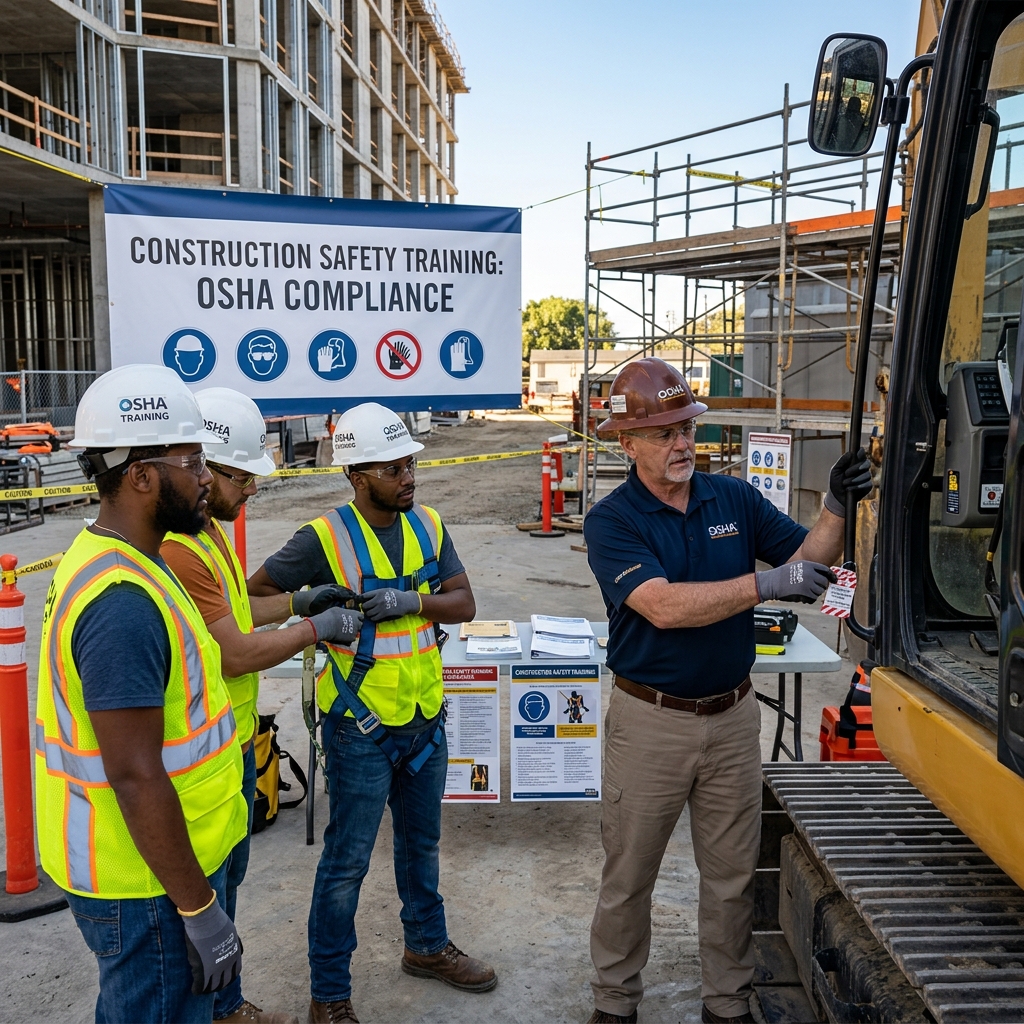
The construction industry faces some of the most serious workplace hazards, ranging from falls and struck-by incidents to electrical shocks and exposure to harmful substances. In this environment, safety training is not only a moral responsibility – it is a legal requirement grounded in the Occupational Safety and Health Act (OSH Act) and, in particular, OSHA’s General Duty Clause.
This article explains how the General Duty Clause applies to construction safety training, why training is central to compliance, and what practical steps employers can take to meet their obligations and reduce risk on job sites.
OSHA’s General Duty Clause: The Legal Foundation
The General Duty Clause is found in Section 5(a)(1) of the OSH Act. It requires every employer to provide “employment and a place of employment which are free from recognized hazards that are causing or are likely to cause death or serious physical harm” to employees.
Although OSHA publishes detailed standards for construction, the General Duty Clause plays a critical role when a particular hazard is not explicitly covered by a specific regulation, or when an employer fails to address a clearly recognized danger on a job site.
Key Elements of a General Duty Clause Violation
OSHA generally must show four elements to cite an employer under the General Duty Clause:
- The employer failed to keep the workplace free from a hazard to which employees were exposed.
- The hazard was recognized (either by the employer, the industry, or through common sense and published guidance).
- The hazard was causing or likely to cause death or serious physical harm.
- A feasible and useful method existed to correct or materially reduce the hazard.
In the construction context, safety training is often a “feasible and useful” method of abating hazards. When employers fail to train workers adequately, they can be exposed to General Duty Clause citations if a preventable incident occurs.
Why Construction Safety Training Is a Legal Imperative
Construction work involves frequent interaction with heavy equipment, elevated work areas, energized systems, and hazardous materials. OSHA data consistently show that construction has a higher rate of serious injuries and fatalities compared with many other industries. Training provides workers with the knowledge to identify hazards, follow safe procedures, and use protective measures effectively.
Under OSHA regulations, employers must comply not only with specific standards, but also with broader training requirements and the General Duty Clause. OSHA’s training guidance document, Training Requirements in OSHA Standards, emphasizes that training is a fundamental component of an effective safety and health program and directly tied to the obligation to prevent recognized hazards.
How Training Supports Compliance With the General Duty Clause
Construction safety training supports General Duty Clause compliance in several ways:
- Hazard recognition: Workers learn how to spot fall risks, unstable structures, unsafe scaffolds, and other dangerous conditions before an incident occurs.
- Procedural knowledge: Training explains standard operating procedures, lockout/tagout practices, trench safety requirements, and proper material handling methods that mitigate risks.
- Use of protective equipment: Training teaches correct selection, fitting, and use of personal protective equipment (PPE), such as hard hats, hearing protection, respiratory protection, and fall arrest systems.
- Emergency response: Workers learn what to do when an incident occurs, minimizing the severity of injuries and preventing further harm.
- Reinforcement of safety culture: Ongoing training reinforces expectations, accountability, and the employer’s commitment to safety.
Because the General Duty Clause requires employers to address recognized hazards, it is difficult to argue that a hazard was not recognized if industry standards, prior incidents, or OSHA publications clearly identify the risk and recommend training as a control measure.
Relevant OSHA Construction Standards and Training Obligations
While the General Duty Clause is broad, OSHA also provides specific construction standards that require training. For example, OSHA’s construction safety and health regulations (29 CFR Part 1926) include provisions that require employers to permit only qualified, trained employees to operate equipment and machinery.
OSHA’s training requirements guidance outlines minimum training durations and topics for workers involved in hazardous substance removal and emergency response, such as 24- or 40-hour courses, plus annual refresher training. These requirements highlight OSHA’s expectation that training be systematic, documented, and appropriate to the level of risk.
| Area | Training Focus | Legal Basis |
|---|---|---|
| Equipment operation | Qualified operators, safe use, inspections | OSHA construction standards (1926.20 – general safety and health provisions) |
| Hazardous substance work | Hazard recognition, PPE, decontamination | OSHA training requirements guidance, including minimum hours and refresher training |
| Emergency response | Incident command, evacuation, medical response | OSHA standards requiring emergency plans and training |
When employers design construction safety training, they must meet these specific regulatory requirements and the overarching duty to prevent recognized hazards under Section 5(a)(1).
Designing an Effective Construction Safety Training Program
A legally sound training program does more than deliver generic safety messages. It should be tailored to the actual tasks, equipment, and environmental conditions workers face on construction sites. The following components help align training with OSHA expectations and the General Duty Clause.
1. Conduct a Thorough Hazard Assessment
Employers should begin by systematically identifying and evaluating hazards present on current and anticipated projects. This includes:
- Reviewing previous incidents, near-misses, and inspection reports.
- Analyzing the types of work performed (e.g., excavation, roofing, steel erection, demolition).
- Examining equipment, materials, and site conditions (e.g., weather, traffic, adjacent structures).
- Consulting OSHA standards and guidance to understand commonly recognized hazards.
Findings from this assessment should drive the structure and content of training modules.
2. Align Training Content With Job Roles
Not all workers need the same level of training. Employers should create differentiated training paths:
- General site orientation: For all workers, covering basic rules, PPE use, reporting procedures, and emergency plans.
- Task-specific training: For employees performing specialized work such as crane operation, confined space entry, or electrical installations.
- Supervisory training: For forepersons and managers, covering hazard recognition, enforcement of safety rules, and incident investigation.
- Refresher and upgrade training: For workers taking on new responsibilities or using new equipment.
OSHA’s guidance on required training hours for certain hazardous operations underscores the need for depth and role-based instruction.
3. Use Multiple Instructional Methods
Effective training blends different formats to reach workers with varied learning styles:
- Instructor-led classroom or toolbox talks.
- Hands-on demonstrations and practice with equipment.
- Visual aids such as diagrams, photos, and videos.
- Scenario-based exercises and simulations.
- Online or computer-based modules, where appropriate.
OSHA-authorized outreach training courses, such as 10-hour or 30-hour construction programs offered through recognized providers, can complement employer-led training, but do not replace the duty to provide site-specific instruction.
4. Verify Competence, Not Just Attendance
Simply gathering workers in a room and handing out sign-in sheets is not enough to demonstrate compliance. Employers should verify that workers understand and can apply what they have learned by:
- Using quizzes or knowledge checks.
- Observing workers performing tasks and providing feedback.
- Documenting evaluations and corrective coaching.
- Restricting certain tasks to workers who have demonstrated competence.
OSHA expects that only trained and qualified employees operate construction machinery and equipment, which means competence must be demonstrable and documented.
5. Maintain Training Records
Detailed records serve multiple purposes: they help track which employees have completed required training, support continuous improvement, and provide evidence of compliance if OSHA conducts an inspection or investigates an incident.
Records should include:
- Training topics and objectives.
- Dates, durations, and locations of sessions.
- Names and qualifications of trainers.
- Lists of attendees and job roles.
- Assessment results or competency evaluations.
While the General Duty Clause does not prescribe a specific recordkeeping format, thorough documentation demonstrates that training is not a mere formality but a structured, ongoing program.
Legal and Practical Consequences of Inadequate Training
Failing to provide adequate safety training can have serious repercussions for construction employers. These include regulatory enforcement, civil liability, and operational disruptions.
OSHA Citations and Penalties
When OSHA investigates an incident on a construction site, inspectors review training records and interview workers to assess whether they were properly trained. If OSHA determines that employees were exposed to recognized hazards without adequate training, the agency may issue citations under specific standards or the General Duty Clause.
Penalties can include substantial monetary fines, mandatory abatement measures, and increased scrutiny of future operations.
Civil Lawsuits and Contractual Impacts
Beyond OSHA enforcement, inadequate training can lead to civil lawsuits by injured workers or third parties. Evidence that training was perfunctory or poorly documented can weaken an employer’s defense and lead to higher damages.
Construction firms may also face contractual consequences, such as termination of agreements or increased insurance premiums, if safety performance does not meet expectations.
Operational Disruption and Reputational Damage
Serious incidents can halt work, trigger investigations, and delay project timelines. Over time, a poor safety record can damage an employer’s reputation, making it harder to win bids and retain skilled workers.
Effective training, by contrast, contributes to a stable, productive workforce and demonstrates a genuine commitment to worker safety.
Best Practices for Integrating Training into Construction Safety Culture
To make training more than a compliance exercise, employers should embed it into the broader safety culture of the organization.
- Leadership involvement: Supervisors and managers should attend training, reinforce lessons on the job, and model safe behavior.
- Regular toolbox talks: Short, focused discussions on specific hazards (e.g., ladder safety, housekeeping) keep safety knowledge current.
- Worker participation: Encourage workers to share observations, near-misses, and suggestions, and incorporate these into training content.
- Continuous improvement: Update training based on new equipment, regulatory changes, and lessons learned from incidents.
- Integration with other programs: Align training with hazard communication, medical surveillance, and emergency planning programs so workers see a coherent safety strategy.
Such practices help demonstrate that the employer is proactively seeking to keep the workplace free from recognized hazards, supporting compliance with the General Duty Clause.
Frequently Asked Questions (FAQs)
1. Does OSHA’s General Duty Clause apply even when specific construction standards exist?
OSHA typically relies on specific standards when a regulation clearly covers a hazard. The General Duty Clause is generally used when no specific standard applies. However, the overall duty to provide a workplace free of recognized hazards remains, and inadequate training can still be relevant to enforcement decisions.
2. How much construction safety training is legally required?
The exact amount and type of training depend on the hazards and job roles. OSHA’s training guidance sets minimum hours for some hazardous operations (e.g., 24 or 40 hours plus annual refreshers). Employers must ensure all workers receive training sufficient to recognize and control the hazards they face.
3. Are OSHA-authorized outreach courses enough to satisfy the General Duty Clause?
Outreach courses such as OSHA 10-hour or 30-hour construction classes provide a strong foundation of hazard awareness. However, they do not replace site-specific training required to address particular conditions, procedures, or equipment on an employer’s projects.
4. What role do employees play under the OSH Act?
Section 5(b) of the OSH Act requires employees to comply with OSHA standards and employer safety rules applicable to their actions and conduct. Well-designed training helps workers understand these requirements and perform their duties safely.
5. How can small construction employers build compliant training programs?
Smaller firms can start by using OSHA publications and recognized training providers to build basic programs, then adapt content to their specific projects. Keeping clear records, conducting regular toolbox talks, and focusing on the most common hazards (falls, struck-by, caught-in/between, and electrocutions) can significantly improve compliance and safety outcomes.
References
- OSHA’s General Duty Standard Explained — OSHA Education Center. 2023-05-01. https://www.oshaeducationcenter.com/what-is-the-osha-general-duty-clause/
- Training Requirements in OSHA Standards — Occupational Safety and Health Administration (OSHA). 2015-01-01. https://www.osha.gov/sites/default/files/publications/OSHA2254.pdf
- What is the OSHA General Duty Clause? — OSHA.com. 2022-06-10. https://www.osha.com/blog/general-duty-clause
- 1926.20 – General Safety and Health Provisions — Occupational Safety and Health Administration (OSHA). 2021-09-15. https://www.osha.gov/laws-regs/regulations/standardnumber/1926/1926.20
- View All Courses By Title and Description — OSHA Training Institute Education Center (OTIEC). 2023-03-20. https://osha.gov/otiec/courses/all
- OSHA 30-Hour Construction Safety Training Course Online — AdvanceOnline Solutions. 2022-08-01. https://www.advanceonline.com/course/osha-30-construction
- OSHA General Industry Safety Training Program for Employees — WorkWise Compliance. 2023-02-10. https://www.workwisecompliance.com/general-industry-osha-safety-training
Similar Articles








Read full bio of Sneha Tete




