
Construction Defect Claims: An Owner’s Guide
Learn how construction defect claims arise, what proof matters, and the practical steps owners can take before filing suit.
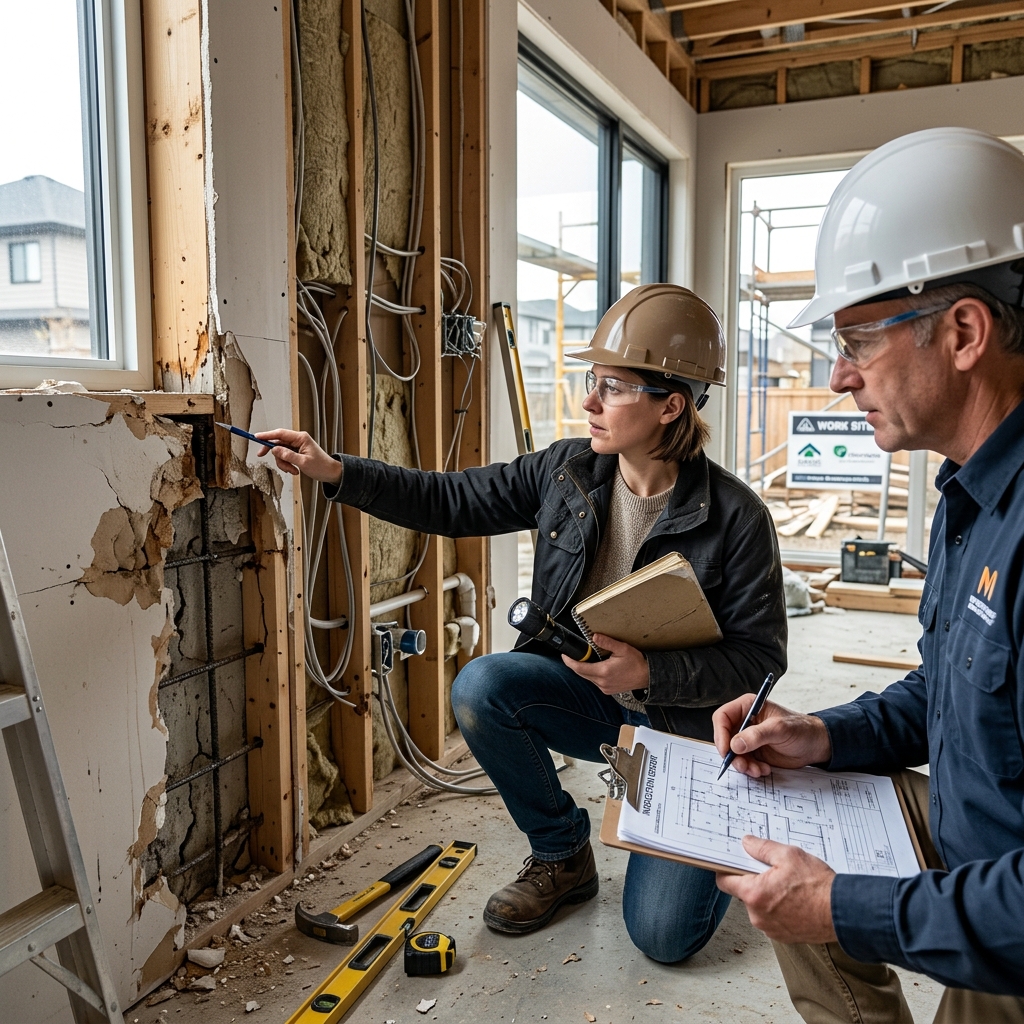
Construction defects can turn a new build, remodel, or commercial project into an expensive dispute. When a structure is not built as promised, the owner may face leaks, cracking, safety concerns, repair bills, and delays. Claims usually depend on the facts, the contract, the workmanship, and the law of the state where the project was performed.
This guide explains how defect claims work, what kinds of problems commonly lead to disputes, what evidence helps most, and how owners and builders often resolve these cases without going straight to trial.
What a construction defect claim usually means
A construction defect claim is a legal demand that a builder, contractor, designer, or another project participant is responsible for work that did not meet the required standard. In practical terms, the issue is not just that something went wrong; the problem must usually be tied to a duty, a contract promise, a building requirement, or accepted construction practice.
These claims often involve more than one issue at the same time. A single roof problem, for example, can trigger water intrusion, damaged framing, mold, ruined interior finishes, and temporary relocation costs. That is why defect disputes often focus on both the source of the problem and the full extent of the resulting harm.
Common problems that lead to disputes
Construction defects can appear in almost any part of a project. Some are obvious right away, while others remain hidden until months or years later. The most common categories include workmanship failures, design mistakes, faulty materials, and poor coordination between project teams.
- Water intrusion: leaks through roofs, windows, balconies, foundations, or plumbing systems.
- Structural movement: cracks, settlement, sagging, or framing issues that affect stability.
- Envelope failures: problems with siding, flashing, sealants, or membranes that protect the building from the elements.
- Mechanical or electrical issues: systems that are installed incorrectly or fail to perform as designed.
- Finish defects: uneven flooring, poorly fitted cabinets, surface damage, or cosmetic work that does not match the agreement.
- Code-related issues: work that may violate safety or building requirements and require correction.
Not every flaw becomes a legal claim. Minor imperfections, normal wear and tear, or damage caused by poor maintenance may not be enough. A viable claim generally depends on whether the defect was created during the project and whether it caused measurable loss.
Who may be responsible
Responsibility in defect cases can extend beyond the general contractor. Depending on the project and the source of the problem, potential parties may include subcontractors, architects, engineers, material suppliers, and sometimes sellers or developers.
| Potential party | Typical role in a claim |
|---|---|
| General contractor | May be responsible for overall supervision, coordination, and completed work. |
| Subcontractor | May be liable for defective trade work such as roofing, framing, plumbing, or drywall. |
| Designer or engineer | May be involved if the problem traces to a design error or inadequate specifications. |
| Supplier or manufacturer | May be part of the case if the materials themselves failed or were misrepresented. |
| Developer or seller | May be implicated in some residential or commercial projects depending on disclosures and warranties. |
Because several parties can contribute to one defect, these cases often require a detailed investigation before anyone can assign fault with confidence.
Why proof matters so much
Successful defect claims usually depend on documentation. A property owner may know something is wrong, but that is not enough by itself. The claim must show what the defect is, where it came from, how it affects the property, and what it costs to fix.
Good evidence can make the difference between a settlement and a disputed claim that goes nowhere. Strong records also help identify whether the problem was caused by workmanship, design, a defective product, or another source entirely.
- Photographs and video: useful for showing cracks, leaks, staining, sagging, and other visible damage.
- Contracts and specifications: helpful for comparing promised work against what was actually delivered.
- Inspection reports and expert opinions: important for explaining the technical cause of the defect.
- Repair estimates and invoices: support the financial value of the claim.
- Emails, texts, and letters: can show notice, repair requests, denials, or failed promises to fix the work.
- Maintenance records: may help prove the owner properly cared for the property and did not cause the issue after completion.
Owners who wait too long to document the problem may lose useful proof. A defect can change over time, and once repairs begin, it may become harder to show the original condition.
How defect claims are usually evaluated
Most claims move through a similar analytical process. First, the injured party identifies the defect and the damage it caused. Next, the party investigates the likely cause and the responsible participants. Then the owner assesses whether the contract, warranty, or state law supports a claim.
From there, the focus often shifts to whether the defect existed at completion, whether it was reported in time, and whether the owner has enough evidence to prove damages. In many cases, the law also asks whether the owner gave the builder a fair chance to inspect and repair the issue before suing.
That sequence matters because many disputes are resolved through notice and repair rather than litigation. A builder who can correct the problem quickly may avoid a lawsuit, while an owner who documents the issue carefully may preserve the right to pursue full damages later.
Deadlines and notice requirements can control the case
Construction defect law is highly state-specific. Some states require written notice before a lawsuit can begin. Others limit the amount of time an owner has to bring a claim after the defect is discovered or after the project is completed. These deadlines can be strict, and missing them may end the claim even when the defect is real.
Before taking action, an owner should determine whether the state requires a pre-suit notice letter, an inspection opportunity, a mediation period, or another mandatory procedure. Some states also use statutes of repose, which cut off claims after a fixed number of years regardless of when the defect was found.
Because those time limits can vary widely, the safest approach is to consult the governing state law as soon as the defect is suspected.
What damages may be available
If the claim is successful, the owner may be able to recover money for the repair and the losses caused by the defect. The exact categories depend on the state, the contract, and the facts of the project.
- Repair costs: money needed to fix the defective work.
- Replacement costs: expenses for removing and replacing materials that cannot be repaired.
- Temporary housing or business interruption: losses caused by needing to vacate or stop using the property.
- Professional fees: engineering, consulting, or inspection charges tied to the defect.
- Damage to personal property: losses involving furniture, equipment, or belongings harmed by the defect.
- Reduced property value: in some cases, the amount the property is worth less even after repairs.
- Legal costs and attorney’s fees: available in some jurisdictions or under certain contracts.
Owners should keep in mind that damages are usually based on reasonable cost, not the most expensive possible repair. In many disputes, the key question is what it costs to restore the property to the condition promised by the contract or required by law.
How owners often handle a defect before filing suit
Most cases do not begin with a lawsuit. Instead, the owner usually gathers evidence, sends notice, requests an inspection, and asks for a repair plan or settlement. This approach can solve the issue faster and at lower cost than litigation.
A practical pre-suit strategy often includes the following steps:
- Document the condition with photos, dates, and written notes.
- Review the contract, warranty, and project documents.
- Notify the builder or contractor in writing.
- Preserve the affected area so the defect can be evaluated.
- Obtain an independent inspection or estimate if needed.
- Track all repair-related costs and communications.
Even when the owner expects litigation, these steps can improve the outcome by clarifying the facts and limiting avoidable disputes over what happened and when.
Common legal theories in defect disputes
Construction defect cases are often framed through more than one legal theory. The available claims depend on state law and on the project documents, but common theories include breach of contract, breach of warranty, negligence, and fraud-related allegations where facts support them.
Breach of contract focuses on whether the work matched the agreement. Breach of warranty centers on promises, express or implied, about quality or performance. Negligence asks whether a party failed to use reasonable care in the work. Fraud claims are less common and usually require proof of a false statement, reliance, and resulting harm.
In many cases, the legal theory matters less than the underlying evidence. If the owner can show a defect, a cause, and a measurable loss, the available claim may be stronger regardless of the label attached to it.
When mediation or settlement makes sense
Mediation is often useful because defect cases can be technical, expensive, and time-consuming. A neutral mediator can help the parties narrow the dispute, compare repair options, and decide whether a cash payment or remedial work is the better solution.
Settlement may be appropriate when the defect is limited, when the repair plan is straightforward, or when both sides want to avoid the cost of expert discovery and trial. It is also common when insurance coverage, multiple contractors, or shared responsibility make the outcome uncertain.
For owners, the goal is not simply to “win” in theory. The practical goal is to get the building fixed, recover the losses caused by the defect, and close the dispute with a workable result.
FAQs
What is the first thing I should do if I discover a defect?
Document the problem immediately with photos, written notes, and dates. Then review your contract and warranty and notify the responsible party in writing.
Do all defects qualify for a lawsuit?
No. A claim usually needs a real defect, a responsible party, a causal connection to the damage, and proof of loss. Minor cosmetic issues or maintenance problems may not be enough.
Can more than one contractor be responsible?
Yes. Many defects involve several participants, such as a designer, a general contractor, and a subcontractor. A proper investigation helps identify who contributed to the problem.
Why is an expert often needed?
Construction disputes are technical. An expert can explain the cause of the problem, identify code or standard deviations, and estimate the cost of repair.
Is it better to repair first or sue first?
That depends on the facts and the state law. In some cases, notice and inspection should happen before repair. In others, emergency mitigation is necessary to prevent more harm. Preserving evidence is essential either way.
How to approach a claim strategically
The strongest defect cases are built early. Owners who act quickly, keep records, and follow required notice procedures are usually in a better position than those who wait until the damage spreads. Builders and contractors, for their part, benefit from prompt inspection, clear communication, and careful documentation of any corrective work.
Because construction defect law blends contract rules, property damage issues, and state-specific procedures, the most effective strategy is usually a fact-driven one. Identify the defect, preserve evidence, understand the deadline, and evaluate the repair cost before deciding whether to settle or litigate.
References
- Construction Defects – Consumer Protection — Texas State Law Library. 2026-07-09. https://guides.sll.texas.gov/consumer-protection/construction-defects
- What Makes Construction Defect Claims Successful? — McCarter. 2026-07-09. https://www.mcelaw.com/blog/what-makes-construction-defect-claims-successful/
- Construction Defect Claims Examples – Defense Strategies — Thompson Coe. 2026-07-09. https://www.thompsoncoe.com/resources/publications/design-and-construction-defect-claims-overview-and-defense-strategies/
- Construction Defects & Litigation — Hoestenbach Law Group. 2026-07-09. https://hoestenbachlawgroup.com/construction-law/construction-defects-litigation/
- Construction Defect Claims – Resolution — Morris & Garritano Insurance. 2026-07-09. https://morrisgarritano.com/resource/construction-defect-claims-resolution/
Similar Articles








Read full bio of Sneha Tete


