
Common Online Shopping Problems and Legal Remedies
Learn how to spot issues in online purchases and the practical legal steps you can take when things go wrong.
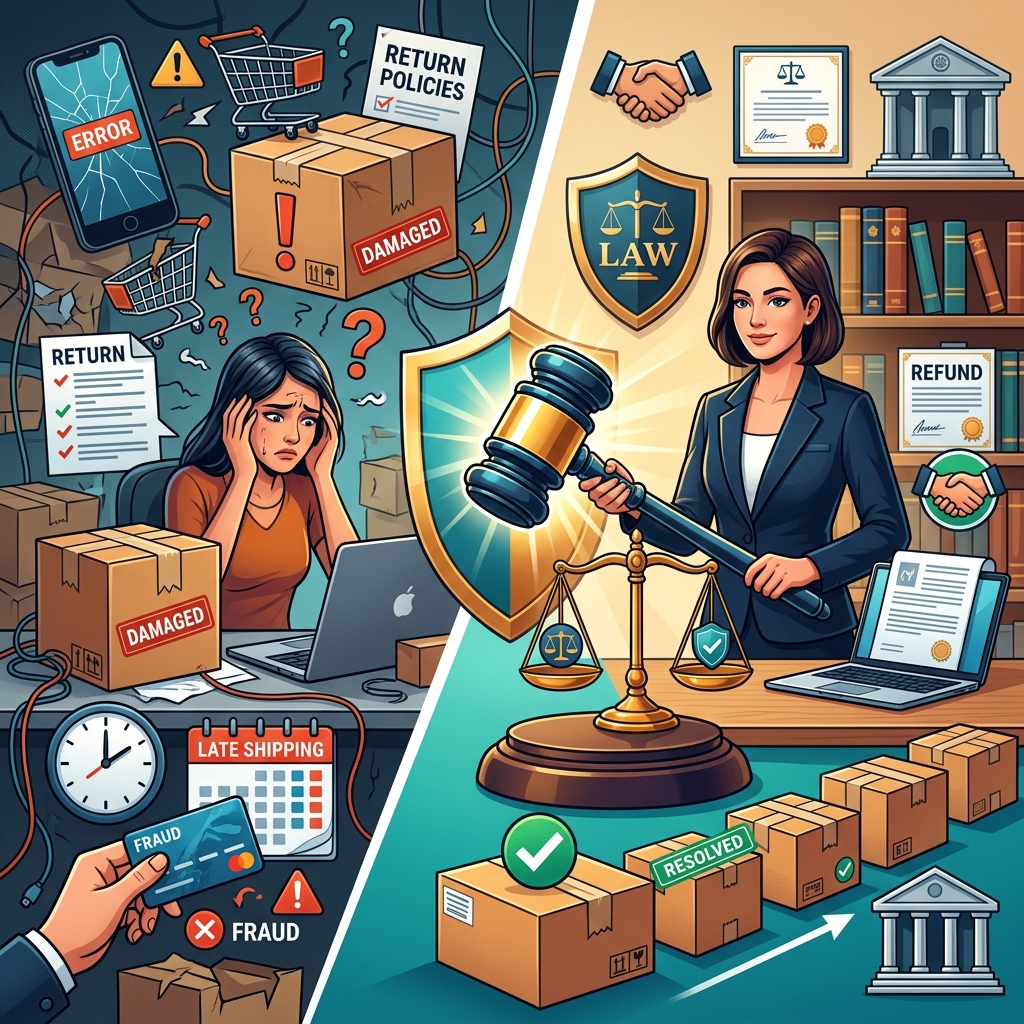
Buying goods and services online is convenient, fast, and often less expensive than visiting a physical store. Yet the same technology that makes online shopping effortless can also expose you to delivery failures, misleading advertising, hidden fees, data breaches, and outright fraud. Understanding common problems, how to prevent them, and what legal tools you have when a seller does not cooperate is essential to protecting your money and personal information.
Understanding the Online Shopping Landscape
Digital commerce now accounts for a significant share of retail spending worldwide, with consumers purchasing everything from groceries to professional services through websites and mobile apps. This shift gives buyers access to thousands of sellers they will never meet in person, often located across state or national borders. That distance can complicate returns, refunds, and dispute resolution, particularly when the seller ignores your complaint or operates in a weakly regulated environment.
Consumer protection agencies emphasize that many online disputes involve relatively small amounts of money, but repeated losses and data misuse can add up over time, so proactive risk management matters. Consumers who keep thorough records and act quickly when issues arise tend to have better outcomes.
Typical Problems Shoppers Face Online
Online shopping disputes usually fall into a few recurring categories. Recognizing them early helps you respond effectively.
1. Orders That Never Arrive or Arrive Late
One of the most common frustrations is paying for something that either never shows up or arrives much later than promised. This can happen because of poor logistics, inventory mismanagement, or misleading shipping commitments.
- Non-delivery: You pay for an item, receive an order confirmation, and then the package never arrives.
- Significant delays: The seller advertises fast shipping but fails to dispatch the order or does not update tracking information.
- Ambiguous shipping terms: The site uses vague language like “usually ships quickly” without clear deadlines or remedies.
Under many legal systems, sellers who accept payment are obligated to ship within the timeframe they advertise or within a reasonable period if no date is specified.
2. Misleading or Inaccurate Product Descriptions
Because you cannot physically inspect a product online, you rely heavily on photos, specifications, and marketing claims. Problems arise when the item delivered:
- Differs substantially from the description or photos.
- Lacks key features the seller highlighted.
- Is defective, refurbished, or used when advertised as new.
Regulators view deceptive product descriptions as a form of false advertising. Words such as “refurbished,” “close-out,” or “vintage” often indicate that an item may have cosmetic or functional defects, so reading the fine print is crucial.
3. Hidden Fees and Unclear Total Costs
Some websites present an attractive headline price but add substantial charges at checkout. These may include:
- High shipping and handling fees disclosed only at the last step.
- Service or convenience fees without clear justification.
- Mandatory add-ons, such as accessories or extended warranties, pre-selected during checkout.
Transparent total pricing, including taxes and all fees, is a central principle of consumer protection. Regulators encourage shoppers to compare the full cost, not just the sale price, across multiple sellers.
4. Complicated or Unfair Return and Refund Policies
Problems frequently arise when you try to return an item that is defective, misdescribed, or simply not what you expected. Common issues include:
- Very short return windows that close before you can reasonably test the product.
- Restocking fees or return shipping costs that make returns uneconomical.
- Policies that are unclear, contradictory, or difficult to find on the website.
- Sellers who state a generous return policy but refuse to honor it when asked.
Many jurisdictions require that terms limiting returns or refunds be clear and conspicuous. Some also provide statutory rights to refunds for defective or misrepresented goods, regardless of what the seller’s policy says.
5. Payment Errors, Double Charges, and Unauthorized Transactions
Electronic payments introduce technical and security risks. Buyers may experience:
- Double billing for a single purchase due to system glitches or timeouts.
- Charges for items that were never ordered or were cancelled.
- Unauthorized transactions after payment card data is stolen.
Credit card laws in many countries give consumers specific rights to dispute billing errors and unauthorized charges, including temporary withholding of payment while the issue is investigated.
6. Privacy, Data Security, and Identity Theft
Online retailers collect large volumes of personal and financial data. If they fail to safeguard that information, data breaches can expose you to identity theft and fraud. Security-related problems include:
- Unencrypted payment forms that transmit card data insecurely.
- Poor password practices or lack of multi-factor authentication.
- Data sharing with third parties without clear consent.
Regulatory frameworks such as privacy and data protection laws require businesses to implement reasonable security measures and restrict how personal data is collected, stored, and shared. Serious breaches can lead to enforcement actions and fines for the company involved.
7. Online Scams and Fake Stores
Beyond legitimate retailers, some websites exist solely to defraud consumers. These scams often:
- Imitate well-known brands with similar domain names and logos.
- Offer unrealistic discounts on high-demand products.
- Collect payments but never ship anything.
Consumer protection agencies encourage reporting fraudulent online sellers, as complaints help identify patterns and support enforcement.
Preventive Strategies Before You Click “Buy”
Many problems can be avoided by careful research and documentation before completing a transaction. The following practical steps reduce risk and strengthen your position if a dispute arises.
Check the Seller’s Reputation
- Search for independent reviews or ratings of the website, not just testimonials hosted by the seller.
- Verify the physical address, customer service contacts, and corporate identity.
- Be wary if you cannot find any credible information about the business or if contact details are incomplete.
Compare Products and Total Costs
Regulators recommend comparison shopping as a core strategy for avoiding misleading offers.
- Record the product’s model number, size, and specifications to compare identical items across sites.
- Calculate the full price, including taxes, shipping, handling, and optional add-ons.
- Read the advertised deal terms carefully—some promotions require you to buy additional products or enroll in recurring subscriptions.
Review Return, Refund, and Warranty Terms
- Locate and read the seller’s return policy before purchasing.
- Check who pays for return shipping and whether restocking fees apply.
- Confirm whether refunds are provided as original payment, store credit, or only exchanges.
- Note any separate product warranty or manufacturer guarantees.
Use Secure Payment Methods
Some payment forms provide stronger legal protections than others. For example, many credit card issuers support chargebacks and limit consumer liability for unauthorized use under national law.
- Prefer credit cards or secure third-party payment services over direct bank transfers.
- Avoid sending payment information via unencrypted email or messaging.
- Check that the website uses HTTPS and displays a valid security certificate before entering payment details.
What to Document When You Shop Online
Accurate records are crucial if you need to dispute a charge, request a refund, or complain to regulators. Consumer agencies advise keeping at least the following:
- The seller’s name, web address, and any customer service contact details.
- A copy or screenshot of the complete product description and price.
- The date of your order, the items purchased, and the total amount paid.
- Stated shipping commitments, such as “delivery within 5 business days.”
- All email, text, and chat communications with the seller, including order confirmations and tracking messages.
- Payment records, such as credit card or bank statements showing the transaction.
Organized documentation not only supports your position with the seller but also makes it easier for your bank or regulatory agency to understand what happened.
Resolving Problems Directly With the Seller
In many cases, you can resolve issues by contacting customer service promptly and clearly explaining the problem. When you reach out, include your order number, describe what went wrong, and state the remedy you are seeking.
| Problem Type | Recommended First Step | Reasonable Remedy |
|---|---|---|
| Non-delivery | Ask for updated tracking and a firm delivery date. | Reshipment or full refund if not delivered within a reasonable time. |
| Misrepresentation | Provide photos and explain how the item differs from the description. | Refund, replacement, or discount consistent with consumer laws on deceptive practices. |
| Defective product | Describe the defect and reference any warranty terms. | Repair, replacement, or refund under warranty or statutory rights. |
| Billing error | Request itemized charges and correction of overbilling. | Reversal of extra charges and updated invoice or statement. |
When communication remains polite but firm and is backed by documentation, many sellers will voluntarily correct mistakes to preserve their reputation and avoid regulatory complaints.
Legal Tools When the Seller Does Not Cooperate
If contacting the seller fails, you may need to rely on formal mechanisms. The appropriate options depend on your location, payment method, and the size of your loss.
Disputing Credit Card Charges (Chargebacks)
Credit card laws in the United States and similar frameworks elsewhere allow consumers to dispute charges that are incorrect, unauthorized, or involve goods that were not delivered as promised.
- Notify your card issuer quickly—regulations often require that disputes be raised within a set period, such as 60 days from the statement date.
- Provide supporting documentation, including receipts, order confirmations, and correspondence with the seller.
- The issuer may temporarily withhold payment while investigating the dispute.
These rights are designed to shift some risk away from consumers and encourage merchants to handle orders correctly.
Filing Complaints With Consumer Protection Agencies
Regulators collect reports about fraudulent websites, recurring patterns of non-delivery, or deceptive advertising. In the United States, consumers can submit complaints about online shopping problems through official portals such as the Federal Trade Commission’s reporting system.
- Complaints assist agencies in identifying systemic problems and prioritizing enforcement.
- While individual restitution is not guaranteed, in some cases authorities negotiate refunds or settlements.
- Accurate information about the seller, transaction, and communications strengthens your complaint.
Small Claims and Civil Litigation
When the amount at stake is larger, and informal remedies fail, you may consider legal action. Common avenues include:
- Small claims courts: Designed for relatively modest disputes with simplified procedures and lower costs.
- Civil lawsuits: Appropriate for substantial losses, recurring misconduct, or cases involving significant privacy or data breaches.
Because jurisdictional questions can be complex in cross-border online transactions, consulting a lawyer to evaluate your options is often advisable.
Protecting Yourself From Fraud and Data Misuse
Reducing exposure to scams and data breaches requires a combination of technical awareness and legal knowledge.
Security Best Practices for Shoppers
- Update devices and browsers to support current security standards.
- Use strong, unique passwords and enable multi-factor authentication on shopping accounts.
- Monitor bank and card statements regularly, and report suspicious transactions immediately.
- Avoid using public Wi-Fi networks for purchases unless you use a secure connection.
Recognizing Red Flags
- Extremely low prices on high-demand items compared to reputable sellers.
- Lack of clear contact information or physical address.
- Requests for payment via methods that provide little recourse (such as certain wire transfers or cryptocurrency).
- Pressure tactics, such as countdown timers combined with vague product details.
Frequently Asked Questions (FAQs)
What should I do if my online order never arrives?
First, contact the seller and request tracking information and a clear delivery date. If the item still does not arrive within a reasonable window and the seller refuses to refund, consider disputing the charge with your card issuer and reporting the problem to consumer protection authorities.
Can I get my money back if the product is different from the description?
Many legal systems treat significant differences between product descriptions and delivered goods as misrepresentation or deceptive advertising. You may be entitled to a refund or replacement under consumer protection laws, regardless of any restrictive store policy, especially if you act promptly and document the discrepancy.
How long do I have to dispute a credit card billing error?
In the United States, consumers generally must notify their credit card company of billing errors within 60 days of the statement date that first showed the error. Check your local rules and cardholder agreement, as deadlines and procedures can vary.
Is it safer to use a credit card than a debit card for online shopping?
Credit cards commonly offer stronger statutory protections for unauthorized use and chargebacks than debit cards, and disputes typically do not immediately remove funds from your bank account. However, both methods should be used on secure sites with proper encryption and authentication.
Where can I report fraudulent online sellers?
In the U.S., consumers can submit complaints about online shopping fraud and deceptive practices to the Federal Trade Commission through its official reporting website. Other countries have similar consumer protection agencies or ombudsman services; check your government’s official guidance for the appropriate portal.
References
- Online Shopping — Federal Trade Commission. 2023-02-01. https://consumer.ftc.gov/articles/online-shopping
- Data Protection and Privacy Legislation Worldwide — United Nations Conference on Trade and Development. 2023-07-12. https://unctad.org/page/data-protection-and-privacy-legislation-worldwide
- Consumer Credit Card Rights — Board of Governors of the Federal Reserve System. 2022-09-15. https://www.federalreserve.gov/consumerinfo/creditcard.htm
- Guidance on Protecting Consumers in E-commerce — Organisation for Economic Co-operation and Development. 2016-03-24. https://www.oecd.org/sti/consumer/ecommerce-guidelines.htm
- Cybersecurity and Online Shopping — Cybersecurity & Infrastructure Security Agency. 2023-05-10. https://www.cisa.gov/resources-tools/resources/shopping-online-safely
Similar Articles








Read full bio of Sneha Tete


