
Child Support in Native American Tribal Systems
How tribal sovereignty, federal rules, and cooperative agreements shape child support for Native American families across jurisdictions.
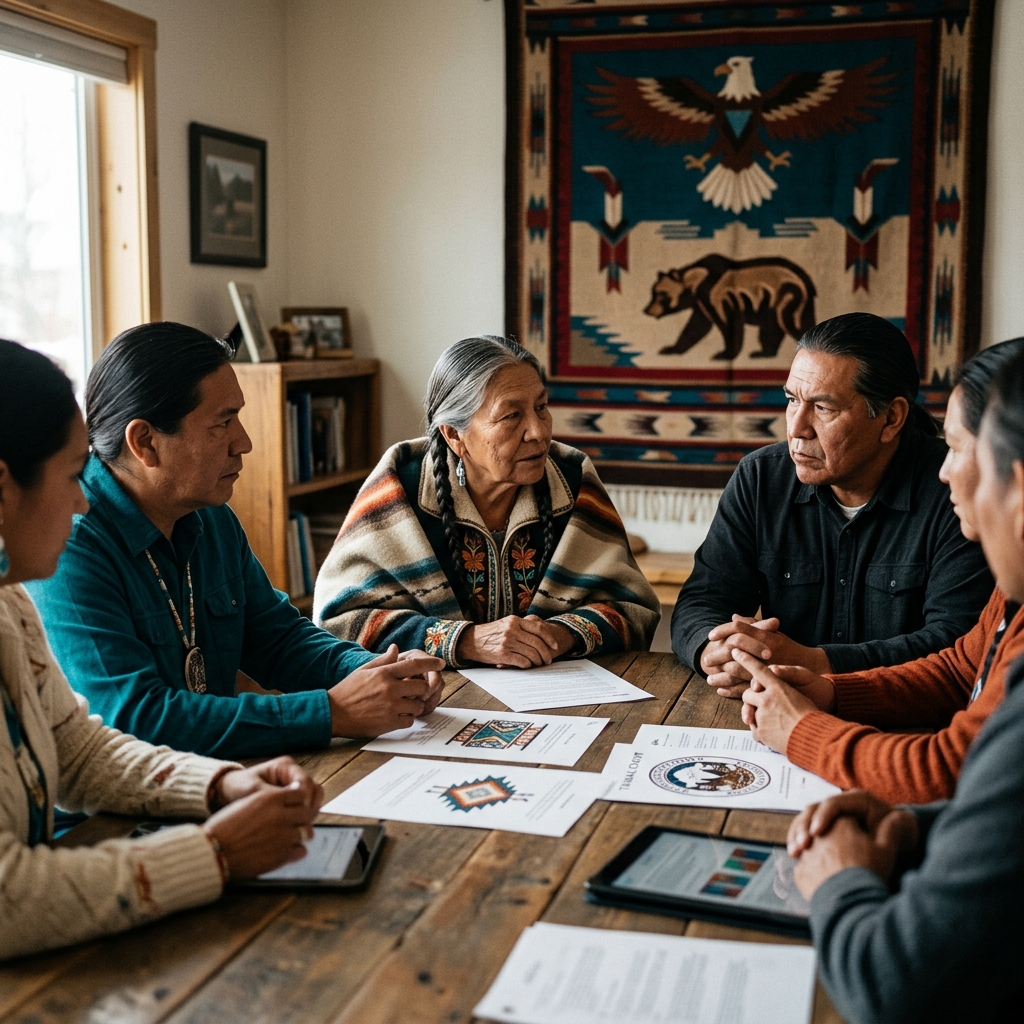
Child support involving Native American families operates at the intersection of tribal sovereignty, federal law, and state child support systems. Understanding how these layers interact is essential for parents, practitioners, and policymakers working on cases that cross tribal and state borders.
Understanding Tribal Sovereignty and Child Support
Federally recognized tribes in the United States are treated as distinct sovereign governments, with authority to create and enforce their own laws, courts, and administrative systems, including child support programs. This sovereignty is a foundational reason why tribal child support arrangements can differ substantially from state-based systems.
In practice, tribal sovereignty means:
- Independent legal authority to establish child support codes, procedures, and enforcement mechanisms.
- Separate court systems (tribal courts or consortium courts) that issue and enforce child support orders for members within tribal jurisdiction.
- Negotiated cooperation with state and federal agencies rather than automatic subordination to state law.
However, sovereignty does not mean that child support obligations can be ignored. It means that the forum, legal standards, and enforcement tools may be different when a tribal member is involved, especially if they live or work on tribal lands.
Federal Framework: Title IV-D Tribal Child Support Programs
The primary federal framework for child support services is known as Title IV-D of the Social Security Act. Under this framework, tribes can operate their own child support agencies, funded and supervised in partnership with the federal Office of Child Support Enforcement (OCSE).
To qualify as a tribal Title IV-D child support program, a tribe or tribal consortium generally must:
- Be federally recognized.
- Have at least 100 children under the age of adulthood within the jurisdiction of the tribal court or agency.
- Maintain a functioning tribal court or administrative body capable of issuing and enforcing child support orders.
- Adopt written procedures and laws governing how child support applications are accepted, orders are established, and payments are collected.
Once approved, tribal Title IV-D programs operate in stages:
- Start-up programs receive federal funds (historically up to $500,000 over two years) to build their child support infrastructure, including staff, technology, and legal frameworks.
- Comprehensive programs then receive ongoing federal funding to support day-to-day operations such as locating parents, confirming paternity, establishing orders, and enforcing payments.
Funding and Recent Policy Changes
Historically, both states and tribes shared the costs of operating child support programs. For tribal programs, the federal government covered a significant share of the operating budget, while tribes supplied a smaller non-federal share. These funds support tasks such as locating parents, establishing and modifying orders, and distributing payments.
Under a recent rule known as the Elimination of the Tribal Non-Federal Share Requirement, the federal government now fully funds certain tribal child support collection costs. This policy acknowledges unique historic and economic challenges faced by tribes and reduces the financial burden of maintaining robust child support services.
Tribal Child Support Agencies vs. State Child Support Offices
Tribal child support agencies are not arms of state child support enforcement units; they are independent programs operating under tribal law and federal requirements. Nonetheless, state and tribal agencies often collaborate to handle cases that involve both tribal members and non-tribal residents.
| Feature | Tribal Child Support Agency | State Child Support Agency |
|---|---|---|
| Primary legal authority | Tribal laws and codes; tribal court jurisdiction. | State statutes and regulations; state courts. |
| Funding framework | Title IV-D tribal program funding through OCSE, often with special federal cost-sharing rules. | Title IV-D state funding shared between federal and state governments. |
| Target population | Tribal members and families within tribal jurisdiction, sometimes including non-members living on tribal lands. | Residents of the state, regardless of tribal affiliation. |
| Sovereign status | Separate sovereign; collaborates with but is not subordinate to the state. | Political subdivision under state and federal constitutions. |
| Cross-border cooperation | Works with state and federal agencies through formal agreements and case-by-case coordination. | Relies on interstate and tribal cooperation, full faith and credit principles, and federal rules. |
Cross-Border Child Support: Cases Involving Tribes and States
Many Native American families live in situations where one parent resides on tribal land and the other lives off-reservation, or where parents belong to different tribes or different states. In these instances, child support enforcement often requires coordination between tribal and state systems.
Common Cross-Jurisdiction Scenarios
- Custodial parent off-reservation, noncustodial parent on tribal lands – The state child support agency may contact the tribal child support office or tribal court to establish or enforce an order.
- Both parents are tribal members, but one lives in a different state – The tribe’s child support agency may work with the state to locate the parent, obtain income information, and ensure that orders are recognized in both jurisdictions.
- Tribe with no formal child support agency – State caseworkers may coordinate directly with tribal courts or administrators to understand local procedures and seek enforcement.
Federal and tribal guidance generally encourages cooperative agreements between tribes and states to clarify how cases are referred, how information is shared, and how orders are recognized across borders.
Practical Steps for Parents in Cross-Border Cases
For parents dealing with cross-border child support issues, several practical strategies can improve results:
- Contact your tribal child support agency if your tribe operates one, to understand available services and local procedures.
- Apply for child support services with the appropriate state office; there is generally nothing preventing parents from seeking assistance from both state and tribal agencies.
- Keep detailed records of orders, payments, and communications, as cross-jurisdiction coordination may require documentation to ensure proper enforcement.
- Ask caseworkers how tribal and state agencies cooperate in your region, as local agreements can vary.
Can Courts Force Native American Parents to Pay Child Support?
Misunderstandings often arise over whether state courts can compel tribal members to pay child support. Because tribes are separate sovereign entities, tribal members living and working primarily on tribal lands may fall predominantly under tribal jurisdiction. In such cases, state court orders might not automatically apply within tribal territory without appropriate cooperation or recognition.
However, two critical points should be emphasized:
- Tribal members may still be legally obligated to support their children under tribal law, state law, or both, depending on where they live and work.
- Courts and child support agencies generally seek to prevent situations where jurisdictional gaps undermine children’s well-being. Cooperative arrangements and shared enforcement mechanisms are designed to ensure that obligations are met.
As a result, the practical answer is that child support obligations are enforceable; the key question is which court and which system has authority in a given case, and how those systems will work together.
Developing Culturally Informed Child Support Services
Tribal child support agencies often emphasize culturally informed approaches that reflect community values, extended family structures, and traditional practices. By administering programs within the tribal community, tribes can design services that are more responsive to local conditions and histories.
Common features of culturally informed tribal programs may include:
- Integration of tribal customs into dispute resolution and support agreements.
- Recognition of extended kinship networks, which may affect caregiving arrangements and financial responsibilities.
- Efforts to avoid punitive measures that undermine community stability, focusing instead on consistent support and parental engagement.
These approaches are supported by the structure of Title IV-D tribal programs, which allow tribes to tailor legal codes and procedures within a federal framework.
Key Considerations for Practitioners
Legal and social service professionals handling child support cases involving Native American tribes should keep several considerations in mind:
- Identify tribal affiliation early – Ask whether either parent is a member of a federally recognized tribe and where they reside.
- Confirm the existence of a tribal child support program – Determine whether the tribe operates a Title IV-D program or uses tribal courts to handle child support.
- Review applicable tribal law – Tribal codes may differ from state statutes regarding calculation of support, enforcement tools, and modification procedures.
- Use cooperative channels – Utilize formal agreements and informal contacts between state and tribal agencies to reduce delays and jurisdictional conflicts.
- Respect sovereignty and cultural context – Approach cases with sensitivity to the tribe’s legal authority and community norms while focusing on the child’s best interests.
FAQs: Child Support in Native American Tribal Systems
1. How do I know if my tribe has a child support program?
Many tribes now operate Title IV-D child support programs in partnership with the federal Office of Child Support Enforcement, but not all do. You can contact your tribal government or court to ask whether there is a dedicated child support office and how to apply for services.
2. Can I receive help from both tribal and state child support agencies?
Yes. Parents are generally allowed to seek assistance from both tribal and state child support agencies in appropriate cases. Coordination between the two systems can help ensure that orders are enforceable where each parent lives and works.
3. What happens if my ex-partner lives on a reservation?
If your ex-partner lives on tribal lands and is a member of a tribe, child support enforcement may occur through the tribe’s child support program or tribal court. State agencies typically contact the tribal office or court and work cooperatively to establish or enforce an order.
4. Are tribal child support orders recognized by state courts?
In many cases, tribal child support orders can be recognized and enforced in state courts through cooperative agreements and principles of comity or full faith and credit, depending on the jurisdiction. Practitioners should consult local legal rules and tribal-state agreements to determine the specific process.
5. Does federal funding affect how much child support I receive?
Federal funding primarily affects the administration of child support programs, not the amount ordered in individual cases. Funding ensures that tribes and states have resources to locate parents, process cases, and distribute payments. The amount of support is determined by tribal or state law and by the facts of the case.
References
- Tribal Child Support: The Tribe is Not an Arm of the State’s Child Support Enforcement Unit — California Indian Legal Services. 2014-06-01. https://www.calindian.org/tribal-child-support-the-tribe-is-not-an-arm-of-the-states-child-support-enforcement-unit/
- Feds Will Fully Fund Tribal Child Support Collections — The Imprint. 2023-08-11. https://imprintnews.org/top-stories/feds-will-fully-fund-tribal-child-support-collections/247504
- Courts Can’t Force Native Americans to Pay Child Support — Kingston Law Group. 2021-05-10. https://kingstonlawgroup.com/courts-cant-force-native-americans-to-pay-child-support/
- Child Support Services: Working Across Borders Handbook, Chapter 7 — Montana Department of Public Health and Human Services, Child Support Services Division. 2018-01-01. https://dphhs.mt.gov/assets/cssd/OCSSServicesWorkingAcrossBordersHandbook.pdf
- Tribal Child Support: Final Report (CSRA 2020–2022 T10) — Institute for Research on Poverty, University of Wisconsin–Madison. 2023-08-22. https://www.irp.wisc.edu/wp/wp-content/uploads/2023/08/CSRA-2020-2022-T10-08222023.pdf
Similar Articles








Read full bio of Sneha Tete


