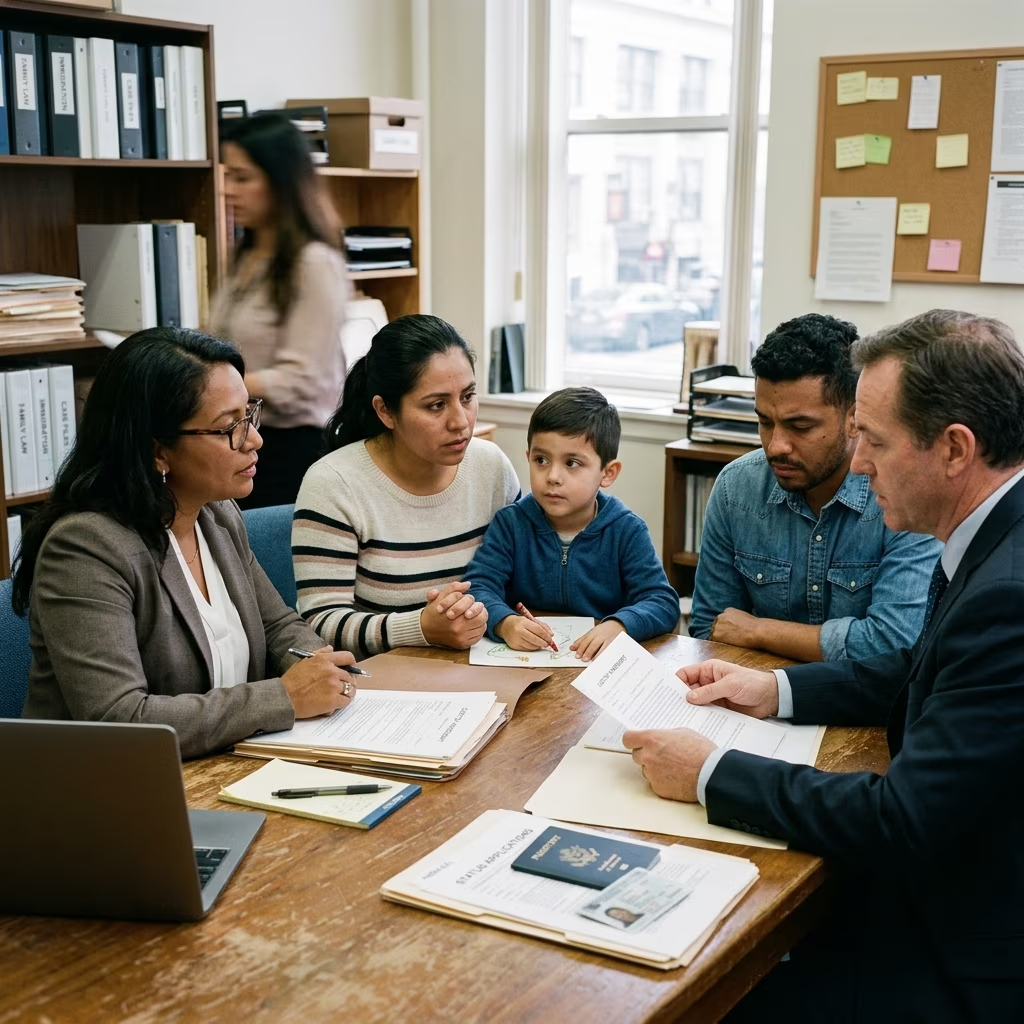
Families with different immigration statuses often face custody questions that go far beyond ordinary parenting disputes. A parent may worry about detention, deportation, travel restrictions, school enrollment, medical decisions, or who would care for a child if the parent is suddenly unavailable. Even so, custody law does not treat immigration status as a substitute for parenting ability. In most situations, courts focus on the child’s safety, stability, and overall welfare rather than a parent’s citizenship or documentation status.
This article explains how custody issues can arise in mixed-status households, what judges usually evaluate, and what parents can do to prepare for emergencies. It also covers common misunderstandings, the role of temporary planning documents, and the practical steps families can take to reduce disruption if immigration-related events affect caregiving.
Why mixed-status custody cases are different
Mixed-status families include households where one parent is a U.S. citizen and the other is not, or where parents and children have different immigration classifications. These families can be especially vulnerable because an immigration event may change where a parent lives, whether a parent can work, or how quickly a child can access care. A custody dispute may also be complicated by fear, lack of paperwork, language barriers, and uncertainty about the future.
The legal system recognizes these concerns, but family courts still rely on child-centered standards. Immigration status alone does not decide custody. Instead, judges typically ask which arrangement best supports the child’s long-term well-being. That means a parent’s bond with the child, caregiving history, home environment, and ability to meet the child’s needs usually matter far more than nationality or immigration paperwork.
What courts usually look at in custody decisions
Although the exact factors vary by state, most custody cases are built around the same core question: what serves the child’s best interests? Courts often examine a range of practical and emotional considerations when making that determination.
- The child’s daily routine and continuity of care
- Each parent’s ability to provide food, housing, supervision, and medical care
- The emotional bond between the child and each parent
- The child’s school, community, and extended family connections
- Any history of abuse, neglect, or instability
- Each parent’s willingness to support the child’s relationship with the other parent
In many cases, the parent who has been the child’s primary caregiver has a strong position, especially when that parent can show consistent involvement in schooling, healthcare, routines, and emotional support. Immigration status may be part of the background facts, but it should not replace the custody analysis itself.
Immigration status and parental rights
A frequent misconception is that an undocumented parent cannot seek custody or visitation. That is not generally true. Family courts routinely hear custody disputes involving noncitizen parents, and many legal systems reject the idea that documentation status by itself determines who should raise a child. Courts are usually more concerned with whether a parent is fit, involved, and able to provide a stable environment.
This is important because removing custody based only on immigration status can punish a parent for a condition unrelated to parenting. A parent may have lived with and cared for the child for years, while another caregiver has less day-to-day involvement. In that situation, a court will often examine the actual caregiving relationship rather than treating immigration status as a disqualifier.
How deportation, detention, or relocation can affect a custody plan
Immigration enforcement can disrupt even well-organized families. If a parent is detained or removed from the country, the child may suddenly lose a primary caregiver or face uncertainty about where to live. In some cases, the other parent may already have custody or visitation rights. In others, the family may need a fast legal response to prevent the child from being left without a clear caregiver.
Because these events can happen with little warning, families often benefit from contingency planning. A good plan can reduce confusion and help a child remain with trusted adults instead of entering an emergency system without guidance. Planning does not guarantee every outcome, but it can make it easier for relatives, schools, and doctors to know who has authority to act.
Practical documents that can help families prepare
Parents in mixed-status families often use legal and administrative documents to reduce disruption if one parent becomes unavailable. These documents are not a replacement for a custody order, but they can be helpful in an emergency.
- Temporary guardianship papers to name a trusted adult who can care for the child if needed
- Medical consent forms so a caregiver can authorize treatment
- School authorization forms that let a relative or guardian handle school matters
- Emergency contact lists with updated phone numbers, addresses, and backup contacts
- Copies of birth certificates, passports, and custody orders kept in a safe but accessible place
These papers can be especially useful if a child needs immediate housing, transportation, medication, or school enrollment. Parents should also tell trusted relatives where documents are stored and who should be contacted first in an emergency. The more clearly a plan is documented, the less likely a child is to be caught in avoidable confusion.
Common myths about custody and immigration
Mixed-status families are often exposed to misinformation, and that misinformation can lead to avoidable mistakes. Some parents assume that undocumented status automatically eliminates custody rights or that a citizen parent will always prevail. Others think they should avoid court altogether for fear that their status will be disclosed.
Those assumptions can be costly. Courts are generally used to handling sensitive family issues and can evaluate custody without turning the case into an immigration proceeding. While immigration consequences may still exist in the background, the custody case itself normally turns on parenting evidence. Understanding that distinction can help parents make better decisions about whether to negotiate, mediate, or ask a court for orders.
When the other parent is not available
Sometimes both the family structure and the immigration situation make custody harder to manage. A parent may be detained, may have moved away, or may be unable to care for the child on a daily basis. In those situations, courts and child welfare agencies may have to decide where the child should live temporarily and which adult should provide care.
When no parent is available, relatives such as grandparents, aunts, uncles, or adult siblings may become important caregivers. The court may consider whether placement with a relative preserves stability and continuity. Judges usually try to avoid unnecessary separation from familiar family members, especially when those relatives can meet the child’s needs and maintain important emotional ties.
How to organize a custody plan before a crisis happens
Preparation is one of the most effective tools available to mixed-status families. Even when a family is functioning well, it helps to think ahead about what would happen if a parent were suddenly unable to care for the child. Planning ahead can reduce stress and may prevent an emergency from becoming a larger legal problem.
- Review any current custody order and make sure it reflects the child’s real living situation
- Identify at least one backup caregiver the child knows and trusts
- Keep important records in one secure location
- Inform schools and doctors about who may act in an emergency
- Talk with a family law attorney about the best type of written authority for your state
A plan should be updated whenever family circumstances change. A child who is now old enough to travel to school alone, for example, may need different instructions than a younger child who depends on a caregiver for everything from meals to transportation. Regular review helps ensure that the plan remains realistic.
How judges may view evidence in these cases
In a custody dispute involving a mixed-status family, evidence matters. A parent may need to show school records, medical records, photos, testimony from teachers, messages with the other parent, or proof of a caregiving routine. These materials can help the court understand who has been meeting the child’s needs over time.
Evidence is especially useful when a parent claims to be the primary caretaker. A court may look for proof that the parent handled doctor visits, homework, meals, discipline, and daily routines. The goal is not to create a perfect biography but to show which living arrangement is most likely to support the child’s development and emotional security.
Table: custody issues and the most relevant response
| Issue | Why it matters | Possible response |
|---|---|---|
| Fear of detention or removal | Can leave a child without a clear caretaker | Prepare temporary guardianship and emergency contact documents |
| Disputed caregiving history | Courts need proof of who provides daily care | Collect school, medical, and communication records |
| Uncertainty about relocation | May affect visitation, schooling, and stability | Ask the court for clear parenting-time terms |
| No available parent | Child may need an immediate temporary home | Identify relatives or trusted adults in advance |
Why legal advice is especially valuable
Custody and immigration can overlap in ways that are difficult to untangle without legal help. A family lawyer can explain how local custody standards work, whether a temporary order makes sense, and what documents may be recognized in your state. If immigration consequences are also a concern, an attorney can help the family coordinate family-law strategy with immigration planning.
Legal advice is particularly useful when there is already a custody dispute, when one parent has been detained, or when the family is considering relocation. A lawyer may be able to help with evidence gathering, emergency filings, and practical steps to preserve the parent-child relationship during a difficult transition.
Frequently asked questions
Can an undocumented parent get custody?
Yes. Immigration status alone usually does not prevent a parent from seeking custody or visitation. Courts generally focus on the child’s best interests and the parent’s actual caregiving ability.
Will a judge automatically remove custody if a parent is deported?
No. A deportation event may affect the practical custody arrangement, but it does not automatically erase parental rights. The court still evaluates the child’s welfare and available caretakers.
Should families create emergency custody documents?
Often yes. Temporary guardianship papers, medical consent forms, and school authorization forms can help a child receive care without delay if a parent becomes unavailable.
Does mixed-status status change the child’s right to stability?
No. Children still need stability, safe housing, schooling, and emotional support. Courts usually try to preserve those interests regardless of the family’s immigration background.
What should a parent do first if immigration enforcement disrupts custody?
The first step is usually to secure the child’s immediate care, identify a trusted adult, and speak with a lawyer about temporary custody or guardianship options as soon as possible.
References
- Immigration Status & California Child Custody Law — TALG. 2024-01-01. https://talglaw.com/when-immigration-status-collides-with-california-family-law/
- Mixed-Status Families: Custody Challenges Explained — Law Firm Ocala. 2024-01-01. https://www.lawfirmocala.com/blog/divorce-law-family-law-ocala/mixed-status-families-custody-challenges-explained/
- Child Custody in Mixed-Status Families — NIWAP Library / American University Washington College of Law. 2013-01-01. https://niwaplibrary.wcl.american.edu/wp-content/uploads/Custody-in-Mixed-Status-Families-ABA-2013.pdf
- Working with Undocumented and Mixed Status Immigrant Children and Families — University of New Mexico School of Law. 2011-01-01. https://childlaw.unm.edu/assets/docs/best-practices/Undocumented-Children-and-Families-2011.pdf
- A Parent’s Undocumented Immigration Status Should Not Be Considered in Custody Decisions — Mitchell Hamline School of Law. 2011-01-01. https://open.mitchellhamline.edu/cgi/viewcontent.cgi?article=1270&context=wmlr