
Can District Attorneys Refuse to Prosecute Entire Categories of Crimes?
Exploring when a prosecutor’s choice not to pursue certain offenses is lawful, and where it collides with statutes, courts, and public expectations.
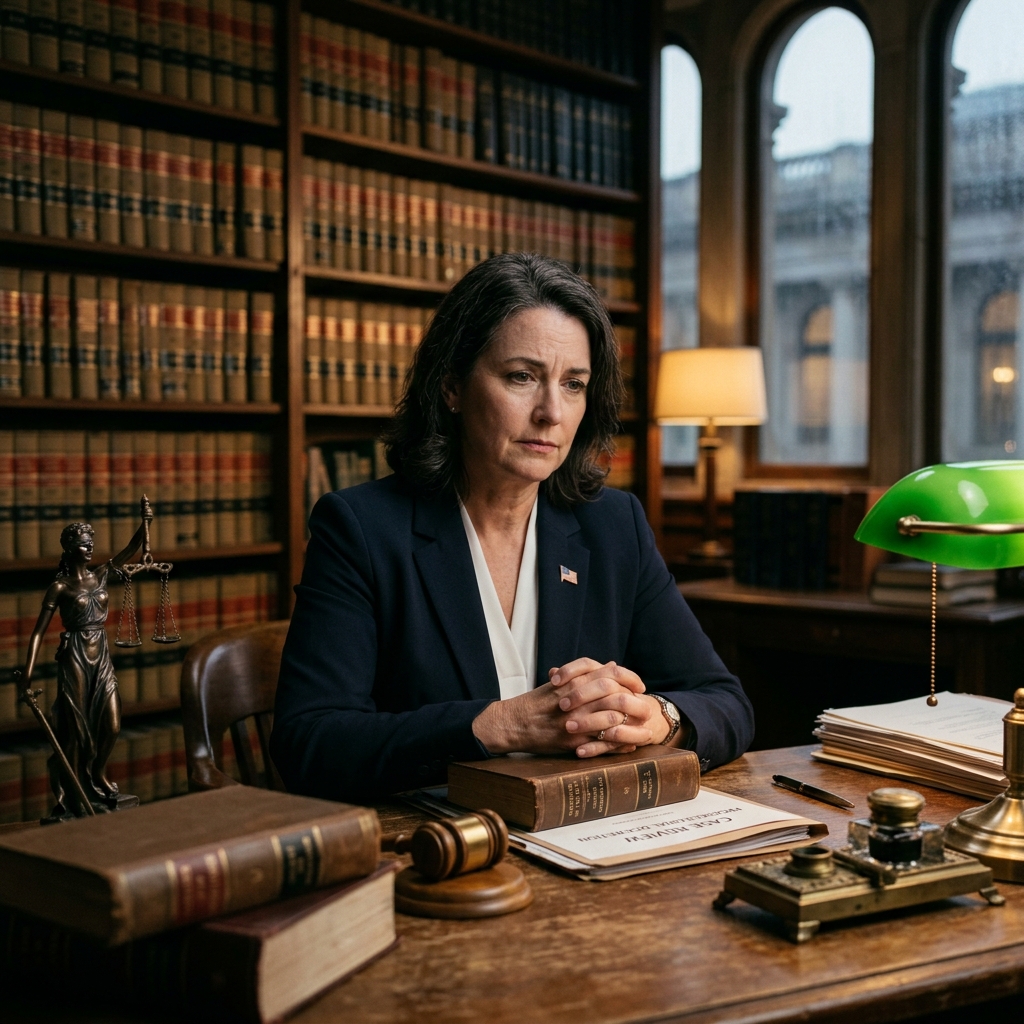
Across the United States, elected district attorneys have begun announcing policies that decline prosecution for entire categories of lower-level offenses, such as simple drug possession, fare evasion, or certain minor thefts. These policies raise an important question: is it legal for a prosecutor to categorically refuse to pursue some crimes at all?
This article explains how prosecutorial discretion works, where the law draws limits on that discretion, and how courts, legislatures, and local officials respond when a prosecutor adopts blanket non-prosecution rules.
Understanding Prosecutorial Discretion
Prosecutors have long been understood to hold broad discretion in deciding whether to file charges, which charges to file, and how to resolve those charges. That authority stems from the separation of powers: legislatures define crimes, but executive officials decide how to enforce them.
In practical terms, this means prosecutors decide:
- Whether to file any case at all after a police report is submitted.
- Which specific offenses to charge, among several available statutes.
- Whether to offer plea bargains or diversion, and on what terms.
- How to prioritize limited resources among thousands of potential cases.
Courts have generally recognized this as a core executive function. The U.S. Supreme Court, for example, has described the decision to prosecute as a quasi-judicial function vested in the executive branch, and has been reluctant to second-guess charging decisions except in cases of unconstitutional discrimination or other extreme abuses.
Individual vs. Categorical Decisions
While case-by-case charging decisions are widely accepted, controversy arises when a district attorney adopts categorical policies—such as declaring that their office will no longer prosecute specific statutory offenses under any circumstances.
There is a significant difference between:
- Individualized discretion: reviewing each case separately and deciding whether prosecution is warranted based on evidence, circumstances, and justice.
- Blanket non-prosecution policies: refusing to prosecute a defined class of offenses regardless of specific facts or public safety impact.
Critics argue that categorical non-prosecution amounts to an executive veto of duly enacted criminal laws. Supporters respond that such policies are a transparent and rational way to allocate limited resources toward serious harm.
Legislative Authority vs. Local Enforcement Power
In most states, the legislature defines criminal offenses and establishes penalties. District attorneys do not repeal or amend those statutes; they simply decide whether to enforce them in particular cases.
However, state law may also distribute enforcement authority among different local actors. In California, for example, county district attorneys are generally responsible for prosecuting felonies and many misdemeanors, but city attorneys in some cities are authorized to prosecute misdemeanor offenses independently.
Under California Government Code provisions, a city attorney can prosecute misdemeanors arising out of state-law violations when certain charter or statutory conditions are met. In some charter cities, the city attorney has primary responsibility for state misdemeanors within city limits, with the county district attorney acting as a backup rather than the main prosecutor.
These statutory arrangements matter when a county district attorney announces that their office will no longer bring certain misdemeanor charges. In jurisdictions where city attorneys hold prosecutorial authority over misdemeanors, those officials may continue to enforce the same laws even if the county prosecutor declines them.
Is a Blanket Non-Prosecution Policy Always Legal?
The legality of non-prosecution policies depends on several overlapping factors:
- State constitutional structure: Does the constitution assign mandatory duties to prosecutors, or does it treat them as executive officers with broad policy discretion?
- Statutory duties: Do statutes explicitly say a district attorney “shall” prosecute particular offenses, or do they leave room for prioritization?
- Judicial precedent: Have courts in that state reviewed and limited prosecutorial discretion, especially in the context of blanket policies?
- Other enforcement actors: Can city attorneys, state attorneys general, or federal officials step in when a local prosecutor declines enforcement?
In general, courts have been reluctant to force prosecutors to pursue specific charges. However, recent litigation has begun testing how far policy-driven non-prosecution can go before it conflicts with mandatory sentencing laws or other state directives.
Example: California Debates Over Prosecutorial Discretion
California offers a concrete illustration of these tensions. The state constitution and statutes create elected district attorneys in each county and assign them responsibility for criminal prosecution. At the same time, California law allows some city attorneys to take on misdemeanor prosecutions, especially in charter cities with city prosecutor offices.
In Los Angeles County, for instance, the District Attorney prosecutes felonies countywide and most misdemeanors in unincorporated areas and in a majority of cities, while certain cities rely on their own city attorneys for misdemeanors. When county-level policies reduce misdemeanor filings, the impact can be uneven across cities depending on their local prosecutorial structures.
Debate has intensified as some prosecutors adopt broader reform agendas, including limiting charging enhancements or declining certain low-level offenses. One high-profile dispute has reached the California Supreme Court, which has been asked to consider whether a district attorney may refuse to pursue sentencing enhancements that state law describes as mandatory. That litigation does not directly address non-prosecution of entire offenses, but it illustrates the growing judicial interest in defining the limits of prosecutorial discretion.
| Actor | Typical Role | Key Limits |
|---|---|---|
| County District Attorney | Felonies countywide; many misdemeanors in most cities. | Constrained by state statutes, constitutional duties, and judicial rulings. |
| City Attorney (General Law City) | May prosecute misdemeanors with consent of District Attorney. | Authority depends on Government Code section 41803.5 and local authorization. |
| City Attorney (Charter City with City Prosecutor) | May have primary duty to prosecute state misdemeanors within city. | Must act within charter and state law; DA often serves as backup. |
Policy Arguments For and Against Non-Prosecution
Even when non-prosecution policies are legally permissible, they are politically and ethically contested. Arguments on both sides focus on safety, fairness, and democratic accountability.
Arguments Supporting Non-Prosecution Policies
- Resource allocation: Prosecutors handle large caseloads and finite staff. Prioritizing violent and serious economic crimes may improve overall public safety.
- Reducing collateral consequences: Low-level prosecutions can trigger long-term harms, such as employment and housing barriers, that far exceed the social value of the conviction.
- Addressing racial and economic disparities: Minor charges like fare evasion or simple drug possession often fall disproportionately on poor and minority communities. Declining such prosecutions can be part of broader equity reforms.
- Encouraging alternative responses: Non-prosecution can push local governments to invest in civil enforcement, social services, or administrative remedies instead of criminal penalties.
Arguments Opposing Non-Prosecution Policies
- Undermining legislative intent: Critics say blanket refusal to prosecute specific statutory crimes effectively nullifies democratically enacted laws.
- Inconsistent justice: When some counties prosecute a crime and others refuse, residents may experience uneven enforcement across the state.
- Public safety concerns: Opponents worry that non-prosecution may encourage repeat minor offenses or blur boundaries between low-level and more serious conduct.
- Reduced accountability: Victims and communities may perceive that certain harms are no longer taken seriously when criminal charges are off the table.
Checks on Prosecutorial Power
Even where non-prosecution policies are formally lawful, several institutional checks can respond to perceived overreach or misuse of discretion.
Democratic Accountability
District attorneys are typically elected. Voters can reward or punish policy choices at the ballot box, including recall efforts or contested re-election campaigns. Public debate about crime trends, prosecution rates, and charging policies can shape these electoral outcomes.
Judicial Review
Court review of charging decisions is limited but not zero. Courts can intervene when prosecutorial policies:
- Rest on impermissible discrimination, such as race or religion.
- Conflict directly with statutory mandates, especially in sentencing.
- Violate constitutional rights of defendants, victims, or the public.
For example, in the ongoing California litigation over mandatory sentencing enhancements, courts are being asked to decide whether a district attorney may forbid line prosecutors from alleging enhancements that state law declares mandatory. A decision that constrains discretion in that context could influence future disputes over broader non-prosecution policies.
Alternative Prosecutors
When a district attorney declines enforcement, other officials may step in:
- City attorneys can pursue misdemeanors in some California cities, independently or with the district attorney’s consent.
- State attorneys general may have authority to supersede local prosecutors in limited circumstances, depending on state law.
- Federal prosecutors can charge overlapping federal offenses even when local authorities decline state charges.
This multi-layered structure mitigates—but does not eliminate—the impact of any single prosecutor’s non-prosecution policy.
Practical Effects on Communities and Victims
Non-prosecution policies are not merely abstract legal questions; they shape how residents experience the justice system.
- Victims of minor offenses may feel their harm is minimized if criminal charges are unavailable, especially in property or quality-of-life offenses.
- Defendants may benefit from fewer criminal records and associated collateral consequences, but could also lose access to court-based diversion programs that depend on a filed charge.
- Local governments may need to invest in civil enforcement tools—such as fines, administrative hearings, or restorative programs—to address conduct that is no longer criminally prosecuted.
In jurisdictions where policy shifts coincide with broader reform, public discussion often centers on whether reduced prosecution has changed crime trends. Some studies and news analyses have found that falling misdemeanor filings can occur alongside stable or even rising overall crime, making causal claims complex and contested.
Key Takeaways for Legality
Determining whether a district attorney’s categorical non-prosecution policy is legally valid requires a close look at state-specific law, but a few general points emerge:
- Prosecutorial discretion is a recognized executive power, and courts rarely compel prosecutors to bring particular charges.
- Legislatures can structure and limit prosecutorial duties, especially for certain classes of offenses or sentencing enhancements.
- In states like California, overlapping authority among district attorneys and city attorneys complicates the impact of county-level non-prosecution policies.
- Legal challenges are more likely when policies appear to conflict with mandatory statutory directions or constitutional protections.
Frequently Asked Questions (FAQs)
1. Can a district attorney simply announce they will never prosecute a certain crime again?
In many jurisdictions, a district attorney can adopt policies that strongly limit or effectively end prosecution of certain lower-level offenses. Whether that is fully lawful depends on state constitutional and statutory provisions. Courts usually allow broad discretion, but policies that contradict explicit statutory mandates or rest on unconstitutional grounds can be challenged.
2. Does a non-prosecution policy repeal the crime from the statute books?
No. Only a legislature can repeal or amend a criminal statute. A non-prosecution policy affects enforcement, not the existence of the law itself. Police may still make arrests, and other prosecutors—such as city attorneys or state attorneys general—may have power to pursue charges.
3. How does this work in California specifically?
In California, county district attorneys handle felonies and many misdemeanors, but city attorneys in some general law and charter cities can prosecute misdemeanors, sometimes with or sometimes without county consent. This means a county-level non-prosecution policy does not necessarily end enforcement of an offense in cities where the city attorney retains independent authority.
4. Can courts force a prosecutor to file charges?
Courts almost never order a prosecutor to bring a specific charge in a specific case. They can, however, review policies that conflict with constitutional protections or mandatory statutory provisions, and they may invalidate those policies or limit their application.
5. What remedies do voters have if they disagree with a prosecutor’s policies?
District attorneys are typically elected. Voters can oppose policies by supporting challengers in elections, backing recall petitions where allowed, or lobbying state legislators to clarify or adjust prosecutorial duties through new statutes.
References
- Office Overview — Los Angeles County District Attorney’s Office. 2024-01-01. https://da.lacounty.gov/about/office-overview
- AB 2309 Bill Analysis — California Senate Committee on Public Safety. 2024-06-10. https://spsf.senate.ca.gov/system/files/2024-06/ab-2309-analysis.pdf
- California Supreme Court to Consider Prosecutorial Discretion Over Sentencing Enhancements — State Court Report, Brennan Center for Justice. 2023-08-22. https://statecourtreport.org/our-work/analysis-opinion/california-supreme-court-consider-prosecutorial-discretion-over-three
- Blame Gascón? Crime Data Say It’s Not So Easy — Los Angeles Times. 2022-07-10. https://enewspaper.latimes.com/infinity/article_share.aspx?guid=6694e763-33c6-4a0f-8725-647a6b2ec371
- San Bernardino County District Attorney’s Office — San Bernardino County. 2023-01-01. https://da.sbcounty.gov
Similar Articles








Read full bio of medha deb




