
Does Bankruptcy Stop Wage Garnishment? 2025 Essential Guide
Learn when bankruptcy pauses wage garnishment and when the debt may still survive.
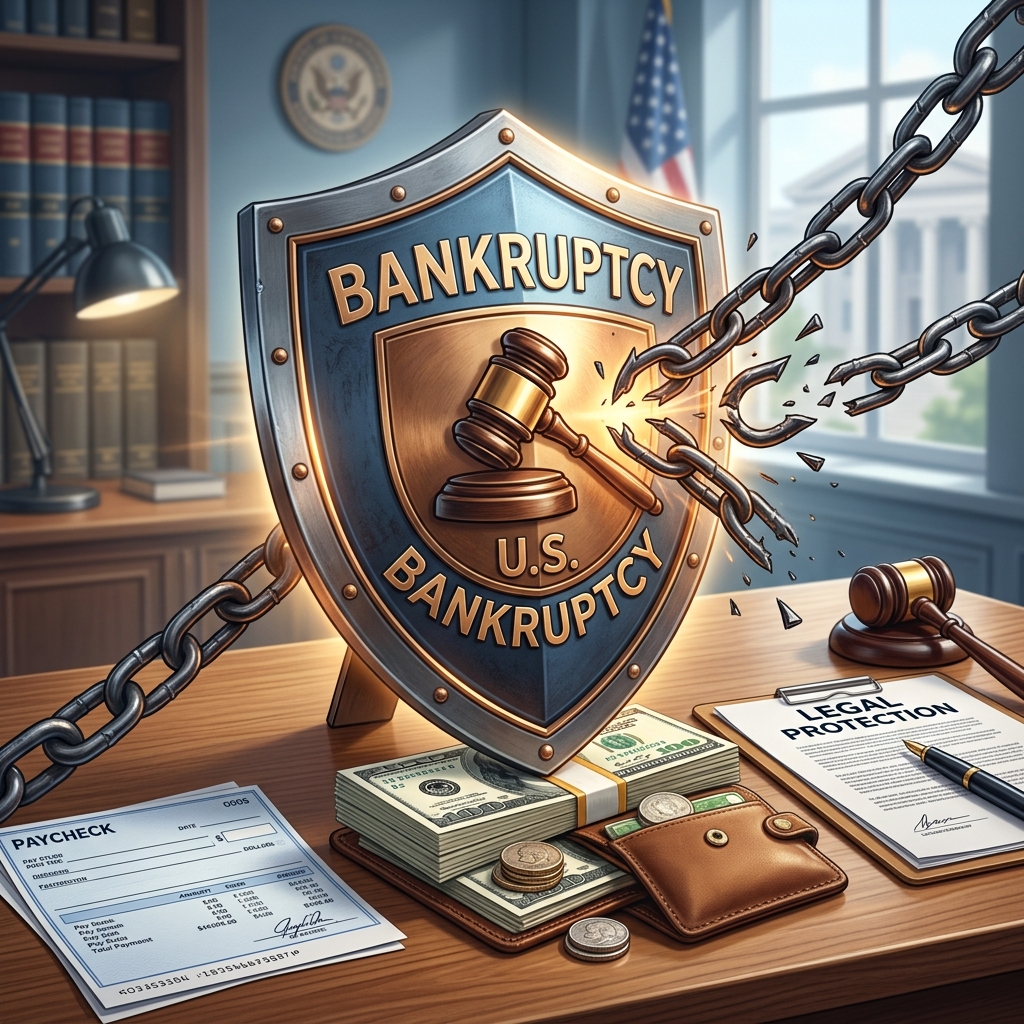
Bankruptcy can often provide fast relief when part of your paycheck is being taken to pay creditors. In many cases, the filing triggers an automatic stay that stops most collection activity, including wage garnishment, while the bankruptcy case is pending.
That protection is not absolute. Whether the garnishment ends for good depends on the kind of debt involved, the bankruptcy chapter you file, and whether the debt is later discharged.
How wage garnishment works
Wage garnishment is a court-ordered process that requires an employer to withhold part of a worker’s earnings and send the money to a creditor. Federal law limits ordinary garnishment to the lesser of 25% of disposable earnings or the amount by which disposable earnings exceed 30 times the federal minimum wage, but different rules apply to support obligations, certain taxes, and bankruptcy orders.
Because garnishment happens through payroll, it can create immediate pressure on a household budget. Rent, food, transportation, and child care may become harder to manage once a portion of each paycheck is diverted before the worker receives it.
What happens when a bankruptcy case begins
In most cases, filing for bankruptcy activates the automatic stay, which is a legal pause on collection efforts. That pause usually stops lawsuits, phone calls, bank levies, and wage garnishment as soon as the case is filed.
The stay exists to give the debtor breathing room while the court reviews the case. It also prevents creditors from racing to collect assets while the bankruptcy process is underway.
- Most collection actions stop immediately after filing.
- Employers generally must stop sending protected wages to creditors once they receive notice.
- The stay lasts until the case ends, the debt is discharged, or the court lifts the stay.
When bankruptcy stops garnishment only temporarily
Some garnishments pause during bankruptcy but may return later. That usually happens when the debt is not discharged in the case. Once the automatic stay ends, a creditor may resume collection if the underlying obligation still exists.
This is especially important for debts that are difficult or impossible to erase through bankruptcy. A temporary stop can still be valuable because it gives the filer time to stabilize income, catch up on necessities, and develop a repayment strategy.
Debts that are often discharged versus debts that usually continue
Whether garnishment ends permanently depends on whether the debt can be discharged. Discharge means the court wipes out the legal obligation to pay, which removes the creditor’s right to keep collecting after the case ends.
| Debt type | Typical bankruptcy effect |
|---|---|
| Credit cards | Often dischargeable, so garnishment may end permanently |
| Medical bills | Often dischargeable, which may permanently stop collection |
| Child support | Usually not stopped or erased by bankruptcy |
| Alimony | Usually not stopped or erased by bankruptcy |
| Some student loans | Usually not dischargeable unless special hardship rules apply |
| Some taxes | May be paused in the short term, but can still remain collectible |
Support obligations such as child support and alimony are treated differently from ordinary consumer debts. They are generally not stopped by bankruptcy in the same way, and garnishment for those obligations can continue despite the filing.
Chapter 7 and Chapter 13 affect garnishment differently
The chapter you choose can shape both the short-term and long-term effect on wage garnishment. Chapter 7 and Chapter 13 each offer a distinct path, and the better option depends on your income, debts, and goals.
Chapter 7 is often associated with debt discharge. If the debt causing garnishment is dischargeable, the bankruptcy process may eliminate it and stop future collection permanently. Chapter 13, by contrast, uses a court-approved repayment plan, which can help stop garnishment while you repay certain debts over time.
- Chapter 7 may be best when the debt is dischargeable and the filer qualifies for liquidation relief.
- Chapter 13 may be useful when a structured repayment plan is needed to catch up on debts.
- Both chapters can trigger the automatic stay and stop most wage garnishments at filing.
What may happen to wages already taken
Bankruptcy usually stops future garnishment, but it does not automatically return money that has already been withheld. Funds sent to a creditor before the filing are often treated as completed transfers and may not be recoverable.
There are limited situations where recent garnished wages may be recoverable, especially if the transfer occurred shortly before filing and exemption rules apply. The available remedy depends on timing, the amount involved, and the bankruptcy exemptions in the relevant jurisdiction.
Why notice to the employer matters
Even though the automatic stay takes effect when the case is filed, payroll departments do not always receive notice instantly. If wages continue to be withheld after filing, the debtor may need to notify the employer or the garnishment office directly so the withholding can stop.
Prompt notice matters because each pay period can result in another deduction if the employer has not yet updated its records. Quick communication can reduce the risk of avoidable losses while the paperwork moves through the system.
Other ways to respond before or alongside bankruptcy
Bankruptcy is not the only way to challenge wage garnishment. In some cases, a debtor may be able to dispute the order, correct an error, or claim an exemption under state law.
Those options may be useful when the garnishment is based on an incorrect debt balance, a mistaken identity issue, or a legal limit that was applied improperly. If the order is flawed, a timely objection may reduce or stop the withholding even without a bankruptcy filing.
- Review the garnishment notice for calculation mistakes.
- Check whether the debt has already been paid or settled.
- Ask whether state exemption laws protect part of your earnings.
- Consider legal advice if multiple creditors are pursuing collection at once.
How to think about the decision
The practical question is not only whether bankruptcy stops garnishment today, but whether it solves the underlying debt problem. If the debt is dischargeable, bankruptcy can end the collection pressure and provide a cleaner reset. If the debt is not dischargeable, filing may still give valuable time, but the obligation may return after the case ends.
That is why the decision should be based on the full debt picture rather than the garnishment alone. A debtor with credit card judgments, medical bills, and a single wage garnishment may benefit very differently from someone whose main obligation is child support or recent taxes.
Questions people often ask
Will my paycheck stop being garnished the day I file?
In most cases, yes, at least temporarily. The automatic stay usually stops wage garnishment as soon as the case is filed, although notice may still need to reach the employer’s payroll department.
Can bankruptcy stop child support garnishment?
Usually no. Child support and alimony are generally not stopped or discharged in the same way as ordinary consumer debt.
Will bankruptcy erase the debt behind the garnishment?
Sometimes. If the debt is dischargeable, bankruptcy may wipe it out and prevent the garnishment from restarting. If the debt survives bankruptcy, collection may resume after the case ends.
Can I get back wages that were already taken?
Not usually, although some recent transfers may be recoverable in limited circumstances. The answer depends on timing, exemptions, and the facts of the case.
Why legal guidance can make a difference
Bankruptcy and garnishment rules overlap with exemption law, payroll procedures, and debt-specific exceptions. A mistake in classification can lead to the wrong chapter being filed or a missed opportunity to stop a garnishment more quickly.
Legal guidance can help identify whether the debt is dischargeable, whether a repayment plan is more appropriate, and whether any garnished wages may be protected or recoverable. For people facing multiple debts, that review can also show whether bankruptcy will provide only temporary relief or a lasting end to collection.
Practical signs bankruptcy may be a strong option
Bankruptcy is often worth considering when wage garnishment is only one part of a larger financial problem. It may be especially relevant if creditors have also filed lawsuits, bank accounts are at risk, or several unsecured debts are past due.
- Multiple creditors are pursuing collection.
- Your paycheck no longer covers basic expenses.
- The debt behind the garnishment is likely dischargeable.
- You need immediate breathing room to organize your finances.
Frequently asked follow-up issues
Many workers want to know whether filing bankruptcy will affect their job. Federal garnishment law generally prohibits an employer from firing an employee solely because one debt is being garnished, although workplace dynamics can still feel stressful.
Others want to know whether garnishment can start again after a successful bankruptcy. The answer is yes if the debt survives the case. The automatic stay is temporary, and once it ends, creditors may be able to resume collection on obligations that were not discharged.
References
- Can Bankruptcy Stop Wage Garnishment? — LendingTree. 2025-01-01. https://www.lendingtree.com/bankruptcy/does-bankruptcy-stop-wage-garnishment/
- Wage Garnishment Under Bankruptcy Law — Justia. 2025-01-01. https://www.justia.com/bankruptcy/collections-credit/wage-garnishment-and-bankruptcy/
- Fact Sheet #30: Wage Garnishment Protections of the Consumer Credit Protection Act — U.S. Department of Labor, Wage and Hour Division. 2025-01-01. https://www.dol.gov/agencies/whd/fact-sheets/30-cppa
- Ending Wage Garnishment Through Bankruptcy — BPS Lawyers. 2025-01-01. https://www.bpslawyers.com/blog/ending-wage-garnishment-through-bankruptcy/
- Stop Wage Garnishments in Tampa with Bankruptcy — Printy Law Firm. 2025-01-01. https://printylawfirm.com/how-bankruptcy-can-stop-wage-garnishments-and-help-you-regain-financial-control/
- Understanding Wage Garnishment Laws in California — PA Law Group. 2025-12-01. https://www.palawca.com/blog/2025/december/understanding-wage-garnishment-laws-in-californi/
Similar Articles








Read full bio of medha deb




