
Beneficiary Designations: 4 Practical Steps To Protect Assets
How to use beneficiary designations to pass assets smoothly, even if you never create a formal will.
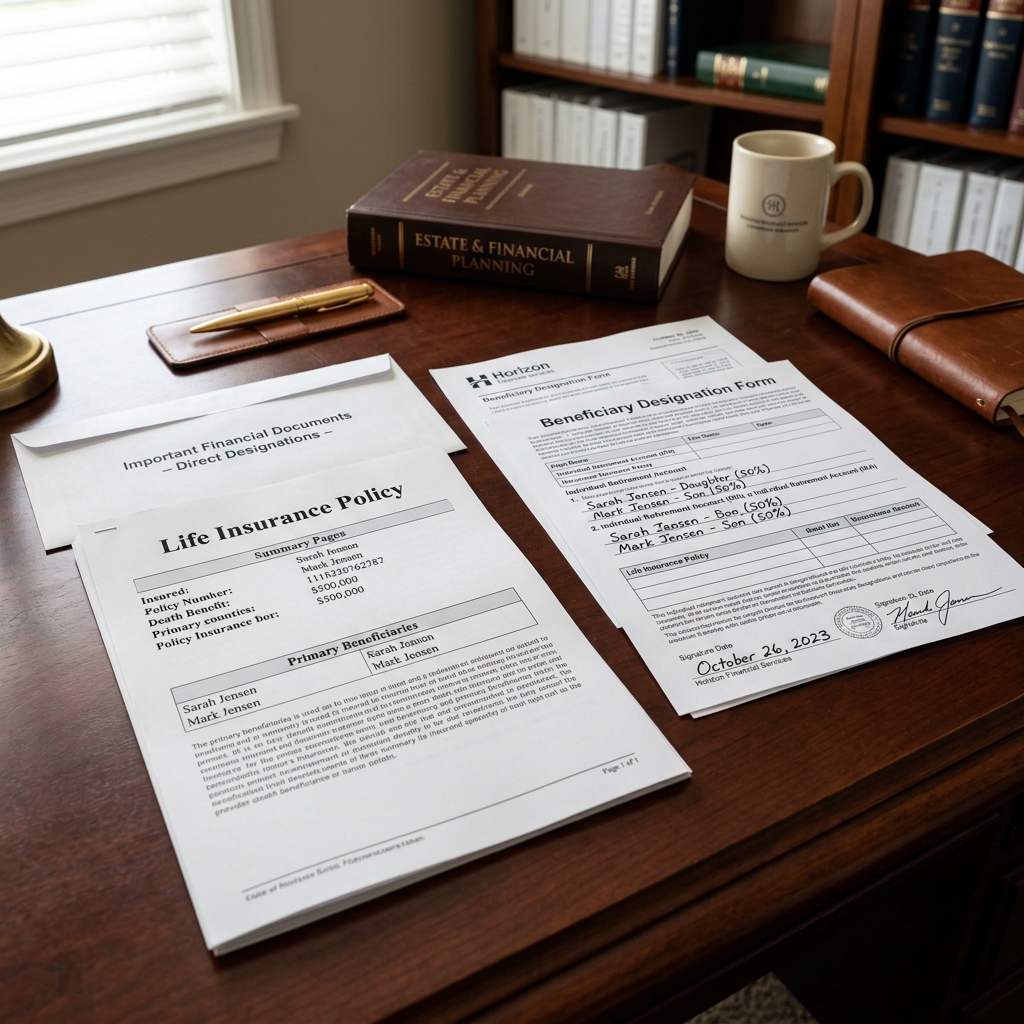
Many people assume that a will is the only way to decide who receives their property when they die. In reality, beneficiary designations on financial accounts and insurance policies can transfer large portions of an estate directly to loved ones, even if the person never signed a will. This article explains how beneficiary designations work, how they interact with wills and intestacy laws, and how you can use them carefully if you do not yet have a formal will.
Understanding Beneficiaries, Heirs, and Intestacy
Before relying on beneficiary designations, it helps to understand a few key terms used in estate planning and inheritance law.
- Beneficiary: A person or entity named on a form or contract to receive a specific asset (for example, on a life insurance policy or retirement account).
- Heir: Someone entitled to inherit under state intestacy laws when a person dies without a valid will.
- Intestacy laws: State statutes that decide who receives your property if you die without a will. These laws typically prioritize a surviving spouse and children, followed by other relatives.
Beneficiaries are chosen directly by the account owner, while heirs are determined automatically by law if no valid estate plan exists. When you rely on beneficiary designations, you are intentionally choosing beneficiaries instead of leaving everything to intestacy.
What Is a Beneficiary Designation?
A beneficiary designation is a legally binding instruction you give to a financial institution or insurance company specifying who should receive a particular asset at your death. When you complete a beneficiary form:
- The institution records the names of beneficiaries and their share or percentage.
- At your death, the institution pays or transfers the asset directly to those beneficiaries after verifying a death certificate and identity.
- The transfer generally occurs outside of probate, meaning a court does not need to oversee the distribution of that asset.
Beneficiary designations are commonly used on:
- Retirement accounts such as IRAs and 401(k)s
- Life insurance policies
- Payable-on-death (POD) bank accounts
- Transfer-on-death (TOD) brokerage or investment accounts
Because these designations are part of contractual documents, they typically take priority over contrary instructions in a will.
How Beneficiary Designations Work Without a Will
If you die without a will but have valid beneficiary designations on most of your major accounts, those particular assets will usually pass directly to the named beneficiaries. The process often looks like this:
- Beneficiaries notify the institution of your death and provide a death certificate.
- The institution confirms the beneficiary designation on file.
- Funds or ownership are transferred to the beneficiaries without going through probate for those assets.
At the same time, any property without beneficiary designations or other non-probate transfer tools (such as a trust or joint ownership) will still pass under state intestacy laws. In other words:
- Assets with beneficiary designations follow the contract.
- Assets without designated beneficiaries follow the law of intestacy if there is no will.
Beneficiary Designations vs. Wills: Which Controls?
A common question is whether a will can override a beneficiary designation. According to estate planning practitioners, the general rule is that beneficiary designations prevail over the will for the specific accounts to which they apply.
| Feature | Will | Beneficiary Designation |
|---|---|---|
| Controls | Property in your probate estate (assets not otherwise directed). | Specific accounts and policies listed on forms filed with institutions. |
| Process | Requires probate court oversight unless assets are small or exempt. | Transfers directly to named beneficiaries, typically without probate. |
| Priority in case of conflict | Usually subordinate; will cannot change a valid beneficiary form. | Generally overrides contrary instructions in a will. |
| Flexibility | Must be formally updated or rewritten to change distributions. | Often can be changed by submitting a new form to the institution. |
This means that if you list one child as the beneficiary of your retirement account, and your will later attempts to split that same account among several relatives, the institution will still pay the account to the beneficiary named on the form.
Pros and Cons of Relying on Beneficiary Designations Alone
Using beneficiary designations instead of a will can be appealing, but it has both advantages and limitations.
Potential Advantages
- Probate avoidance: Assets with designated beneficiaries generally bypass probate, which can reduce court oversight, delay, and cost for those accounts.
- Speed of access: Beneficiaries often receive funds more quickly because they only need to file claims and provide documentation to the institution.
- Simplicity: Completing a beneficiary form is straightforward, and many institutions allow you to update designations online.
- Privacy: Transfers via beneficiary designations are usually not part of public probate records, which can maintain more privacy about your financial affairs.
Important Limitations
- Incomplete coverage: Some assets cannot be transferred by beneficiary designation, including personal property, real estate in many situations, and small accounts where no form is offered.
- Risk of outdated forms: If you fail to update designations after major life changes, an ex-spouse or estranged relative might still inherit a significant asset.
- No overall plan for debts and expenses: Beneficiary designations do not explain how to pay taxes, final bills, or administrative costs. Those issues are usually handled through the estate in probate.
- Complex family situations: Blended families, beneficiaries with special needs, or minor children often require more nuanced planning than simple designation forms can provide.
Because of these limitations, many experts emphasize that even people with extensive beneficiary designations still benefit from having a basic will as a safety net.
Coordinating Beneficiary Designations With Intestacy
If you choose to rely heavily on beneficiary designations but do not yet have a will, you are effectively combining contract-based transfers with default statutory rules for the remaining property.
Consider the following coordination points:
- State intestacy laws will control any property that is not directed by a beneficiary designation, trust, or joint ownership arrangement.
- Your beneficiaries under account contracts may be different from the heirs identified under state law, which can produce unequal or unexpected outcomes.
- In some cases, a court-appointed personal representative must still gather and manage the probate estate, even if many major assets pass directly to beneficiaries.
To avoid surprises, it is helpful to understand who your legal heirs would be under intestacy. States typically provide public information on these laws through official legislative or judicial websites.
Practical Steps to Make Solid Beneficiary Designations
Creating effective beneficiary designations involves more than simply writing a name on a form. Institutions and laws impose certain requirements to ensure valid transfers.
1. Identify All Accounts That Allow Beneficiary Designations
- List retirement accounts (e.g., IRA, 401(k), 403(b)).
- Review life insurance policies and annuities.
- Check bank accounts for payable-on-death options.
- Look at investment and brokerage accounts for transfer-on-death provisions.
Contact each institution to confirm whether beneficiary designations are available and how they must be completed.
2. Complete Forms Accurately and Clearly
- Use full legal names and confirm spellings.
- Include requested identifying information, such as date of birth or Social Security number, as allowed.
- Specify percentages or shares for multiple beneficiaries so the distribution is clear.
- Consider naming contingent beneficiaries who would inherit if your primary beneficiary dies before you.
Accuracy matters because incomplete or incorrect forms can fail, causing the asset to fall into the estate and be handled under the will or intestacy laws instead.
3. Understand Legal and Institutional Requirements
- Institutions may impose age or capacity requirements for certain types of beneficiaries, especially minors or individuals with special needs.
- State law may limit or shape certain designations, particularly for retirement accounts or spousal rights.
- Some accounts require spousal consent to name non-spouse beneficiaries, depending on applicable federal or state rules.
Reviewing the institution’s official documentation and, when needed, consulting legal counsel can help ensure your designations meet both contract and legal standards.
4. Review and Update Regularly
Beneficiary designations are not a one-time task. Estate planning sources recommend reviewing them after major life events:
- Marriage or divorce
- Birth or adoption of a child
- Death of a previously named beneficiary
- Significant changes in financial circumstances or health
Updating designations typically involves submitting new forms, and institutions are bound to follow the most recent valid version. Keeping copies with your other estate planning records can make administration easier for your survivors.
Why You May Still Want a Will
Even if beneficiary designations cover a large portion of your assets, many financial educators and attorneys emphasize that a basic will remains valuable.
- Coverage of overlooked assets: A will can address property that does not have a beneficiary designation, such as household belongings, vehicles, or real estate in your sole name.
- Appointment of a guardian for minor children: Beneficiary forms cannot appoint guardians; only a will or court proceeding can do this.
- Direction for taxes and expenses: A will can specify how to pay final bills, taxes, and administrative fees from the estate, which helps structure the settlement process.
- Coordination with trusts and other tools: A will can work together with trusts, powers of attorney, and health directives to form a comprehensive plan.
In practice, beneficiary designations are often one piece of a broader estate plan rather than a full replacement for a will.
Frequently Asked Questions (FAQs)
1. If I have beneficiaries named on all my major accounts, do I still need a will?
Beneficiary designations can direct many significant assets, and they often avoid probate for those accounts. However, most experts say you still benefit from a will because it covers property without designations, addresses guardianship issues, and provides instructions for paying debts and expenses.
2. What happens if a beneficiary I named dies before me and I never update the form?
If a primary beneficiary dies and you do not have a contingent beneficiary listed, the designation may fail. In that case, the asset usually becomes part of your estate and is distributed according to your will or, if you have no will, under state intestacy laws.
3. Can my family challenge a beneficiary designation in court?
Beneficiary designations are generally respected as binding contract instructions. Challenges may be possible in limited situations, such as alleged fraud, duress, or lack of capacity, but the legal standards are high and disputes can be complex. Legal advice is important in such cases.
4. Do beneficiary designations help reduce legal fees?
Transfers that bypass probate usually involve fewer court procedures, which can reduce some legal costs for those assets. However, if other property still requires probate, or if disputes arise, legal fees may still be significant.
5. Are beneficiary designations appropriate for everyone?
Beneficiary designations are useful for many people because they are simple and effective for specific accounts. Nevertheless, individuals with complicated family structures, business interests, or substantial estates often need a more comprehensive plan that includes wills, trusts, and coordinated tax strategies.
References
- Understanding Beneficiary Designation In Estate Planning — Western & Southern Financial Group. 2023-06-01. https://www.westernsouthern.com/retirement/beneficiary-designation
- Do I Need a Will if I Have Named Beneficiaries on Most of My Assets? — University of Illinois Extension. 2016-11-17. https://extension.illinois.edu/blogs/plan-well-retire-well/2016-11-17-do-i-need-will-if-i-have-named-beneficiaries-most-my-assets
- Does a Will Take Precedence over Beneficiary Designations? — Sims Campbell Law Firm. 2023-04-10. https://www.simscampbell.law/does-a-will-take-precedence-over-beneficiary-designations/
- Does a Will Take Precedence over Beneficiary Designations? — Beck Elder Law. 2022-09-15. https://beckelderlaw.com/does-a-will-take-precedence-over-beneficiary-designations/
- Beneficiary Designations — Hamilton Law, PLC. 2023-01-05. https://www.hamiltonlawplc.com/practice-areas/estate-planning/beneficiary-designations/
- What Is a Beneficiary Designation and Why Does It Matter? — Antanavage Farbiarz PLLC. 2025-12-05. https://www.antanavagefarbiarz.com/2025/12/what-is-beneficiary-designation/
- What Happens When Someone Dies Without a Beneficiary? — Rossi DeMarco Law Firm. 2024-03-18. https://www.valelawoffice.com/blog/beneficiary-designations-are-a-free-fast-and-effective-estate-planning-tool/
Similar Articles








Read full bio of medha deb


