
Anti-Gay Assaults And Hate Crimes: What Victims Should Know Now
How bias, assault, and hate crime laws overlap when violence targets LGBTQ people.
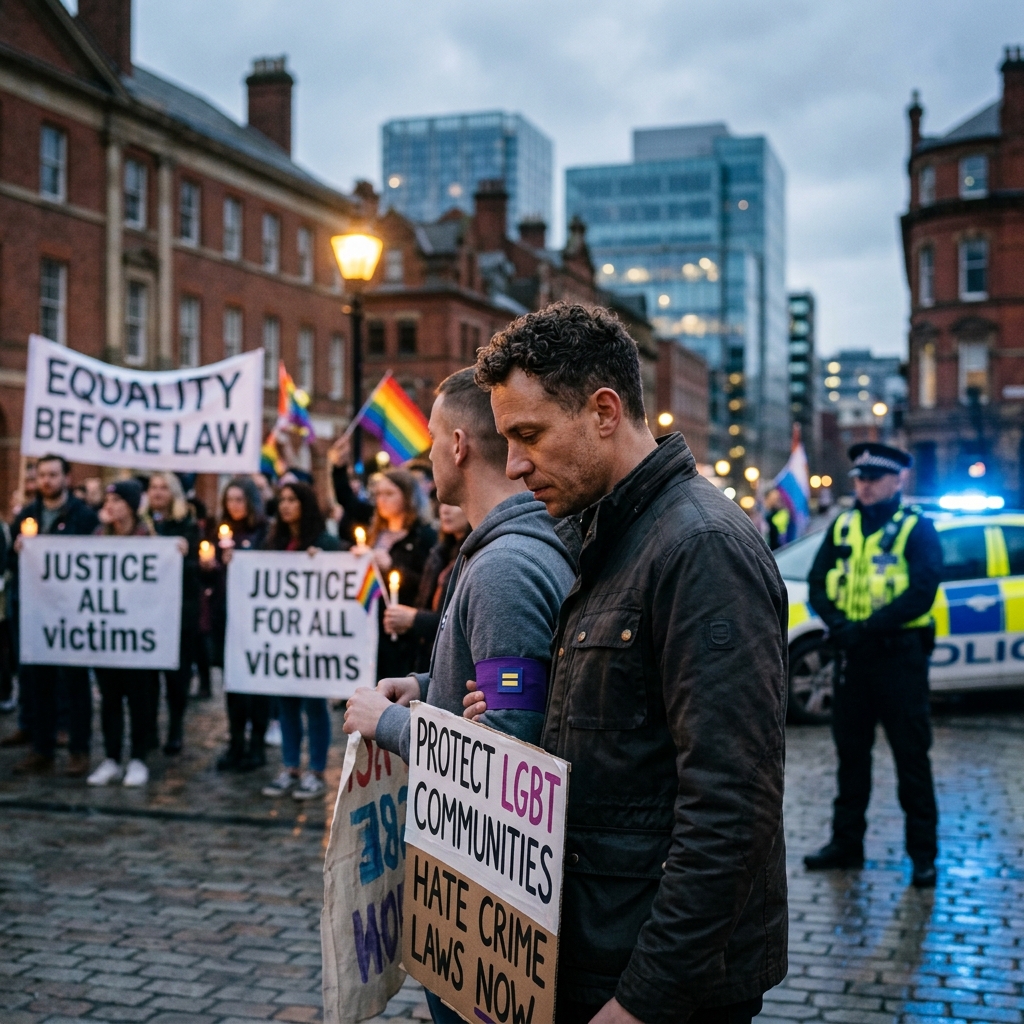
Violence directed at someone because they are believed to be gay, lesbian, bisexual, or otherwise LGBTQ can be more than a simple assault. In many jurisdictions, it may qualify as a hate crime if the attacker acted out of bias and targeted the victim because of sexual orientation or gender identity.
The key legal question is not only whether an assault occurred, but also whether prejudice was a motivating factor. That distinction matters because hate crime laws are designed to punish both the physical harm and the broader social harm caused by bias-driven violence.
What makes an assault a hate crime?
An assault becomes a hate crime when the crime is committed because of a protected characteristic. Under federal law, hate crime rules cover bias based on race, color, religion, national origin, sexual orientation, gender, gender identity, or disability. The Department of Justice explains that the “hate” in hate crime means bias, not simply anger or hostility.
In practical terms, this means an anti-gay assault may be treated as a hate crime if the attacker selected the victim because of actual or perceived sexual orientation or gender identity. The victim does not have to be LGBTQ for the law to apply; what matters is the attacker’s perception and motivation.
Why bias matters in the legal analysis
Ordinary assault laws punish the violent act itself. Hate crime laws add an additional layer because the attacker’s motive is viewed as especially harmful to the victim and to the community. Federal guidance describes hate crimes as crimes motivated by bias against a protected group, while bias incidents that do not involve criminal conduct are treated differently.
This distinction is important because hateful words alone do not always create a hate crime. There must usually be a criminal act such as assault, threats, vandalism, arson, or another offense recognized by law. The bias motive can then elevate the seriousness of the charge or influence sentencing.
Common signs that bias may have been involved
Investigators and prosecutors often look for evidence that connects the crime to anti-LGBTQ prejudice. No single fact decides the issue, but the following may be relevant:
- Slurs or anti-gay statements made during the attack.
- Prior threats or harassment referencing the victim’s sexual orientation or gender identity.
- Symbols, messages, or online posts showing anti-LGBTQ hostility.
- Targeting of LGBTQ venues, events, or community spaces.
- Statements from witnesses describing bias-driven behavior.
Bias can be proven through direct statements or inferred from surrounding circumstances. A prosecutor does not always need a written confession; the total pattern of conduct may be enough to show motive.
Does the victim have to be openly LGBTQ?
No. Hate crime laws generally focus on the attacker’s belief, not the victim’s identity. If the offender attacked someone because they believed the person was gay or transgender, the law may still apply even if that belief was wrong.
This rule helps capture attacks based on appearance, association, expression, or rumor. It also reflects the reality that bias-driven violence often depends on stereotypes rather than verified facts.
How hate crime charges differ from ordinary assault charges
Most anti-gay assaults begin as standard criminal cases such as simple assault, battery, aggravated assault, or attempted battery. When prosecutors believe bias played a substantial role, they may add a hate crime allegation or use hate crime statutes as a sentencing enhancement. The federal Department of Justice notes that hate crimes often overlap with violent offenses such as assault, murder, arson, vandalism, and threats.
The practical effect can be significant. Hate crime charges may increase the seriousness of the offense, strengthen the penalties, and change how the case is handled in court. Some jurisdictions also allow civil remedies or protective orders in addition to criminal charges.
What kinds of conduct may be covered?
Anti-gay hostility can show up in many forms. Not every act will become a hate crime, but common examples include:
- Physical attacks after anti-LGBTQ slurs.
- Threats of violence based on sexual orientation.
- Vandalism of homes, vehicles, or businesses with anti-gay messages.
- Harassment that escalates into criminal intimidation.
- Group assaults involving repeated anti-LGBTQ abuse.
Some incidents may involve speech that is offensive but not criminal. Others may involve speech plus conduct, which is often where hate crime law comes into play. Courts generally distinguish protected expression from threats, intimidation, and violence.
Federal and state roles in hate crime enforcement
Both federal and state systems can address hate crimes, but most cases are prosecuted by state and local authorities. The Matthew Shepard and James Byrd, Jr. Hate Crimes Prevention Act expanded federal law to include bias against sexual orientation and gender identity. The Justice Department explains that state and local officials still handle most violent bias-motivated crimes, while federal prosecution is reserved for specific circumstances.
That division matters because the same incident may be investigated under multiple legal theories. A local prosecutor may file assault charges and a hate crime enhancement, while federal authorities may step in if the legal requirements for federal jurisdiction are met.
What victims should do after an anti-gay assault
Anyone who has been attacked or threatened should treat the incident as a serious criminal matter and preserve evidence. Prompt reporting improves the chance that police can document slurs, threats, injuries, witnesses, and physical evidence before it disappears.
- Call emergency services if there is immediate danger.
- Seek medical care and keep records of injuries.
- Write down exact words used by the attacker, if possible.
- Save texts, posts, emails, photos, or videos connected to the incident.
- Identify witnesses and ask whether they are willing to speak to police.
- Report the bias element clearly, not just the physical assault.
Detailed documentation can make the difference between an ordinary assault case and a hate crime investigation. If the offender used online messages, location tags, or public social media posts, those records may also help prove motive.
How prosecutors and police evaluate hate crime evidence
Police officers and prosecutors typically look at both the act itself and the surrounding context. A single slur may not be enough by itself, but repeated comments, prior threats, or a pattern of anti-LGBTQ conduct can strengthen the case. Evidence of planning or targeting may also matter.
Because motive is a central issue, investigators often gather statements from witnesses, records of past conflicts, and any digital evidence that shows bias. The legal focus is on whether prejudice was a substantial reason for the attack, even if there were other motives as well.
Why hate crime laws exist
Hate crime statutes recognize that bias-motivated violence does more than injure one person. It can intimidate an entire community, make people fear using public spaces, and reinforce exclusion through fear. That is why the law often treats these crimes as especially serious.
For LGBTQ communities, anti-gay assaults can have a chilling effect far beyond the individual victim. When people are targeted because of identity or perceived identity, the attack sends a message to others who share that characteristic. Hate crime law responds to that broader harm.
Hate crimes, hate incidents, and free speech
Not every offensive or prejudiced act is a crime. Government guidance distinguishes a hate crime from a bias incident: a hate crime involves criminal conduct, while a bias incident may involve prejudice without violence, threat, or property damage. This distinction helps protect free speech while still punishing criminal acts.
That means hateful views alone are not enough for a criminal case. The law generally becomes involved when those views are tied to assault, threats, vandalism, or another punishable offense. In that sense, hate crime laws regulate conduct, not mere opinion.
Quick comparison of related legal concepts
| Concept | What it means | Legal result |
|---|---|---|
| Assault | Physical attack or attempted harmful contact | Criminal charge based on the act itself |
| Bias incident | Prejudiced conduct without a crime | May be reported, but not always chargeable |
| Hate crime | Crime motivated by bias against a protected group | Can increase charges or penalties |
Frequently asked questions
Is every anti-gay assault a hate crime?
No. An anti-gay assault is a hate crime only if bias against sexual orientation or gender identity was a motivating factor and the conduct satisfies the elements of a criminal offense.
What if the attacker claims it was not about sexuality?
That claim does not automatically end the inquiry. Investigators can rely on statements, behavior, prior incidents, and other evidence to determine motive.
Can a hate crime charge be added to another offense?
Yes. In many cases, hate crime allegations are added to underlying charges such as assault, battery, vandalism, or threats.
Do hate crime laws apply only if the victim is LGBTQ?
No. They can also apply when the victim is perceived to be LGBTQ, even if that perception is mistaken.
Should victims report anti-gay slurs even if no major injury occurred?
Yes. Slurs and threats may help establish bias and are important evidence even when the physical harm seems limited.
References
- Learn About Hate Crimes — U.S. Department of Justice. 2024-01-01. https://www.justice.gov/hatecrimes/learn-about-hate-crimes
- Matthew Shepard and James Byrd, Jr. Hate Crimes Prevention Act — U.S. Congress / U.S. Department of Justice. 2009-10-28. https://www.justice.gov/crt/hate-crime-laws
- Federal Hate Crimes Law — U.S. Department of Justice, Civil Rights Division. 2024-01-01. https://www.justice.gov/crt/federal-hate-crimes-law
- Anti-LGBT Violence & Harassment — GLAD Law. 2017-01-01. https://www.gladlaw.org/wp-content/uploads/2017/01/Anti-LGBT-Harassment-Violence.pdf
- Hate Crimes FAQs — San Diego County District Attorney. 2024-01-01. https://www.sdcda.org/helping/hate-crimes-faq.html
- Hate Crime Laws & the LGBTQ+ Community — Justia. 2024-01-01. https://www.justia.com/lgbtq/criminal-justice/hate-crimes/
Similar Articles








Read full bio of Sneha Tete




