
Alaska’s Pet Custody Law: Putting Animal Well‑Being First
How Alaska’s groundbreaking divorce law reshaped pet custody by prioritizing animal welfare over simple ownership rights.
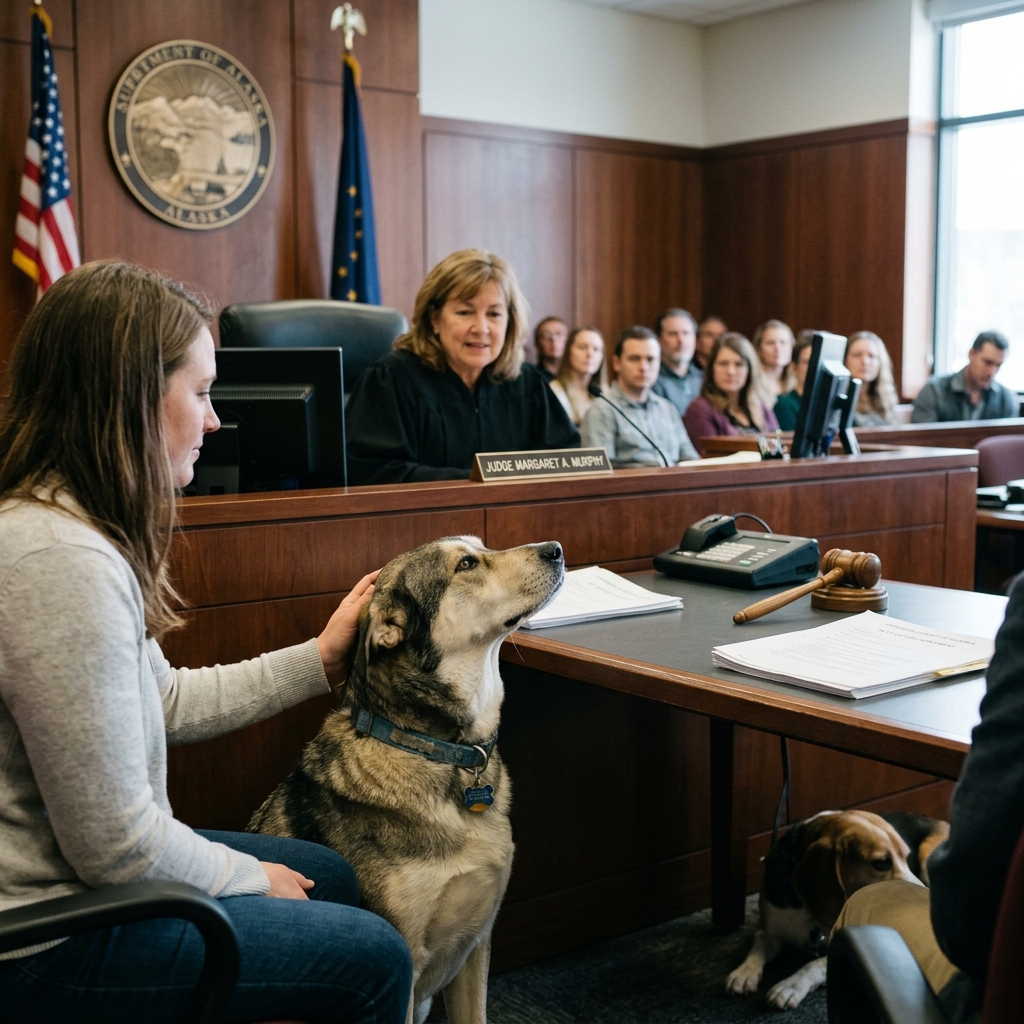
In recent years, courts and legislatures have begun to recognize that pets are more than property. They are family members whose lives are deeply affected when relationships end. Alaska became the first U.S. state to formally embrace this reality by requiring divorce courts to consider the well-being of companion animals when deciding who keeps them.
This article explains how Alaska’s law works, why it matters, how it compares to traditional approaches that treat pets as property, and what divorcing couples with animals should know about navigating pet custody disputes.
From Property to Family: Why Pet Custody Needed Reform
Historically, in divorce cases, dogs, cats, and other companion animals were treated similarly to household items: the court decided which spouse “owned” the pet and awarded it as part of the property division. Emotional bonds, daily care, and the animal’s welfare were largely irrelevant to the legal analysis.
Several factors pushed lawmakers and judges to reconsider this model:
- Growing recognition that animals have interests and needs beyond their monetary value.
- Significant evidence that people view pets as family members, not belongings.
- More frequent and complex disputes over beloved animals in divorces, cohabitations, and breakups.
- Advocacy by animal protection organizations urging courts to factor in welfare and avoid harmful outcomes for pets.
Alaska responded to these trends with a landmark amendment to its divorce statute, marking the first time a state explicitly required courts to address the well-being of companion animals when assigning ownership in divorce and dissolution proceedings.
Core Features of Alaska’s Groundbreaking Law
In 2016, Alaska enacted House Bill 147, a bipartisan measure signed by the governor that took effect in January 2017. The law introduced several key innovations:
Mandatory Consideration of Animal Well‑Being
Alaska’s amended divorce law empowers and directs judges to consider the “well-being of the animal” when deciding who should receive a companion animal as part of the divorce. This is a significant departure from traditional property-based analysis.
Under this framework, courts may look to factors analogous to those used in child custody, such as:
- Who has primarily cared for the animal (feeding, walking, grooming, vet visits).
- Who has the stronger emotional bond with the pet.
- Which home environment is more stable, safe, and suitable.
- Any history of neglect or abuse by either party.
By focusing on welfare rather than strict ownership, the law aims to place pets where they are most likely to thrive.
Recognition of Joint Ownership and Custody‑Like Arrangements
Alaska’s statute is also the first in the country to explicitly allow joint ownership of a companion animal in divorce cases. Courts can award shared arrangements when both parties have meaningful relationships with the animal and when it appears beneficial and practical for the pet.
While the law does not mandate detailed visitation schedules, it gives judges discretion to craft creative solutions, such as:
- Alternating physical possession of the pet on a weekly or monthly basis.
- Allowing one spouse primary care but granting the other regular visitation.
- Requiring cooperation on major veterinary decisions and shared financial responsibility.
These custody-like options mark an important evolution from a purely property-based assignment.
Companion Animals as Unique Legal Subjects
Although animals remain legally categorized as property in many contexts, Alaska’s law carves out a special treatment for companion animals. The statute signals that these beings warrant consideration of their interests and welfare, not solely ownership rights.
This shift is part of a broader trend in animal law, where courts and legislatures increasingly distinguish between living beings with needs and inert objects with only economic value.
How Alaska’s Approach Differs from Traditional Pet Custody Rules
| Aspect | Traditional Property Approach | Alaska’s Welfare‑Focused Approach |
|---|---|---|
| Legal classification of pets | Purely property, like furniture or vehicles. | Still property, but courts must consider the animal’s well-being in custody decisions. |
| Primary decision criteria | Ownership documents, purchase price, or financial contribution. | Caregiving history, emotional bonds, home environment, and welfare. |
| Joint arrangements | Often discouraged; courts typically assign the pet to one spouse. | Law explicitly allows joint ownership and creative custody-like solutions. |
| View of the animal | Object of property division. | Nonhuman family member whose interests must be considered. |
Factors Alaska Courts May Weigh in Pet Custody Disputes
Although Alaska’s statute does not list a rigid checklist, practice in Alaska and similar jurisdictions reveals common considerations when applying a welfare-focused standard.
1. History of Care and Responsibility
Courts often look at who has undertaken day-to-day responsibilities for the animal, including:
- Feeding, walking, and exercise routines.
- Bathing and grooming.
- Scheduling and attending veterinary appointments.
- Training and socialization.
Records such as vet bills, licenses, microchip registrations, adoption contracts, and receipts for food and supplies can help demonstrate actual caregiving roles.
2. Emotional Bond and Stability
Courts may consider which party appears to have the closer relationship with the animal and which home offers more stability. Relevant factors can include:
- Length of time the pet has lived with each person.
- Evidence of strong attachment or distress when separated.
- Predictability of routines and continuity of environment.
Because stability is important for animal welfare, judges may favor arrangements that minimize disruption to the pet’s life.
3. Home Environment and Capacity to Care
Courts may evaluate which spouse is better positioned to meet the pet’s physical and emotional needs, asking questions such as:
- Is there adequate space indoors and outdoors for the animal?
- Does the household allow for safe supervision and interaction?
- Does the person’s work schedule permit regular care and attention?
- Can the party afford necessary veterinary treatment and quality food?
These considerations help ensure that the pet’s future home promotes health and comfort.
4. Pre‑Relationship Ownership and Agreements
Where one party owned the animal before the relationship, that fact may influence the analysis. Additionally, written agreements—such as prenuptial provisions or cohabitation contracts addressing pets—can guide the court’s decision.
While Alaska’s law allows judges to depart from strict ownership rules in favor of welfare, clear prior agreements remain relevant, especially when they align with the pet’s best interests.
5. Evidence of Neglect or Abuse
Any credible evidence of mistreatment can be highly significant. Courts are unlikely to place an animal with someone who has harmed or neglected it.
Reports from veterinarians, animal control, shelters, or witnesses may be considered when evaluating the safety of each environment.
Alaska in the National Context: Other States Following Suit
Alaska’s 2017 law was the first in the United States to explicitly require consideration of animal well-being in divorce custody disputes. Since then, several other jurisdictions have enacted similar statutes, recognizing the need for more nuanced pet custody rules.
As of 2024, states including Illinois, California, New Hampshire, Maine, New York, Delaware, Rhode Island, and the District of Columbia have adopted laws that allow or require courts to consider the best interests or well-being of pets when assigning custody.
Although the specific language and procedures vary, these laws share common features:
- Courts may evaluate caregiving history and welfare rather than strictly relying on ownership documents.
- Some jurisdictions permit joint custody or visitation-like arrangements.
- Recognition that animal interests are distinct from the financial interests of the parties.
Alaska’s pioneering statute helped spur this trend, demonstrating that treating animals as nonhuman family members is legally workable and socially supported.
Practical Guidance for Divorcing Couples with Pets in Alaska
For couples separating in Alaska, the welfare-based law offers both opportunities and responsibilities. Proactive planning can reduce conflict and improve outcomes for pets.
Document Your Role in the Pet’s Life
Judges often rely on concrete evidence to decide where a pet should live. Helpful documentation includes:
- Veterinary records listing the primary contact and payer.
- Receipts for food, supplies, and grooming services.
- Licenses, microchip registrations, and insurance policies.
- Training contracts, daycare or boarding records, and behavior evaluations.
Such records can demonstrate who consistently shows up for the animal’s needs.
Consider a Pet Agreement Before Conflict Arises
Couples who anticipate potential disputes may choose to address pet custody in advance, through:
- Prenuptial agreements that specify who keeps the pet in case of divorce.
- Cohabitation or partnership contracts covering animals acquired during the relationship.
- Written pet plans that outline custody, expenses, and decision-making roles.
While courts retain authority to prioritize welfare, clear agreements can guide decisions, especially when they promote the animal’s best interests.
Evaluate Whether Shared Arrangements Help or Hurt the Pet
Joint ownership can be attractive when both parties are deeply attached to a pet, but it is not always best for the animal. Couples should thoughtfully assess:
- Whether frequent transitions between households will stress the pet.
- Whether schedules and locations make a shared plan practical.
- Whether the parties can communicate and cooperate around care.
Alaska courts tend to favor stability and may prefer awarding primary custody to one person when conflict is high. Couples who choose shared arrangements should prioritize consistency and low-stress routines for the animal.
Think Beyond Ownership: Focus on Welfare
The core message of Alaska’s law is that pets’ well-being should drive decisions. This means that, in some cases, a person who loves an animal deeply may still choose to let the pet live with the partner whose home and schedule better support the animal’s needs.
Approaching pet custody with welfare as the guiding principle can reduce adversarial disputes and align legal outcomes with the animal’s best interests.
Frequently Asked Questions About Pet Custody in Alaska
Are pets still considered property under Alaska law?
Yes. Legally, pets remain classified as property. However, Alaska’s divorce statute is unique because it requires courts to consider the well-being of companion animals when assigning them in divorce and dissolution proceedings, rather than relying solely on ownership or financial considerations.
Can Alaska courts order joint custody or visitation for pets?
Alaska’s law explicitly permits joint ownership of companion animals in divorce cases. While it does not mandate detailed visitation schedules, courts can create creative arrangements that resemble custody or visitation when doing so serves the animal’s welfare and the parties are capable of cooperating.
What kinds of evidence help in a pet custody dispute?
Evidence showing your involvement in the animal’s life is particularly important. Courts may look at veterinary records, receipts for food and care, licensing documents, microchip registrations, and testimony about who regularly feeds, exercises, and supervises the pet.
Does Alaska’s approach influence other states?
Yes. Alaska was the first state to require explicit consideration of animal well-being in pet custody decisions, and its law helped inspire similar legislation in states such as Illinois, California, New Hampshire, Maine, New York, Delaware, Rhode Island, and the District of Columbia.
What should I prioritize if I am separating and want the best for my pet?
Prioritize the animal’s stability, safety, and emotional comfort. Consider which home can consistently provide routine care, veterinary attention, low stress, and secure living conditions. Be prepared to support your position with evidence, and be open to arrangements that best serve the pet’s welfare—even if they require compromise.
References
- Alaska is First State to Consider Well Being of Pets in Divorce Proceedings — Society for the Prevention of Cruelty to Animals Los Angeles (spcaLA). 2017-01-23. https://spcala.com/alaska-is-first-state-to-consider-well-being-of-pets-in-divorce-proceedings/
- Alaska Legislature Becomes First to Require Consideration of Animals’ Interests in Custody Cases — Animal Legal Defense Fund. 2024-07-01 (updated). https://aldf.org/article/alaska-legislature-becomes-first-to-require-consideration-of-animals-interests-in-custody-cases/
- Pet Custody in Alaska: Who Gets the Pet in a Divorce? — Polaris Law Group. 2023-06-15. https://matsuattorney.com/pet-custody-in-alaska-who-gets-the-pet-in-a-divorce/
- Pet Custody in a Divorce — O’Keeffe O’Brien Lyson Attorneys. 2019-04-10. https://www.okeeffeattorneys.com/pet-custody-in-a-divorce/
- How Your State Determines Pet Custody in Divorce — Hello Divorce. 2024-03-05. https://hellodivorce.com/parenting/how-your-state-determines-pet-custody
- In a First, Alaska Divorce Courts Will Now Treat Pets More Like Children — The Washington Post. 2017-01-24. https://www.washingtonpost.com/news/animalia/wp/2017/01/24/in-a-first-alaska-divorce-courts-will-now-treat-pets-more-like-children/
Similar Articles








Read full bio of Sneha Tete


