
Contract Job Lawsuit: Comprehensive Guide To Claims & Remedies
Learn how disputes over contract work arise, how lawsuits unfold, and what legal options contractors, employees, and clients have when agreements break down.
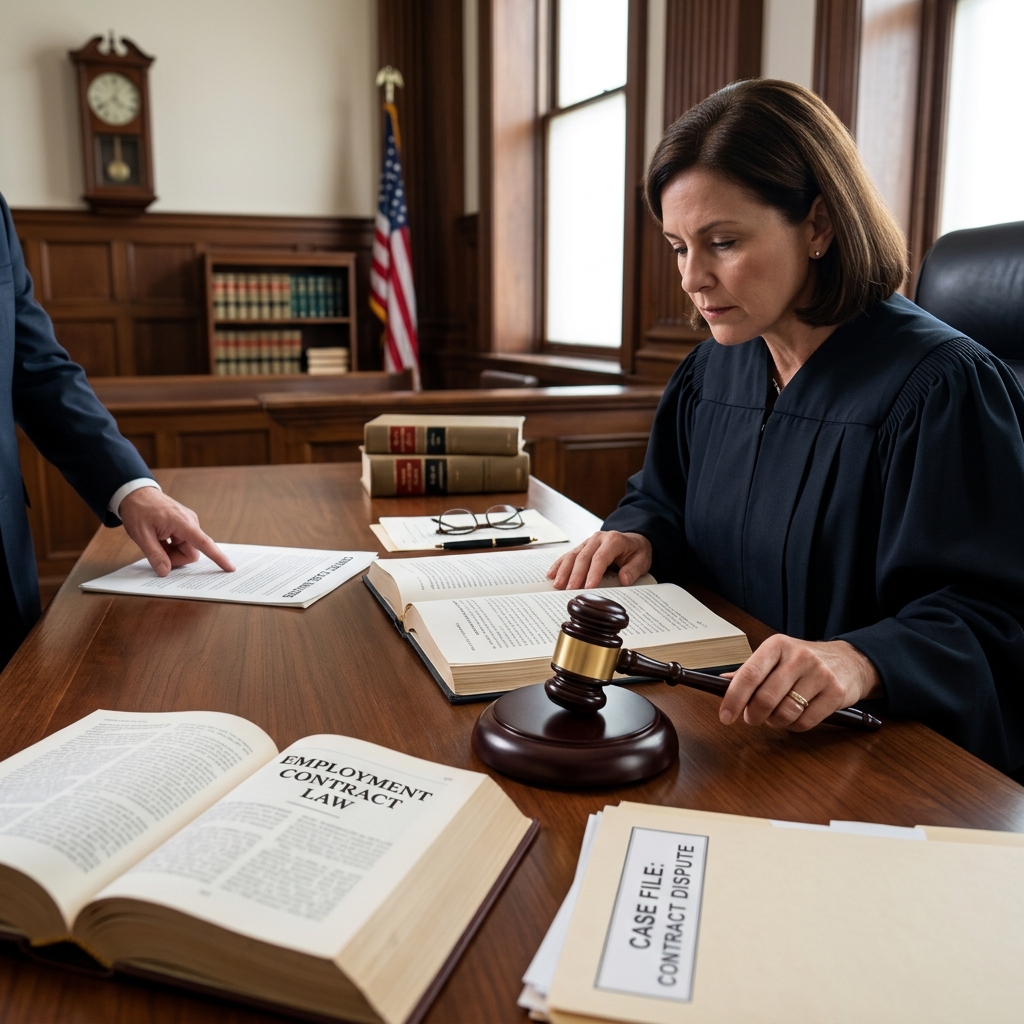
Contract work is now a major part of the modern economy. Businesses rely on written agreements to hire employees, independent contractors, and temporary workers, and individuals use contracts to secure pay, benefits, and job security. When one side fails to live up to what was promised, a contract job lawsuit may be the only way to enforce those rights or resolve the dispute.
This article explains how contract job lawsuits arise, what legal standards apply, how the court process typically works, and what both workers and hiring parties can do to protect themselves. It covers employment contracts, independent contractor agreements, non-compete obligations, wage and hour issues, and practical steps to take before and during litigation.
1. What Is a Contract Job Lawsuit?
A contract job lawsuit is a legal action arising from a dispute over a work-related agreement. The agreement might be a formal written employment contract, an independent contractor agreement, or even an oral promise that creates enforceable obligations under state law.
In simplest terms, a contract job lawsuit claims that one party:
- Made a binding promise relating to work or pay;
- Failed to perform that promise (a breach);
- Caused financial or other legally recognized harm to the other party.
These lawsuits can be brought by:
- Employees who allege that their employer violated an employment agreement (e.g., wrongful termination in breach of contract, unpaid bonuses or commissions).
- Independent contractors who claim a client failed to pay for services or wrongfully terminated a project.
- Employers or clients who allege that an employee or contractor failed to deliver work, violated confidentiality obligations, or ignored non-compete clauses.
2. Types of Work-Related Contracts Commonly Involved
Although contract disputes arise in many settings, a few types of agreements are frequently seen in job-related lawsuits.
2.1 Employment Contracts
A formal employment contract defines the terms of a worker’s relationship with an employer. It may specify job duties, salary, duration of employment, grounds for termination, benefits, bonuses, and dispute resolution procedures.
In some states, employers must provide certain terms in writing, including promised wages, pay schedules, and key employment policies.
2.2 Independent Contractor Agreements
Independent contractor agreements are widely used in construction, technology, consulting, healthcare, and many gig-economy roles. These contracts typically address:
- Scope of services and deliverables;
- Deadlines and milestones;
- Payment terms and invoicing;
- Intellectual property ownership;
- Confidentiality, non-solicitation, or non-compete clauses.
Disputes often arise over whether the contractor performed adequately, whether the client provided necessary information or access, and whether termination or non-payment violates the agreement.
2.3 At-Will Employment and Implied Agreements
Many workers in the United States are employed “at will,” meaning the employer can terminate the relationship for almost any lawful reason, without a fixed term contract. However, written policies, offer letters, or oral assurances can sometimes create implied contractual rights, particularly regarding pay, benefits, or disciplinary procedures.
Courts may consider employer policies or repeated practices when deciding whether an enforceable promise existed, especially when workers reasonably relied on those statements to their detriment.
3. Common Causes of Contract Job Lawsuits
Several recurring issues trigger litigation in contract-based employment and contractor relationships.
3.1 Breach of Employment Contract
A breach of employment contract happens when an employer fails to honor material terms in the agreement. To succeed in such a claim, an employee generally must show:
- A valid contract existed with clear terms and mutual consideration;
- The employer violated one or more significant terms (such as pay, position, or duration);
- The employee fulfilled their obligations or was ready and willing to perform;
- The breach caused measurable harm, such as lost wages or benefits.
Examples include failure to pay agreed salary or bonuses, termination without cause contrary to a fixed-term contract, or not providing promised benefits when they were part of the negotiated deal.
3.2 Independent Contractor Non-Payment or Early Termination
Independent contractors often sue when clients refuse to pay invoices, dispute the quality of work, or terminate a contract in a way that violates the agreement.
Key disputes include:
- Client claiming the work was defective or incomplete;
- Arguments over change orders and additional charges;
- Termination before the contractor had an opportunity to cure alleged problems;
- Disagreements about ownership of work product.
3.3 Misclassification of Workers
Misclassification occurs when a business treats a worker as an independent contractor when, under the law, they should be considered an employee. The U.S. Department of Labor’s current rule uses a multi-factor “economic realities” test to determine whether a worker is economically dependent on the employer.
Factors include:
- Opportunity for profit or loss;
- Worker and employer investments;
- Permanence of the relationship;
- Degree of control exercised by the employer;
- Whether the work is integral to the employer’s business;
- Skills and initiative required.
Misclassified workers may pursue claims for unpaid overtime, minimum wage, or other protections available to employees under federal and state laws.
3.4 Promissory Estoppel and Reliance Claims
Even if a formal contract is disputed or incomplete, courts sometimes enforce promises under a doctrine known as promissory estoppel. This typically requires:
- A clear promise or offer by the employer or client;
- Reasonable reliance on that promise by the worker;
- Detrimental consequences, such as leaving another job or investing money based on the promise;
- Damages beyond mere disappointment.
These claims can arise when an employer recruits a worker with specific assurances that are later withdrawn.
4. Legal Elements of a Contract Job Lawsuit
Although exact standards vary by state, most contract job lawsuits share core legal elements that must be proven in court.
| Element | Typical Requirements in Work-Related Cases |
|---|---|
| Existence of a Contract | Offer, acceptance, mutual consideration, and sufficiently definite terms related to work, pay, or benefits. |
| Breach | Failure by one party to perform a material obligation, such as payment or continued employment. |
| Performance by Non-Breaching Party | The claimant performed or was ready and willing to perform their duties under the agreement. |
| Damages | Financial loss or other harm caused by the breach (lost wages, fees, benefits, etc.). |
Failure to prove any of these elements can result in dismissal of the claim.
5. Evidence Commonly Used in Contract Job Disputes
Successful contract job lawsuits depend heavily on documentary and testimonial evidence. Typical materials include:
- Signed employment or contractor agreements;
- Offer letters, emails, and text messages documenting promises;
- Pay stubs, invoices, and bank records showing payment history;
- Written policies, employee handbooks, and posted wage notices;
- Performance evaluations or project reports;
- Witness testimony from co-workers, supervisors, or clients;
- Time records and work logs (important for wage and hour disputes).
Because employment and contractor relationships often span months or years, careful record-keeping significantly strengthens either side’s position in court or settlement negotiations.
6. Remedies and Damages in Contract Job Lawsuits
If a court finds that a contract was breached or a promise was wrongfully broken, it may award various forms of relief.
6.1 Monetary Damages
Common categories of damages include:
- Compensatory (expectation) damages – Designed to put the injured party in the position they would have been in if the contract had been fully performed, often including lost wages, fees, and benefits.
- Consequential damages – Losses that flow indirectly from the breach, such as costs of securing replacement work or hiring another contractor.
- Liquidated damages – Pre-agreed amounts stated in the contract to be paid in the event of a breach.
6.2 Specific Performance and Equitable Relief
In some cases, the goal is not money but performance of the agreement. Courts may order specific performance, such as reinstatement for a wrongfully terminated employee or requiring an employer to comply with promised wage terms.
Equitable remedies are more likely where monetary damages cannot fully compensate for the harm, or where unique employment or business interests are at stake.
6.3 Attorneys’ Fees and Costs
Whether parties can recover legal fees depends on statute and contract language. Some employment and wage laws allow prevailing workers to recover attorneys’ fees, and many contracts include fee-shifting clauses.
7. How the Lawsuit Process Typically Works
The path from workplace conflict to court judgment usually involves several stages.
7.1 Internal Discussion and Informal Resolution
Most disputes begin with internal conversations:
- Worker raises concerns with HR or management;
- Contractor contacts the client to dispute unpaid invoices or scope changes;
- Parties attempt to renegotiate deadlines or payment terms.
Early open communication can resolve misunderstandings without legal action.
7.2 Alternative Dispute Resolution (ADR)
Many contracts require mediation or arbitration before a lawsuit can be filed.
- Mediation uses a neutral third party to facilitate settlement discussions.
- Arbitration is a more formal process in which an arbitrator hears evidence and issues a binding or non-binding decision.
ADR can be faster and more private than court litigation, but the rules vary widely depending on the agreement.
7.3 Filing the Complaint
If informal efforts fail, the aggrieved party may file a lawsuit in the appropriate court. The complaint sets out:
- The parties involved and their relationship;
- Key terms of the contract or promises made;
- Specific breaches alleged;
- Damages claimed;
- Legal theories (breach of contract, promissory estoppel, wage law violations, etc.).
7.4 Discovery and Pretrial Motions
Discovery allows each side to gather evidence through document requests, depositions, and written questions. Pretrial motions may seek to narrow issues or dismiss claims that lack legal support.
7.5 Settlement or Trial
Many contract job lawsuits settle before trial, based on risk assessments and legal costs. If settlement is not reached, the case proceeds to trial where a judge or jury decides liability and damages.
8. Preventing Contract Job Disputes
Prevention is often cheaper than litigation. Both workers and hiring parties can reduce risk by focusing on clarity and compliance.
8.1 For Employers and Clients
- Use clear, written contracts for employees and contractors, defining duties, pay, and termination rights.
- Ensure offer letters and policy documents do not unintentionally create conflicting promises.
- Provide required wage and pay notices in writing as mandated by state law.
- Review worker classification regularly to avoid misclassification under current federal and state standards.
- Maintain accurate payroll and time records.
8.2 For Employees and Contractors
- Request written agreements that clearly state pay, work scope, hours, and benefits.
- Keep copies of contracts, emails, and pay documentation.
- Clarify expectations early, including how performance will be evaluated.
- Document any changes to duties or pay in writing.
- Seek legal advice before signing non-compete, non-solicitation, or arbitration clauses.
9. Frequently Asked Questions (FAQs)
9.1 Can an at-will employee sue for breach of contract?
Yes, in some situations. Even at-will employees may have contractual rights related to compensation, bonuses, benefits, or procedures if those terms were clearly promised and relied upon. The claim usually focuses on specific promises rather than continued employment.
9.2 What if my contract was never put in writing?
Oral agreements and implied contracts can sometimes be enforceable, depending on state law and the nature of the promises made. Courts examine evidence such as emails, text messages, and conduct to determine whether a binding agreement existed.
9.3 How long do I have to bring a contract job lawsuit?
The deadline (statute of limitations) varies by state and type of claim. Contract claims typically must be filed within several years, while wage and hour claims may have shorter deadlines. Consulting a lawyer promptly is important to avoid losing rights.
9.4 Do I need to prove financial loss to win?
In almost all contract cases, the plaintiff must show measurable damages. Courts can enforce some promises even without substantial monetary loss, but most successful claims include evidence of lost wages, unpaid invoices, or other financial harm.
9.5 Should I try mediation before filing a lawsuit?
Mediation is often a cost-effective way to resolve disputes, especially where parties wish to preserve an ongoing business relationship. Many employment and contractor agreements require mediation or arbitration before litigation, so reviewing contract dispute clauses is essential.
10. When to Seek Legal Advice
Because contract and employment laws vary significantly across jurisdictions, and because federal rules on worker classification and wages continue to evolve, professional legal guidance is often critical.
You may wish to consult an employment or contract attorney if:
- You have been terminated despite a fixed-term employment contract;
- You are owed substantial unpaid wages, commissions, or contractor fees;
- You believe you were misclassified as an independent contractor and denied legal protections;
- You face a lawsuit from a worker or contractor alleging breach of agreement;
- Your business needs to revise contracts to comply with new labor regulations.
An attorney can evaluate the strength of potential claims, estimate damages, advise on negotiation strategies, and represent you in mediation, arbitration, or court.
References
- Lawsuits Challenge DOL’s New Independent Contractor Rule — Bricker Graydon LLP. 2024-02-27. https://www.brickergraydon.com/employment-law-report/lawsuits-challenge-dols-new-independent-contractor-rule
- Breach of Employment Contract by Employer Lawsuit in Florida — Tiffany Cruz, P.A. 2023-05-01 (approx.). https://www.tiffanycruzlaw.com/breach-of-employment-contract-by-employer
- Other Types of Employment-Related Litigation — Texas Workforce Commission. 2021-08-10 (approx.). https://efte.twc.texas.gov/other_employment_litigation.html
- Employment Agreements / Contractual Obligations — North Carolina Department of Labor. 2022-03-15 (approx.). https://www.labor.nc.gov/workplace-rights/employee-rights-regarding-time-worked-and-wages-earned/employment-agreementscontractual-obligations
- Employment Contract Breaches: Legal Rights and Remedies — Law Office educational video. 2023-09-01 (approx.). https://www.youtube.com/watch?v=eSkRhMrd4jY
Similar Articles








Read full bio of Sneha Tete


