
Work-Related Car Crashes: Employee Liability Explained
Understand when accidents on the road turn into workplace liability issues and what employees should do after a collision.
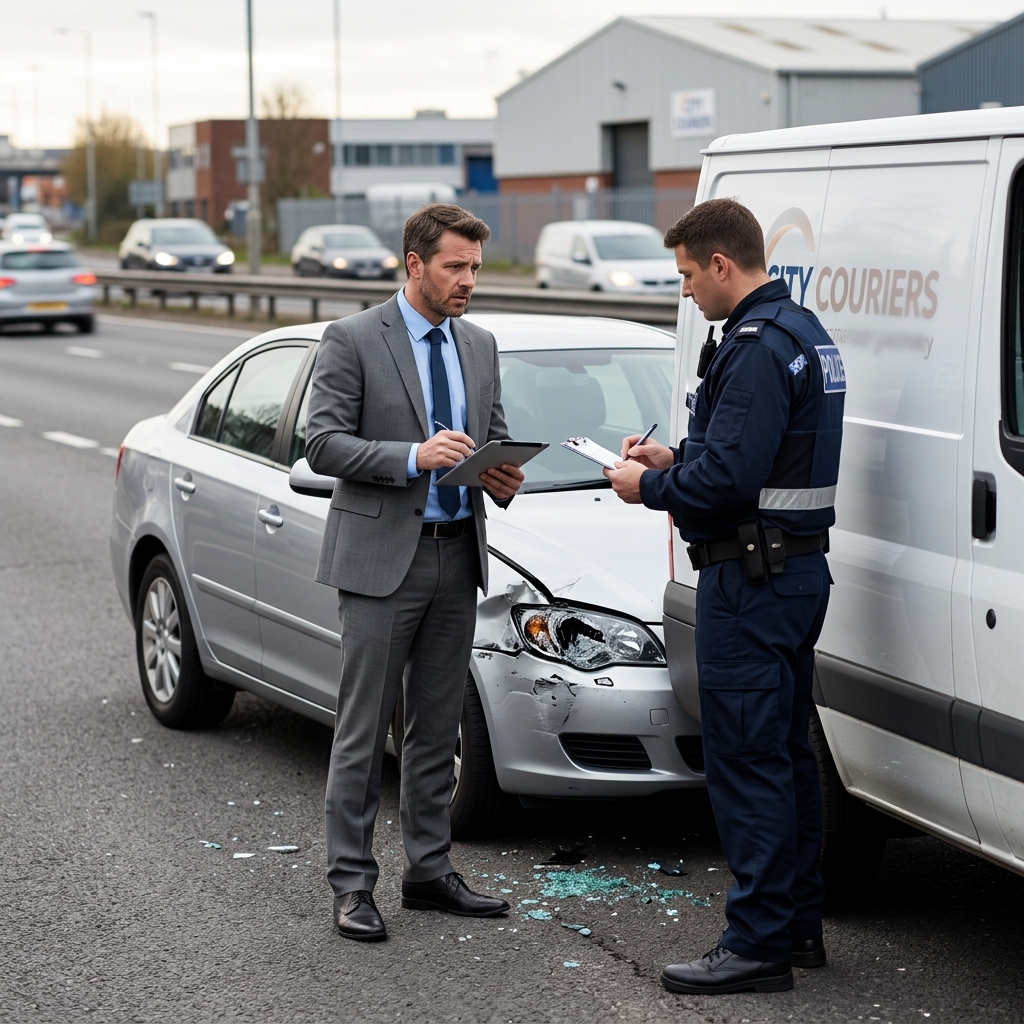
When an auto collision happens during work-related driving, the crash is no longer just a routine traffic incident—it becomes an employment law and insurance problem that can affect both the employee and the employer. Understanding how liability is allocated, which insurance applies, and what claims are available is critical to protecting your rights and minimizing financial risk.
Why Work-Related Driving Is Legally Different
Auto accidents on public roads are usually resolved under ordinary negligence and traffic laws. However, when the driver is performing job duties, additional legal doctrines and insurance coverages come into play. These include:
- Vicarious liability / respondeat superior – employers may be responsible for employees’ negligent driving within the scope of employment.
- Workers’ compensation – employees injured while driving for work may receive no-fault benefits for medical bills and some lost wages.
- Commercial and personal auto insurance – multiple policies may be triggered, depending on ownership and use of the vehicle.
- State-specific rules – such as “going and coming” rules for commuting and comparative negligence standards.
Because these systems overlap, the same crash can generate several distinct claims: a workers’ compensation case, a liability claim against an at-fault driver, and potential claims against the employer.
Key Concepts That Shape Liability
Scope of Employment
The phrase scope of employment is central to determining whether an employer is financially responsible for an employee’s driving. Courts look at whether the employee was performing tasks they were hired to do and whether the trip served the employer’s business.
Factors commonly considered include:
- Was the employee on the clock or otherwise being paid?
- Did the employer direct, authorize, or benefit from the trip?
- Was the driving part of the job (e.g., delivery, sales calls, site visits)?
- Did the employee substantially deviate for personal reasons, such as a long social visit or personal shopping?
Driving that clearly serves the employer—such as visiting a client at the employer’s request—usually falls within the scope of employment. Driving purely for personal errands usually does not.
Frolic, Detour, and Personal Deviations
To draw a line between work and personal time, many legal systems use the concepts often described as “frolic and detour.”
- Detour – a minor deviation from work activities (for example, stopping briefly for fuel or food). Employers are often still liable during a detour because the overall trip remains work-related.
- Frolic – a significant personal departure from work duties (such as a long visit with friends or unrelated personal travel). In these cases, courts are more likely to treat the employee as acting independently, cutting off employer responsibility.
The more you can show that the trip would not have occurred but for the employer’s business needs, the stronger the argument that the employer shares liability.
Commuting vs. Work Trips
Many states apply a “going and coming” rule: employers are generally not liable for accidents during routine commuting to and from a regular workplace. Travel to work is treated as personal time, even if the employee is headed to the office.
However, liability may shift when commuting overlaps with work assignments, for example:
- Running a work errand on the way home
- Driving between multiple job sites or client locations
- Using an employer-provided vehicle under employer control
- Performing a special mission requested by a supervisor outside normal hours
In these situations, the trip is no longer ordinary commuting; it may be considered a work-related journey that exposes the employer to liability.
Who Can Be Held Liable After a Work-Related Crash?
Responsibility after a work-related collision is rarely limited to a single person or entity. Multiple parties may share liability, depending on how and why the accident occurred.
| Party | When They May Be Liable |
|---|---|
| Employee driver | When their negligent driving causes the crash (speeding, distraction, impairment, violations of traffic laws). |
| Employer | When the employee was acting within the scope of employment at the time of the collision (vicarious liability). |
| Vehicle owner | In some states, owners can be vicariously liable simply because they permitted someone to drive their vehicle (dangerous instrumentality doctrines). |
| Other drivers | Any third-party driver whose negligence contributed to the crash can be held accountable in a traditional negligence claim. |
| Employers of other drivers | If the other driver was also working at the time, their employer may share responsibility under respondeat superior. |
In practice, attorneys and insurers often pursue claims against every potentially responsible party so that all available insurance coverage is considered.
How Insurance Typically Applies
One of the most confusing aspects of work-related car accidents is how insurance policies coordinate. Different coverages serve different purposes, and several may respond to the same event.
Personal Auto Insurance
If you are driving your own vehicle for work, your personal auto policy is usually the first line of coverage for property damage and bodily injury claims brought against you.
- Liability coverage can pay for injuries and property damage suffered by others if you are at fault.
- Collision coverage may help repair or replace your vehicle.
- Medical payments or similar benefits may help with medical bills.
However, some personal policies limit or exclude coverage for extensive commercial use, so it is important to review your policy terms if you regularly drive for work.
Employer’s Commercial Auto Insurance
Employers commonly carry commercial auto policies or general liability coverage that protects the business when employees cause accidents in the course of their work.
- Covers employer liability when an employee is at fault while acting within the scope of employment.
- Often includes owned company vehicles, and sometimes non-owned or hired vehicles used for business.
- May share responsibility with personal policies through allocation agreements between insurers.
The presence of commercial coverage can significantly increase available limits, which is important when injuries or property damage are substantial.
Workers’ Compensation Benefits
Separate from auto insurance, workers’ compensation is a specialized system that provides benefits to employees injured in the course of employment, including many work-related driving injuries.
- Workers’ compensation is generally a no-fault system: benefits may be available regardless of who caused the accident.
- Common benefits include medical treatment coverage, partial wage replacement, and compensation for certain permanent impairments.
- In exchange, employees usually cannot sue their employer for negligence in most work-related injury situations, with limited exceptions.
In many jurisdictions, an employee injured while driving for work can pursue workers’ compensation and, at the same time, file a separate claim against any negligent third-party driver who caused the crash.
Employee Fault and Comparative Negligence
Whether you are personally liable often turns on state negligence rules and how much responsibility you bear for the crash. Many states use comparative negligence systems, which reduce compensation in proportion to each party’s share of fault.
- In partial comparative negligence states, an injured person can recover damages as long as their fault does not exceed a set threshold (often 50%).
- In pure comparative negligence systems, compensation is reduced based on fault percentage but is not completely barred.
As an employee, your personal liability to third parties generally depends on whether you obeyed traffic laws and drove reasonably. If you were not negligent, you may still be involved in claims as a witness or insured party, but you are less likely to face personal financial exposure.
Practical Steps for Employees After a Work-Related Crash
What you do immediately after a work-related accident can strongly influence both legal outcomes and insurance coverage. Following methodical steps helps protect your health and your legal position.
Immediate Health and Safety
- Call emergency services if anyone is injured or if vehicles are blocking traffic.
- Seek medical attention even if injuries seem minor; some symptoms appear hours or days later.
- Follow all law enforcement instructions at the scene.
Reporting and Documentation
- Notify your employer promptly that the accident occurred during a work-related trip.
- File a police report when required by state law, especially when injuries or major damage are involved.
- Collect key information:
- Names, contact details, and insurance information for all drivers
- Witness contact information
- Photographs of vehicle positions, damage, skid marks, and road conditions
- The exact time, location, and nature of the work assignment
Insurance and Claims
- Inform your personal auto insurer if your own vehicle was involved.
- Ask your employer how to report the claim under any commercial auto or liability policy.
- If you are injured, promptly initiate a workers’ compensation claim when the crash arose from your employment duties.
- Consider consultation with a qualified attorney, particularly if multiple insurance policies and parties are involved.
One important rule is to avoid admitting fault or speculating about responsibility at the scene. Provide factual information, but leave the determination of liability to investigators, insurers, and courts.
How Employers Reduce Risk When Employees Drive
Employers have strong incentives to manage the risk created when employees use vehicles for business. Good policies protect not only the company but also employees who may be exposed to significant claims after a crash.
- Clear driving policies explaining when work-related driving is permitted, required insurance limits, reporting rules, and restrictions on personal use of company vehicles.
- Verification of insurance for employees who drive their own vehicles, ensuring that coverage meets minimum standards.
- Driving record checks to identify high-risk drivers and provide training or limit driving assignments.
- Safety programs, including bans on phone use while driving, fatigue management, and maintenance standards for company vehicles.
- Training on what employees should do after an accident, including immediate reporting and documentation protocols.
When employees know the rules and employers enforce them consistently, the likelihood of disputes over liability is reduced, and claims can be handled more efficiently.
Frequently Asked Questions (FAQs)
1. If I cause an accident while driving for work, am I personally liable?
If you were negligent—such as speeding, driving distracted, or violating traffic laws—you can be named in a claim or lawsuit personally. However, when you were acting within the scope of your employment, your employer is often vicariously liable as well, and its commercial insurance may help cover the damages.
2. Can I get workers’ compensation if I am at fault for the crash?
Workers’ compensation typically does not depend on fault; benefits may be available as long as you were performing work duties when the accident occurred. Serious misconduct such as intentional harm or impairment can affect eligibility, but ordinary negligence usually does not.
3. Does using my own car for a work errand change insurance coverage?
Using a personal vehicle for work can trigger both your own auto policy and, in some situations, your employer’s commercial coverage. The exact allocation depends on policy language and state law, so coordination between insurers is common.
4. Is my employer always responsible when I drive a company vehicle?
Not always. If you are using the vehicle for purely personal reasons—far outside any work duties—your employer may argue that you were acting outside the scope of employment. However, when you are performing work-related tasks, employers are frequently liable for your negligent driving.
5. What if the other driver was working at the time of the collision?
If another driver was performing job duties when they caused the crash, you may have claims against both that driver and their employer under respondeat superior. Their personal and commercial insurance policies may both be relevant to your recovery.
References
- Employer Liability for Employee Car Accidents: Vicarious Liability and the Going-and-Coming Rule in Florida — Smith & Vanture, LLP. 2024-01-10. https://www.smithball.com/employer-liability-for-employee-car-accidents-vicarious-liability-and-the-going-and-coming-rule-in-florida/
- Accident While Driving a Personal Vehicle for Work in Illinois — Malman Law. 2023-08-15. https://www.malmanlaw.com/malman-law-injury-blog/accident-while-driving-a-personal-vehicle-for-work-in-illinois/
- Hurt While Driving on the Job: Car Crash Workers’ Comp Cases Explained — Anderson Hemmat, LLC. 2022-11-02. https://andersonhemmat.com/personal-injury-resources/colorado-personal-injury-blog/hurt-while-driving-on-the-job-car-crash-workers-comp-cases-explained
- What Happens if You’re in a Car Accident While Driving a Company Vehicle? — Karns & Karns Injury Attorneys. 2024-03-05. https://www.karnsandkarns.com/what-happens-if-youre-in-a-car-accident-while-driving-a-company-vehicle/
- Who’s Liable When an Employee Has an Accident in Their Own Car for Work? — Motus, LLC. 2023-06-20. https://www.motus.com/blog/whos-liable-when-an-employee-has-an-accident-in-their-own-car-for-work/
Similar Articles








Read full bio of medha deb




