
Wisconsin Adoption Laws Guide
A clear overview of Wisconsin adoption rules, consent, expenses, and process.
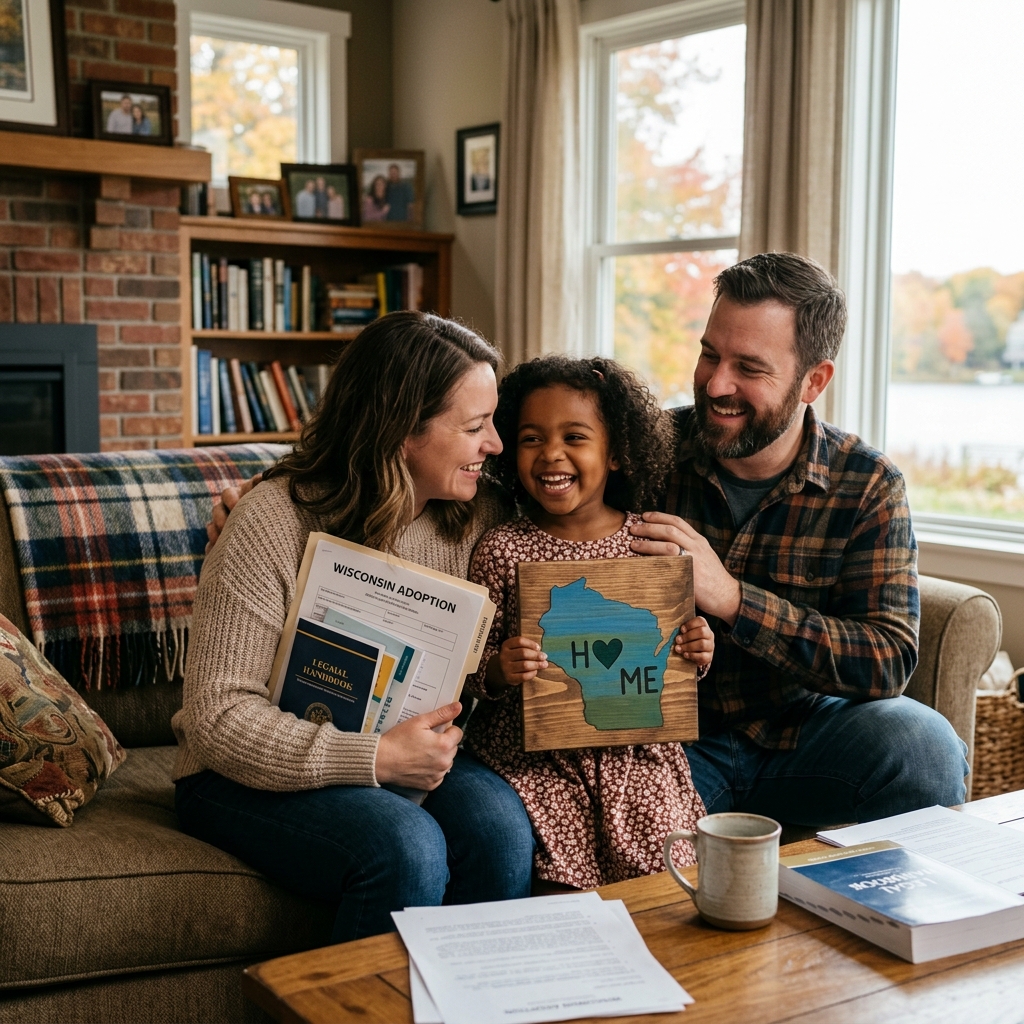
Adoption in Wisconsin creates a legally recognized parent-child relationship between adoptive parents and a child after the child’s birth parents’ rights have been ended or suspended. The process can be straightforward in some cases and highly procedural in others, depending on the child’s circumstances, the type of adoption, and whether all required consents are available. Families often need to understand not only who can adopt, but also how parental rights are terminated, what expenses may be paid, and what happens if a parent does not cooperate.
This guide explains the main rules that shape adoption in Wisconsin and highlights the most important issues for prospective parents, birth parents, and relatives considering adoption. It is designed to give a practical overview rather than legal advice for a specific case.
How adoption works under Wisconsin law
In Wisconsin, adoption is the legal process that transfers parental rights and responsibilities to the adoptive parent or parents. Once an adoption is finalized, the adoptive family gains the same legal status as any other parent-child relationship, including rights related to custody, decision-making, inheritance, and support. At the same time, the legal ties to the child’s former parents are generally severed unless a limited exception applies.
Because adoption changes legal parentage, the court must make sure the proper steps are completed before an adoption can be approved. That usually includes a petition, background information about the child and family, an investigation or home study in many situations, and proof that any required consent has been properly given or lawfully waived.
Who may adopt a child in Wisconsin
Wisconsin allows a range of people to adopt, including married couples, stepparents in qualifying situations, and unmarried adults. State guidance also recognizes that adoptive parents may be single or married, and that people may already have children in their home or may be parenting for the first time. In practical terms, the court focuses less on marital status alone and more on whether the proposed placement is appropriate and in the child’s best interests.
To qualify as a foster or adoptive parent, applicants commonly need to meet baseline requirements such as being at least 21 years old, having enough income to meet household needs, and having sufficient room for the child. Wisconsin foster and adoption guidance also points to the need for training, a criminal background check, and other screening steps before approval.
| Common eligibility factor | What it means in practice |
|---|---|
| Age | Prospective parents are generally expected to be at least 21. |
| Income | Families must show they can meet their own financial needs. |
| Housing | The home must have adequate space for the child. |
| Screening | Background checks and home study requirements may apply. |
| Training | Foster and adoption preparation classes are often required. |
Consent and termination of parental rights
One of the most important parts of any adoption is consent. In Wisconsin, a parent may consent to a voluntary termination of parental rights by petitioning the court. A hearing is then held, typically within 30 days after the petition is filed, and the parent must appear personally to give consent unless the court accepts a valid written consent executed before an authorized official.
For birth fathers, consent may be given by a notarized written statement in some situations. If a father is known and actively involved, he may be part of the adoption plan. If he is not identified, if paternity has not been established, or if he fails to take legally required action, his consent may not be necessary for the case to proceed.
Wisconsin law also recognizes situations where consent is not required because parental rights have already been terminated or because the parent has lost the legal ability to object. These situations may include abandonment, failure to assume parental responsibility, abuse, continuing parental disability, relinquishment of custody very early in the child’s life, or conception resulting from incest or sexual assault. In cases involving an Indian child, special timing and execution rules apply, including a prohibition on consent before birth or within 10 days after birth.
Birth parent rights and notice issues
Birth parents do not simply disappear from the process. They may have rights to notice, a hearing, or an opportunity to consent depending on the circumstances. In some cases, a man who may be the father of a nonmarital child may not be entitled to notice if paternity has not been established and he has not taken the steps required to secure that right. These procedural rules matter because an adoption can be delayed or challenged if notice requirements are not handled correctly.
For birth parents considering adoption, it is important to understand that once parental rights are voluntarily terminated or otherwise legally ended, they are usually not easily restored. That is why courts look carefully at timing, signatures, and the parent’s understanding of the consequences before approving the case.
What expenses may be paid in connection with adoption
Wisconsin permits adoptive parents to cover certain adoption-related expenses for a prospective birth mother and, in some cases, the child. The law allows payment for specific categories of support, but the amounts and purposes are limited. This framework is intended to prevent improper inducements while still allowing practical help during pregnancy and placement.
- Pre- and post-adoption counseling services
- Maternity clothing, up to a set amount
- Transportation related to pregnancy and adoption
- Medical and hospital care for pregnancy, birth, and the child
- Legal services for the child and birth parents
- Living expenses in limited circumstances to protect the health of the mother and baby
- Birthing classes
- A modest gift to the birth mother within the statutory limit
- Agency services
- Home study and investigation costs
Adoptive parents are also required to provide the court with an accounting of these expenses at the adoption hearing. That report must itemize payments made or promised in connection with the adoption. This requirement gives the court a record of what was paid and helps confirm that the adoption was handled lawfully.
Stepparent adoption and family placements
Stepparent adoption is one of the most common forms of intrafamily adoption in Wisconsin. It allows a spouse who lives with the child and the child’s custodial parent to adopt the child, but the other biological parent’s rights must usually be terminated first. In many cases, that means the non-spouse parent must consent, be found unfit, or otherwise lose parental rights through a legal process.
Stepparent adoption usually still involves court filings and an investigation or study, though the process may be simpler than a stranger adoption because the child already lives in the home. The court will still focus on whether the adoption serves the child’s best interests and whether all legal prerequisites have been satisfied.
Foster care adoption and county involvement
Wisconsin’s foster care system is county run and state administered, which means local agencies play a major role in identifying children, training families, and guiding placements. People who want to foster and adopt often begin with county or state-approved training, background checks, and home studies. There are generally no costs to foster and adopt through the public system, which makes this route especially significant for families hoping to adopt children already in out-of-home care.
Foster adoption may involve children whose parental rights have already been terminated, children nearing reunification decisions, or children with more complex legal histories. Because of that, timelines can vary. Some cases move relatively quickly once a child becomes legally free for adoption, while others require patience and repeated court review.
Adult adoption and other special situations
Not every adoption in Wisconsin involves a minor. Adult adoption is also recognized, and it may be used to formalize long-standing family relationships, assist with inheritance planning, or give legal recognition to a parent-child bond that already exists in practice. Even though the subject is different from child adoption, the court still requires proper filings and compliance with procedural rules.
International adoption adds another layer of complexity. When a child arrives in Wisconsin from a foreign jurisdiction for adoption purposes, the guardian must file the proper petition or petitions within a limited period after arrival. If only termination of parental rights is filed first, the adoption petition must follow within the required window after termination. These requirements help ensure the child’s legal status is addressed promptly after entry into the state.
Records, confidentiality, and adult adoptees
Wisconsin also has important rules about adoption records. Adult adoptees in the state do not have an automatic right to obtain their original birth record by court order or parental permission alone. Instead, the original record is generally sealed or impounded after adoption and may be released only through a court order or the state’s adoption records search program. In many cases, identifying information requires the affirmative consent of both birth parents before release.
These record rules can matter a great deal for adult adoptees seeking family history, medical background, or personal identity information. Because access is limited and the process is specific, individuals often need to determine whether a search program, court petition, or consent from birth relatives is available in their case.
Practical steps for families considering adoption
Although every adoption is unique, most families can prepare by focusing on a few basic tasks. First, they should determine the type of adoption involved, since the legal requirements differ for stepparent, foster, infant, relative, adult, and interstate or international placements. Second, they should identify whether any parent’s rights must be terminated and whether all necessary consents are available. Third, they should gather financial and household documentation that may be needed for screening or a home study.
It is also wise to keep careful records of any adoption-related expenses and conversations with agencies or birth parents. Because the court may require an itemized expense accounting, organized records can reduce delay and help demonstrate compliance. Finally, families should be prepared for timing issues. Even when all parties agree, a hearing date, investigation, or statutory waiting period may still be required.
Frequently asked questions
Do both birth parents have to agree to an adoption in Wisconsin?
Not always. Consent is commonly required, but it may not be needed if parental rights have already been terminated or if the parent falls within a legally recognized exception such as abandonment or failure to assume responsibility.
Can a stepparent adopt without the other parent’s approval?
Only if the other parent’s rights have been legally ended or the court determines that consent is not required under the law. The exact path depends on the family’s facts and the status of the noncustodial parent.
Are adoptive parents allowed to help with pregnancy-related expenses?
Yes, but only for categories allowed by Wisconsin law and within any statutory limits. The court may require a full accounting of those payments at the adoption hearing.
Can an adult adoptee get the original birth certificate?
In Wisconsin, access is limited. Adult adoptees do not automatically receive the original birth record and may need a court order or the state records search process, often with required consent from birth parents.
Where do foster and adoptive families usually start?
Most begin with the county or the state’s foster and adoption system, complete training, and then move through screening, home study, and placement steps.
References
- Adoption in Wisconsin — Wisconsin Department of Children and Families. 2026-07-09. https://dcf.wisconsin.gov/adoption
- Wisconsin foster care and adoption guidelines — AdoptUSKids. 2026-07-09. https://adoptuskids.org/adoption-and-foster-care/how-to-adopt-and-foster/state-information/wisconsin
- Consent to Adoption – Wisconsin — Child Welfare Information Gateway. 2026-07-09. https://www.childwelfare.gov/resources/consent-adoption-wisconsin/
- Wisconsin — Adoptee Rights Law Center. 2026-07-09. https://adopteerightslaw.com/wisconsin/
- Wisconsin State Law Library: Adoption — Wisconsin State Law Library. 2026-07-09. https://wilawlibrary.gov/topics/familylaw/adoption.php
- Wisconsin Adoption Laws Every Family Should Know — American Adoptions. 2026-07-09. https://www.americanadoptions.com/wisconsin-adoption/wisconsin-adoption-laws
Similar Articles








Read full bio of medha deb


