
Key Elements of an Effective Parenting Plan
Learn how to build a clear, child-focused parenting plan that addresses custody, parenting time, decision-making, and practical day-to-day details.
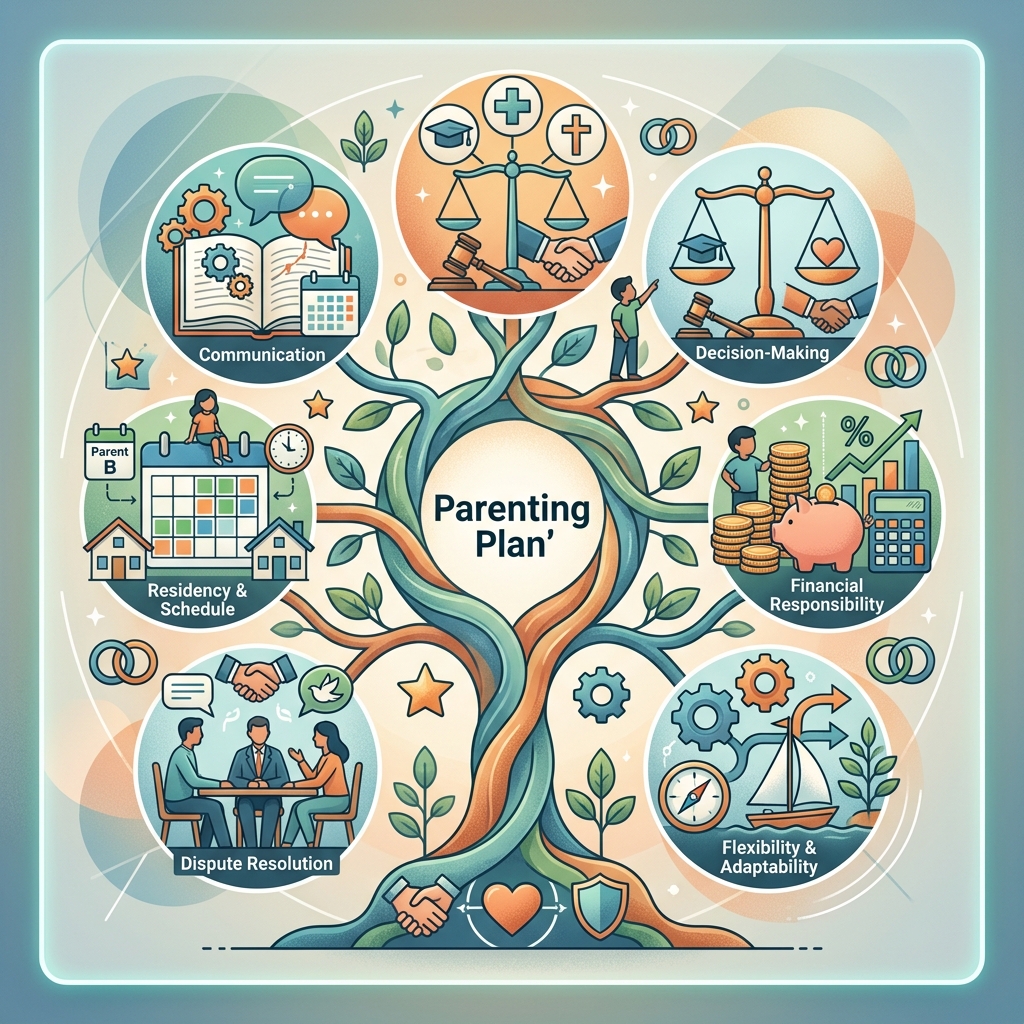
A well-crafted parenting plan is one of the most important tools separating or divorcing parents can use to support their children through family changes. It sets out how parents will share responsibilities, make decisions, and spend time with their children, and it is often incorporated into a court order in custody or divorce cases.
This guide explains the major components that typically belong in a parenting plan, how courts look at these arrangements, and practical considerations to help parents create a clear, child-focused document. The goal is to reduce conflict and confusion while keeping the child’s best interests at the center of every decision.
Understanding What a Parenting Plan Is
A parenting plan is a written document that describes how parents will raise their child when they live in separate households. In many states, parenting plans are required whenever a court is asked to decide custody or parenting time. Once approved, the plan may become part of a formal court order, meaning both parents must follow it.
Although terminology varies by jurisdiction, parenting plans generally address two core concepts:
- Legal custody (decision-making authority about major issues such as education, health care, and religion)
- Physical custody or parenting time (where the child lives and the schedule for time spent with each parent)
Plans may be very detailed or fairly general, but courts commonly favor arrangements that are specific enough to minimize disputes and give the child a predictable routine.
Best Interests of the Child: The Guiding Principle
In virtually all custody and parenting time decisions, courts rely on the best interests of the child standard. While factors differ somewhat by state, they typically include:
- The child’s health, safety, and emotional well-being
- The stability of each home environment
- The importance of frequent and continuing contact with parents who can act in the child’s best interests
- The parents’ ability to cooperate and share parenting responsibilities
- Preserving relationships with siblings, other relatives, and key adults in the child’s life
- The child’s preferences, when age-appropriate and permitted by law
An effective parenting plan reflects these factors by putting the child’s needs ahead of parental convenience and by reducing exposure to conflict. Plans that promote stability, safety, and meaningful relationships are more likely to align with what courts will approve.
Core Components Every Parenting Plan Should Cover
Although each family’s situation is unique, most comprehensive parenting plans address several recurring topics. Some states even list minimum requirements in statute or court forms.[10]
1. Legal Custody and Decision-Making
The section on legal custody explains who will make major decisions for the child and how those decisions will be made.[10] Parents should address:
- Education – choice of schools, special education services, tutoring, and involvement in school activities
- Health and mental health care – selection of doctors and therapists, consent to medical treatment, and handling emergencies
- Religious upbringing – participation in religious education or observances, if applicable
- Extracurricular activities – sports, music, clubs, and time commitments
- Information sharing – access to school records, medical records, and other important documents
Parents can agree that one parent has sole legal custody (exclusive decision-making authority) or that they share joint legal custody, making major decisions together. Even with joint legal custody, courts recognize that day-to-day decisions are usually made by the parent with whom the child is staying at the time.
2. Physical Custody and Parenting Time Schedule
The parenting time schedule specifies where the child will live and when the child will be in each parent’s care. Some plans use a week-on/week-off pattern; others divide the week or alternate weekends. There is no single “correct” schedule, but it should be age-appropriate and realistic.
Key elements to address include:
- The regular weekly or monthly routine
- Holidays and school breaks
- Vacations and special occasions
- Out-of-state travel and any required notice
Courts often require that plans specify at least the minimum amount of time the child will spend with each parent. Being specific about start and end times, locations for exchanges, and transportation responsibilities can significantly reduce misunderstandings.
| Topic | Questions to Resolve |
|---|---|
| Regular schedule | Which days and nights is the child with each parent? How are transitions handled? |
| Holidays | How are major holidays divided or alternated? What time do exchanges occur? |
| School vacations | Who has the child during winter, spring, and summer breaks? Can parents travel with the child? |
| Special events | How are birthdays, family weddings, or religious events handled? |
3. Transportation and Exchange Logistics
Clear transportation and exchange arrangements help avoid last-minute conflict. Many court resources encourage parents to identify who is responsible for driving, where exchanges will occur, and what happens if someone is delayed.
When discussing logistics, parents might specify:
- Primary exchange locations (for example, each parent’s home or a neutral public place)
- Routine drop-off and pickup times
- How transportation is handled for school, medical appointments, and extracurricular activities
- Requirements for safe travel, such as use of car seats or booster seats
4. Childcare Arrangements
Parenting plans often address childcare for times when neither parent is available, such as work hours or emergencies. The plan may include:
- Preferred daycare providers or after-school programs
- Use of relatives, babysitters, or nannies
- How childcare costs will be shared
- When each parent must offer the other a chance to care for the child before using outside care (sometimes called a “right of first refusal”)
5. Rules, Safety, and Discipline
To give the child a consistent environment, many plans outline basic household rules and safety expectations. Parents may agree on:
- Appropriate forms of discipline and behaviors that result in consequences
- Limits on entertainment, such as age-appropriate movies, video games, and social media use
- Safety measures for activities like biking, skiing, swimming, or online interactions
- Any restrictions involving firearms or other hazardous items
While each home may have its own routines, broad agreement on major rules can reduce confusion for the child and reassure both parents about safety.
6. Communication Between Parents and With the Child
Effective communication is crucial for successful co-parenting. Plans often explain how parents will share information and how the child may contact the other parent when not in their care.
Points to consider include:
- Preferred methods of communication between parents (email, text, phone, or dedicated co-parenting apps)
- How quickly parents will respond to non-emergency messages
- How parents will notify each other about school events, medical appointments, or significant changes
- Reasonable opportunities for the child to speak with the other parent, balanced with daily routines
7. Conflict Resolution and Plan Review
Disagreements are inevitable. Many laws and court guides encourage parents to include a method for resolving disputes and reviewing the parenting plan over time.
A conflict resolution section might specify:
- Steps to discuss disagreements directly before seeking outside help
- Use of mediation, counseling, or conciliation services if disputes persist
- How alleged breaches of the plan will be handled
- How often parents will review the plan and consider modifications (for example, every one or two years)
Including these procedures can reduce the need to return to court and strengthen long-term cooperation.
Special Considerations for Different Families
While the topics above form a solid foundation, certain circumstances call for additional detail. Courts and legal aid organizations highlight several common situations.[10]
Children of Different Ages
Very young children may need shorter, more frequent contact with each parent, whereas teenagers may manage longer stays and more input into their schedules. Some court materials provide age-based guidance to help parents plan appropriately.
Questions to keep in mind:
- How will the schedule support the child’s sleep, school, and activity needs at their current age?
- Is the plan flexible enough to adjust as the child grows?
- When, if allowed by law, will the child’s preferences be considered in revising the plan?
Safety Concerns and Restrictions
If there are serious safety issues—such as domestic violence, substance misuse, or other risks—parenting plans can include restrictions on contact or supervision requirements. Courts may order:
- Supervised visitation
- Limitations on overnight stays
- Conditions that must be met before increasing parenting time
In these cases, professional legal advice is particularly important, and courts may rely heavily on evidence concerning the child’s safety.
Military Service, Relocation, and Travel
Parents who may face deployment or relocation need to consider how these events will affect the parent-child relationship. Plans can address:
- Temporary adjustments during military service
- Notice requirements and procedures when a parent plans to move a significant distance
- How long-distance travel costs and logistics will be managed
Financial Topics Connected to the Plan
While child support is usually handled in separate orders, parenting plans often touch on practical financial matters, such as who handles certain expenses and how tax benefits are claimed.[10] It can be helpful to clarify:
- Responsibility for extracurricular fees and school-related costs
- Payment of health insurance premiums and unreimbursed medical expenses
- Which parent will claim the child as a dependent for tax purposes, if permitted by law
Practical Tips for Drafting a Strong Parenting Plan
Many court systems offer tools or sample forms to help parents create parenting plans.[10] Whether parents use those resources or draft their own, several practical guidelines can improve the quality of the plan:
- Be specific and detailed. Ambiguity leads to conflict. Clear schedules, responsibilities, and procedures are easier to follow and enforce.
- Think long-term. Consider upcoming stages in the child’s life, such as starting school, learning to drive, or using social media.
- Focus on the child’s needs. Plans that prioritize the child’s stability and emotional security are more consistent with the best interests standard.
- Use plain language. Simple, direct wording makes it easier for both parents—and older children—to understand the plan.
- Review court requirements. Some states mandate specific topics or forms, so checking official guidance can prevent delays.[10]
- Update the plan as circumstances change. Parenting plans are not static; they can be modified through court processes when the child’s needs or family situation evolve.[10]
Frequently Asked Questions About Parenting Plans
Is a parenting plan always required?
Many states require a parenting plan whenever parents ask the court to make or modify custody or parenting time orders. However, requirements differ by jurisdiction, and some types of cases may be treated differently. Checking local rules or consulting an attorney is the best way to confirm what applies in your situation.
Can parents create a parenting plan without going to court?
Parents can privately agree on how to share time and responsibilities, and those agreements can sometimes be turned into formal court orders by submitting them to the court for approval. A written plan is still useful even if the court is not involved immediately, because it provides clarity and a record of what was agreed.
What happens if one parent does not follow the parenting plan?
If a parenting plan is part of a court order, failing to follow it can have legal consequences. Parents are usually encouraged to try communication or mediation first, but persistent violations may require returning to court to enforce or modify the order. Local procedures will govern how enforcement works.
Can a child’s preferences change the parenting plan?
Courts may consider a child’s wishes, especially for older children, but preferences are only one factor among many in the best interests analysis. Changes based on a child’s wishes typically occur through formal modifications, not informal agreements alone, to ensure the new arrangement remains appropriate and safe.
Do parents need a lawyer to write a parenting plan?
Many parents use court forms, legal aid resources, or self-help guides to prepare parenting plans without an attorney.[10] However, legal advice can be valuable in complex cases, especially those involving safety concerns, interstate issues, or significant disputes about custody.
Conclusion: Using Parenting Plans to Support Children
A thoughtful parenting plan is more than a legal document; it is a roadmap for how parents will cooperate to meet their child’s needs across two households. By addressing legal and physical custody, schedules, decision-making, safety, communication, and conflict resolution, parents can create a structure that promotes stability and reduces uncertainty.
With clear, child-focused provisions and a willingness to adjust as circumstances change, a parenting plan can help families navigate transitions while keeping the child’s well-being at the center of every decision.
References
- Parenting Plans — Maryland Courts. 2023-05-01. http://www.mdcourts.gov/family/parentingplans
- Parenting Plan — Maryland People’s Law Library. 2022-11-10. https://www.peoples-law.org/parenting-plan
- Parenting Plans in AZ — Arizona Law Group. 2021-08-15. https://www.arizonalawgroup.com/child-custody/parenting-plans/
- Parenting plan guide — Washington Law Help. 2023-03-20. https://www.washingtonlawhelp.org/en/parenting-plan-guide
- Child custody and parenting time — California Courts Self-Help. 2024-01-05. https://selfhelp.courts.ca.gov/child-custody
- Parenting Plans: Children & Families — Oregon Judicial Department. 2022-09-30. https://www.courts.oregon.gov/programs/family/children/pages/parenting-plans.aspx
- Parenting plan for parental responsibilities — Illinois Legal Aid Online. 2023-06-18. https://www.illinoislegalaid.org/legal-information/parenting-plan-parental-responsibilities
Similar Articles








Read full bio of Sneha Tete


