
Who Stays In The Home During Divorce: 5 Key Factors To Know Now
How courts, safety concerns, and parenting arrangements influence which spouse remains in the marital home during a divorce.
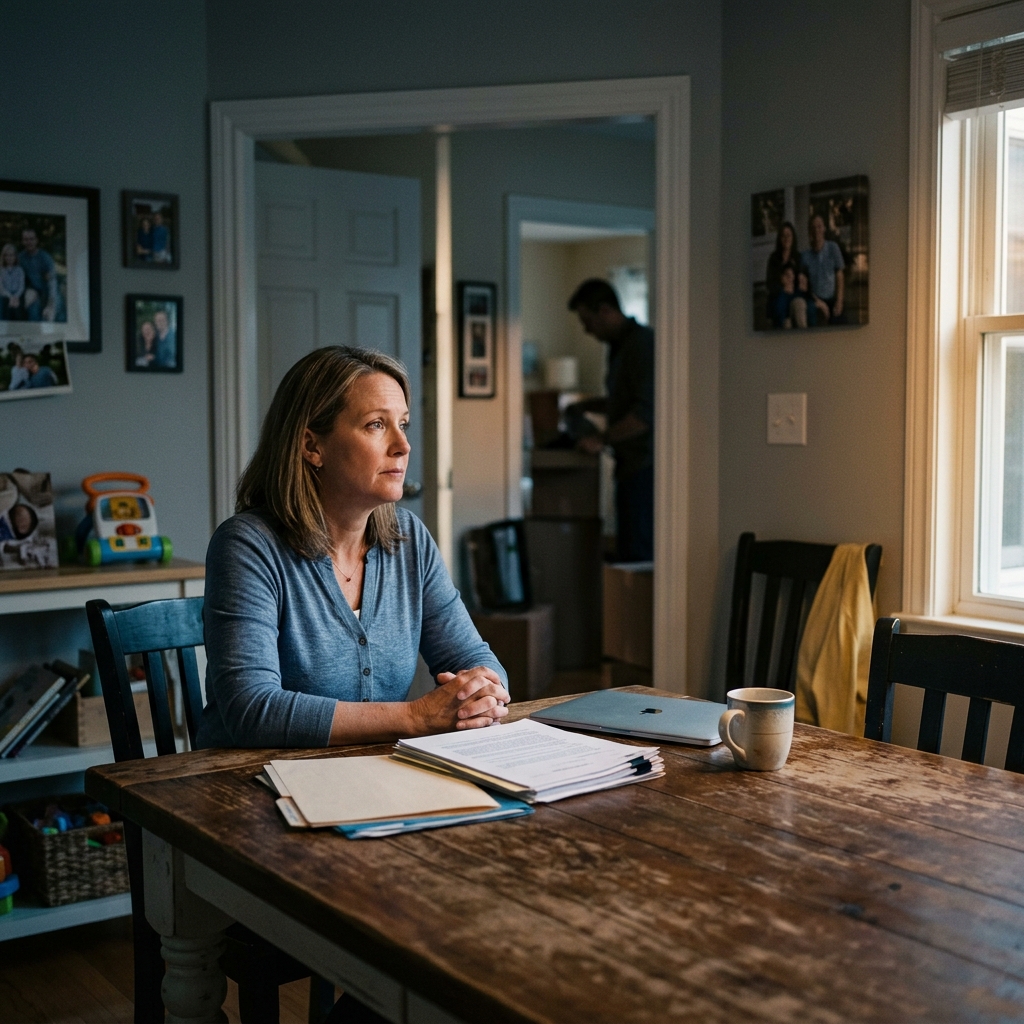
The question of who stays in the home during a divorce is one of the most emotionally charged and practically important issues couples face when separating. Decisions about the marital home affect daily routines, finances, children, and long-term property rights. While many people assume that leaving the home means losing it, the legal reality is more complex and depends heavily on your state’s laws, safety considerations, and parenting arrangements.
This article explains how courts and lawyers approach the question of residence during divorce, how property division works in the background, and what you should consider before deciding whether to stay, leave, or negotiate a temporary solution.
Understanding the Marital Home in Legal Terms
Before deciding who should remain in the home, it helps to understand how the law generally categorizes the property you and your spouse own. In most divorces, courts distinguish between marital property (also called community property in some states) and separate property, and the home often falls into one of these categories.
Marital vs. Separate Property
Although definitions vary by jurisdiction, there are common patterns:
- Marital property typically includes assets acquired by either spouse during the marriage, regardless of whose name appears on the deed or title.
- Separate property is generally property owned by one spouse before the marriage, inheritances received by one spouse, gifts from third parties, and some personal injury awards.
- In equitable distribution states, courts aim to divide marital property fairly, not necessarily equally.
- In community property states, marital property is often divided roughly 50/50, subject to limited exceptions.
Whether your home is marital or separate property will influence who ultimately owns it after the divorce, but it does not automatically determine who can live there during the divorce process.
Equitable Distribution vs. Community Property
| System | Key Principle | Implication for the Home |
|---|---|---|
| Community Property | Most property acquired during marriage is jointly owned and typically divided 50/50. | The home is often presumed to be jointly owned; each spouse generally has equal rights to occupy it unless a court orders otherwise. |
| Equitable Distribution | Marital property is divided in a fair manner considering multiple factors; fairness does not always mean equal. | Either spouse might be awarded the home, sold-out, or given a buy-out option depending on needs, contributions, and child-related considerations. |
These systems matter at the end of the case, but during the divorce, courts focus more on safety, stability, and practical living arrangements than on final ownership.
Temporary Occupancy vs. Final Ownership
A crucial distinction is between temporary occupancy (who lives in the home while the divorce is pending) and final ownership (who owns or uses the home after the divorce decree).
Temporary Orders About the Home
Most courts have procedures for issuing temporary or interim orders at the beginning of a divorce to stabilize the situation. These orders may address:
- Who has exclusive use and possession of the marital home during the case.
- Responsibility for mortgage payments, taxes, and insurance while the case is pending.
- Restrictions on selling, encumbering, or damaging the property.
Judges generally prefer arrangements that minimize disruption, particularly for children, and avoid placing either spouse in unsafe or unreasonably precarious circumstances.
Final Disposition of the Home
At the end of the divorce, the home may be:
- Awarded to one spouse, with the other receiving other property or a cash offset.
- Ordered sold, with the net proceeds divided according to the state’s rules (equitable or community).
- Held jointly for a period of time, especially if children are older and a sale will occur when certain conditions are met.
Leaving the home temporarily does not necessarily mean you will lose your claim to its value. Courts look at the overall property division, not just who stayed in the house during the litigation.
Key Factors Courts Consider When Deciding Who Stays
When spouses cannot agree about the home, judges typically consider a set of factors grounded in state law and practical reality. While each state’s statute differs, commonly cited factors include:
- Safety and domestic violence
- Best interests of minor children
- Financial capacity and housing alternatives
- Health and special needs
- Contribution to the property and marital estate
Safety and Domestic Violence
If there is a history of physical, emotional, or financial abuse, courts can issue protective orders that remove the abusive spouse from the home to protect the victim and children. In such cases:
- The abused spouse may receive exclusive use of the home.
- The abusive spouse may be prohibited from entering the property.
- Temporary custody and support orders often accompany housing protections.
Documented evidence—police reports, medical records, witness testimony—can be significant in persuading a judge that one spouse should be excluded for safety reasons.
Children and Stability
When minor children are involved, many courts prioritize keeping them in a familiar environment whenever feasible. Judges may consider:
- Which parent is the primary caregiver.
- School location and continuity of education.
- Proximity to childcare, medical providers, and extended family.
Some statutes explicitly allow courts to award possession of the family home to the parent with primary residential custody to minimize disruption to the children’s lives.
Financial Capacity and Alternatives
Court decisions also reflect practical financial realities:
- Which spouse can afford the mortgage, taxes, and maintenance.
- Whether either spouse has realistic alternative housing options.
- Whether selling the home immediately would cause undue financial loss (for example, in a bad market).
Even if both spouses would prefer to remain, a judge may allow the spouse who can realistically sustain the property to remain, while adjusting the asset division to compensate the other.
Practical Options for Couples Facing the Home Question
Although court orders are available, many couples try to resolve housing questions through negotiation to reduce conflict and legal costs. Options include:
One Spouse Stays, the Other Leaves
This is the most common pattern. To make it work, couples often set out agreements on:
- Who pays ongoing housing expenses (mortgage, utilities, repairs).
- How to handle personal property in the home.
- Whether the home will later be sold or refinanced.
Important: If you leave the home voluntarily, document that your departure is temporary and does not waive property claims, especially in states that evaluate fault or abandonment.
Both Spouses Stay Temporarily
Some couples continue living under the same roof for economic or child-related reasons. This arrangement is usually more viable when:
- There is no history of abuse.
- Couples can maintain separate bedrooms or living areas.
- Ground rules about privacy, parenting responsibilities, and finances are clearly defined.
Living together during divorce can be stressful, but in high-cost housing markets or tight rental environments, it may be the only practical choice until a court or settlement resolves the property division.
Selling the Home and Moving On
For some couples, the simplest solution is to sell the home and divide the proceeds under state law.
- Selling can help each spouse make a clean break.
- Proceeds may be used for down payments on new homes or to pay off marital debts.
- Courts may order a sale if neither spouse can afford to retain the home long term.
Timing matters: a court may allow one spouse to remain until children reach a certain age, after which the property is sold and equity shared.
How Property and Debt Division Interact with the Home
The marital home is only one piece of the overall property puzzle. Courts look at all assets and debts to achieve a fair division.
Assets and Liabilities Considered Alongside the Home
- Retirement accounts and pensions accrued during the marriage.
- Bank accounts, investments, and business interests.
- Vehicles, valuable personal property, and real estate besides the marital home.
- Marital debts such as mortgages, credit cards, car loans, and personal loans.
In an equitable distribution state, a spouse who receives the home might receive a smaller share of retirement or investment accounts to balance the overall division.
Marital Debt and the Home
Debt allocation is closely linked to housing decisions:
- Mortgages are often treated as marital debts if incurred during the marriage.
- Responsibility for mortgage payments may follow the spouse who retains occupancy, or may be shared as part of support obligations.
- Courts may consider whether one spouse has dissipated assets (for example, by wasteful spending) when dividing debts and property.
Understanding how debt will be allocated can help you assess whether keeping the home is financially sustainable after divorce.
Strategic Considerations Before You Leave the Home
Deciding to move out involves both legal and practical consequences. Consider the following before leaving:
- Consult a lawyer about how your state treats voluntary departure and whether it affects custody or property claims.
- Document the condition of the home and belongings before leaving to prevent disputes over damage or missing items.
- Secure access to financial records and important documents (titles, loan statements, tax returns).
- Plan for interim housing that is stable enough for parenting time and daily life.
In most jurisdictions, simply moving out does not automatically forfeit ownership rights, but it may influence a judge’s view of custody arrangements and practical use of the home.
Frequently Asked Questions About Leaving the Marital Home
Does moving out mean I lose my share of the house?
Generally, no. Final ownership is determined by property division rules, not by who physically remains in the home during the divorce. In both equitable distribution and community property states, courts look at how and when the home was acquired, its value, and the overall balance of assets and debts.
Can the court force my spouse to leave?
Yes, in some situations. Courts can grant one spouse exclusive possession of the home through temporary orders, especially when there is domestic violence, significant conflict, or a strong need to protect children’s stability. Protective orders may prohibit an abusive spouse from entering or approaching the property.
Who pays the mortgage if I am not living in the home?
Responsibility for the mortgage is often addressed in temporary orders and final property division. In many cases, both spouses remain legally liable to the lender until the loan is refinanced or paid off. Courts may assign payment obligations as part of support or property division, but third-party lenders are not bound by divorce decrees.
What if neither of us can afford to stay?
When neither spouse can realistically afford the home, courts frequently order a sale and division of net proceeds. Judges may weigh market conditions, outstanding mortgage balances, and the availability of alternative housing. Couples may also agree to sell voluntarily and craft their own distribution of proceeds.
Do children always stay in the same house?
Not always, but many courts try to minimize disruption for children when possible. In practice, this often means awarding the home to the parent with primary physical custody when financially feasible. However, in some families, both parents relocate, or the home is sold, and children adjust to new housing arrangements.
When to Seek Professional Legal Advice
Decisions about who stays in the home are intertwined with custody, support, safety, and long-term financial planning. Because property division rules differ significantly across states, speaking with a family law attorney in your jurisdiction is crucial. Official resources such as state bar associations and legal help websites explain local standards for dividing property and debts.
- If there is abuse or safety concerns, contact law enforcement or domestic violence services immediately and ask a lawyer about protective orders.
- If you are worried about losing your interest in the home, ask your lawyer how to document your claim and secure interim orders.
- If you and your spouse can still communicate, consider mediation to negotiate housing and property issues with professional guidance.
Thoughtful planning, informed by local law and professional advice, can reduce conflict and help you make choices that protect your safety, your children, and your financial future.
References
- Dividing Your Property and Debt in a Divorce — Texas Law Help. 2023-05-01. https://texaslawhelp.org/article/dividing-your-property-and-debt-in-a-divorce
- How Marital Property Is Divided in Ohio Divorces — Cathy Cook Law. 2022-08-10. https://cathycooklaw.com/blog/marital-property-division-ohio-divorces/
- Property Disposition in Divorce — Maryland People’s Law Library. 2021-11-15. https://www.peoples-law.org/property-disposition-divorce
- Divorce: What factors will a judge consider when dividing marital property and debts? — WomensLaw.org. 2023-02-20. https://www.womenslaw.org/laws/dc/divorce/what-factors-will-judge-consider-when-dividing-marital-property-and-debts
- Divorce Basics: Dividing Your Property and Debt — Michigan Legal Help. 2022-06-01. https://michiganlegalhelp.org/resources/family/divorce-basics-dividing-your-property-and-debt
- Ohio Divorce Courts Divide Assets and Liabilities Equitably — Ohio State Bar Association. 2020-09-30. https://www.ohiobar.org/public-resources/commonly-asked-law-questions-results/family-relations/divorce-courts-divide-assets-and-liabilities-equitably/
Similar Articles








Read full bio of medha deb


