
When Your Smart Speaker Never Stops Listening
How always-on voice assistants reshape privacy, consent, and legal rights inside the modern connected home.
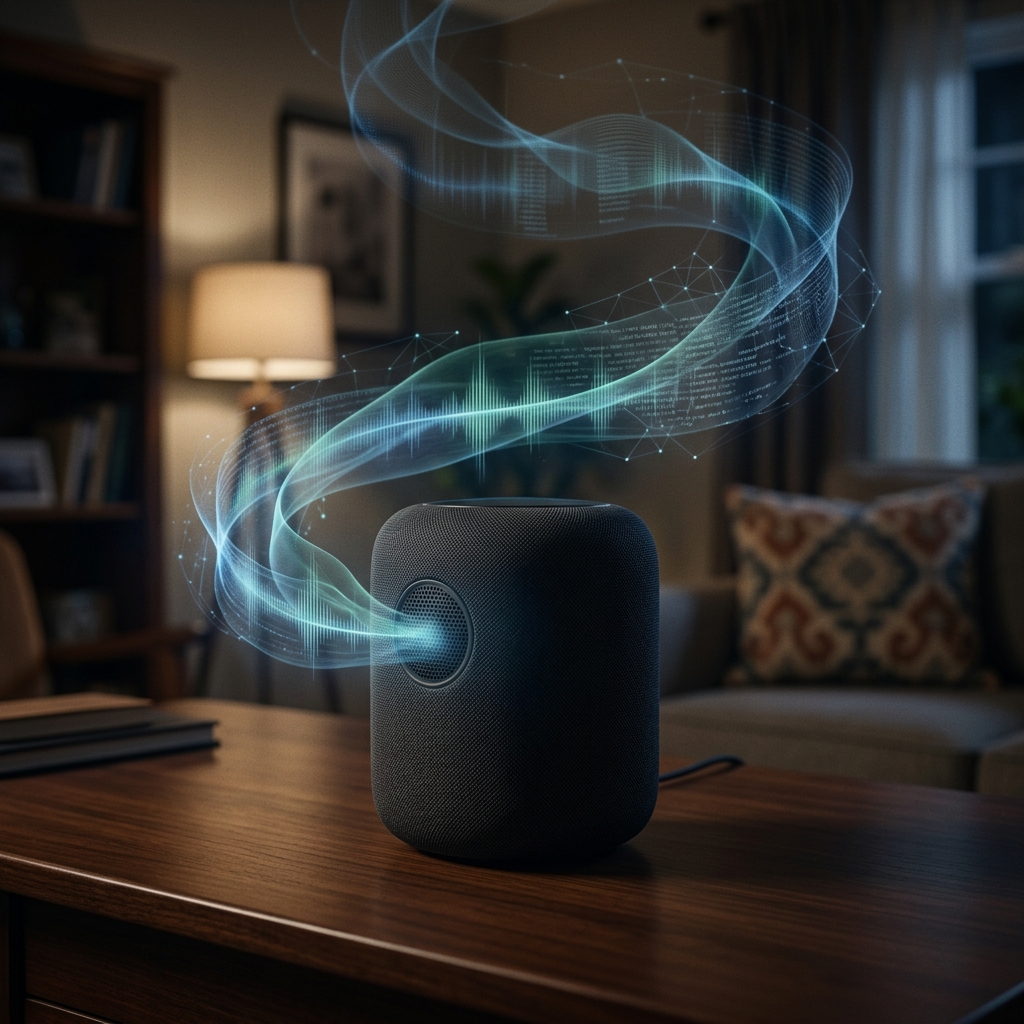
Voice assistants like Amazon Alexa, Google Assistant, and other smart speakers have slipped quietly into our kitchens, living rooms, and bedrooms. They promise convenience: hands‑free timers, quick answers, home automation, and entertainment on demand. Yet behind the friendly voice and glowing light ring sits an infrastructure of constant data collection, algorithmic analysis, and corporate decision‑making that can profoundly affect your privacy and legal rights.
This article examines how always‑listening devices work, what companies can do with your recordings, why regulators are increasingly concerned, and how you can reduce the risks without necessarily giving up the benefits of modern smart homes.
From Helpful Assistant to Household Microphone
Smart speakers are sold as tools that respond only when needed. Official documentation from Amazon, for example, emphasizes that Echo devices are designed to detect a specific wake word such as “Alexa” before recording and sending speech to the cloud. A light indicator and sound cue typically signal when the device is actively listening.
Yet the boundary between “standby” and “recording” is not always so clear. Modern voice assistants rely on a combination of local processing and cloud services. When a device detects the wake word, it begins streaming audio to remote servers, where sophisticated models interpret your request and return a response. That audio can include more than just the command itself—ambient conversation, background noises, and the voices of other household members may be captured in the process.
- Wake word detection: Continuous local monitoring for phrases like “Alexa” or “Hey Google”.
- Cloud processing: After activation, audio is transmitted to company servers for interpretation.
- Persistent storage: Many providers store recordings and text transcripts unless you change default settings.
Recent changes to some platforms have narrowed user control over whether audio is sent to the cloud or saved at all, effectively making cloud‑based processing mandatory for core features. As cloud reliance expands, so does the volume and sensitivity of the data companies hold about intimate daily life.
What Your Smart Speaker Collects About You
The raw audio you speak into a smart speaker is only the starting point. According to enforcement actions and guidance from the U.S. Federal Trade Commission (FTC), voice assistants and connected cameras can collect “highly private data” that reveals habits, routines, relationships, and sometimes sensitive personal information.
Typical categories of data include:
- Voice recordings: Audio clips of each interaction, often stored alongside timestamps and device identifiers.
- Text transcripts: Machine‑generated text interpretations of spoken commands.
- Usage patterns: How often you use certain features, which skills you enable, and what content you access.
- Household context: Information about devices in your home, network configuration, and location data derived from IP addresses.
- Third‑party integrations: Data shared with external services (music platforms, smart lights, security systems) when you link them to your assistant.
In some cases, these recordings have involved children whose parents allege they were captured without proper consent, raising specialized concerns under state laws and child‑privacy statutes. Voice assistants do not inherently distinguish between adult and minor voices; they record whatever is audible when activated.
How Companies Use Voice Data
From a technical perspective, keeping recordings can improve an assistant’s accuracy. Companies use stored audio and transcripts to train machine‑learning models, fine‑tune speech recognition for different accents, and develop new features. However, regulators have criticized how some firms balanced these benefits against users’ privacy expectations.
In complaints against Amazon and Ring, the FTC alleged that companies used voice and video recordings to train algorithms while giving “short shrift” to customer privacy, including insufficient controls over access and retention. In Ring’s case, lax data practices allegedly enabled instances of employee spying and harassment using home security cameras.
| Use of Data | Potential Benefit | Privacy Risk |
|---|---|---|
| Algorithm training | Improved recognition and smarter responses | Large archives of intimate recordings retained indefinitely |
| Product development | New features and personalized services | Secondary uses beyond what users expect or explicitly consent to |
| Human review | Quality control and error correction | Risk of employee misuse and exposure of private speech |
| Advertising and analytics | Targeted offers and revenue | Profiling, interest‑based ads, and data sharing with partners |
Investigations and reports have also highlighted the role of human reviewers. Amazon has acknowledged using workers to listen to selected voice clips to improve Alexa’s performance, though users can now opt out of this practice through privacy settings. Even limited human access raises acute concerns about who can hear your recordings and under what safeguards.
Regulatory Scrutiny and Legal Exposure
Regulators are increasingly treating voice data as sensitive personal information. Under recent FTC actions, companies that collect such data must maintain reasonable safeguards, honor deletion requests, and avoid using recordings in ways that contradict user expectations or stated privacy commitments.
Beyond federal enforcement, lawsuits have tested how general privacy laws and state statutes apply to voice assistants. One notable case involved children, through their guardians, alleging that Alexa recorded them without consent, violating multiple state privacy laws. These claims draw attention to core legal questions:
- Consent: Is one adult household member’s acceptance of terms enough to authorize recording all guests and children within earshot?
- Retention and deletion: If a company retains recordings after a user believes they were deleted, does that constitute unfair or deceptive conduct?
- Third‑party access: At what point does employee or contractor access to recorded speech become unlawful surveillance or misuse?
For families, landlords, and businesses deploying smart speakers, these questions are not abstract. They influence how courts may view disputed recordings in criminal investigations, civil litigation, and regulatory proceedings. In some contexts, investigators have sought access to voice assistant logs as potential evidence, and judges must weigh privacy expectations against law‑enforcement interests.
When Cloud Processing Becomes the Default
Originally, some devices allowed consumers to limit how much data left their homes. Users could decline to save recordings or keep certain processing local. Recent changes reported by technology outlets suggest that cloud processing is increasingly a non‑negotiable requirement for core functionality.
Amazon’s privacy options, for example, have historically included settings such as “Do not send voice recordings” and “Do not save voice recordings.” Yet specific product updates have been described as a “privacy ultimatum”: continue using Echo devices with more extensive cloud reliance, or accept reduced functionality.
For many households, this shift means:
- There may be no practical way to use the device fully without transmitting recordings to remote servers.
- Opting out of data retention can disable features users considered integral when they purchased the product.
- Cloud‑only processing increases dependence on company promises and security measures, rather than physical control inside the home.
Legally, cloud dependence can change the calculus of risk. Data stored remotely may be subject to different jurisdictional rules, cross‑border transfers, and access demands. Technically, those servers become attractive targets for malicious actors seeking voice and video archives, as security researchers and privacy experts have warned.
Practical Steps to Reclaim Some Privacy
Even with the trend toward cloud‑first architectures, users still have meaningful, if imperfect, tools for limiting exposure. Several reputable privacy guides highlight concrete measures for Amazon Alexa and other platforms.
Review and Delete Existing Recordings
Major providers now offer dashboards where you can view, listen to, and remove stored recordings. For Alexa, recommended steps include:
- Use the Alexa app or web portal to open Alexa Privacy or equivalent settings.
- Review your voice history and delete either specific clips or all recordings for all time.
- Enable automatic deletion of future recordings after a set period, such as three or eighteen months, if full opt‑out is not feasible.
Amazon acknowledges that Alexa does not support voice‑based deletion commands in every scenario and may not always interpret them correctly, so manual review through the app or web interface remains important.
Limit Future Data Collection
Although some functions now require cloud processing, you can still narrow how much data is stored or reused:
- Choose “Don’t save recordings” or the shortest available retention period in your voice data settings whenever possible.
- Disable options that allow providers to use your voice recordings to improve services or develop new features if you prefer not to contribute to training datasets.
- Turn off interest‑based advertising tied to your voice assistant to reduce profiling for marketing purposes.
These changes rarely eliminate all data collection, but they can significantly reduce how much of your household’s daily life ends up in long‑term archives.
Control the Device in Physical Space
Technical settings matter, but simple physical controls can be equally powerful:
- Use the hardware microphone mute button when discussing sensitive topics.
- Avoid placing smart speakers in bedrooms, bathrooms, or areas where intimate conversations are common.
- Unplug devices entirely during private gatherings, legal consultations, or other high‑stakes conversations.
For shared homes and workplaces, clear communication is essential. Guests and employees should know when they are around a device capable of recording and transmitting speech.
Building a Household Privacy Plan
Smart speakers are only one part of the broader Internet of Things ecosystem. To manage risk effectively, consider treating voice assistants as a component of a larger privacy plan.
Experts recommend periodic audits of devices and settings to keep pace with new features, policy changes, and emerging threats.
- Monthly check‑ins
- Review recent recordings and delete items that feel overly intrusive.
- Examine which third‑party skills or integrations have access to your assistant and remove ones you no longer use.
- Update firmware to ensure you benefit from the latest security patches.
- Annual reassessment
- Decide which rooms genuinely need voice control and which might be better served by less intrusive technology.
- Revisit privacy preferences in light of new regulatory developments or company policy announcements.
- Change passwords and enable multi‑factor authentication for accounts linked to smart devices.
Framing these actions as routine maintenance, rather than one‑off panic responses, helps normalize privacy protection as a regular part of owning connected devices.
Frequently Asked Questions
Does my smart speaker record everything I say?
Most major platforms are designed to start actively recording only after they detect a wake word, such as “Alexa.” However, detection is not perfect, and accidental wake‑ups can cause recordings of conversations you did not intend to share. Once a wake event occurs, audio is typically transmitted to the cloud for processing.
Can I stop companies from keeping my recordings?
In many cases, you can reduce or eliminate retention through privacy settings that allow deletion and shorter storage periods. Some recent product changes mean you may not be able to use full features without sending data to the cloud, but you can still control how long recordings are retained and whether they are used for training or advertising.
Are my voice recordings used to train AI systems?
Yes, many providers use stored voice clips and transcripts to improve recognition and develop new features. Some platforms allow you to opt out of having your recordings used for such purposes, though this may be buried in advanced privacy controls.
Can hackers access my smart speaker recordings?
Any internet‑connected device carries some risk of unauthorized access. Security experts note that voice and video recordings are vulnerable if an account is compromised or if device software has exploitable flaws. Strong passwords, multi‑factor authentication, and timely updates are critical defenses.
What should families with children keep in mind?
Children may interact with voice assistants frequently and may not understand the implications of being recorded. Parents should review child‑related consent policies, configure strict privacy settings, and consider where devices are placed. In some jurisdictions, unauthorized recording of minors can raise legal issues, particularly if consent requirements are not met.
References
- Hey, Alexa! What are you doing with my data? — Federal Trade Commission Business Blog. 2023-06-20. https://www.ftc.gov/business-guidance/blog/2023/06/hey-alexa-what-are-you-doing-my-data
- Amazon Alexa: The Privacy Concerns When Technology Must Understand Human Needs — North Carolina Journal of Law & Technology Blog. 2020-02-13. https://journals.law.unc.edu/ncjolt/blogs/amazon-alexa-the-privacy-concerns-when-technology-must-understand-human-needs/
- Alexa and Google Assistant Privacy Concerns — SafeHome.org. 2023-05-10. https://www.safehome.org/home-automation/disable-smart-speaker/
- Alexa privacy: Everything you need to know — NordVPN Blog. 2023-09-01. https://nordvpn.com/blog/alexa-privacy/
- Alexa, Echo Devices, and Your Privacy — Amazon Customer Service Help Page. 2024-01-10. https://www.amazon.com/gp/help/customer/display.html?nodeId=GVP69FUJ48X9DK8V
- Amazon’s Privacy Ultimatum Starts Today: Let Echo Devices Process Your Data or Stop Using Them — CNET. 2024-03-28. https://www.cnet.com/home/security/a-privacy-ultimatum-starts-today-let-amazon-echo-process-your-data-or-stop-using-it/
Similar Articles








Read full bio of medha deb


