
Arrested For Criticizing Police: 5 Ways To Protect Your Speech
How arrests for speech against police chiefs test the boundaries of the First Amendment and local government power.
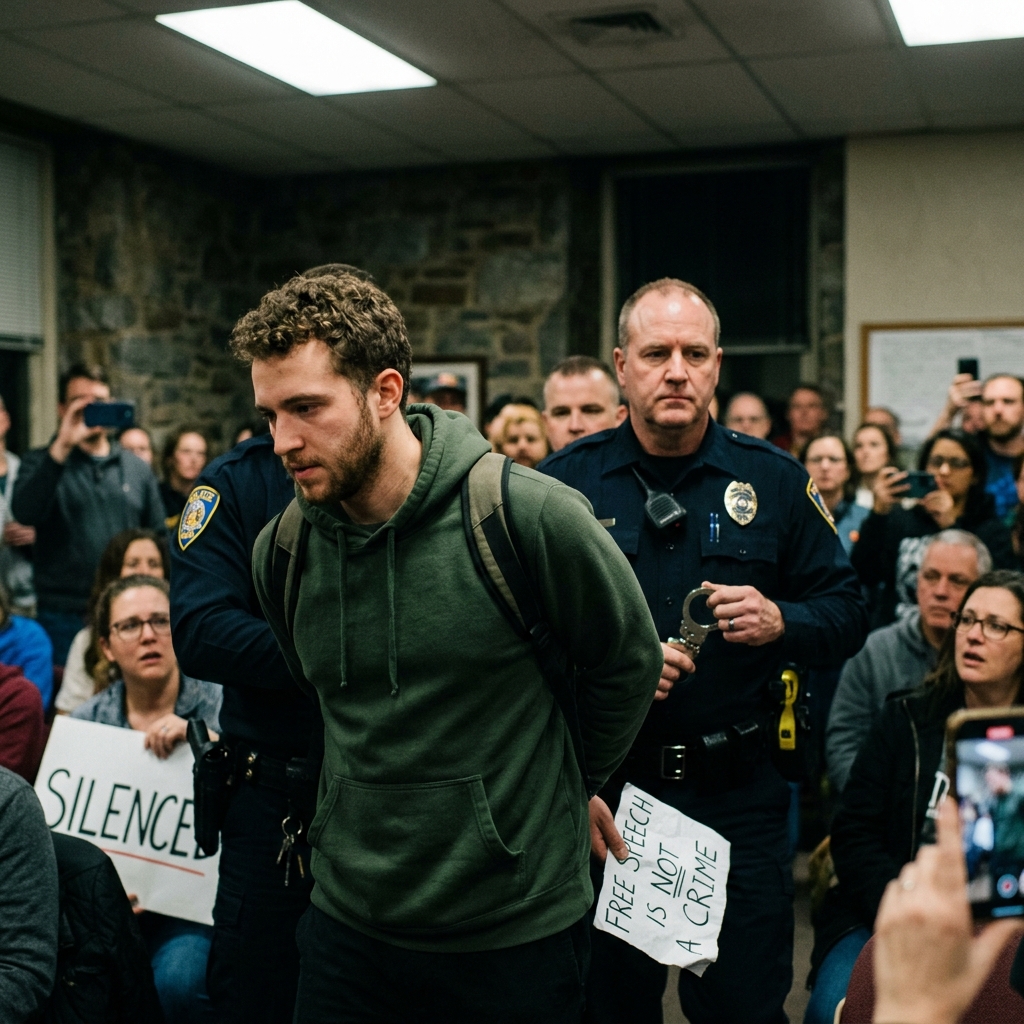
Across the United States, people are sometimes arrested, charged, or threatened with jail not for violence or property damage, but for words directed at law enforcement officials. These incidents pose a direct challenge to the First Amendment and raise fundamental questions about how far government can go in punishing criticism of public officials, including police chiefs.
This article uses recent cases involving citizens who criticized police at public meetings or online as a lens to explore the legal limits on government retaliation, the protections that the First Amendment offers, and the practical realities of speaking out against law enforcement.
Public Criticism of Police: Why It Matters
Democratic constitutional systems rely on open debate about how power is exercised. Police departments have broad discretion to use force, make arrests, and shape public safety policy. Because of that authority, criticism of police behavior is not only inevitable but essential to accountability.
- Accountability – Public complaints and harsh critiques can expose misconduct, racial bias, or abusive practices that might otherwise remain hidden.
- Policy Debate – Residents challenge use-of-force policies, surveillance programs, or traffic enforcement priorities, often in the only forum available to them, such as city council meetings.
- Community Trust – Allowing robust criticism without retaliation builds trust that government will tolerate dissent, even when it is uncomfortable.
When law enforcement responds to criticism with handcuffs instead of counter-arguments, the message is chilling: speak against us and face the criminal justice system.
Illustrative Incidents: Arrests for Speaking Out
While the details differ from case to case, several incidents reveal a pattern: citizens are arrested for words that target police officials, often under broad, discretionary laws such as disorderly conduct, harassment, or criminal defamation.
Arrests at Public Meetings
Public comment periods at city council or local government meetings are frequently the setting for conflict. In one widely discussed example, a resident was arrested twice after calling the police chief and mayor harsh names during open comment time, leading to a lawsuit alleging violations of the First, Fourth, and Fourteenth Amendments.
- The speaker used strong language to criticize the police chief during the public comment period.
- Police arrested the speaker, charged them with disorderly conduct, and briefly jailed them.
- After returning to a later meeting and repeating the criticism, the speaker was arrested again.
- A judge ultimately acquitted the speaker and invalidated a rule that prohibited “derogatory” comments about individuals in city council meetings, finding that the rule violated the First Amendment when applied to critical speech about the chief.
Rules that try to bar “derogatory” statements about officials often collide directly with protections for political speech, which lie at the core of the First Amendment.
Online Criticism and Criminal Charges
Conflict is not confined to council chambers. Police have also arrested individuals for posts made on social media or local news sites, accusing them of criminal defamation or misuse of communication systems when they criticize officers or departments.
- In one case from New Hampshire, a man was arrested after he posted critical comments online about police, including allegations of lying and misconduct.
- Officers charged him under a criminal libel or defamation statute, treating his online criticism as a criminal offense rather than a civil dispute.
- Legal advocates later argued that the statute and its application were incompatible with modern First Amendment doctrine, which sharply limits criminal penalties for allegedly false statements about public officials.
Online platforms amplify speech, but they also make criticism more visible to law enforcement. When public officials react with criminal charges rather than responding in the marketplace of ideas, they risk violating constitutional limits.
Recording and Criticizing On the Street
In other situations, citizens are arrested while observing and filming police activity, often adding vocal criticism as officers carry out searches or arrests. A case in Ohio shows how this can lead to litigation and policy change.
- A resident filmed a SWAT team executing a search warrant on his street and criticized what he saw as mistreatment of neighbors.
- Police arrested him, even though he was exercising his right to observe and record officers in public.
- After a lawsuit, the city agreed to a settlement and acknowledged the resident’s right not just to watch, but to record and criticize police conduct.
Federal appeals courts have repeatedly recognized a First Amendment right to record police officers performing their duties in public places, emphasizing that such documentation contributes to public oversight of law enforcement.
Legal Foundations: The First Amendment and Government Retaliation
The First Amendment prohibits government from making laws “abridging the freedom of speech.” Courts interpret this broadly, especially for speech about public officials and public policy.
| Legal Principle | Implication for Police Criticism |
|---|---|
| Content neutrality | Government cannot favor praise over criticism or ban speech because it is offensive or insulting to officials. |
| Viewpoint discrimination | Rules that allow positive comments about police but punish negative ones are presumptively unconstitutional. |
| Protected political speech | Criticism of government actors, including police chiefs, is at the core of protected speech and receives strong judicial protection. |
| Limited public forums | City councils can impose reasonable time, place, and manner rules, but not selectively silence harsh criticism of officials. |
At the same time, First Amendment protection is not absolute. True threats, incitement to imminent lawless action, and targeted harassment that crosses into stalking or intimidation may fall outside constitutional safeguards. However, courts draw a clear line between those categories and ordinary, even rude, criticism of public officials.
Criminal Defamation, Disorderly Conduct, and Misuse of Broad Statutes
Many controversial arrests for criticizing police rely on broad statutes that can be stretched to cover speech. The most common tools are disorderly conduct and criminal defamation, along with local ordinances regulating public meetings or communications.
Disorderly Conduct at Government Meetings
Disorderly conduct laws are intended to address disruptive or dangerous behavior. When used against speakers at public meetings, they raise difficult questions: is the problem the speaker’s volume and interruptions, or the message being expressed?
- Courts generally allow meeting organizers to enforce rules on speaking time, turn-taking, and avoiding actual disruptions that prevent the body from doing business.
- That authority does not include silencing speakers because they use strong language or express anger about public officials, so long as the meeting can continue.
- When an arrest follows immediately after a critical comment, courts look closely for evidence of viewpoint discrimination—punishing a message rather than neutral enforcement of decorum rules.
Criminal Defamation and Libel Statutes
Some states still have criminal libel or defamation laws on the books. These statutes are rarely used, and modern courts view them with skepticism because civil defamation suits usually provide sufficient remedies.
- The U.S. Supreme Court has long held that public officials must tolerate a wide range of criticism, including statements that later turn out to be false, unless the speaker acts with “actual malice”—knowledge of falsity or reckless disregard for the truth.
- Criminal punishments for allegedly defamatory statements about public officials run against this tradition and are regularly challenged on First Amendment grounds.
- As seen in New Hampshire and similar cases, criminal charges based on online criticism of police often trigger significant constitutional concerns.
Civil Rights Lawsuits: Turning Arrests Into Legal Tests
When people are arrested for criticizing police, they do not always stop at defending against the charges. Many file civil rights lawsuits in federal court, arguing that police and city officials violated their constitutional rights.
- Lawsuits frequently invoke 42 U.S.C. § 1983, which allows individuals to sue state and local officials for depriving them of constitutional rights under color of law.
- Claims typically allege violations of the First Amendment (retaliation for protected speech) and Fourth Amendment (unreasonable seizure or arrest without probable cause).
- Some plaintiffs seek not only monetary damages but also court orders invalidating meeting rules or local ordinances that restrict “derogatory” comments about officials.
For example, the resident arrested twice for criticizing a police chief during public comment now seeks damages and a formal declaration that the city’s rule banning “derogatory” statements is unconstitutional. In Ohio, litigation over an arrest for filming and criticizing police led to a monetary settlement and clearer recognition of the right to record officers.
Chilling Effects: Why These Cases Reach Beyond One Town
Even if charges are ultimately dismissed or rules overturned, the consequences of arrest for speech can be profound. People who see neighbors handcuffed for criticizing police may decide it is safer to remain silent.
- Deterrence of dissent – The prospect of arrest or court appearances discourages residents from speaking honestly at public meetings or online.
- Distorted public debate – Officials receive more praise than criticism in official forums, not because performance improved, but because critics fear retaliation.
- Long-term mistrust – Communities that experience retaliatory arrests often lose confidence in promises of transparency and open government.
Civil liberties organizations, including the ACLU, regularly emphasize that recording and criticizing police are central to democratic oversight and must remain protected. Government responses that cross constitutional lines threaten not only individual speakers but the health of public discourse itself.
Practical Guidance for Citizens Who Criticize Police
While the law strongly protects political speech, citizens can take practical steps to reduce risk and assert their rights effectively when criticizing police or other officials.
- Know the forum rules – Obtain written rules for public meetings, including time limits and procedures. This reduces the chance that officials can claim you violated unknown policies.
- Stay focused on issues – Direct criticism to conduct, policies, and performance. Even when using strong language, grounding your comments in specific concerns can aid later legal defenses.
- Record interactions – When lawfully possible, record public meetings and interactions with police. Courts have repeatedly recognized a right to record officers in public places, and video can provide crucial evidence of retaliation.
- Seek legal assistance – If you are threatened with arrest or charged because of your speech, consult civil liberties organizations or attorneys experienced in First Amendment and civil rights law.
- Document patterns – Keep records of multiple incidents, such as repeated arrests or ejections of critical speakers. Patterns of viewpoint discrimination strengthen constitutional claims.
Frequently Asked Questions
Can I be arrested just for calling a police chief a harsh name?
In most circumstances, merely insulting a police chief or other official, even with offensive language, is protected speech. Arrests based solely on the content of criticism are likely to raise serious First Amendment problems. However, if speech is combined with genuine threats, incitement to immediate violence, or conduct that physically disrupts a meeting so it cannot continue, police may have grounds to intervene.
Is it legal to record police in public?
Federal courts and civil rights advocates widely recognize a First Amendment right to record police officers in public places, as long as recording does not interfere with law enforcement operations. Cases like the Ohio settlement involving a resident filming a SWAT team reinforce that citizens can observe, record, and criticize police actions on their street.
What should I do if I am arrested for criticizing police?
First, exercise your right to remain silent about the incident itself and request an attorney. After release, consider consulting an attorney or civil liberties group about potential civil rights claims. It may be possible to challenge the legality of the arrest, seek dismissal of charges, and pursue damages or court orders to prevent similar retaliation in the future.
Can a city council ban “derogatory” comments about officials?
Rules that forbid “derogatory” comments about individuals, including police chiefs, are constitutionally suspect when applied to speech in public comment periods. Courts view such rules as targeting viewpoint—penalizing negative speech while allowing positive speech—which is generally prohibited under the First Amendment. At least one judge has explicitly struck down such a rule when a speaker was arrested for criticizing a police chief.
Are criminal defamation laws still enforceable today?
Some states maintain criminal defamation statutes, but their use against criticism of public officials is highly controversial. Modern Supreme Court doctrine requires robust protection for speech about public officials, and criminal penalties for allegedly false statements often clash with that tradition. When police invoke criminal defamation against online criticism, civil liberties advocates frequently challenge those charges on constitutional grounds.
References
- Noah Petersen Sues After Being Arrested Twice for Criticizing the Police at a Public Meeting — Reason. 2023-10-13. https://reason.com/2023/10/13/iowa-man-files-lawsuit-after-being-arrested-twice-for-criticizing-the-police-at-a-public-meeting/
- ACLU of Ohio and City of Columbus Settle Case of Man Arrested for Filming Police — ACLU of Ohio. 2022-08-18. https://www.acluohio.org/press-releases/aclu-ohio-and-city-columbus-settle-case-man-arrested-filming-police/
- Exeter Police Arrested a Man for Criticizing Them on the Internet — Slate. 2018-06-07. https://slate.com/news-and-politics/2018/06/exeter-police-arrested-a-man-for-criticizing-them-on-the-internet.html
- Six Former Mississippi Law Enforcement Officers Sentenced for Torturing and Abusing Two Black Men — U.S. Department of Justice. 2023-11-15. https://www.justice.gov/archives/opa/pr/six-former-mississippi-law-enforcement-officers-sentenced-torturing-and-abusing-two-black
- ACLU of Ohio: The Right to Record Police — ACLU. (Accessed 2026). https://www.acluohio.org/press-releases/aclu-ohio-and-city-columbus-settle-case-man-arrested-filming-police/
Similar Articles








Read full bio of Sneha Tete




