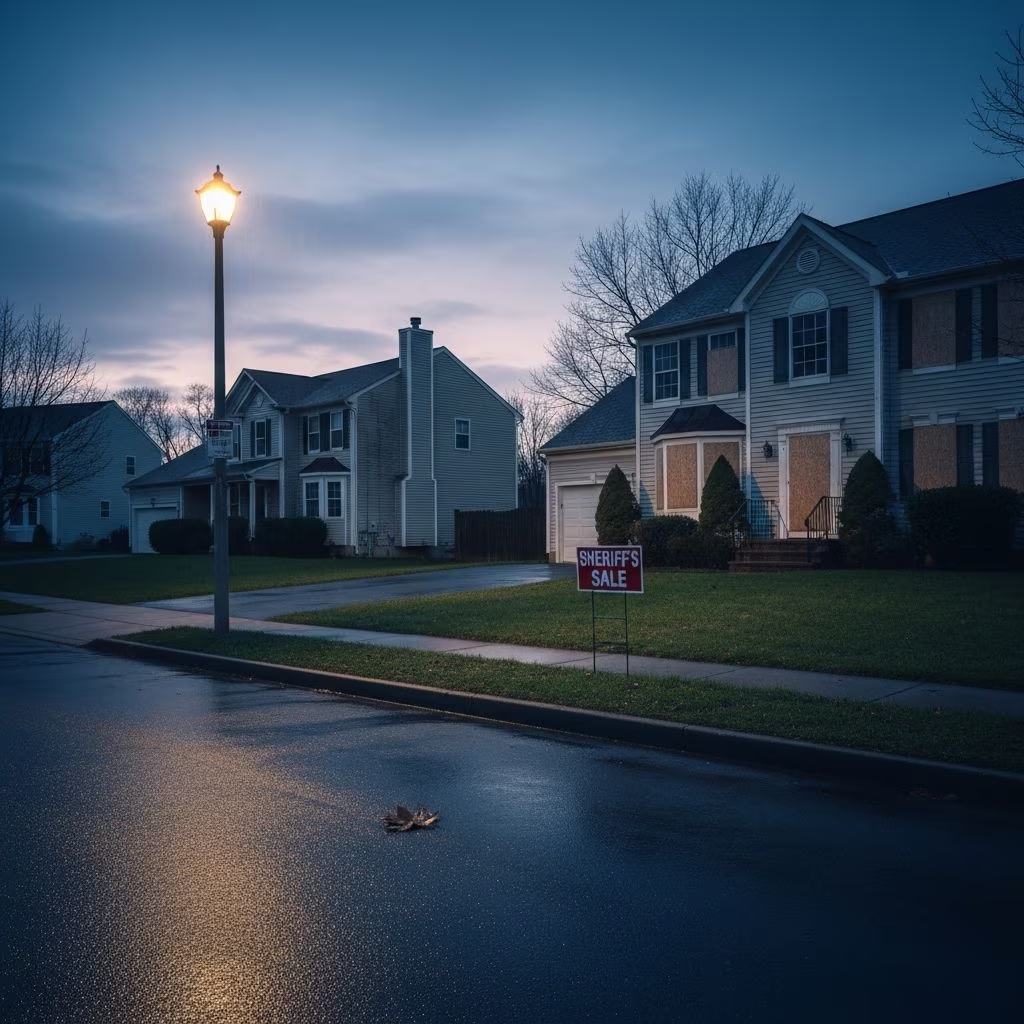
Property taxes fund vital public services in New Jersey, and failing to pay them triggers a series of escalating enforcement actions by local municipalities. Homeowners who miss payments face accumulating interest, penalties, tax liens, public sales of certificates, and ultimately the threat of foreclosure, which can result in loss of property ownership.
Property Tax Payment Requirements Across New Jersey
New Jersey municipalities typically divide property taxes into four quarterly installments due on February 1, May 1, August 1, and November 1, though some areas follow calendar-year schedules. These payments support schools, roads, emergency services, and local government operations. Owners of residential, commercial, and vacant land properties bear this obligation, with assessments based on local tax assessors’ valuations.
Exemptions and abatements exist for seniors, veterans, low-income households, and certain nonprofits, but eligibility requires proactive application. Ignoring due dates initiates the delinquency process immediately, as taxes become liens superior to most other encumbrances like mortgages.
Initial Penalties: Interest and Late Fees
Delinquent taxes accrue interest from the due date at rates set annually by each municipality, capped by state law at 8% per annum on the first $1,500 of delinquency and 18% on amounts exceeding that threshold. For example, a $2,000 unpaid bill would incur 8% on $1,500 ($120 annually) and 18% on $500 ($90 annually), compounding the debt rapidly.
Additionally, for delinquencies over $10,000 unpaid by fiscal year-end, municipalities impose a 6% penalty on the full amount, collectible by tax collectors and applicable even if a lien holder pays. This penalty incentivizes prompt payment and compensates for administrative burdens. Municipal ordinances may add further fees, but all must comply with N.J.S.A. 54:4-67.
| Delinquency Amount | Interest Rate (Annual) | Additional Penalty (if >$10K & unpaid by year-end) |
|---|---|---|
| First $1,500 | 8% | 6% on total |
| Over $1,500 | 18% | 6% on total |
This table illustrates standard rates; actual computations depend on municipal fiscal calendars (e.g., July-June or calendar year).
From Delinquency to Tax Lien Creation
Once taxes remain unpaid, they automatically attach as liens to the property, gaining priority over mortgages, judgments, and other claims. Municipal tax collectors compile lists of delinquents and prepare for enforcement. Unlike many states, New Jersey rarely seizes properties outright initially; instead, it sells tax sale certificates.
- Lien Priority: Tax liens supersede nearly all other debts, protecting municipal revenue.
- Notice Requirements: Owners receive delinquency notices; public postings and newspaper ads precede sales.
- Impact on Owners: Liens cloud title, complicating sales, refinances, or loans until cleared.
The Tax Sale Certificate Auction Process
Municipalities hold annual tax sales, often online or in-person, auctioning certificates representing the lien rights. Investors bid down the interest rate they accept (from the statutory maximum) rather than the debt amount, making these attractive for high yields.
The winning bidder receives a certificate entitling them to collect the full tax debt plus their bid interest rate upon redemption. Certificates last two years before holders can foreclose, unless the municipality retains them (six-month redemption period).
- Bid Mechanics: Bids start at max rate (e.g., 18%); lowest acceptable rate wins.
- Premiums: Bidders may pay extra cash premiums, returned with 2-5% interest upon redemption.
- Owner Notification: Post-sale, owners get mailed notice of the certificate details.
Redemption Rights and Costs for Property Owners
Owners (or mortgagees) retain redemption rights throughout the process by paying the full redemption amount to the collector, who forwards to the certificate holder. Required payments include:
- All outstanding taxes, including subsequent quarters.
- Accrued interest at the bid rate.
- Penalties and municipal costs.
- Certificate holder’s legal fees if applicable.
Redemption periods vary: anytime before foreclosure filing for investor-held certificates (minimum two years typical), or six months if municipality-held. Post-judgment, a three-month challenge window applies.
Foreclosure Actions by Certificate Holders
If unredeemed, certificate holders file Superior Court foreclosure complaints after statutory periods. The process mirrors mortgage foreclosures:
- Complaint Filing: Lists delinquencies, serves owners and interested parties.
- Judgment Entry: Court approves if uncontested; bars redemption except for fraud claims.
- Final Title Transfer: Holder gains clean title, extinguishing prior ownership.
Owners can defend via payment, appeals, or hardship arguments, but success rates are low without resolution.
Accelerated Processes for Problem Properties
Abandoned or nuisance properties face faster timelines under N.J.S.A. 55:19-81. Criteria include vacancy for six months plus any delinquency, allowing immediate post-sale foreclosure with limited redemption. Municipalities use this for redevelopment, consolidating blighted areas.
Strategies to Resolve Delinquencies and Avoid Loss
Proactive steps can halt escalation:
- Contact Tax Collector: Request payment plans or hardship extensions.
- File Tax Appeals: Challenge assessments if overvalued.
- Seek Exemptions: Apply for senior freeze, veteran deductions.
- Negotiate with Lien Holders: Some accept partial settlements.
- Legal Counsel: Attorneys can extend timelines or quiet title.
Bankruptcy may temporarily stay foreclosures but rarely discharges tax liens. Selling the property before final judgment preserves equity.
Comparing Redemption Scenarios
| Scenario | Redemption Period | Risk Level | Typical Costs |
|---|---|---|---|
| Investor-Held Certificate | 2 years minimum | Moderate | Taxes + bid interest + fees |
| Municipality-Held | 6 months | High | Taxes + statutory interest + penalty |
| Abandoned Property | Accelerated | Very High | Full arrears + expedited fees |
Frequently Asked Questions
Can I lose my home over unpaid property taxes in New Jersey?
Yes, prolonged non-payment leads to tax lien sales and foreclosure, potentially resulting in loss of title and equity.
What interest rates apply to late property taxes?
8% on the first $1,500 and 18% thereafter, per N.J.S.A. 54:4-67, set annually by municipalities.
How do I redeem a tax sale certificate?
Pay all taxes, interest, penalties, and costs to the tax collector before foreclosure judgment.
Does bankruptcy stop tax foreclosure?
It may provide temporary stays, but property tax liens generally survive bankruptcy discharge.
Are there defenses against tax foreclosure?
Payment in full, procedural errors, or assessment appeals offer potential relief, best pursued with counsel.
Long-Term Impacts on Credit and Ownership
Tax delinquencies harm credit reports, hinder refinancing, and devalue properties. Foreclosure judgments create public records lasting years, affecting future purchases. Prevention through budgeting or professional appeals preserves wealth.
In summary, New Jersey’s system prioritizes municipal recovery while offering redemption windows, but inaction compounds risks exponentially. Homeowners should monitor bills closely and act swiftly on delinquencies.
References
- 2024 New Jersey Revised Statutes Title 54 – Taxation Section 54:4-67 — State of New Jersey. 2024. https://law.justia.com/codes/new-jersey/title-54/section-54-4-67/
- Penalties on Delinquent Taxes and Tax Sale Certificates — eCode360. Accessed 2026. https://ecode360.com/14405433
- What Happens When Property Taxes Go Unpaid? — Mrod.law. 2024-12-20. https://www.mrod.law/2024/12/20/what-happens-if-property-taxes-are-not-paid/
- Purchasing and Foreclosing on Tax Liens in New Jersey — Ansell.law. Accessed 2026. https://ansell.law/purchasing-and-foreclosing-on-tax-liens-in-new-jersey-how-it-works-and-what-potential-real-estate-investors-should-consider/
- What is the interest percent penalty — Midland Park NJ. Accessed 2026. https://www.midlandparknj.gov/tax-collector-office/faq/what-interest-percent-penalty
- How Long Can You Go Without Paying Property Taxes in NJ? — CPA Pai. Accessed 2026. https://cpapai.com/blog/how-long-without-paying-property-taxes-nj
- Tax Foreclosure & Tax Sales As A Redevelopment Tool — HCDN NJ. Accessed 2026. https://www.hcdnnj.org/tax-foreclosure-and-tax-sales