
Utah Employment Law: 10 Essential Rules For Employers Explained
A practical, plain‑English guide to key Utah employment rules, from hiring and wages to breaks, leave, safety, and discrimination.
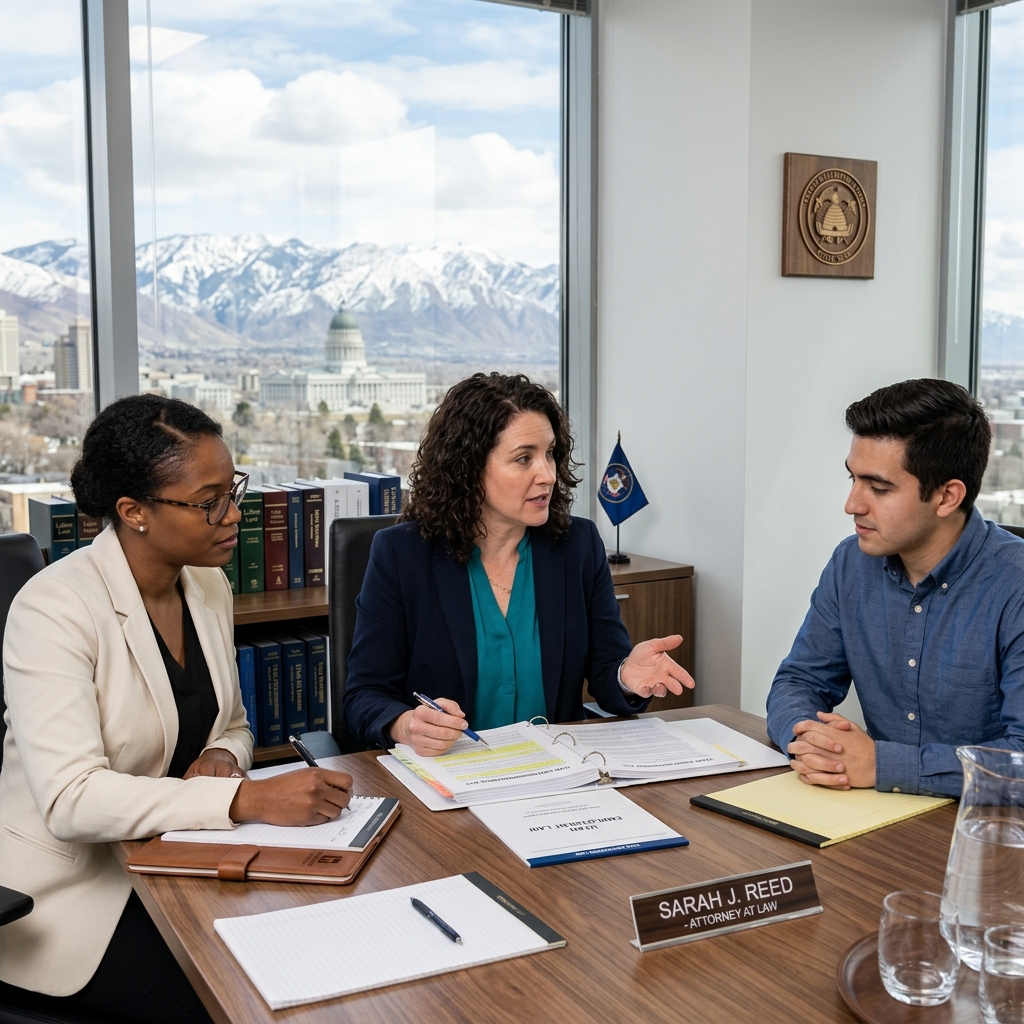
Utah follows a blend of federal labor standards and state‑specific rules that shape how workplaces operate, how employees are hired and paid, and what rights and responsibilities each side has. This guide explains the major areas of Utah employment law in clear language so both workers and businesses can better understand what compliance and fair treatment look like under state and federal rules.
1. Employment Relationships in Utah
Most work arrangements in Utah are governed by the concept of at‑will employment. Under at‑will employment, either the employer or the employee may end the employment relationship at any time, with or without notice and with or without a specific reason, as long as the decision does not violate a statute, regulation, or public policy.
However, there are important limits and exceptions to at‑will rules:
- Written contracts: A signed employment agreement can limit the employer’s ability to fire an employee without cause.
- Implied agreements: In some circumstances, policies or repeated assurances can create expectations about job security that a court may treat as an implied contract.
- Statutory protections: Anti‑discrimination laws, wage and hour rules, and public policy protections can make certain terminations unlawful (for example, firing someone for reporting safety violations).
- Restrictive covenants: Utah allows non‑compete agreements, but they are generally limited to a maximum duration of one year after employment ends; longer restrictions may be void.
2. Wages, Hours, and Pay Practices
Utah’s wage and hour standards are heavily influenced by the federal Fair Labor Standards Act (FLSA), with some state‑specific rules layered on top. Employers must understand minimum wage, overtime, and pay timing requirements when structuring compensation.
2.1 Minimum Wage and Overtime
Utah’s minimum wage is aligned with the federal minimum wage, which is currently $7.25 per hour for most non‑exempt employees.[10] Some employees are exempt from overtime based on their job duties and salary level under federal rules, such as certain executive, administrative, and professional positions.
Key points on pay and overtime:
- Regular rate: Non‑exempt employees must be paid at least the minimum wage for each hour worked.
- Overtime rate: Employees covered by overtime rules must receive at least 1.5 times their regular rate of pay for all hours worked over 40 in a single workweek.[10]
- Tipped employees: Employers may pay a lower cash wage to tipped workers if federal requirements are met and tips bring total earnings to at least the minimum wage.
- Recordkeeping: Employers must track hours worked and wages paid and retain these records for several years to comply with state and federal requirements.
2.2 Wage Deductions and Final Paychecks
Utah places guardrails on when employers may deduct amounts from an employee’s paycheck. Generally, deductions are allowed only if they are:
- Required by state or federal law (such as taxes or court‑ordered garnishments).
- Authorized in writing by the employee for specific purposes.
- Related to certain loans, shortages, losses, or damages, in compliance with state rules.
Final wage payments are also subject to specific timelines:
- Termination or layoff: If an employee is discharged, Utah law generally requires that all wages due be paid within 24 hours of termination, with some exceptions for commissioned sales agents.
- Voluntary resignation: When an employee quits, final wages are typically due on the next regular payday.
Whether unused vacation or paid time off must be paid at separation typically depends on the employer’s written policy or agreement, as Utah law does not automatically require payout in all situations.
3. Protections Against Discrimination and Harassment
Federal civil rights laws apply in Utah, but the state also has its own comprehensive statute, the Utah Antidiscrimination Act (UADA), enforced by the Utah Labor Commission’s Antidiscrimination and Labor Division.
3.1 Protected Characteristics
Under UADA, covered employers may not discriminate or harass employees or job applicants based on protected characteristics such as:
- Race and color
- Sex
- Pregnancy, childbirth, and pregnancy‑related conditions
- Age (within covered ranges)
- Religion
- National origin
- Disability
- Sexual orientation
- Gender identity
Employers are prohibited from discriminating in hiring, promotion, compensation, work assignments, training, or termination based on these characteristics. Harassment that creates a hostile work environment because of a protected characteristic can also violate the law.
3.2 Pregnancy, Breastfeeding, and Accommodation Rights
Utah law provides specific protections for employees experiencing pregnancy, childbirth, or related medical conditions, including breastfeeding. Employers with at least 15 employees must offer reasonable accommodations when requested, unless doing so would cause an undue hardship.
Examples of reasonable accommodations can include:
- Adjusted work schedules or duties.
- More frequent restroom, food, or water breaks.
- Temporary transfer to less strenuous or hazardous positions.
- Private space and time for expressing breast milk.
Employers generally may ask for medical certification supporting the need for accommodation, but Utah law limits when certification can be required for simple break requests like extra access to water or restroom facilities.
Additionally, employers may not force an employee to resign if a reasonable accommodation is available, nor deny job opportunities because accommodation would be needed, unless the accommodation would cause undue hardship.
4. Working Minors: Utah Child Labor Rules
Utah has detailed child labor laws designed to safeguard the health, education, and safety of minors in the workplace. These rules operate alongside federal child labor protections and cover permitted hours, types of work, and required breaks.
4.1 Age Limits and Hazardous Work
While federal law sets the baseline, Utah’s rules specify that minors may not work in occupations classified as hazardous under federal standards. In general:
- The minimum legal age for most non‑hazardous employment is typically 14 years, subject to job and hour limits.[10]
- Minors under 16 face stricter restrictions than those aged 16 and 17 on when and how long they can work.[10]
4.2 Hour and Scheduling Restrictions
For minors under 16, Utah law restricts work during school days and limits daily and weekly hours to protect educational obligations and well‑being.[10] Examples include:
- No work during scheduled school hours.
- Limits on hours worked before or after the school day and on total hours in a 24‑hour period.[10]
- Restrictions on very early morning and late‑night work on school days.[10]
4.3 Mandatory Breaks for Minors
Utah has specific rules requiring meal and rest breaks for workers under 18:[10]
- Meal break: At least 30 minutes, provided no later than five hours after the start of the workday. This may be unpaid if the minor is fully relieved of duties.[10]
- Rest breaks: A paid 10‑minute rest break for roughly every four hours worked, with minors not allowed to work more than three consecutive hours without receiving this break.[10]
These break requirements are stricter for minors than for adults, as Utah does not generally mandate meal or rest breaks for workers over 18, leaving adult break policies largely to employer discretion unless otherwise required by contract.
5. Leave, Benefits, and Health Coverage Continuation
Utah employers must navigate both federal leave laws (such as the Family and Medical Leave Act, where applicable) and state‑specific requirements. One notable state rule concerns continuation of health coverage when an employee’s work status changes.
5.1 Continuation of Health Coverage
Utah’s health care continuation law applies to all employers, not only those covered by federal COBRA rules. In many cases, an employer must offer continued group health coverage for up to 12 months to eligible employees and dependents who lose coverage because of:
- Termination of employment (excluding certain cases like gross misconduct).
- Reduction in hours below benefit eligibility thresholds.
- Retirement, sabbaticals, disability, or other covered leaves of absence.
Employees should carefully review notices from their employer and insurer to understand time limits for electing continuation coverage and the costs associated with it.
5.2 Other Leave Provisions
Beyond federal laws governing family, medical, and military leave, Utah may provide additional protections in narrower areas, such as leave for certain emergency responders. Generally, many aspects of paid leave, vacation, and sick time remain matters of employer policy, as long as they are administered consistently and without discrimination.
6. Workplace Safety and Health Standards
Workplace safety in Utah is governed primarily by the Utah Occupational Safety and Health Act, which incorporates federal occupational safety and health regulations. Employers must provide a work environment that is free from recognized hazards likely to cause death or serious physical harm.
Core safety responsibilities for employers include:
- Identifying and mitigating workplace hazards through policies, equipment, and training.
- Complying with industry‑specific safety standards (for example, in construction, manufacturing, or healthcare).
- Providing personal protective equipment where required.
- Maintaining records of injuries and illnesses and reporting certain incidents to regulators.
Employees have the right to raise safety concerns, request hazard corrections, and, in some situations, contact regulatory agencies without facing retaliation. Retaliatory actions for reporting safety issues may violate both safety laws and anti‑discrimination protections.
7. Hiring Practices and Background Checks
Utah employers must structure hiring and onboarding processes in line with anti‑discrimination rules and other legal requirements. This extends to background checks, verification of work authorization, and the handling of sensitive information.
7.1 Non‑Discriminatory Hiring
Hiring decisions cannot be based on protected characteristics under state and federal law. Job postings, interviews, and selection criteria should focus on job‑related skills and qualifications. Employers must also avoid discriminatory treatment related to medical conditions, including certain information about HIV or AIDS, and pregnancy‑related circumstances.
7.2 Background Checks and Work Authorization
Utah has specific requirements in certain environments:
- School settings: Background checks are required for non‑licensed school personnel, certain contractors, volunteers, and charter school board members, reflecting heightened safety obligations for children.
- Work authorization verification: Employers of a certain size must use designated verification systems to confirm that employees are legally authorized to work in the United States, in addition to federal I‑9 requirements.
Employers using background checks must comply with federal rules governing consumer reports, provide required notices, and apply results consistently to avoid discriminatory impact.
8. Practical Compliance Tips for Utah Employers
Because Utah employment law involves a mixture of state‑specific rules and federal obligations, employers benefit from a structured approach to compliance. Below is a practical checklist to help organizations minimize risk and support fair workplaces.
- Document policies: Maintain written policies on wages, hours, discrimination, accommodations, leave, and discipline, and share them with employees.
- Train managers: Provide regular training on harassment prevention, accommodation obligations, child labor rules, and how to respond to complaints.
- Audit pay practices: Periodically review payroll data to confirm minimum wage, overtime, and deduction rules are followed.
- Review job classifications: Verify that exempt versus non‑exempt classifications match federal standards and that minors are not assigned hazardous tasks.
- Monitor legal updates: Use official state resources and legal counsel to stay current with changes in statutes, regulations, or agency guidance.
9. Comparison Snapshot: Selected Utah Employment Rules
| Topic | Utah / State Rule | Key Points |
|---|---|---|
| Minimum Wage | Matches federal minimum (currently $7.25/hour).[10] | Applies to most non‑exempt workers; tipped employees follow federal rules. |
| Overtime | Follows FLSA overtime of 1.5× over 40 hours/week.[10] | Exempt status depends on duties and salary level. |
| Breaks for Adults | No general state mandate for meal or rest breaks. | Policies are largely up to employers, subject to contract and safety requirements. |
| Breaks for Minors | Mandatory 30‑minute meal and paid 10‑minute rest breaks.[10] | Applies to minors under 18 with specific timing rules. |
| Final Wages | 24 hours for discharged workers; next payday for resignations. | Commission arrangements may have special rules. |
| Health Coverage Continuation | State law applies to all employers for up to 12 months. | Triggers include termination, reduced hours, retirement, and certain leaves. |
| Non‑Compete Duration | Generally limited to one year post‑employment. | Longer covenants risk being void under state law. |
10. Frequently Asked Questions About Utah Employment Law
FAQ 1: Does Utah require employers to give meal or rest breaks to adult workers?
Utah does not broadly require meal or rest breaks for employees who are 18 or older. Break policies for adults are primarily a matter of employer choice, contract, and industry practice. However, for minors, Utah law mandates specific meal and rest periods and limits on continuous work without a break.[10]
FAQ 2: Can an employer in Utah fire an employee without a reason?
Because Utah is generally an at‑will employment state, an employer may terminate an employee without stating a reason, as long as the decision is not based on unlawful discrimination, retaliation for asserting legal rights, or violations of public policy. Written contracts, union agreements, or company policies may limit an employer’s ability to terminate without cause.
FAQ 3: What should I do if I believe I have been discriminated against at work?
If you believe you have faced discrimination or harassment because of a protected characteristic, you can document what happened, report it through your employer’s internal complaint process, and consider filing a charge with the Utah Labor Commission’s Antidiscrimination and Labor Division or the appropriate federal agency. Timely filing is important, as there are deadlines for bringing claims.
FAQ 4: Are non‑compete agreements enforceable in Utah?
Non‑compete agreements can be enforceable in Utah, but the state restricts their duration. In many private employment situations, a post‑employment restrictive covenant may not exceed one year, and longer agreements risk being invalid. Courts also look at whether the restrictions are reasonably tailored to protect legitimate business interests.
FAQ 5: Where can employers and employees find official guidance on Utah employment laws?
Both employers and workers can consult official resources such as the Utah Labor Commission, which publishes rules and guidance on wage, discrimination, and safety laws, and the Utah Department of Workforce Services, which provides links to key state and federal employment regulations and compliance assistance.
References
- UALD – Laws and Regulations — Utah Labor Commission. 2024-01-10. https://laborcommission.utah.gov/laws-regulations/uald-laws-regulations/
- Employment Law – Compliance Assistance — Utah Department of Workforce Services. 2023-09-01. https://jobs.utah.gov/employer/legal.html
- Utah employment law overview — Brightmine. 2023-07-15. https://www.brightmine.com/us/resources/hr-compliance/utah-employment-law/
- Guide to HR Laws in Utah — PeopleKeep. 2024-03-20. https://www.peoplekeep.com/resources/utah-hr-compliance
- Quick and Easy Guide to Labor & Employment Law: Utah — Baker Donelson. 2022-11-30. https://www.bakerdonelson.com/easy-guide-utah
- Utah Employment and Labor Laws — Paylocity. 2024-05-01. https://www.paylocity.com/resources/tax-compliance/state-laws/utah/
- Utah Employment & Labor Law Overview 2025 — Deputy. 2025-01-05. https://www.deputy.com/compliance-hub/states/utah
Similar Articles








Read full bio of Sneha Tete




