
Understanding the Legality of Speed Traps
Explore when speed traps are legal, how states regulate them, and what drivers can do if they receive a ticket.
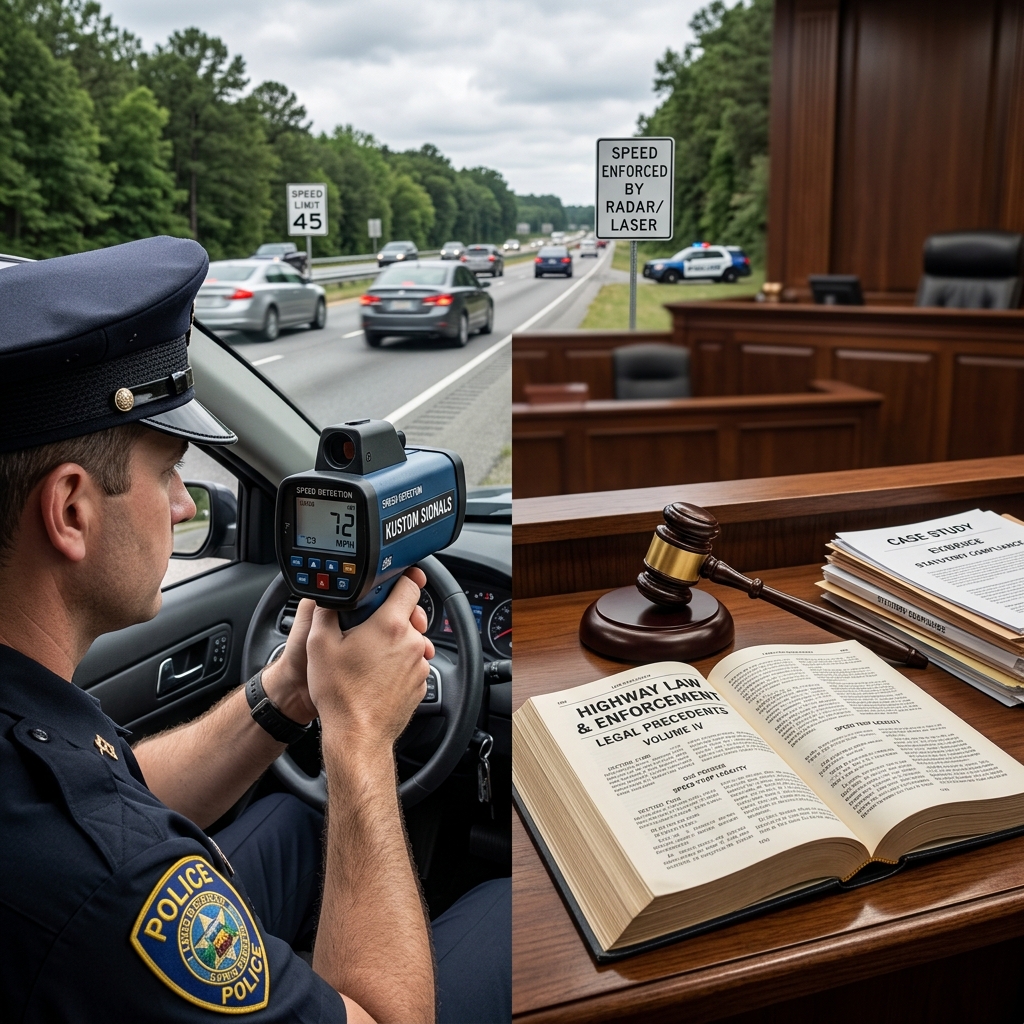
Many drivers feel blindsided when they see flashing lights in the rear-view mirror near a sudden speed limit change or a hidden police cruiser. These situations are often described as speed traps, and they raise a crucial question: are these enforcement tactics actually legal? In most parts of the United States, speed traps are generally lawful, but the rules that govern them can vary significantly from one state or city to another.
This guide explains what qualifies as a speed trap, how the law treats different enforcement methods, the special issues surrounding automated speed cameras, and what drivers can realistically do if they receive a ticket in one of these areas. It focuses on broad legal principles rather than any single state, while highlighting examples where state laws impose unique limits or protections.
What Is a Speed Trap?
Although there is no single nationwide definition, the term speed trap typically refers to a location where the combination of road design, speed limit changes, and police presence makes it especially likely that drivers will be caught exceeding the posted limit.
Common characteristics of areas described as speed traps include:
- A noticeable drop in the posted speed limit over a short distance.
- Frequent or continuous police monitoring, often with radar or laser devices.
- Officers parked in concealed positions, such as behind trees, signs, or overpasses.
- Speed limit signs that are easy to miss, such as those partially hidden by vegetation or placed just after an intersection.
The phrase is often used by motorists to express frustration, especially when it appears that a local government is using enforcement to generate revenue rather than to improve safety. However, from a legal perspective, most of these situations are treated as standard speed enforcement, not as unlawful traps.
General Legal Principles Behind Speed Enforcement
To understand whether a speed trap is legal, it helps to start with the basic legal framework for traffic enforcement. In every state, speeding laws are enacted to promote safety and reduce the severity of crashes. Police officers are authorized to enforce these laws across public roads, and drivers are required to comply with posted speed limits regardless of how the enforcement officer is positioned.
Visibility of Officers and Equipment
Drivers often assume that officers must be visible or that enforcement is unfair if a cruiser is hidden. In reality, most states do not require officers to reveal their location while monitoring traffic.
Key points include:
- Concealed monitoring is generally allowed; simply hiding in a parking lot or behind vegetation does not amount to entrapment.
- Entrapment, in the criminal law sense, usually requires law enforcement to induce a person to commit an offense they would not otherwise commit. Passive observation of speeding does not meet this standard.
- Courts focus more on whether the speed limit is valid and whether the evidence of speed is reliable than on where the officer was parked.
Accuracy and Calibration of Speed Measurement
While visibility is rarely a legal issue, accuracy is. Many states require that radar guns, lasers, or other speed measurement tools be properly calibrated and tested at defined intervals. If a driver can demonstrate that the device used to measure speed was not correctly maintained, it may provide a defense to a ticket.
Courts also expect officers to follow procedural standards when operating speed enforcement equipment. These standards can include training requirements, internal policies, and manufacturer guidelines, all designed to ensure that speed readings are as reliable as possible.
How States Differ in Regulating Speed Traps
Although the underlying goal of reducing dangerous speeds is consistent nationwide, the extent to which states regulate speed traps and related practices varies. Some states rely mostly on general traffic laws, while others have specific statutory rules about how speed limits must be justified or posted before they can be enforced.
States With Special Rules on Sudden Speed Limit Changes
A notable example is California, which uses a more technical legal definition of speed traps. In that state, certain stretches of road can be classified as improper speed traps if the posted limit is not supported by a recent engineering and traffic survey, subject to stated exceptions.
Engineering surveys typically consider:
- Average operating speed of vehicles on the roadway.
- Crash history and safety concerns.
- Roadway characteristics, such as curves, grades, and intersections.
- Presence of pedestrians, bicyclists, schools, or other special uses.
In jurisdictions that use similar standards, if a speed limit is set well below what an engineering analysis supports, it may be harder for the government to enforce tickets based on that limit. However, this kind of protection is not universal; most states do not have detailed speed trap statutes and instead rely on general traffic law principles.
Requirements for Clear and Adequate Signage
Across states, one of the most common legal arguments raised against alleged speed traps concerns the visibility of speed limit signs. Many traffic codes require that speed limits be posted in a clearly visible manner so that an ordinary driver has a fair chance to observe and obey them.
Potential signage issues include:
- Signs obscured by tree branches or other vegetation.
- Signs hidden by construction equipment or temporary barriers.
- Unusually small or poorly reflective signs that are hard to see at night.
- Missing signs when entering a reduced-speed zone from a side road.
In some cases, drivers have successfully challenged tickets by presenting photos or other evidence showing that the speed limit sign was not reasonably visible. In these situations, courts may find that enforcement in that particular spot was improper, even though the general concept of speed traps remains legal.
Automated Speed Cameras and Legal Limits
Beyond traditional officer-operated radar, automated speed safety cameras have become a major enforcement tool, particularly in school zones, work zones, and high-crash corridors. These systems use speed measurement devices to detect violations and then capture photographic or video evidence of the offending vehicles.
State-by-State Variation in Camera Legality
Automated speed cameras are not uniformly permitted. According to analyses by transportation agencies, some states explicitly authorize these systems, others restrict them to specific contexts, and several have chosen to prohibit them entirely.
| Type of Rule | Typical Approach |
|---|---|
| Full authorization | State law allows broad use of cameras, often letting cities or counties deploy them with local ordinances. |
| Limited authorization | Cameras permitted only in defined zones, such as school or work zones, or under pilot programs. |
| Total prohibition | State law bans automated speed cameras, often citing privacy or policy concerns. |
| Local discretion | Even where statewide programs are limited, some jurisdictions use cameras under local authority. |
The National Highway Traffic Safety Administration (NHTSA) and Federal Highway Administration (FHWA) note that programs using automated enforcement benefit from explicit legal authorization to reduce the risk of court challenges. State courts have generally upheld the constitutionality of these systems when they are properly authorized and implemented.
Designing Camera Programs for Safety, Not Revenue
Public acceptance of speed cameras often depends on whether they are perceived as safety tools rather than revenue generators. Federal guidance stresses that agencies should carefully design programs, select vendors, and structure payment agreements to avoid incentives that prioritize ticket volume over safety outcomes.
Best practices include:
- Locating cameras in documented high-risk areas, such as corridors with frequent serious crashes.
- Using clear signage to notify drivers of camera enforcement zones.
- Applying consistent speed thresholds that focus on dangerous speeding, not minor deviations from the limit.
- Maintaining public oversight by transportation or safety agencies rather than private entities.
Are All Speed Traps Legal?
Despite widespread frustration among drivers, the answer is that most speed traps are legal, at least in the sense that courts routinely uphold tickets issued in these areas if the underlying speed limit and enforcement methods comply with applicable laws.
However, legality can turn on specific details:
- If a speed limit is set without required engineering justification in a state that demands such surveys, enforcement may be restricted.
- If signage is inadequate under state or local regulations, tickets may be vulnerable to challenge.
- If radar or camera equipment is not properly maintained or calibrated, its readings may be questioned in court.
- If an automated camera program operates without statutory authorization, it may face legal challenges on procedural grounds.
These nuances mean that while the concept of speed traps is generally accepted, individual tickets can sometimes be successfully contested based on legal or technical deficiencies.
Practical Steps If You Receive a Speed Trap Ticket
Facing a ticket from what you believe is a speed trap can be stressful, but there are structured steps you can take to evaluate your options. The goal is to understand whether the enforcement was legally sound and whether there is any realistic basis to contest the citation.
1. Document the Location and Conditions
As soon as it is safe to do so, make notes or take photographs of the area where you were stopped. Key details include:
- The position and visibility of speed limit signs before the enforcement point.
- Any obstructions (trees, vehicles, construction) affecting sign visibility.
- Roadway layout, such as hills, curves, or lane merges that may affect typical speeds.
- Weather and lighting conditions at the time of the alleged violation.
This information can help a lawyer or court assess whether signage and roadway conditions complied with legal standards.
2. Review the Ticket for Technical Details
Tickets usually include the alleged speed, the posted limit, the type of equipment used (radar, laser, camera), and the location of the violation. Reviewing these details can reveal potential issues:
- Incorrect or vague location descriptions that make it hard to confirm where the offense occurred.
- Missing information about the enforcement tool used to measure speed.
- Apparent discrepancies between the stated limit and signs in the area.
In some states, very specific requirements govern how tickets must be written or recorded, and errors can occasionally form the basis for a legal challenge.
3. Consider Consulting a Traffic Attorney
Although many drivers choose to pay speeding fines and move on, consulting an attorney experienced in traffic law can be useful, especially if the ticket carries significant penalties, such as substantial fines, license points, or potential license suspension.
A legal professional can:
- Explain how your state defines and regulates speed traps.
- Assess whether signage or engineering requirements might apply.
- Review whether enforcement equipment was likely calibrated and documented according to local rules.
- Advise you on realistic chances of success if you contest the ticket.
4. Evaluate Plea and Hearing Options
In many jurisdictions, drivers may have options besides simply paying the fine or going to trial. Depending on local rules, possibilities can include:
- Pleading to a non-moving violation that carries lower penalties.
- Attending a traffic safety course to reduce or avoid points.
- Requesting a hearing to present evidence of inadequate signage or equipment issues.
The availability of these options depends entirely on state and local law, so reviewing your citation and any instructions that accompany it is essential.
Driver Strategies to Avoid Speed Trap Problems
While drivers cannot control how police set up enforcement zones, they can adopt strategies to reduce the risk of being caught off guard by speed traps.
- Watch for speed transitions: Pay attention to changes in speed limits, particularly when entering towns, approaching school zones, or driving through construction areas.
- Use navigation tools wisely: Many modern navigation systems and apps highlight frequent enforcement zones or remind drivers of current speed limits. These tools can help anticipate sudden drops.
- Stay below the limit on unfamiliar roads: When driving in areas you do not know well, it is prudent to err on the side of caution until you clearly see the posted limit.
- Monitor roadside signs regularly: Make it a habit to scan roadside signage, especially after intersections or entry ramps where limits may change.
These habits cannot guarantee that you will never encounter a speed trap, but they significantly improve the chances of noticing and responding to changing limits before enforcement occurs.
Frequently Asked Questions About Speed Traps
Are speed traps illegal anywhere in the United States?
There is no blanket national ban on speed traps. Most states treat them as ordinary enforcement of speed laws, although some states, such as California, restrict enforcement in certain situations if speed limits lack required engineering support or if other specific legal conditions apply.
Do officers have to be visible for speed enforcement to be valid?
No. Visibility of officers is generally not a legal requirement. Concealed monitoring is widely permitted, and courts focus more on whether the speed limit is legally set and whether speed measurements are accurate.
Can I challenge a ticket by arguing that the speed trap was unfair?
Arguments about fairness alone rarely succeed. However, you may be able to challenge a ticket by showing that signs were not visible, the limit was not properly authorized, or enforcement equipment was not correctly maintained according to state rules.
Are automated speed cameras always legal?
No. Automated speed cameras are subject to state-specific laws. Some states authorize them broadly, others restrict them to defined zones, and a number prohibit them altogether. Programs typically need explicit legislative authority to withstand legal scrutiny.
Do speed cameras improve safety?
Transportation agencies such as NHTSA and FHWA identify speed safety cameras as one of several proven countermeasures for reducing speeding and improving safety when programs are well designed and focused on high-risk locations.
References
- Are Speed Traps Legal? – FindLaw — FindLaw. 2023-08-15. https://www.findlaw.com/traffic/traffic-tickets/are-speed-traps-legal.html
- Are Speed Traps Legal? How Do I Fight a Speed Trap Ticket? — Nolo. 2022-11-10. https://www.nolo.com/legal-encyclopedia/are-speed-traps-legal-how-do-i-fight-a-speed-trap-ticket.html
- Speed Safety Camera Enforcement — National Highway Traffic Safety Administration (NHTSA). 2023-01-01. https://www.nhtsa.gov/book/countermeasures-that-work/speeding-and-speed-management/countermeasures/enforcement/speed
- Speed Safety Cameras — Federal Highway Administration (FHWA), U.S. Department of Transportation. 2023-02-01. https://highways.dot.gov/safety/proven-safety-countermeasures/speed-safety-cameras
- Are Speed Traps Legal? State-by-State Map (2026) — ConsumerShield. 2026-03-01. https://www.consumershield.com/injuries-accidents/car-accidents/are-speed-traps-legal
- Speed Traps: Legal Reality vs. Driver Perception in Florida — Traffic Ticket Team. 2024-06-01. https://www.trafficticketteam.com/speeding-ticket/speed-traps-legal-reality-vs-driver-perception-in-florida/
- Can I Fight a Speed Trap Ticket? Are Speed Traps Legal? — Andrew Flusche, Attorney at Law. 2023-05-15. https://www.andrewflusche.com/blog/can-i-fight-a-speed-trap-ticket-are-speed-traps-legal/
Similar Articles








Read full bio of Sneha Tete


