
Texas Traffic Laws 2025: 7 Essential Rules For Every Driver’s Safety
A practical guide to key Texas traffic rules, common infractions, and the penalties that can affect your license, record, and wallet.
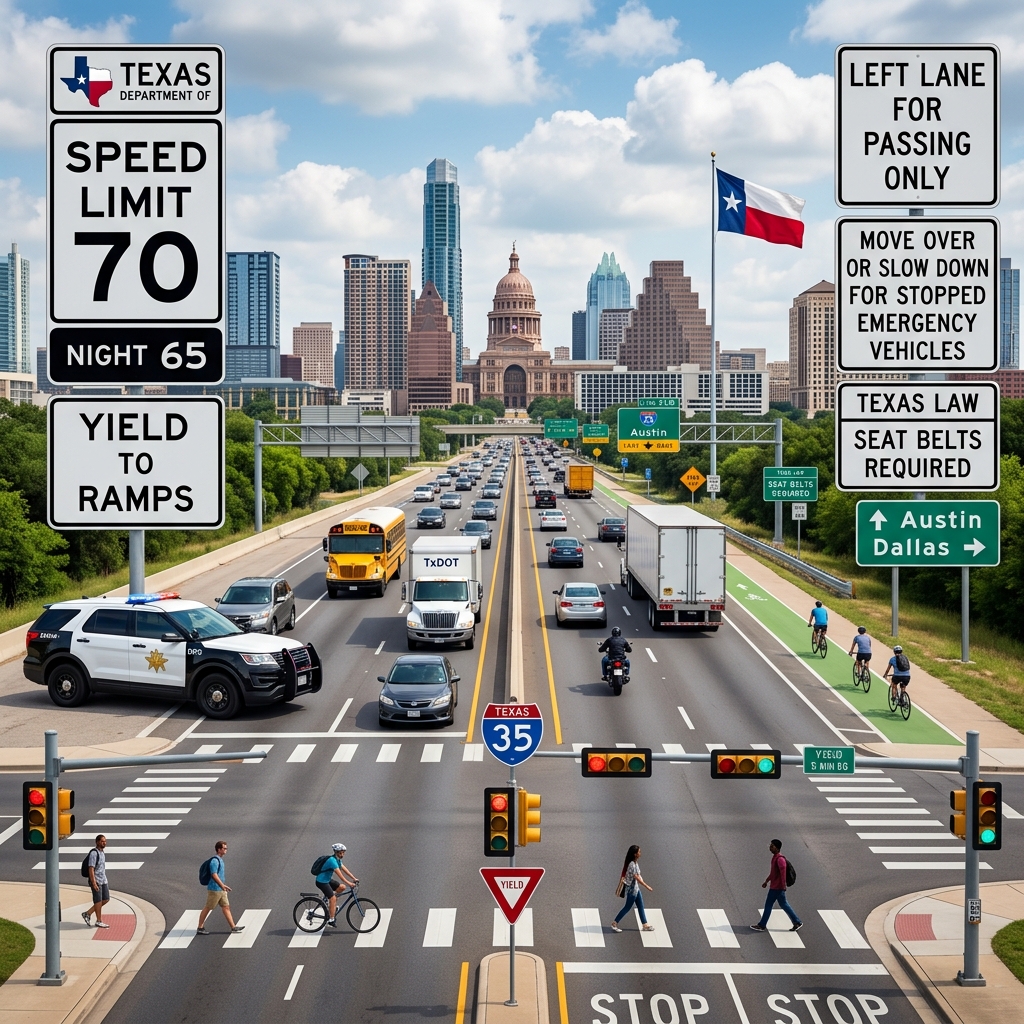
Texas traffic laws shape how every driver, motorcyclist, cyclist, and pedestrian shares the road. These rules are not only about avoiding tickets; they are designed to prevent crashes, reduce injuries, and keep traffic flowing safely across the state. Whether you are a new driver or have been on Texas roads for decades, understanding key requirements and common violations can help you stay safe and legally compliant.
This guide explains major Texas traffic rules, typical infractions, and the potential consequences of breaking them. It is based on official Texas statutes and statewide safety guidance, presented in everyday language for easy reference.
Overview of Texas Traffic Law
Most Texas traffic rules are codified in the Texas Transportation Code, particularly in Title 7, which covers vehicles and traffic. Traffic offenses in Texas are generally criminal, meaning violations can lead to fines, court appearances, and sometimes jail or license suspension.
- Scope of the law: Rules apply to public roads, highways, and many parking areas open to the public.
- Types of offenses: Minor infractions (e.g., speeding) and more serious offenses (e.g., driving while intoxicated) are both governed by the Transportation Code and related statutes.
- Enforcement: Local police, sheriffs, and state troopers enforce these laws and issue citations when drivers do not comply.
Although some details differ by city or county, statewide rules for speed limits, seat belt use, distracted driving, DUI/DWI, and right-of-way are broadly consistent.
Common Traffic Infractions in Texas
Several categories of violations appear frequently in Texas courts and on roadside citations. While the list below is not exhaustive, it covers many of the infractions that drivers encounter in everyday travel.
1. Distracted Driving and Mobile Device Use
Texas law restricts the use of wireless communication devices, especially for texting or sending electronic messages while driving. The goal is to reduce crashes caused by inattention.
- Texting ban: Handheld texting, emailing, or similar electronic communications while driving is prohibited statewide.
- Young drivers: Drivers under 18 are barred from using any wireless communication device while driving.
- Safety rationale: State safety agencies emphasize that texting and cell phone conversations are dangerous distractions that take eyes, hands, and attention away from the road.
Penalties vary depending on local enforcement and whether a violation contributes to a crash, but fines and points on your driving record are common outcomes. Serious distracted driving crashes can lead to criminal charges.
2. Speed Limit Violations
Driving faster than the posted speed limit or too fast for conditions is one of the most common Texas traffic violations. Speed limits are set to balance safety and efficient travel, and ignoring them increases crash risk.
| Road Type | Typical Speed Range | Notes |
|---|---|---|
| Residential & business districts | Up to ~30 mph | Urban areas often have lower limits to protect pedestrians and local traffic. |
| Rural highways | 55–75 mph | Higher speeds reflect wider roads and fewer intersections. |
| Major highways / toll roads | 70–85 mph | Some segments, such as State Highway 130, allow speeds up to 85 mph. |
| School zones | 15–30 mph | Strictly enforced during school hours or when children are present. |
Driving above the posted limit or too fast for weather, traffic, or road conditions can result in a citation. Extremely high speeds may support more serious charges and higher fines.
3. Failure to Yield and Right-of-Way Errors
Texas law contains detailed right-of-way rules for intersections, crosswalks, and interactions with emergency vehicles and school buses. Violating these requirements can cause serious crashes.
- Uncontrolled intersections: When there are no signals, the driver on the left generally must yield to the driver on the right.
- Pedestrians: Drivers must yield to pedestrians in crosswalks and take necessary precautions when people with assistance animals or white canes are crossing.
- Emergency vehicles: When approaching vehicles with flashing lights and sirens, drivers must yield, typically by pulling to the right and stopping until the vehicle passes.
Failing to honor right-of-way can lead to citations and civil liability if a crash occurs.
4. School Bus and School Zone Violations
Texas treats school-related violations seriously because children are particularly vulnerable in traffic.
- Passing a stopped school bus: It is illegal to pass a school bus displaying a stop sign and flashing red lights, whether you are behind the bus or approaching from the opposite direction, until the signals are off and the bus moves again.
- School zone speeds: Reduced speed limits, typically between 15 and 30 mph, apply in designated school zones and are strictly enforced during school hours or when children are present.
Violations in these areas often carry increased fines and long-term consequences on insurance and driving records.
Seat Belts, Child Safety, and Vehicle Equipment Rules
Texas lawmakers emphasize occupant restraint as a key safety measure. State guidance notes that safety belts save thousands of lives each year.
Seat Belt Requirements
Texas law requires all passengers, no matter where they sit, to wear seat belts if the vehicle is equipped with them. Drivers can be fined if anyone in the vehicle is not properly restrained.
- Front and rear seat passengers must use seat belts.
- Failure to wear a seat belt can lead to fines, court costs, and higher insurance premiums.
- Repeated violations may carry greater penalties.
Child Passenger Safety
Detailed rules govern the use of child seats and booster seats, generally based on the child’s age, weight, and height. Texas safety agencies publish guidelines and emphasize that proper child restraints are crucial to preventing serious injuries.
Other Vehicle-Related Requirements
Texas laws also regulate many aspects of vehicle equipment and operation, including:
- License plates: Most vehicles must display license plates at required locations so they are clearly visible.
- Window tint: Limits apply to how much light front side windows must allow and how reflective tint can be; darker rear windows may require dual side mirrors.
- Parking and security: Leaving keys in an unattended vehicle, failing to set a parking brake, or opening doors unsafely can violate various provisions of the Transportation Code.
DUI/DWI and Impaired Driving in Texas
Driving under the influence of alcohol or drugs is one of the most serious traffic offenses in Texas. State safety materials underscore that impaired driving carries heavy penalties and severe crash risks.
Blood Alcohol Concentration Limits
Texas sets different legal thresholds depending on a driver’s age and license category.
- Drivers 21 and over: It is illegal to operate a vehicle with a blood alcohol concentration (BAC) of 0.08% or higher.
- Commercial drivers: A stricter limit of 0.04% BAC applies to many commercial license holders.
- Drivers under 21: Texas applies an effective zero-tolerance approach; any detectable alcohol can result in penalties.
Potential DUI/DWI Penalties
Exact penalties depend on prior history, BAC level, and whether injuries or property damage occurred, but typical consequences for adults include:
- First offense: Up to a $2,000 fine, three to 180 days in jail, and possible loss of driving privileges for up to one year.
- Second offense: Up to a $4,000 fine, 30 days to one year in jail, and license suspension of up to two years.
- Third offense: A fine up to $10,000, two to 10 years in prison, and up to a two-year license suspension.
These penalties illustrate how seriously Texas treats impaired driving, especially repeat offenses.
Motorcycle, Lane Use, and Special Rules
Texas traffic law also contains special provisions for motorcycles and lane use that differ from some other states.
Motorcycle Helmet Laws
Texas requires riders under 21 to wear helmets. Riders 21 and older may ride without helmets if they meet certain insurance or training requirements. This flexibility is unusual compared to more restrictive states.
Lane Splitting and Lane Use
Unlike some jurisdictions, Texas does not permit motorcycles to ride between lanes of traffic.
- No lane splitting: Motorcycles must remain in a single lane like other vehicles; lane splitting and lane filtering are prohibited.
- Passing and centerlines: Drivers must generally stay to the right of centerlines and follow rules on when passing or turning across them is allowed.
Consequences of Traffic Violations
Beyond immediate fines, Texas traffic violations can lead to a range of consequences.
- Criminal record: Because many traffic offenses are criminal, convictions can appear on background checks.
- License impact: Repeated offenses or serious violations such as DUI/DWI can result in license suspension or revocation.
- Insurance costs: Insurers often raise premiums after citations or crashes involving traffic law violations.
Understanding and following Texas traffic laws helps drivers avoid these long-term financial and legal consequences.
Quick Compliance Checklist for Texas Drivers
The following bullet points summarize practical steps to align everyday driving with Texas traffic rules:
- Always obey posted speed limits and slow down for school zones or adverse conditions.
- Wear seat belts in every seating position and use appropriate child restraints.
- Put away handheld devices and never text while driving.
- Yield properly at intersections, to pedestrians, and to emergency vehicles.
- Never drive after consuming enough alcohol or drugs to impair your ability to operate a vehicle safely.
- Follow motorcycle helmet and lane use rules if you ride a motorcycle.
- Respect school buses’ flashing lights and stop signs; do not pass until they move again.
Frequently Asked Questions About Texas Traffic Laws
Do all passengers in Texas have to wear seat belts?
Yes. Texas law requires every passenger, regardless of seating position, to wear a seat belt when the vehicle is equipped with them. Drivers can be fined if any passenger is unrestrained.
Is texting while driving illegal everywhere in Texas?
Using a handheld device to text, email, or send electronic messages while driving is prohibited statewide. Many localities also adopt additional restrictions to further reduce distracted driving.
How fast can I legally drive on Texas highways?
Speed limits on Texas highways generally range from 70 to 75 mph, with some toll roads allowing speeds up to 85 mph. Always follow posted signs and reduce speed in school zones or adverse conditions.
What happens if I pass a stopped school bus?
Passing a school bus that is stopped with an extended stop sign and flashing red lights is illegal and can result in significant fines and other penalties. Drivers must stop and remain stopped until the signals are removed and the bus resumes motion.
What is the legal BAC limit for drivers in Texas?
For drivers 21 and older, the legal BAC limit is 0.08%. Commercial drivers face a lower limit of 0.04%, while drivers under 21 can face penalties for any detectable alcohol.
Are traffic offenses in Texas considered criminal?
Yes. Like Penal Code offenses, most traffic violations are criminal under Texas law, meaning they can lead to court proceedings, fines, and sometimes jail, depending on the offense.
References
- Driving safety and laws — Texas Department of Transportation. 2024-03-01. https://www.txdot.gov/safety/driving-laws.html
- New Traffic Laws in Effect for Texas Drivers — SafeMotorist. 2023-06-15. https://www.safemotorist.com/articles/new-texas-traffic-laws
- Texas Driving Laws: The 2026 Guide — ConsumerShield. 2026-01-10. https://www.consumershield.com/injuries-accidents/texas/driving-laws
- Texas Traffic Laws — FindLaw. 2022-09-20. https://www.findlaw.com/state/texas-law/texas-traffic-laws.html
- Traffic Law (Level I, Chapter 8) — Texas Municipal Courts Education Center. 2022-07-01. https://www.tmcec.com/wp-content/uploads/2022/07/11-Level-I-Ch-8.pdf
- Texas Transportation Code — Texas Legislature. 2025-01-01. https://statutes.capitol.texas.gov/?link=TN
- The Rules of the Road in Texas — Thomas J. Henry Law. 2023-08-05. https://thomasjhenrylaw.com/blog/texas-driving-the-most-important-rules-of-the-road/
Similar Articles








Read full bio of medha deb


