
Understanding Sales and Use Tax for Small Businesses
A practical guide to sales and use tax rules, compliance steps, and common pitfalls every small business owner should know.
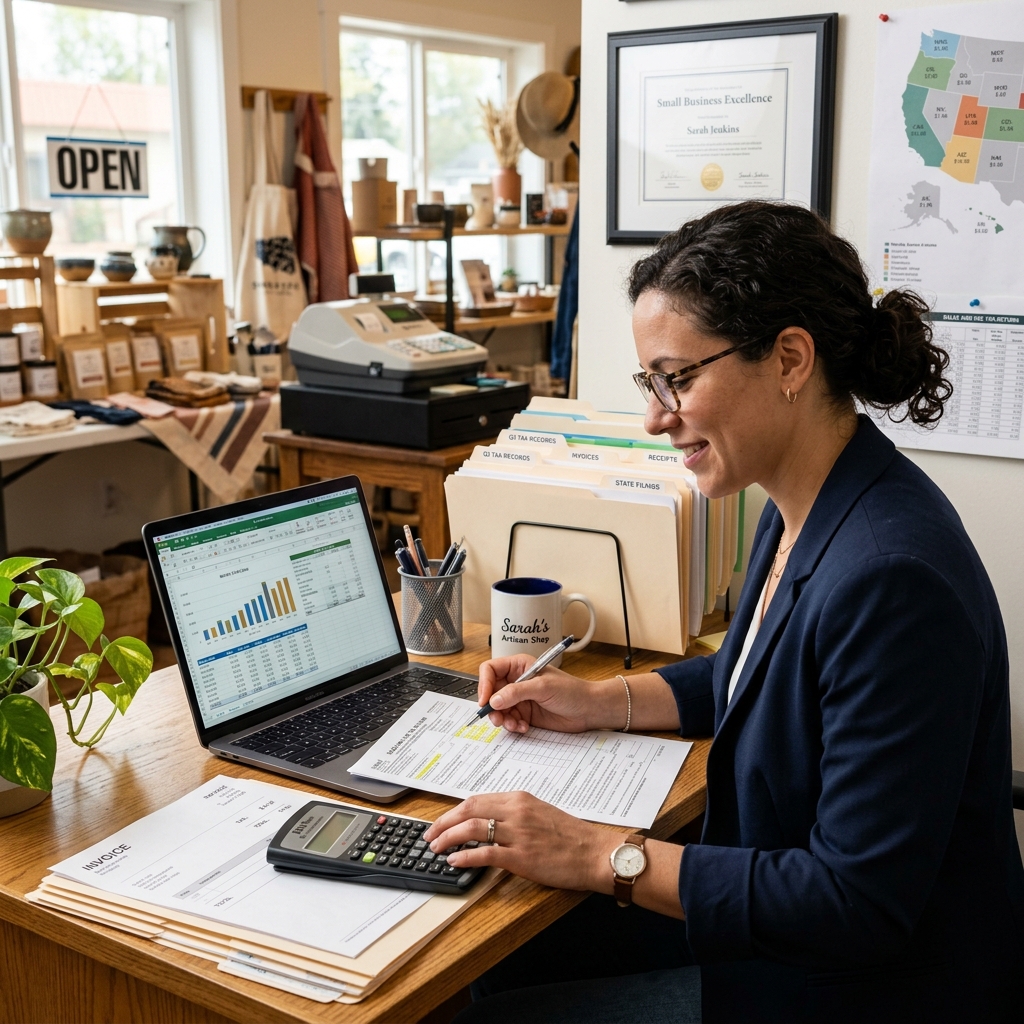
Sales and use tax rules affect nearly every small business that sells goods or certain services in the United States. These taxes are imposed by states and local governments, and failure to handle them correctly can lead to penalties, interest, and even loss of your business license. This guide explains the essentials of sales and use tax, focusing on what small business owners need to know to stay compliant.
What Are Sales and Use Taxes?
Although they often appear together, sales tax and use tax are distinct but closely related. Most states administer them as a unified system to ensure that taxable purchases are properly taxed whether they occur inside or outside the state.
Sales Tax Defined
Sales tax is generally a tax on the retail sale of tangible personal property (things you can touch) and certain taxable services to the final consumer. It is typically added to the purchase price at the point of sale and collected by the seller.
- Imposed on retail sales of taxable goods and some services.
- Charged to the customer as a separate line item on the invoice or receipt.
- Collected by the business and remitted to the state or local tax authority; the business does not keep this money.
In many states, all sales of tangible personal property and taxable services are presumed taxable unless a specific exemption applies.
Use Tax Defined
Use tax is a companion tax that applies when sales tax was not properly charged on a taxable item, usually because the item was purchased outside the state or in a context where tax was not collected.
- Imposed on the storage, use, or consumption of taxable property within a state.
- Typically owed by the buyer, not the seller, when no sales tax was collected on a taxable purchase.
- Ensures that purchases used in a state are taxed even if the seller is out of state or did not charge tax.
For example, if a Maryland resident buys equipment online from an out-of-state seller that does not charge tax, the resident may owe consumer use tax to Maryland.
Key Differences Between Sales and Use Tax
| Aspect | Sales Tax | Use Tax |
|---|---|---|
| When applied | At the point of sale on taxable items or services. | After purchase, if sales tax was not charged on a taxable item. |
| Who collects/pays | Seller collects from the buyer and remits to the state. | Buyer self-assesses and pays directly to the state (consumer use), or seller remits under vendor use tax rules. |
| Typical scenario | Retail sale within the state where the seller has tax obligations. | Out-of-state or online purchases used in the state without proper sales tax. |
| Legal purpose | Tax intrastate retail transactions. | Prevent tax avoidance and equalize tax treatment of in-state and out-of-state purchases. |
When Does a Small Business Have to Collect Sales Tax?
The obligation to collect sales tax depends primarily on whether your business has nexus in a particular state. Nexus is a legal term that describes the level of connection between your business and a state that justifies imposing tax duties.
Understanding Nexus
Nexus can arise in several ways, including physical presence and economic activity. While each state defines nexus differently, common triggers include:
- Having a store, office, warehouse, or other physical facility in the state.
- Employing staff or independent contractors who work in the state.
- Storing inventory in a third-party warehouse or fulfillment center located in the state.
- Making a substantial volume of sales into the state, even without physical presence (economic nexus).
Once nexus exists, you generally must register, collect, report, and remit sales tax on taxable sales into that state.
Types of Sales Subject to Tax
States broadly tax retail sales of tangible personal property, but they differ in how they treat services and specific item categories.
- Tangible goods: Most states tax retail sales of tangible items such as equipment, furniture, clothing, and supplies.
- Digital goods: Some jurisdictions tax digital products (e.g., downloads, software) as if they were tangible property.
- Services: Only certain services are taxed, and these vary by state; examples include manufacturing services, accommodations, and rentals.
- Special categories: Items such as hotel rooms, car rentals, or alcoholic beverages may be taxed at different rates than general merchandise.
Because rules differ, small businesses should verify the taxability of their products and services in each state where they have nexus.
How Use Tax Affects Small Businesses
Use tax often arises when a business buys items for its own use from out-of-state vendors who do not charge sales tax. In these situations, the business may be required to pay use tax to its home state.
Typical Use Tax Situations
- Purchasing equipment, tools, or office furniture from an online seller that does not collect sales tax for your state.
- Buying inventory tax-free and then using it for your own business rather than reselling it.
- Acquiring promotional items or samples from out-of-state vendors without tax, then distributing them in your state.
In these cases, the business is usually required to self-assess the use tax and remit it to the appropriate tax authority, often through a separate use tax return or as part of a combined sales and use tax filing.
Consumer vs. Vendor Use Tax
Some states distinguish between consumer use tax (owed by purchasers) and vendor/retailer use tax (owed by sellers making certain interstate sales).
- Consumer use tax: A buyer calculates tax on untaxed purchases and pays it directly to the state.
- Vendor use tax: A seller registered in a state collects tax on sales shipped into that state, even if the sale originates elsewhere.
Understanding which type of use tax applies helps businesses comply with obligations when selling or buying across state lines.
Registering for Sales and Use Tax
Before collecting sales tax, businesses must register with the relevant state tax authority. Registration enables the state to assign an account number and establish filing requirements.
Basic Registration Steps
- Determine where you have nexus based on physical presence and economic activity.
- Visit the state’s tax department website and complete an online registration application.
- Provide information such as business name, legal entity type, address, ownership details, and estimated sales volume.
- Receive your sales and use tax account number and certificate of registration, which may need to be displayed at your place of business.
For example, states like Virginia, Missouri, and California allow retailers engaged in business in the state to register online and receive account credentials and certificates.
Licenses and Certificates
Registration often results in documents you must keep or display:
- Sales tax certificate of registration: Confirms you are authorized to collect tax and may be required to be posted at your location.
- Resale or exemption certificates: Allow you to buy inventory or certain items tax-free if they will be resold or used in an exempt manner.
Improper use of exemption certificates, or failure to maintain records, can lead to assessments and penalties.
Collecting, Tracking, and Remitting Sales Tax
Once registered, the business becomes responsible for calculating the correct tax, collecting it at the time of sale, tracking liabilities, and filing returns with payment.
Calculating the Correct Tax Rate
Sales tax rates typically include a state component plus local rates imposed by cities, counties, or special districts.
- State base rate (for example, 4.225% in Missouri).
- Additional local rates that vary by locality.
- Special rates or surcharges for accommodations, rentals, or certain products.
Because rates can differ from one location to another, businesses should use reliable tax rate tools provided by state agencies or trusted software.
Collecting and Recording Tax at Checkout
At the point of sale, businesses must add the applicable sales tax to the taxable portion of the transaction.
- Show the tax as a separate line item on invoices or receipts.
- Ensure your point-of-sale system applies the correct rate based on product taxability and customer location.
- Maintain detailed records showing tax collected by transaction, and often by jurisdiction.
States may require separate reporting for different districts, cities, or counties, so record-keeping should be thorough and organized.
Filing Returns and Paying Tax
Most states require registered businesses to file periodic sales and use tax returns, usually monthly, quarterly, or annually depending on the amount of tax collected.
- Monthly filing: Required for larger collectors, often when annual tax collections exceed a specified threshold.
- Quarterly filing: Common for smaller businesses below a set collection level.
- Electronic filing: Many states provide secure online portals for filing and payment.
Due dates vary by state but often fall around the 20th day of the month following the reporting period. Some jurisdictions expect returns even when no tax was collected, while others waive filing if no tax is owed.
Penalties for Noncompliance
Late filing or payment can result in penalties and interest. For example, Virginia imposes a penalty of 6% per month (up to 30%) plus a minimum penalty amount and interest based on a federal underpayment rate. Other states apply similar structures, and repeated noncompliance may lead to enforcement actions or revocation of your sales tax license.
Common Exemptions and Special Rules
Most states provide exemptions or special rules for certain transactions, though details differ considerably.
Casual and Isolated Sales
Individuals who do not regularly sell goods or taxable services may be exempt from sales and use tax on small, occasional sales under certain conditions. For instance, Maryland exempts casual sales under specific price and frequency limits when the seller does not act through a dealer or auctioneer.
Resale Exemptions
Businesses that buy items specifically for resale generally may purchase those items without paying sales tax, using a valid resale certificate. Later, they must collect tax when selling the goods to the final customer. Improper use of resale certificates can be scrutinized in audits.
Government and Nonprofit Exemptions
Many states exempt certain government entities or qualifying nonprofits from paying sales tax on eligible purchases, subject to documentation and registration requirements. Small businesses selling to exempt buyers must properly record exemption certificates to substantiate non-taxed transactions.
Practical Compliance Tips for Small Businesses
Managing sales and use tax can be complex, but a few practical steps can greatly reduce risk.
- Regularly review nexus: Track where you have employees, inventory, facilities, or significant sales, and update registrations accordingly.
- Classify products correctly: Create a taxable status list for each item or service you sell, based on state guidance.
- Use reliable software: Implement point-of-sale and accounting systems that handle multi-jurisdiction tax rates and reporting.
- Keep detailed records: Maintain invoices, exemption certificates, and filing confirmations for the statutory retention period.
- Monitor law changes: State tax rules, rates, and nexus thresholds can change; review tax department updates regularly.
FAQs: Sales and Use Tax for Small Businesses
Do all states have both sales and use tax?
Most states that impose a sales tax also impose a complementary use tax to cover untaxed purchases from outside the state. A few jurisdictions have unique structures, so businesses should check each state’s rules.
Is sales tax considered part of my business revenue?
No. Sales tax is typically treated as a trust tax, meaning the customer entrusts the tax to the retailer, who holds it temporarily and then remits it to the state. It should not be reported as operating income.
What happens if I do not file a return because I had no sales?
Many states still require a return, even if no taxable sales occurred. Failing to file can lead to penalties or administrative consequences, including possible revocation of your registration.
How do I know which rate to charge for an online sale?
For online or remote sales, the applicable rate often depends on the customer’s location, especially where destination-based sourcing is used. Businesses should consult each state’s guidance and use approved online tools or software to determine the correct rate.
Do I need to worry about use tax if all my suppliers charge sales tax?
If every taxable purchase you make is properly taxed, your use tax exposure may be limited. However, you still need to consider situations such as inventory withdrawn for internal use or promotional items, where use tax might apply even if original purchases were exempt or taxed differently.
References
- How to pay sales tax for your small business — Thomson Reuters Tax & Accounting. 2023-05-10. https://tax.thomsonreuters.com/en/insights/how-to-pay-sales-tax-for-small-business
- Retail Sales and Use Tax — Virginia Department of Taxation. 2024-02-01. https://www.tax.virginia.gov/retail-sales-and-use-tax
- Maryland Sales and Use Taxes — People’s Law Library of Maryland. 2023-06-15. https://www.peoples-law.org/maryland-sales-and-use-taxes
- Sales/Use Tax — Missouri Department of Revenue. 2024-01-10. https://dor.mo.gov/taxation/business/tax-types/sales-use/
- Sales & Use Tax — California Department of Tax and Fee Administration. 2023-09-30. https://cdtfa.ca.gov/taxes-and-fees/sutprograms.htm
- Sales and Use Tax — New York State Department of Taxation and Finance. 2023-11-20. https://www.tax.ny.gov/bus/st/stidx.htm
- What is the difference between sales tax and use tax? — Sales Tax Institute. 2022-08-05. https://www.salestaxinstitute.com/sales_tax_faqs/sales-tax-vs-use-tax-guide
Similar Articles








Read full bio of Sneha Tete




