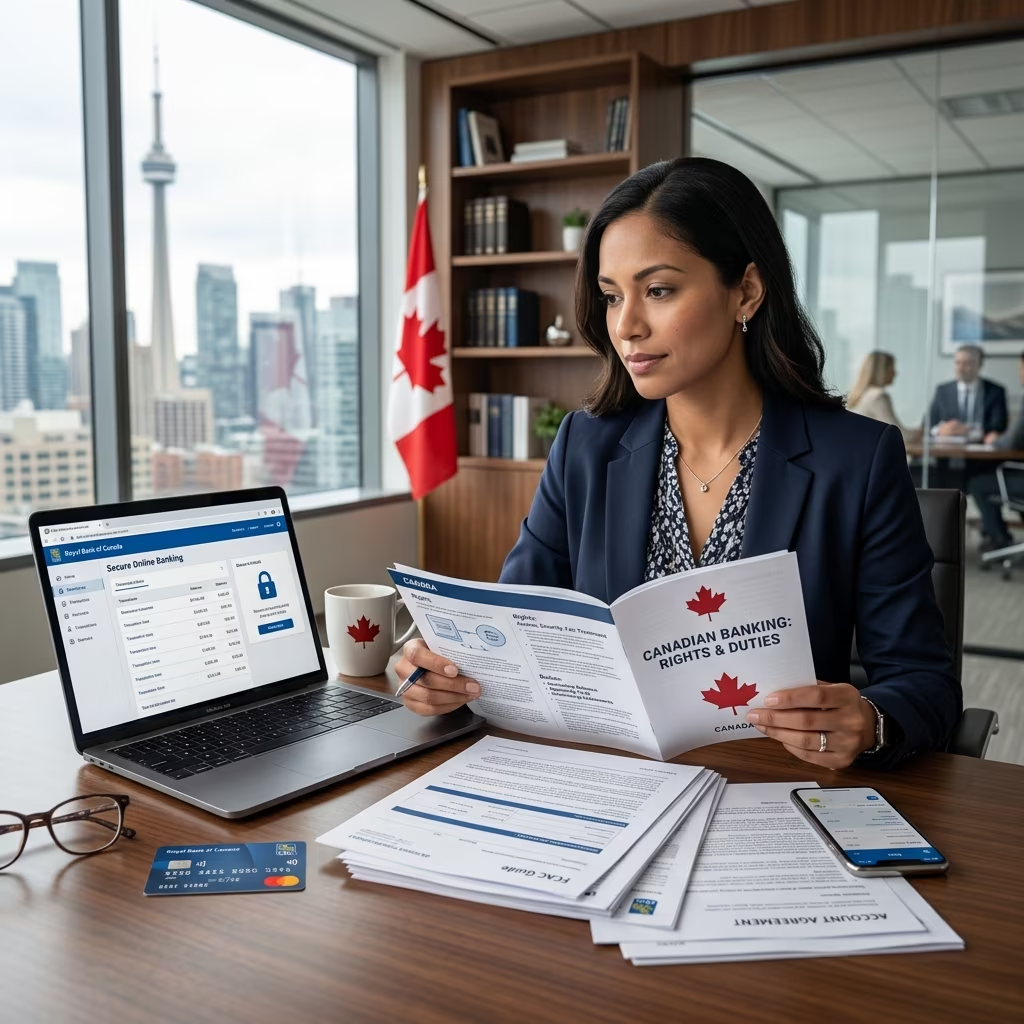
Having a bank account is essential for most people living in Canada. It lets you deposit your pay, pay bills, use debit cards, and manage your money securely. But every bank account also comes with legal rights and responsibilities. Knowing what the law requires from banks, and what it expects from you, can help you avoid fees, protect your savings, and resolve problems more effectively.
This guide explains the key rules that apply to personal and joint bank accounts in Canada, based on federal consumer protection laws and common banking practices. It focuses on accounts with federally regulated financial institutions, such as major banks, and highlights practical steps you can take when something goes wrong.
1. What a Bank Account Is – And Why Legal Rules Matter
A bank account is a financial product offered under a contract between you and a bank or similar institution. That contract is governed by federal legislation such as the Bank Act and consumer protection regulations, as well as provincial laws and the bank’s own policies.
In practical terms, an account is a record of the money you deposit and withdraw. However, the legal side is equally important:
- You have rights – for example, to open certain types of accounts, receive clear information, and make complaints.
- You have obligations – such as providing accurate identification, following the account agreement, and repaying overdrafts.
– including disclosure of fees, fair complaint-handling, and specific rules about inactive accounts and unclaimed balances.
Understanding these rules can help you compare offers, avoid surprise charges, and respond confidently if you believe your rights have been ignored.
2. Opening a Personal Bank Account: Your Legal Rights
In Canada, you generally have the right to open a personal bank account with a federally regulated bank, even if you do not have a job or a large amount of money to deposit. The Financial Consumer Agency of Canada (FCAC) sets out detailed rules on when banks must open accounts and what they must tell you.
2.1. Conditions to Open an Account
To open an account, you must meet certain basic conditions, mainly related to identification and lawful behaviour.
- Provide acceptable identification (ID) in original form, not photocopies.
- Be willing to enter into an account agreement and consent to the bank’s terms.
- Not be engaged in fraudulent or criminal activity involving financial institutions.
Official guidance lists different combinations of ID that banks must accept, including Canadian driver’s licences, passports, birth certificates, and some other government-issued documents. If you do not have standard ID, other options may still be available, such as using one strong piece of ID plus confirmation from someone the bank knows.
2.2. When a Bank May Refuse to Open an Account
Banks cannot turn you away arbitrarily. However, they may refuse to open a personal account in specific situations, such as:
- If you provide false or misleading identification.
- If they suspect you are attempting fraud or money laundering.
- If you have a documented history of illegal or fraudulent activity involving financial service providers in the last seven years.
- If they have reasonable grounds to believe opening the account would put staff or customers at risk of physical harm or serious harassment.
When a bank refuses to open an account, it must provide you with a written explanation and information about how to complain or contact FCAC for help.
2.3. Your Right to Clear Information
Before or at the time you open an account, the bank must give you key information in writing, either on paper or electronically (if you agree to electronic communication). This includes:
- A copy of the account agreement.
- A list of all fees and charges that apply to the account.
- Details of interest rates, how interest is calculated, and how often it is paid, if applicable.
The law also requires that the bank’s communications be clear, simple, and not misleading. This applies to brochures, online information, and any notices of changes to charges or interest.
3. Using Your Account: Alerts, Fees, and Changes
Once your account is open, a number of consumer protection rules govern how the bank must treat you, especially around electronic alerts, changes to fees, and ongoing disclosure.
3.1. Low-Balance Electronic Alerts
Federally regulated banks must send electronic alerts, without delay, in certain situations where your balance or credit limit is close to being used up. Specifically, you are entitled to alerts when:
- The balance in your chequing or savings account falls below $100, or below another amount you have chosen.
- The available credit on your credit card or personal line of credit falls below $100, or below another threshold you set.
These alerts are designed to help you avoid overdraft fees and declined transactions. You can usually manage alert settings through online banking.
3.2. Increases in Fees and New Charges
Banks can change the fees associated with your account, but they must follow strict notice rules. If your bank introduces a new charge or raises an existing one, it must:
- Provide information about the change in writing, either on paper or electronically (if you agreed to electronic communication).
- Send this notice at least 30 days before the change takes effect, if you receive account statements.
This gives you time to evaluate whether the account still meets your needs, compare alternatives, or modify how you use the account to limit fees.
4. Joint Bank Accounts: Shared Rights and Risks
Joint accounts are common among spouses, partners, family members, or business associates. They make it easier to manage shared expenses, but they also create shared ownership and responsibility.
4.1. What a Joint Account Is
A joint bank account is owned by two or more people, each of whom can deposit, withdraw, and manage funds in the account. All account holders usually have equal rights to access the money, regardless of who originally deposited it.
| Feature | Single Account | Joint Account |
|---|---|---|
| Number of owners | One person | Two or more people |
| Access to funds | Only the account holder | Each holder can carry out transactions |
| Responsibility for overdrafts and fees | Sole responsibility | Shared responsibility; any holder may be liable for the full amount |
| Use for shared expenses | Less convenient | Useful for managing household or joint costs |
4.2. Equal Rights and Shared Liability
In most cases, all joint account holders:
- Can deposit and withdraw funds without needing the others’ consent.
- Can use any linked debit cards or online banking services.
- Share responsibility for all transactions, including overdrafts and fees. The bank can collect the full amount owing from any one of the account holders.
Because of this shared liability, it is crucial to choose joint account partners carefully and discuss expectations openly.
4.3. Estate and Capacity Considerations
Joint accounts can raise complex legal questions when one account holder dies or loses mental capacity. For example, courts have held that deposits by a parent into a joint account with an adult child do not automatically entitle the child to the full balance on the parent’s death. Evidence of the parent’s intentions is often required to determine whether the surviving holder should receive the funds or whether they should form part of the estate.
People considering joint accounts for estate planning or elder support should:
- Seek legal advice about rights of survivorship and potential tax or estate impacts.
- Discuss alternative tools, such as powers of attorney, which allow someone to help with financial transactions without creating co-ownership.[10]
- Document their intentions clearly, possibly in a will or separate written instructions.
5. Inactive Accounts and Unclaimed Balances
If you forget about an account or stop using it for many years, special rules apply. Under the Bank Act, when a bank account has been inactive for 10 years and the bank cannot contact the owner, the balance is considered an “unclaimed balance.” The bank must transfer that money to the Bank of Canada.
The Bank of Canada maintains a public registry of these funds. If you think you may have left money in a long-forgotten account, you can search for it and claim it if still available.
5.1. Avoiding Unclaimed Balances
To prevent your money from becoming unclaimed:
- Keep your contact information up to date with every bank where you have accounts.
- Log in or carry out a small transaction periodically on any account you intend to keep.
- Consider closing accounts you no longer need and consolidating balances.
These simple steps help ensure that banks can reach you and that your accounts do not fall into long-term inactivity.
6. Resolving Problems and Making Complaints
Despite legal protections, disputes sometimes arise—for example, over unauthorized transactions, fees you did not expect, or account closures. Canadian law requires banks to have structured complaint-handling processes, and there are independent bodies that can help.
6.1. Steps to Resolve a Banking Problem
If you have a problem with your bank account, a practical escalation path is:
- Contact the branch – Speak with a customer service representative or branch manager and explain the issue in detail.
- Escalate to head office – If you are not satisfied, use the bank’s formal complaint process, usually managed by a dedicated complaints or customer care unit. Banks must inform you how to access this process.
- Use an external ombuds service – For federally regulated banks, you may be able to bring your complaint to an external complaints body, such as the Ombudsman for Banking Services and Investments (OBSI), after the bank’s process is complete.
- Contact FCAC for information – FCAC does not resolve individual disputes, but it can provide guidance on your rights and monitor whether banks follow consumer protection laws.
Keeping records—such as statements, correspondence, and notes of conversations—makes it easier to present a clear case if the dispute escalates.
7. Practical Tips to Avoid Bank Account Problems
Beyond legal rights, good habits can reduce the chance of issues and fees. Consider these practical strategies:
- Read your account agreement carefully before signing. Pay attention to overdraft policies, hold periods on deposits, and service fees.
- Use low-balance alerts to avoid overdraft or nonsufficient funds charges.
- Review statements regularly to catch unauthorized transactions or errors quickly.
- Limit joint accounts to people you fully trust, and discuss expectations for spending and deposits in advance.
- Keep your contact information updated to ensure you receive important notices about fee changes or inactive accounts.
- Ask questions if any term or fee is unclear. Banks are required to provide information in a clear and simple manner.
8. Frequently Asked Questions (FAQs)
8.1. Can a bank refuse to open an account for me?
Yes, but only for specific reasons. A bank may refuse if you present false identification, if it suspects you are involved in fraud or illegal activity, or if opening the account could endanger staff or customers. If it refuses, it must confirm this in writing and tell you how to complain.
8.2. Do I need a job or income to open a bank account?
No. Under Canadian law, you have the right to open a personal bank account even if you do not have a job or a regular income. You must still meet identification requirements and other basic conditions.
8.3. Who owns the money in a joint account?
Legally, all account holders are considered owners of the full balance. Each can usually withdraw or use the funds, and each shares responsibility for overdrafts and fees. However, for estate purposes, courts may look at who contributed the money and what the original owner intended.
8.4. What happens if my account is inactive for a long time?
If your federally regulated bank account has no activity for 10 years and the bank cannot contact you, the money may be treated as an unclaimed balance. The bank must transfer it to the Bank of Canada, where it can be claimed later if you can prove ownership.
8.5. How can I complain if I think my bank has treated me unfairly?
Start with your branch and follow the bank’s formal complaint process. If you remain unsatisfied, you may contact an external complaints body such as OBSI, and FCAC can provide information about your rights and whether the bank’s practices comply with federal law.
References
- Opening a personal bank account: know your rights — Financial Consumer Agency of Canada. 2022-08-09. https://www.canada.ca/en/financial-consumer-agency/services/rights-responsibilities/rights-banking/accounts-rights-responsibilities.html
- Opening a Personal Bank Account: Understanding Your Rights — Financial Consumer Agency of Canada. 2013-01-01. https://publications.gc.ca/collections/collection_2013/acfc-fcac/FC5-25-2013-eng.pdf
- Banking: know your rights — Financial Consumer Agency of Canada. 2023-05-01. https://www.canada.ca/en/financial-consumer-agency/services/rights-responsibilities/rights-banking.html
- What Are Your Legal Rights Around Your Bank Account? — Peoples Law School (Dial‑A‑Law). 2021-06-01. https://dialalaw.peopleslawschool.ca/your-bank-account/
- Joint Bank Account Canada: The complete guide — Neo Financial. 2026-01-15. https://www.neofinancial.com/blog/joint-bank-account-canada
- Single vs. Joint Account: What is it and which should you open? — TD Bank Group. 2024-03-01. https://www.td.com/ca/en/personal-banking/advice/day-to-day-banking/single-vs-joint-bank-account
- Joint Accounts in Estate — Kantor LLP. 2020-11-01. https://www.kantorllp.ca/law/estate-administration/joint-accounts/