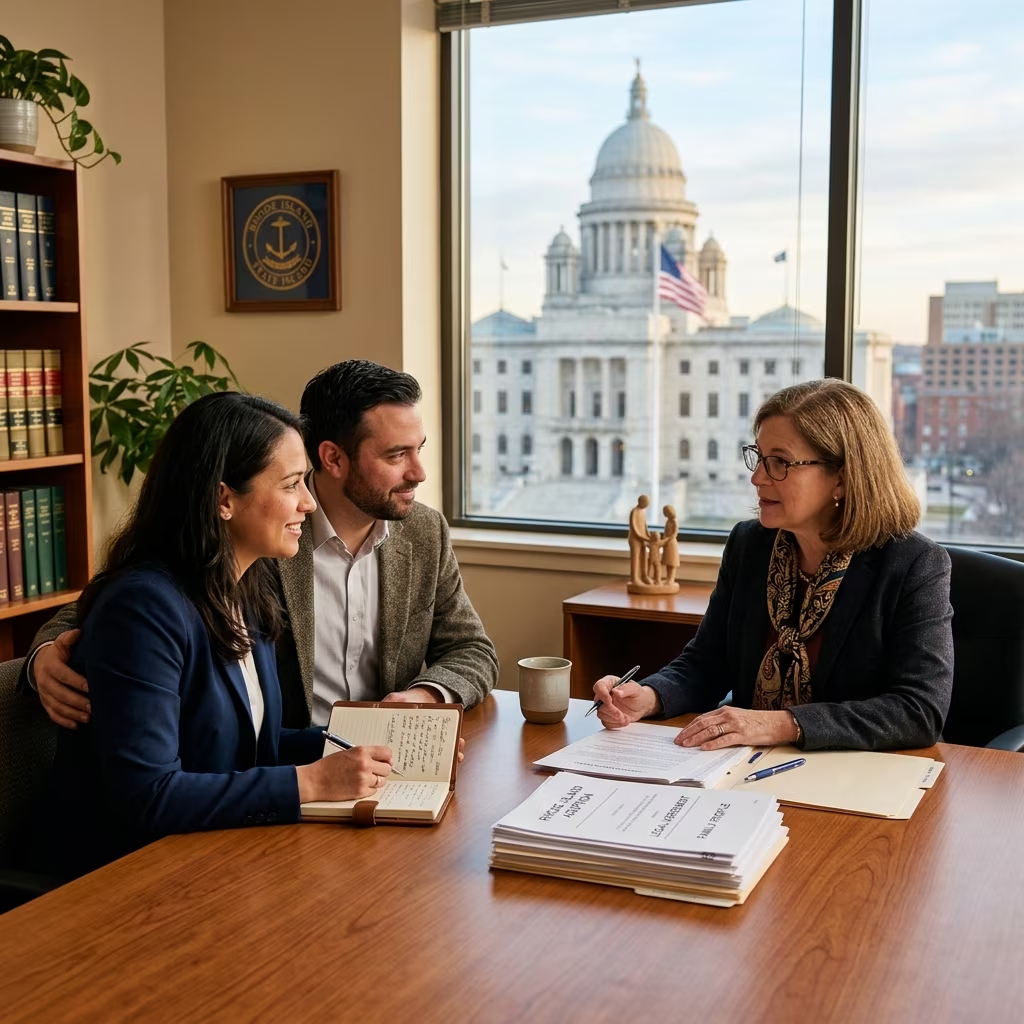
Rhode Island has a detailed legal framework governing the adoption of children, designed to protect the best interests of the child while giving prospective parents a clear path to build or expand their families. This guide explains the major rules, procedures, and practical steps involved in adopting in Rhode Island in accessible, everyday language.
Core Legal Framework for Adoption in Rhode Island
Adoption in Rhode Island is primarily governed by Title 15, Chapter 15-7 of the Rhode Island General Laws, titled “Adoption of Children.” These statutes cover who may adopt, which courts have jurisdiction, how children are placed, and what investigations and hearings must occur before an adoption is finalized.
- Primary statute: Rhode Island General Laws, Title 15, Chapter 15-7 (Adoption of Children).
- Jurisdiction: Family Court handles most adoptions of minors; Probate Court handles adoptions of adults.
- Regulatory oversight: The Department of Children, Youth & Families (DCYF) and licensed child placing agencies play key roles in investigations and home studies.
Understanding these basic legal building blocks will help you see how the specific requirements and steps in the process fit together.
Who Is Allowed to Adopt in Rhode Island?
Rhode Island law is relatively broad in who it allows to adopt. Any person residing in Rhode Island may petition the Family Court to adopt a child younger than themselves and under 18 years of age. Nonresidents may also petition if the child is in the custody of a governmental or licensed Rhode Island child placing agency.
Basic Eligibility Rules
- Residency: Residents of Rhode Island may adopt a child under 18 who is younger than they are.
- Nonresidents: Nonresidents may adopt if the child is in the care and custody of a state agency or licensed Rhode Island placement agency.
- Age of the adoptive parent: State law requires the child to be younger than the prospective parent; many agencies separately require adoptive parents to be at least 21 for foster and adoptive placements.
- Marital status: A married person must generally have their spouse join in the petition, although the court can allow a solo petition if doing so is in the child’s best interests and good cause is shown.
In practice, private agencies and DCYF may add program-specific rules, such as age ranges, background checks, or training requirements, but these are layered on top of the statutory framework.
Adult Adoption
Rhode Island also permits the adoption of persons who are 18 or older. These petitions are heard not in Family Court, but in the Probate Court of the city or town where the petitioners live. Adult adoption often serves to formalize long-term parental relationships or ensure inheritance and legal recognition.
Major Types of Adoption Recognized in Practice
While the statutes focus on general rules, different pathways to adoption exist in Rhode Island based on the relationship between the parties and the type of placement.
- Agency adoption: The child is placed through DCYF or a licensed child placing agency.
- Relative adoption: A grandparent, aunt, uncle, or other relative adopts the child.
- Stepparent adoption: A stepparent becomes a legal parent, often when the child has lived with them for a significant period.
- Foster-to-adopt: Foster parents who have had physical custody for at least two years may petition to adopt.
- Adult adoption: A person 18 or older is adopted through Probate Court.
Each type follows the same core principles—child safety, informed consent, and judicial oversight—but may have different procedural requirements, especially regarding home studies and background checks.
Home Study and Investigation Requirements
Most adoptions of minors in Rhode Island require a home study and an investigation before the court can approve the adoption. These are intended to ensure that the proposed home is safe, stable, and suited to the child’s needs.
What a Home Study Typically Includes
Rhode Island’s home study rules for domestic adoption are detailed and cover many aspects of family life.
- Minimum visits: At least two home visits by the agency conducting the study.
- Interviews: All prospective siblings and household members are interviewed during home visits.
- Identifying information: Basic data on all household members, including minor children and their current needs.
- Motivation to adopt: Reasons the prospective parents seek adoption and their expectations.
- Background information: Personal history and a written self-assessment by the prospective adoptive parents.
- Parenting experience: Childcare experience, parenting philosophy, and ability to meet a child’s physical and emotional needs.
- Health and stability: Medical, psychological, and financial information relevant to the family’s stability.
- Background checks: Clearances from DCYF and checks of State and Federal criminal records for all household members age 18 and older.
- Openness and support: Willingness to use adoption support services and level of understanding of openness with birth family when applicable.
Agencies must submit the investigation report to the court, typically within a fixed time frame (such as 60 days), and social workers often conduct post-placement visits and provide recommendations before finalization.
When Home Studies May Be Waived
Rhode Island law allows the court to waive home study requirements in certain cases, particularly when one of the adoptive parents is already the child’s natural parent and the child resides with them. This flexibility recognizes that a lengthy investigation may be unnecessary when the parent-child relationship is already well established.
Filing a Petition and Court Jurisdiction
The adoption process formally begins when the prospective parent files a petition to adopt with the appropriate court. The petition asks the court to grant legal parentage and may also request a change of the child’s name.
| Type of Adoption | Court | Key Notes |
|---|---|---|
| Child under 18, resident petitioner | Family Court | Petitioner must be older than the child; spouse usually must join in petition. |
| Child under 18, nonresident petitioner | Family Court | Allowed if child is in custody of state or licensed RI agency. |
| Person 18 or older | Probate Court | Heard in the city/town where the petitioners live. |
Once a petition is properly filed, Family Court retains jurisdiction even if petitioners later move out of state while the case is pending.
Consent and Termination of Parental Rights
For an adoption of a minor to be lawful, the legal relationship between the child and their existing parents must be addressed. This occurs either through voluntary consent to adoption or through a court order terminating parental rights.
Voluntary Consent
In many cases, birth parents will consent to their child’s adoption. Consent is usually documented in writing and clearly states that parental rights are being relinquished. Depending on the circumstances and the type of adoption, there may be periods during which a consenting parent can revoke, but once the adoption is finalized, parental rights are permanently transferred.
Termination of Parental Rights
If a parent does not consent—or if there are serious concerns about the child’s safety or welfare—courts may terminate parental rights following separate proceedings. Only after rights are terminated can DCYF or an agency place the child for adoption and consent to an adoptive placement on the child’s behalf.
The Role of DCYF and Licensed Agencies
Rhode Island’s Department of Children, Youth & Families and licensed child placing agencies are central to many adoptions. They supervise placements, conduct home studies, and provide written reports to the court.
- Placement supervision: Agencies oversee the child’s transition into the adoptive home and assess how the child and family are adjusting.
- Post-placement visits: Social workers visit the adoptive family at least twice after placement and before the final decree, recording observations and making recommendations for or against finalization.
- Fair hearing rights: The department must offer a fair hearing if placement is denied or delayed, ensuring adoptive families and children can challenge adverse decisions.
Finalizing the Adoption
After the investigation, home study, and any necessary termination of parental rights are complete, the court schedules a final hearing. At that hearing, the judge reviews the evidence, including agency reports and consent documents, and decides whether the adoption is in the child’s best interests.
If everything is in order, the court issues a final decree of adoption. This decree:
- Recognizes the adoptive parents as the child’s legal parents.
- Grants full parental rights, including custody and decision-making authority for the child’s education, healthcare, and welfare.
- May approve a change of the child’s name if requested in the petition.
Once the decree is entered, the adoption is legally complete. In many agency cases, the child must live in the adoptive home for a minimum period (often six months) before finalization, allowing professionals to confirm stability and compatibility.
Special Situations: Relative, Stepparent, and Foster Parent Adoptions
Some adoptions arise in families where the child already has a close relationship with the prospective parent. Rhode Island law and practice give partial flexibility to these cases.
Relative and Kinship Adoptions
When a relative adopts, the child usually already knows the adoptive parent, which can reduce trauma associated with removal from the birth home. The same legal rules apply—consent or termination of parental rights, petition filing, and home study—but courts may view these placements favorably when they maintain family ties and provide stability.
Stepparent Adoptions
In some stepparent adoptions, the child has lived with the stepparent for a significant period. Rhode Island law allows the court, in its discretion, to waive certain home study requirements in these cases where the child is the natural child of one of the parties and resides with the petitioning couple. Even with a waiver, the court still examines whether the adoption serves the child’s best interests.
Foster Parent Adoptions
Rhode Island recognizes that foster parents may become a child’s long-term family. Foster parents who have had physical custody of a child for two years or more are specifically allowed to petition for adoption. The same investigative and judicial safeguards apply, but the long-term relationship often supports a finding that adoption is appropriate.
Second Parent and Co-Parent Adoption Context
For LGBTQ+ parents and other families where a child has two de facto parents but only one legal parent, second parent adoption (sometimes called co-parent adoption) can be an important tool to secure legal parentage for both adults.
Rhode Island allows various strategies to protect children, including voluntary acknowledgment of parentage (VAP), guardianship, and second parent adoption. A second parent adoption provides the most secure, court-recognized parent-child relationship, ensuring that the non-birth parent can make decisions and retain rights if the other parent dies or the adults later separate.
Key Practical Considerations for Prospective Parents
Beyond the statutory rules, families considering adoption should think through several practical issues:
- Financial readiness: Agencies will evaluate whether you can provide for the child’s needs; this is part of the home study.
- Time commitment: The process can take months or longer, especially when investigations, hearings, and post-placement visits are required.
- Emotional preparation: Adoption can involve complex feelings for the child, birth family, and adoptive parents. Support services and counseling are often advisable.
- Legal representation: Many families work with an attorney familiar with Rhode Island adoption law to ensure filings and consents meet statutory requirements.
- Openness and contact: Post-adoption contact agreements, when used, may be enforceable and modifiable by the court if agreed to by both parties.
Frequently Asked Questions About Rhode Island Adoption Law
Can a single person adopt in Rhode Island?
Yes. Rhode Island law allows any eligible person to petition to adopt, and private agencies and DCYF may work with single adoptive parents, as long as they meet age and home study requirements.
Do I have to be a Rhode Island resident to adopt a child from Rhode Island?
No. Nonresidents may petition to adopt if the child is in the care and custody of a governmental child placing agency or licensed Rhode Island agency, subject to the same investigative and court approval processes.
Is a home study always required?
Most adoptions of minors require a home study and investigation. However, the court may waive home study requirements in limited circumstances, such as when the child is the natural child of one petitioner and lives with the petitioning parties.
Who decides whether an adoption is approved?
The appropriate court—Family Court for most children’s adoptions and Probate Court for adult adoptions—reviews all evidence and issues the final decree of adoption if it finds that the adoption serves the child’s best interests.
What happens to the child’s legal ties to their birth parents?
Legal parent-child relationships with birth parents are typically ended through consent or termination of parental rights before an adoption is finalized. After the final decree, the adoptive parents become the child’s legal parents with full parental rights and responsibilities.
References
- Title 15, Chapter 15-7: Adoption of Children — Rhode Island General Assembly. 2025-01-01. https://law.justia.com/codes/rhode-island/title-15/chapter-15-7/
- § 15-7-4 Petition to adopt — Court having jurisdiction — Rhode Island General Assembly. 2025-01-01. https://webserver.rilegislature.gov/Statutes/TITLE15/15-7/15-7-4.HTM
- Home Study Requirements for Prospective Parents in Domestic Adoption: Rhode Island — Child Welfare Information Gateway, U.S. Department of Health and Human Services. 2022-07-01. https://www.childwelfare.gov/resources/home-study-requirements-prospective-parents-domestic-adoption-rhode-island/
- Rhode Island Adoption Overview: Legal Considerations and Guidance — DarrowEverett LLP. 2023-06-01. https://darroweverett.com/rhode-island-adoption-overview-legal-considerations-guidance/
- Second Parent Adoption in Rhode Island — GLAD (GLBTQ Legal Advocates & Defenders). 2023-03-01. https://www.gladlaw.org/issues/second-parent-adoption-rhode-island/
- Home Study Requirements and Adoption Process in Rhode Island — American Adoptions. 2023-01-01. https://www.americanadoptions.com/rhodeisland-adoption/rhode-island-adoption-requirements
- Adoption RI Overview — Adoption Rhode Island. 2022-01-01. https://adoptionri.org/