
Understanding Proxy Marriage Laws in the United States
Learn where and when proxy marriages are allowed, how they work, and the legal pitfalls couples must consider before using a stand‑in at their wedding.
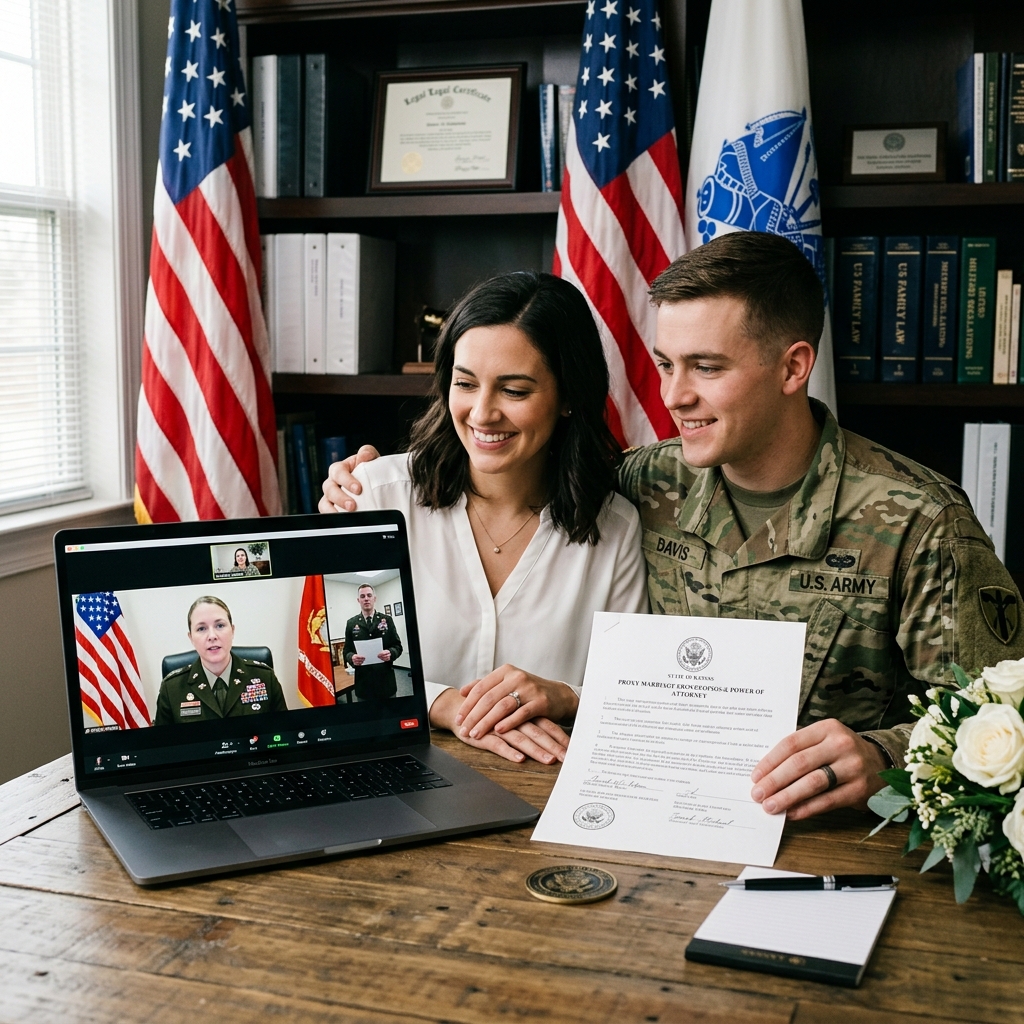
Proxy marriage is a niche but important legal tool for couples who cannot be in the same place at the time of their wedding ceremony. While most U.S. states require both partners to be physically present, a handful permit one or even both spouses to be represented by a stand‑in, subject to strict conditions. This article explains what proxy marriages are, where they are allowed, how they work, and the key legal and immigration issues couples should understand before relying on this option.
What Is a Proxy Marriage?
A proxy marriage is a legally recognized marriage ceremony in which one or both members of the couple are not physically present, and another person (the proxy) stands in and participates in the ceremony on their behalf. The proxy signs the marriage license and may recite vows in place of the absent partner, pursuant to state law and the officiant’s requirements.
- Single proxy marriage: Only one spouse is absent; the other attends in person while a proxy represents the absent party.
- Double proxy marriage: Both spouses are absent; two proxies stand in and complete the ceremony.
Proxy marriages are typically used when physical presence is impossible or very difficult, such as military deployment, incarceration, severe travel restrictions, or urgent needs like health insurance coverage or inheritance planning.
Why Are Proxy Marriages So Rare?
Despite their usefulness in extreme situations, proxy marriages are uncommon. Most states insist on both spouses being present before the officiant and often require witnesses, reflecting a policy preference for ensuring that consent is personal, immediate, and verifiable.
States that allow proxy marriage do so with narrow, targeted exceptions. Legislatures and courts tend to worry about fraud, coercion, and proof of genuine consent when a spouse is not physically in the room. As a result, proxy marriage laws are tightly drafted, often tied to specific groups like active‑duty service members.
States That Allow Proxy Marriage
Only a small number of U.S. jurisdictions permit proxy marriages, and the rules differ significantly from one state to another. According to publicly available analyses and statutory summaries, Colorado, Kansas, Montana, and Texas authorize single proxy marriages in limited circumstances.
| State | Proxy Type Allowed | Who Must Be Present? | Typical Eligibility |
|---|---|---|---|
| Colorado | Single proxy | One spouse present | Absent spouse is armed forces member, government contractor, or similar roles supporting the military. |
| Kansas | Single proxy | One spouse present | Proxy marriage recognized because no statute prohibits it and prior attorney general opinion supports validity. |
| Montana | Single and double proxy | Potentially neither spouse present | Montana residents or military members; absent party must consent and be unable to attend. |
| Texas | Single proxy | One spouse present | Absent spouse is a member of the armed forces stationed abroad. |
Other sources note that California has permitted some forms of proxy marriages, but current coverage consistently emphasizes Colorado, Kansas, Montana, and Texas as the main states where proxy marriage is actively recognized for most couples.
Montana and Double Proxy Marriage
Montana is often highlighted because it is the only U.S. state that clearly authorizes double proxy marriages—ceremonies in which neither spouse is physically present and both are represented by stand‑ins. Montana’s solemnization statute allows an officiant to marry parties when the absent spouse has consented and is unable to attend, as long as the officiant is satisfied with the circumstances.
Common features of proxy marriage in Montana include:
- At least one party usually must be a Montana resident or an active‑duty member of the U.S. armed forces.
- The absent spouse must provide written authorization and, in practice, often a formal power of attorney to the proxy.
- The officiant (such as a judge or clergy member) has discretion to decide whether the absent party is truly unable to attend and has freely consented.
Because Montana is unique in allowing both spouses to be absent, it has become a common destination for couples who need a legally recognized marriage quickly while facing serious obstacles to travel or physical co‑presence.
How States Typically Regulate Proxy Marriage
Even where proxy marriage is permitted, state law imposes several safeguards to ensure that the absent spouse genuinely agrees to the union and is properly represented.
Written Authority for the Proxy
States often require the absent party to grant the proxy formal authority to act on their behalf, commonly through a power of attorney (POA) or other written instrument. A POA is a legal document in which one person authorizes another to manage specified legal or financial affairs for them. For proxy marriage, the document typically allows the proxy to sign the marriage license and participate in the ceremony.
- Original POA documents may be required; duplicate or photocopied versions may not suffice.
- The document should clearly identify the parties and the specific authority to enter into marriage.
- Some jurisdictions insist that the POA be notarized to confirm identity and voluntary execution.
Officiant’s Discretion and Consent Verification
Most proxy marriage statutes give the officiant the responsibility to confirm that the absent spouse has consented and is genuinely unable to attend. The officiant may review documents, speak with the parties (sometimes remotely), or rely on affidavits and supporting evidence.
Typical considerations for the officiant include:
- Whether the absent spouse signed the necessary forms and understands the legal consequences.
- Whether any evidence suggests coercion or fraud.
- Whether both parties meet the general marriage requirements (age, capacity, not already married, etc.).
General Marriage Requirements Still Apply
Proxy marriage does not relax basic legal prerequisites for marriage. Couples must still comply with local rules on:
- Minimum age and parental or judicial consent, if applicable.
- Prohibitions on bigamy or close blood relationships.
- Obtaining a valid marriage license from the appropriate authority.
Failing to satisfy these requirements can lead to a marriage being void or voidable, even if the proxy aspects were handled correctly.
Recognition of Proxy Marriages Across States
When a marriage is legally performed in one state, other states generally must recognize that marriage under the U.S. Constitution’s Full Faith and Credit Clause, as long as the union is not contrary to strong public policy in the receiving state. This principle typically means that a properly executed proxy marriage in Montana or another permitting state is valid in all other states for most purposes such as property rights, tax filing status, and spousal benefits.
However, couples should be aware that recognition questions can become complicated if the marriage implicates unusual issues—for example, conflicts with local age requirements or prohibitions on certain types of relationships. Legal advice from a family law attorney is strongly recommended in such cases.
Proxy Marriage and U.S. Immigration Law
One of the most important caveats about proxy marriage involves federal immigration law. The Immigration and Nationality Act expressly limits recognition of marriages where the contracting parties are not physically present together at the ceremony unless the marriage is later consummated.
Under Section 101(a)(35) of the Act, the terms “spouse,” “wife,” and “husband” do not include a partner from a marriage ceremony in which the parties were not physically together at the time of the ceremony, unless the marriage has been consummated after the ceremony. The U.S. Citizenship and Immigration Services (USCIS) therefore applies special rules to proxy marriages.
Consummation Requirement
For a proxy marriage to be recognized for immigration benefits, the couple must:
- Be physically together in person after the proxy ceremony, and
- Consummate the marriage through sexual relations after the ceremony date.
Consummation prior to the ceremony does not satisfy this requirement, even if the couple already has children together. USCIS views consummation as proof that the relationship is real and continuing, not simply a formal legal arrangement.
Evidence USCIS May Request
Couples relying on a proxy marriage for immigration purposes should be prepared to provide detailed evidence that they met in person and consummated the marriage after the ceremony. Typical documentation may include:
- Travel records, such as airline tickets or boarding passes showing both partners were in the same location at the same time.
- Hotel receipts or other lodging records covering the period of post‑ceremony cohabitation.
- Photographs together during the relevant trip, ideally with date and location metadata.
- Affidavits from both spouses describing their relationship history and confirming consummation after the proxy ceremony.
- Optional statements from friends or relatives who can attest to the couple spending time together after the wedding.
Because USCIS scrutinizes proxy marriages carefully, couples should expect detailed questioning and should assemble as much credible evidence as possible.
Practical Considerations Before Choosing Proxy Marriage
Proxy marriage is not suitable for every couple, and it can introduce complexities that do not arise in traditional ceremonies. Before proceeding, it is wise to weigh the advantages and risks.
Potential Benefits
- Timely access to benefits: Marriage can unlock health insurance, military spousal allowances, tax options, and inheritance rights sooner, even when deployment or other circumstances delay an in‑person ceremony.
- Flexibility for deployed or distant partners: Service members and others working abroad can marry without interrupting their assignments.
- Legal certainty: A proxy marriage performed under clear state law may provide more predictable rights than informal arrangements or long‑term cohabitation.
Key Risks and Limitations
- Limited availability: Only a few states offer proxy marriage options, and some restrict them to military or similar categories.
- Immigration hurdles: Without post‑ceremony consummation and strong evidence, USCIS may refuse to treat a proxy marriage as valid for immigration benefits.
- Administrative complexity: Arranging a proxy, preparing POA documents, and coordinating with an officiant can be logistically demanding.
- Emotional considerations: Some couples may feel that an in‑person ceremony is important for personal or religious reasons and prefer to wait.
Frequently Asked Questions About Proxy Marriage
Is a proxy marriage legal everywhere in the United States?
No. Most states do not allow proxy marriage at all. Only a small group, including Colorado, Kansas, Montana, and Texas, recognize single proxy marriages under specific conditions, and Montana is currently the only state that explicitly allows double proxy marriage.
Will other states recognize my proxy marriage?
Generally, yes—if your proxy marriage was valid under the law of the state where it was performed. Under the Full Faith and Credit Clause, other states typically recognize marriages performed elsewhere, although there can be exceptions for unions that violate strong local public policy.
Can a proxy marriage be used for immigration purposes?
Only with additional steps. USCIS and federal law require that a proxy marriage be consummated after the ceremony and that the couple provide evidence of being together in person afterward. Without consummation and proof, the absent spouse will not be treated as a lawful “spouse” for immigration benefits.
Do we still need a marriage license for a proxy wedding?
Yes. Proxy marriage does not replace the ordinary licensing process. You must obtain a valid marriage license and comply with all standard state requirements, including age limits and prohibitions on existing marriages or close relatives.
Should we hire a lawyer to arrange a proxy marriage?
While not always legally required, consulting a family law attorney can be very helpful. Because proxy marriage rules differ by state and can intersect with immigration, military, and tax law, professional advice reduces the risk of mistakes or unintended consequences.
References
- Which States Allow Proxy Marriage? — ProxyMarriage.com (private informational site summarizing state laws). 2024-01-10. https://www.proxydivorce.com/proxy-marriage-states
- Does My State Allow Proxy Marriage? — Super Lawyers, Thomson Reuters. 2022-08-17. https://www.superlawyers.com/resources/family-law/does-my-state-allow-proxy-marriage/
- Map Shows States Where You Can Get Married Without Your Spouse — Newsweek. 2024-03-28. https://www.newsweek.com/states-legal-married-without-spouse-proxy-marriages-map-1888089
- What Is a Proxy Marriage? — Boyd Law. 2019-06-12. https://www.boydlawlosangeles.com/what-is-a-proxy-marriage/
- What Is a Proxy Marriage? Are They Valid for Immigration? — Boundless Immigration. 2023-05-05. https://www.boundless.com/blog/proxy-marriage
- Immigration and Nationality Act, Section 101(a)(35) — U.S. Congress / U.S. Citizenship and Immigration Services. (original statute, date of enactment 1952, still governing definition of “spouse” for immigration). https://www.uscis.gov/laws-and-policy/legislation/immigration-and-nationality-act
- Legalizing Proxy Marriages — Duke Law Scholarship Repository. 1945-01-01. https://scholarship.law.duke.edu/cgi/viewcontent.cgi?article=5439&context=faculty_scholarship
Similar Articles








Read full bio of Sneha Tete


