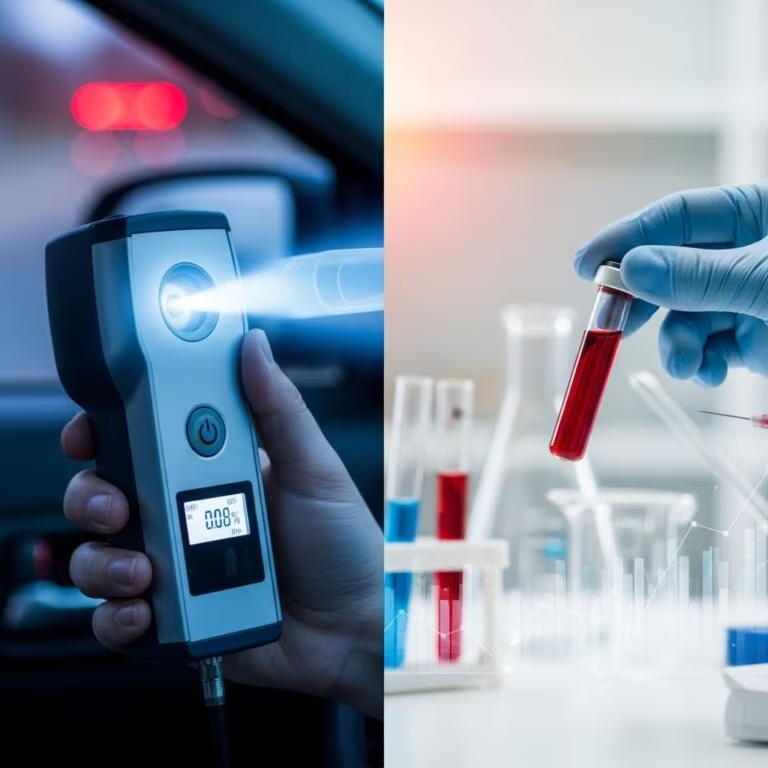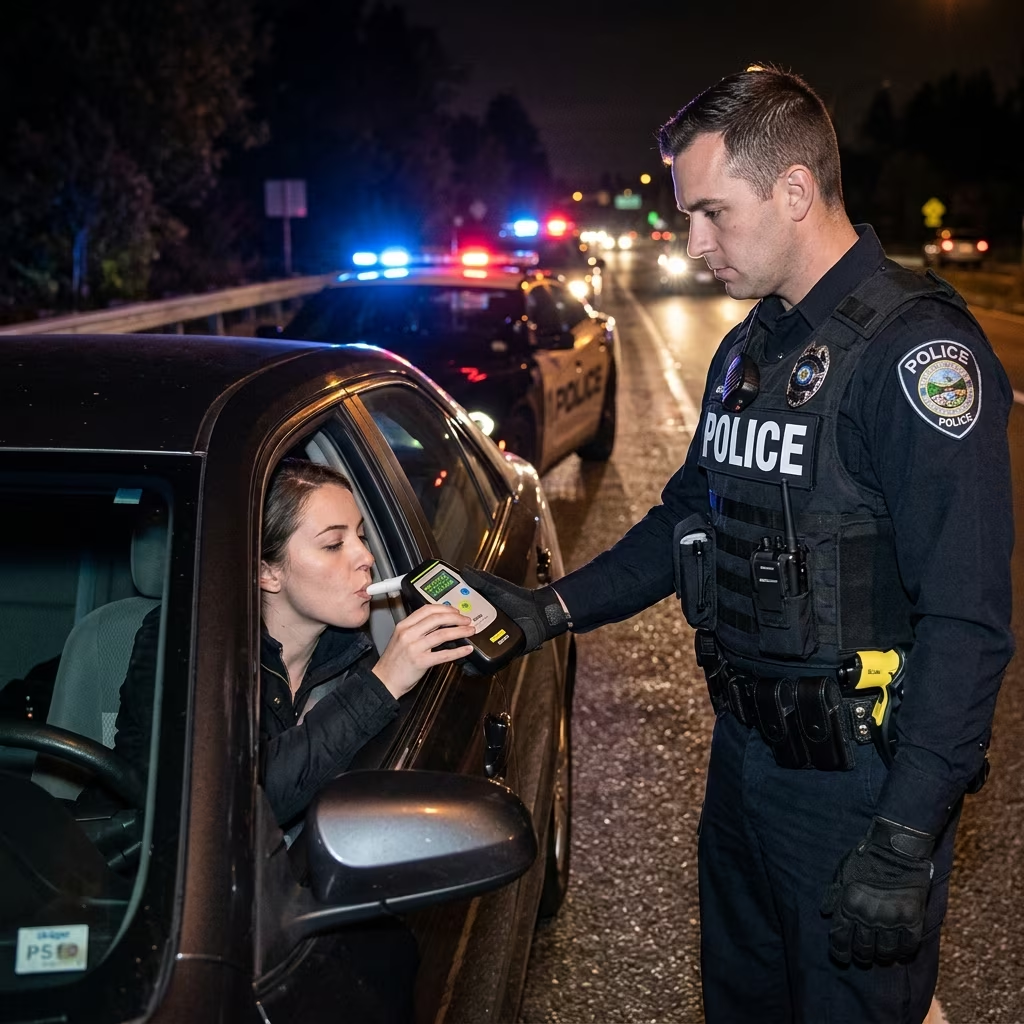
Preliminary Alcohol Screening (PAS) tests are a common feature of modern DUI investigations. Police use these handheld breath devices at the roadside to quickly estimate a driver’s alcohol level and decide whether there is enough probable cause to make an arrest for driving under the influence.
Despite their widespread use, many drivers are unsure how PAS tests work, whether they must take one, and how the results affect their case. This guide explains PAS testing in clear, practical terms so you can better understand what is happening during a traffic stop and make informed decisions.
What Is a Preliminary Alcohol Screening (PAS) Test?
A PAS test is a roadside breath test performed with a small, portable device designed to estimate a person’s blood alcohol concentration (BAC). Officers use PAS devices to help determine if a driver may be impaired and whether further investigation or an arrest is warranted.
- Handheld device: The PAS instrument is typically about the size of a radio or phone, with a mouthpiece or tube used to capture a breath sample.
- Screening tool: PAS results are intended for screening rather than final proof of a crime. They help officers decide if more accurate testing or an arrest is necessary.
- Immediate estimate: The device gives an instant reading that approximates the driver’s BAC, often in percentage form (for example, 0.05%).
Importantly, many states treat PAS devices differently from larger, evidential breath machines: PAS tools are often considered not sufficiently reliable to be used as primary evidence at trial, but they can still support the officer’s decision to arrest.
How PAS Devices Are Used During a DUI Stop
Although exact procedures vary by jurisdiction, a typical use of a PAS test in a DUI stop follows a general pattern:
- Initial observation: An officer notices driving behavior that suggests impairment, such as swerving, speeding, or failing to obey traffic signals.
- Traffic stop: The officer pulls the vehicle over and begins interacting with the driver, observing speech, odor of alcohol, and physical coordination.
- Field sobriety tests: Standardized field sobriety tests (like walking in a straight line or following a pen with the eyes) may be administered.
- PAS request: If the officer still suspects alcohol use, they may request a PAS breath test using a handheld device.
- Result and decision: The officer reviews the PAS reading alongside other observations to decide whether there is probable cause to arrest and require a formal chemical test.
In many states, a positive PAS result is not required for an arrest. An officer may rely on driving behavior and physical signs alone to conclude that a driver is under the influence.
PAS Devices vs. Evidentiary Breath Testing
PAS devices are often confused with the larger, more sophisticated machines used for evidentiary breath testing. Although both measure alcohol in breath, they serve different roles and are subject to different standards.
| Feature | Preliminary Alcohol Screening (PAS) | Evidentiary Breath Test (EBT) |
|---|---|---|
| Primary Purpose | Screening and establishing probable cause at the roadside | Providing admissible evidence of BAC for prosecution |
| Typical Location | Roadside, patrol car, DUI checkpoint | Police station, mobile testing unit, or certified testing site |
| Device Type | Handheld, portable breath sensor | Larger, stationary or certified evidential device |
| Legal Status | Usually not admissible as primary trial evidence due to reliability limits | Designed to meet strict evidentiary standards; commonly admissible |
| When Used | Before arrest during investigative phase | After arrest, pursuant to implied consent or warrant |
In some jurisdictions, the same device may be configured for both screening and evidential purposes, but the legal distinctions between a roadside PAS test and a formal evidentiary test remain important.
Accuracy and Limitations of PAS Testing
Studies have found that PAS devices can be effective tools for identifying drivers whose BAC is above legal limits, and that PAS scores can predict BAC status reasonably well. However, several factors limit their accuracy compared to full evidential tests.
Technical and Environmental Factors
- Calibration: PAS devices must be regularly calibrated and maintained to remain accurate. Poor calibration can produce readings that are too high or too low.
- Operator technique: Improper use—such as not instructing the driver to provide a proper breath sample—can affect results.
- Ambient conditions: Extreme temperatures, wind, or alcohol in the surrounding environment may influence readings, especially for more sensitive devices.
Legal Recognition of Limitations
Because of these issues, many states have concluded through statutes or case law that PAS results are not reliable enough to serve as primary evidence of BAC at trial. Instead, PAS data is used mainly to support probable cause, while evidentiary tests or blood analyses provide the legally accepted BAC value.
Drivers should understand that a PAS reading is only one piece of the evidence puzzle. A single high or low PAS result does not automatically determine guilt or innocence, but it can influence how the investigation proceeds.
When Is a PAS Test Required, and When Is It Optional?
Whether a driver must submit to a PAS test depends on age, prior DUI history, and specific state law. As a general pattern, PAS tests are often voluntary for adult drivers not on DUI probation, but may be mandatory in certain circumstances.
Situations Where PAS Is Often Voluntary
- Adult drivers (21+): In many jurisdictions, an adult driver who is not on probation for a prior DUI can decline a PAS test during a roadside stop without immediate license penalties.
- Pre-arrest phase: Before an arrest, PAS tests are frequently treated as field sobriety tools rather than mandatory chemical tests.
Even when voluntary, refusing a PAS may lead officers to rely more heavily on other evidence, such as field sobriety tests or observed driving behavior. It does not prevent an arrest if the officer believes there is enough evidence of impairment.
Situations Where PAS May Be Required
- Underage drivers: Many states have zero-tolerance laws for drivers under 21. In those cases, a PAS test may be required to check for any measurable alcohol, even below typical adult BAC limits.
- DUI probation: Drivers already on probation for a DUI offense may be obligated, as a condition of probation, to submit to PAS testing upon request.
After a lawful arrest, most jurisdictions enforce implied consent rules requiring drivers to submit to an evidentiary breath or blood test. Refusal can lead to license suspension and other penalties separate from any criminal case.
How PAS Results Affect Probable Cause and Arrest Decisions
Police officers do not rely on PAS results alone when deciding whether to arrest a driver. Instead, they combine test readings with many other observations.
Common Evidence Considered Alongside PAS
- Driving behavior: Swerving, erratic speed changes, or failing to maintain lane position can indicate impairment.
- Physical signs: Bloodshot eyes, slurred speech, odor of alcohol, and difficulty following instructions are frequently noted in reports.
- Field sobriety performance: Standardized tests such as the walk-and-turn or one-leg stand give clues about coordination and attention.
- PAS reading: A PAS result above zero suggests the presence of alcohol; higher readings may support conclusion that the driver is above the legal limit.
According to official guidance, PAS devices are particularly useful to augment or complement probable cause determinations, but they are not the sole deciding factor. Any reading above 0.00% indicates some level of alcohol, and officers combine that with other evidence when deciding whether to arrest and require a formal chemical test.
Practical Tips for Drivers Encountering PAS Tests
If you are stopped and an officer requests a PAS test, understanding the context can help you respond more calmly and thoughtfully. This section provides general information, not legal advice; specific rights and obligations depend on your jurisdiction and circumstances.
- Know whether it may be voluntary: Adult drivers not on probation are often allowed to decline PAS testing before arrest, but this may vary by state. You can ask the officer whether the test is mandatory.
- Remain respectful: Regardless of your decision, staying calm and respectful can reduce tension during the encounter.
- Understand the consequences: Refusing a PAS does not necessarily prevent arrest. Officers may rely on other evidence to make their decision.
- Consider legal counsel: After any DUI-related stop or arrest, it may be wise to consult an attorney who can explain how PAS results might affect your case.
Because PAS tests are only one part of the DUI enforcement framework, drivers benefit most from an overall understanding of their rights and obligations rather than focusing solely on the device itself.
Frequently Asked Questions About PAS Tests
Is a PAS test the same as a Breathalyzer?
Not exactly. Both are breath tests, but “Breathalyzer” often refers to larger, evidential machines used to produce BAC results for court. A PAS device is a handheld tool used mainly for screening and probable cause determinations at the roadside.
Can PAS test results be used against me at trial?
In many states, PAS results are not admissible as primary evidence at trial because they are considered less reliable than evidentiary instruments. However, prosecutors may still use other forms of proof, such as blood tests, evidentiary breath tests, or officer testimony, to show impairment.
If I refuse a PAS test, will I lose my license?
Consequences for refusing a PAS test vary by jurisdiction and individual status. Adult drivers not on DUI probation often can decline a PAS without immediate license penalties, but drivers under 21 or on probation may face consequences for refusal. After an arrest, refusing a required evidentiary test can lead to significant license sanctions under implied consent laws.
How accurate are PAS devices?
Research by the National Highway Traffic Safety Administration indicates that PAS scores can effectively predict whether a driver’s BAC is above legal limits. Still, PAS devices are generally considered less precise than evidentiary instruments and are more sensitive to calibration, operator technique, and environmental conditions.
Does a PAS reading automatically mean I will be convicted of DUI?
No. A PAS reading is only one piece of evidence. Convictions typically depend on a combination of factors, including evidentiary tests, officer observations, field sobriety performance, and sometimes video or witness testimony. PAS results mainly influence the early stages of an investigation rather than the final verdict.
References
- What Is a Preliminary Alcohol Screening (PAS) Device? — FindLaw. 2024-03-01. https://www.findlaw.com/dui/arrests/what-is-a-pas-device.html
- Chapter 7, Preliminary Alcohol Screening Device (HPM 70.4) — California Highway Patrol. 2019-01-01. https://www.chp.ca.gov/siteassets/policy/hpm/hpm-70.4/hpm-70.4-ch-7.pdf
- Alcohol Measurement Devices — National Highway Traffic Safety Administration (NHTSA). 2021-08-01. https://www.nhtsa.gov/book/countermeasures-that-work/alcohol-impaired-driving/countermeasures/enforcement/alcohol
- PAS Test – Preliminary Alcohol Screening Device — Shouse Law Group. 2023-06-01. https://www.shouselaw.com/ca/dui/laws/pas-test/
- Preliminary Alcohol Screening (PAS) Tests — Campbell Whitten. 2022-11-15. https://www.campbellwhitten.com/dui/the-stop-through-arrest/preliminary-alcohol-screening/
- PAS Test vs. Evidentiary Breath Test: What You Need to Know If You Face a DUI Charge — Kern County DUI. 2025-01-10. https://www.kerncountydui.com/blog/2025/january/pas-test-vs-evidentiary-breath-test-what-you-nee/