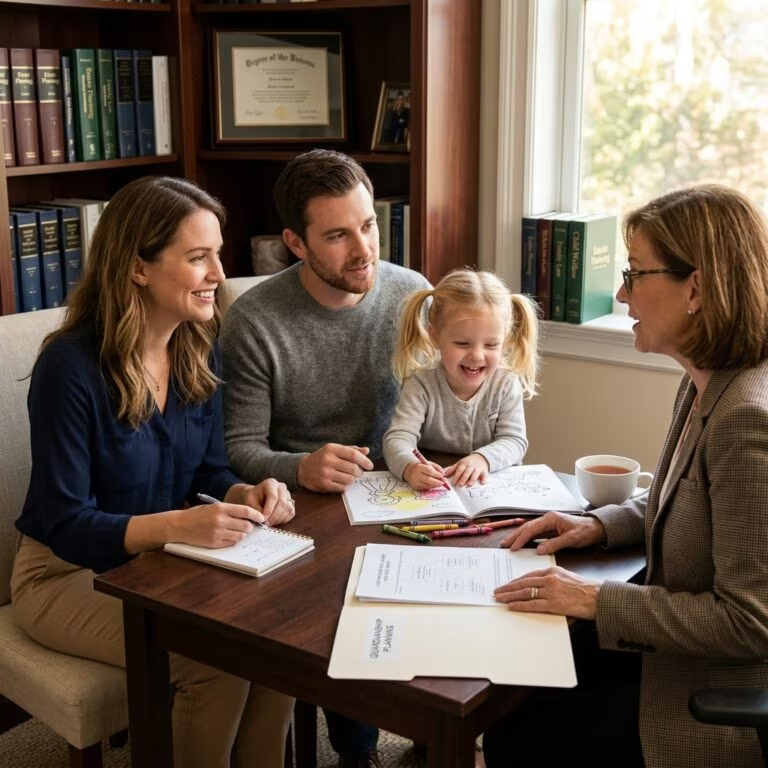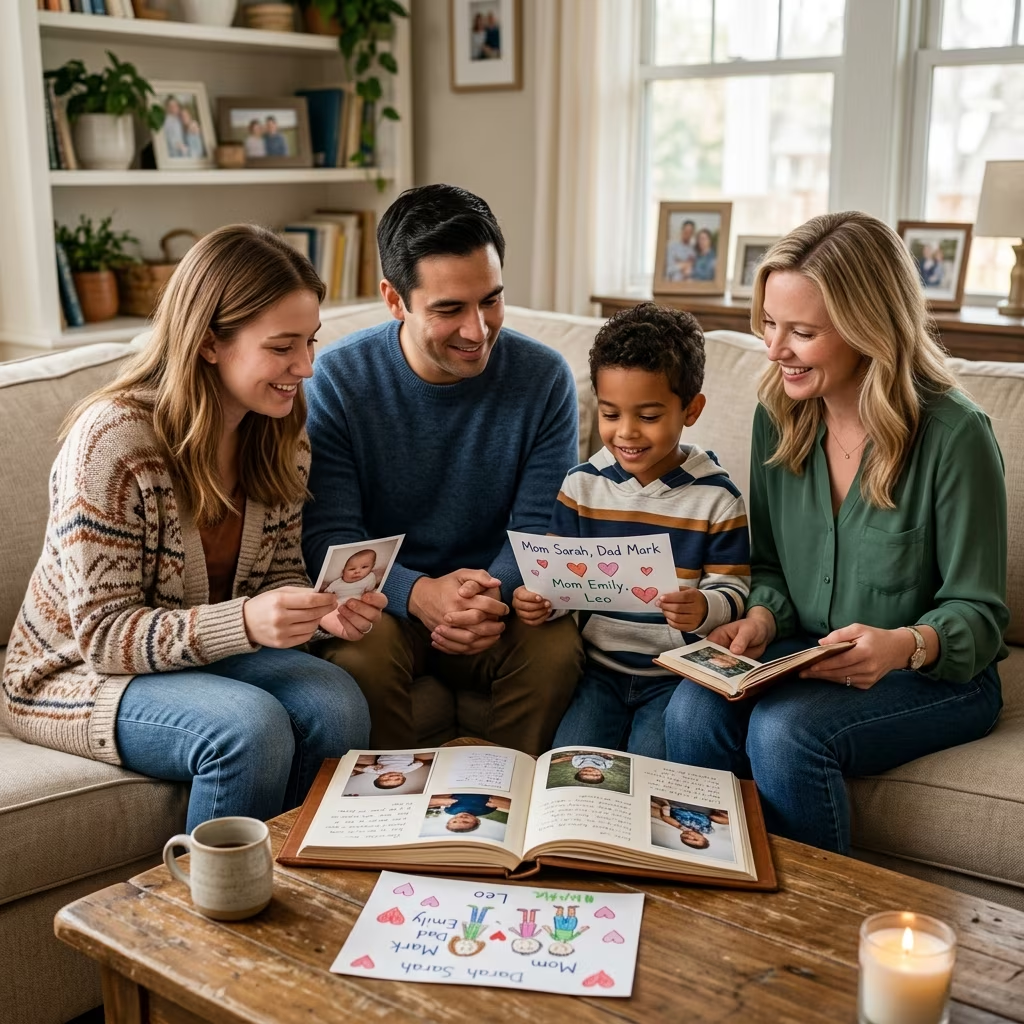
Adoption today rarely fits a single mold. Families can choose a range of arrangements, from ongoing contact with birth relatives to complete confidentiality. This idea of openness in adoption influences how birth parents, adoptive parents, and adoptees share information, maintain relationships, and navigate questions about identity and history.
What Does “Openness” Mean in Adoption?
Openness in adoption refers to the degree of contact and information sharing between birth families and adoptive families, both before and after the adoption is finalized. It exists on a continuum rather than as a single, rigid model.
At one end are fully confidential arrangements where no identifying information is exchanged. At the other are highly open adoptions with direct, ongoing contact between birth and adoptive families, often including the adoptee.
- Information sharing — what details about identity, medical history, and background are exchanged.
- Type of contact — letters, photos, phone calls, emails, video chats, or in-person visits.
- Frequency of contact — one-time, occasional, or regular contact over many years.
- Control of communication — direct communication between families or through a third-party mediator.
Key Types of Adoption Openness
While different agencies and states may use slightly different terms, most modern practice recognizes three broad patterns of openness:
1. Open Adoption
In an open adoption, birth parents and adoptive parents share identifying information and have direct contact with each other. The adoptee may be part of this contact, especially as they grow older.
- Names and contact details are exchanged.
- Families may meet before placement and stay in touch afterward.
- Contact can range from occasional letters to frequent visits.
- Information about medical history, family background, and culture can be shared in a more complete way.
2. Semi-Open or Mediated Adoption
A semi-open adoption (often called mediated) allows some information to flow between families but typically through a third party, such as an agency or attorney. Identifying information might be limited or withheld.
- Letters and photos may be exchanged via an agency rather than directly.
- Birth and adoptive parents may meet once but not maintain ongoing direct contact.
- Non-identifying information (age, education, medical history) is commonly shared.
3. Confidential (Closed) Adoption
In a confidential adoption, there is no direct contact between birth and adoptive families, and identifying information is not shared. Many states also seal original birth certificates, restricting future access to these records.
- Birth and adoptive parents typically never meet.
- Only limited, non-identifying information is shared, if at all.
- Adoptees may face more challenges accessing their original birth records later in life.
Comparing Levels of Openness
The table below provides a simplified comparison of how different adoption types typically handle information and contact.
| Feature | Open Adoption | Semi-Open / Mediated | Confidential Adoption |
|---|---|---|---|
| Identifying information shared | Yes, both families know each other’s identities. | Partially or indirectly through mediator. | No identifying information exchanged. |
| Direct contact between families | Direct, ongoing contact is possible. | Contact via agency or attorney. | Generally no contact after placement. |
| Information about background and health | More complete and updatable over time. | Some information; may not be updated regularly. | Limited non-identifying facts, if any. |
| Flexibility over time | Contact patterns can evolve with family needs. | Moderate flexibility, dependent on mediator. | Low flexibility unless families reconnect later. |
Why Openness Has Become More Common
Historically, adoption in the United States was dominated by secrecy and sealed records, especially in the mid-20th century. Since the 1990s, however, research and practice have increasingly supported open and semi-open arrangements.
- Before 1990, fewer than 5% of domestic infant adoptions were open.
- By 2012, around 90% of adoption agencies were recommending some form of open adoption.
- Studies indicate that greater openness is associated with higher satisfaction for both birth and adoptive parents, and better post-placement adjustment for birth mothers.
These changes reflect a broader shift toward recognizing the adoptee’s need for information, identity, and connection, as well as the benefits of transparency for all parties involved.
Potential Benefits of Openness
When thoughtfully planned and supported, openness can offer meaningful advantages to adoptees, birth parents, and adoptive parents.
Benefits for Adoptees
- Access to personal history — information about medical conditions, family traits, and background can help adoptees understand themselves and plan for their health.
- Reduced need for searching — open communication can eliminate or reduce the need to search for birth relatives later in life.
- Identity development — knowing who they “look like” and why they were placed can ease feelings of abandonment and support healthier identity formation.
- Connection to culture and heritage — contact can maintain links to racial, ethnic, or cultural roots that might otherwise be lost.
- Expanded circle of support — some adoptees benefit from having relationships with both adoptive and birth relatives as part of their broader support network.
Benefits for Birth Parents
- Ongoing reassurance — contact can show birth parents that their child is safe and cared for, which can ease grief and guilt.
- Participation in the child’s story — some birth parents appreciate being able to share family history and answer questions over time.
- Improved adjustment — studies have found that greater openness is positively linked with birth mothers’ and birth fathers’ satisfaction and post-adoption adjustment.
Benefits for Adoptive Parents
- More information to support the child — medical and background details help adoptive parents make informed decisions and respond to the child’s questions.
- Reduced uncertainty — openness can lessen worries about unknown health or family history.
- Support in answering difficult questions — birth parents can participate in explaining the reasons for placement, which may alleviate loyalty conflicts for the child.
- Stronger satisfaction with the adoption process — research indicates adoptive parents in more open arrangements report higher satisfaction with the adoption itself.
Common Risks and Challenges
Openness does not automatically solve every problem, and it is not the best fit for every situation. Families should weigh potential challenges and plan for them.
- Emotional complexity — grief, anxiety, and fears about roles can arise for both birth and adoptive parents.
- Boundary confusion — without clear expectations, families may struggle to define who decides what and how involved each party should be.
- Inconsistent contact — sporadic or stopped contact may feel like rejection to the adoptee or lead to frustration for birth relatives.
- Explaining relationships to others — children and parents may find it difficult to describe their family structure to peers who are unfamiliar with open adoption.
- Potential conflict — in rare cases, relatives may attempt to play families against each other or challenge boundaries.
Designing Healthy Contact Agreements
Many agencies encourage families to document their expectations in a contact agreement or openness plan. In some jurisdictions, these agreements can be incorporated into legal documents; in others, they remain informal and rely on goodwill.
Key Topics to Discuss
- What types of contact (letters, emails, visits) everyone is comfortable with.
- How often contact will occur and whether this may change over time.
- Who will initiate contact and how to communicate changes in circumstances.
- How the child’s needs and preferences will be considered as they grow older.
- What boundaries exist around social media, sharing photos publicly, or introducing new partners.
Principles for Sustainable Openness
- Focus on the child — frame decisions around the child’s long-term well-being, not adult expectations alone.
- Flexibility — allow room to adjust the agreement as life circumstances, health, and relationships change.
- Clarity — put agreements in writing, even if they are not legally enforceable, to reduce misunderstandings.
- Respect — treat all parties as important members of the child’s story, recognizing different roles rather than competing ones.
Legal and Practical Considerations
Laws around openness and access to adoption records vary widely between states and countries. Many jurisdictions still seal original birth certificates after adoption, limiting access for adoptees and birth parents.
- In many states, birth and adoptive parents must consent to any post-adoption contact agreements, and enforcement mechanisms differ.
- Some states allow courts to recognize and enforce written contact agreements; others treat them as moral, not legal, commitments.
- Adoptees’ access to original birth certificates often depends on age, state law, and whether both parties consent to disclosure.
Because these rules are complex and change over time, families are encouraged to consult legal professionals or adoption specialists who are familiar with their local law when drafting agreements or seeking records.
Making a Choice: Questions for Families to Consider
No single level of openness is “right” for every adoption. Families should consider their own capacities, safety concerns, and the child’s needs.
- What kind of contact feels emotionally sustainable for each party?
- Are there safety or privacy issues that would make open contact challenging?
- How will you handle changes in contact if someone moves, relationships shift, or new family members enter the picture?
- What support (counseling, education, mediation) is available to help everyone navigate openness?
- How will you talk with the child about their adoption story, including their birth family?
Frequently Asked Questions About Openness in Adoption
Does open adoption mean co-parenting?
No. Open adoption does not mean that birth and adoptive parents share legal custody or day-to-day parenting decisions. Adoptive parents are the child’s legal parents. Openness focuses on communication and connection, not shared parenting authority.
Can a semi-open adoption become more open over time?
In many cases, yes. Families sometimes begin with mediated contact and gradually move toward more direct communication as trust is built and comfort increases. Any change should be discussed carefully and, where possible, documented.
Is openness always better than confidentiality?
Research suggests that, on average, greater openness is linked with higher satisfaction and better adjustment for many birth and adoptive parents. However, individual situations vary. Safety concerns, history of abuse, or other factors may make more limited contact appropriate in some cases. The best arrangement is one that prioritizes the child’s well-being and is realistic for the adults involved.
What if someone stops honoring the contact agreement?
If a party withdraws from contact, the impact can be painful, particularly for the adoptee, but it does not automatically undo the adoption. Depending on local law, some agreements may be enforceable, while others rely on trust and mutual commitment. Professional mediation or counseling can sometimes help repair communication or redefine expectations in a healthier way.
How can families prepare for open adoption?
Education and support are crucial. Families can benefit from:
- Pre-adoption counseling focused on openness and boundaries.
- Reading evidence-based materials on adoption adjustment and contact.
- Talking with experienced adoptive and birth parents to understand real-world dynamics.
- Developing a written plan with the agency, including how to address conflicts if they arise.
Moving Forward with Informed Openness
Openness in adoption reflects a broader commitment to honesty, respect, and the long-term needs of adoptees. Whether families choose open, semi-open, or confidential arrangements, thoughtful planning and clear communication can help everyone navigate the emotional and practical realities of adoption.
By understanding the continuum of openness, the documented benefits and risks, and the legal context in which contact occurs, birth parents and adoptive parents are better equipped to design arrangements that honor the child’s story and support healthier relationships over time.
References
- Openness in Adoption — U.S. Department of Health and Human Services, Child Welfare Information Gateway. 2003-02-01. https://www.govinfo.gov/content/pkg/GOVPUB-T72-PURL-gpo116985/pdf/GOVPUB-T72-PURL-gpo116985.pdf
- Openness in Adoption — Adoption Assistance Program, UConn Health. 2012-01-01 (approx.). https://health.uconn.edu/adoption-assistance/learn/openness-in-adoption/
- Bridging the Divide: Openness in Adoption and Post-Adoption Psychosocial Adjustment Amongst Birth and Adoptive Parents — Neil, E., & others, in Journal of Child Psychology and Psychiatry. 2009-02-01. https://pmc.ncbi.nlm.nih.gov/articles/PMC2638763/
- Open Adoption — Pact, An Adoption Alliance. 2020-01-01 (approx.). https://pactadopt.org/openness-in-adoption/
- Open Adoption: Is It Worth the Angst, Fear and Complication? — National Council For Adoption. 2017-11-01 (approx.). https://adoptioncouncil.org/blog/open-adoption-angst-fear-complication/
- National Survey of Adoptive Parents (NSAP) — Office of the Assistant Secretary for Planning and Evaluation, U.S. Department of Health and Human Services. 2008-01-01. https://aspe.hhs.gov/national-survey-adoptive-parents-nsap
- Research Spotlight: Openness in Adoption — AdoptConnect. 2019-06-01 (approx.). https://www.adoptconnect.com/blog/post/research-spotlight