
Understanding New York’s Child Victims Act
A practical guide to New York’s Child Victims Act, its lookback window, and extended rights for survivors of childhood sexual abuse.
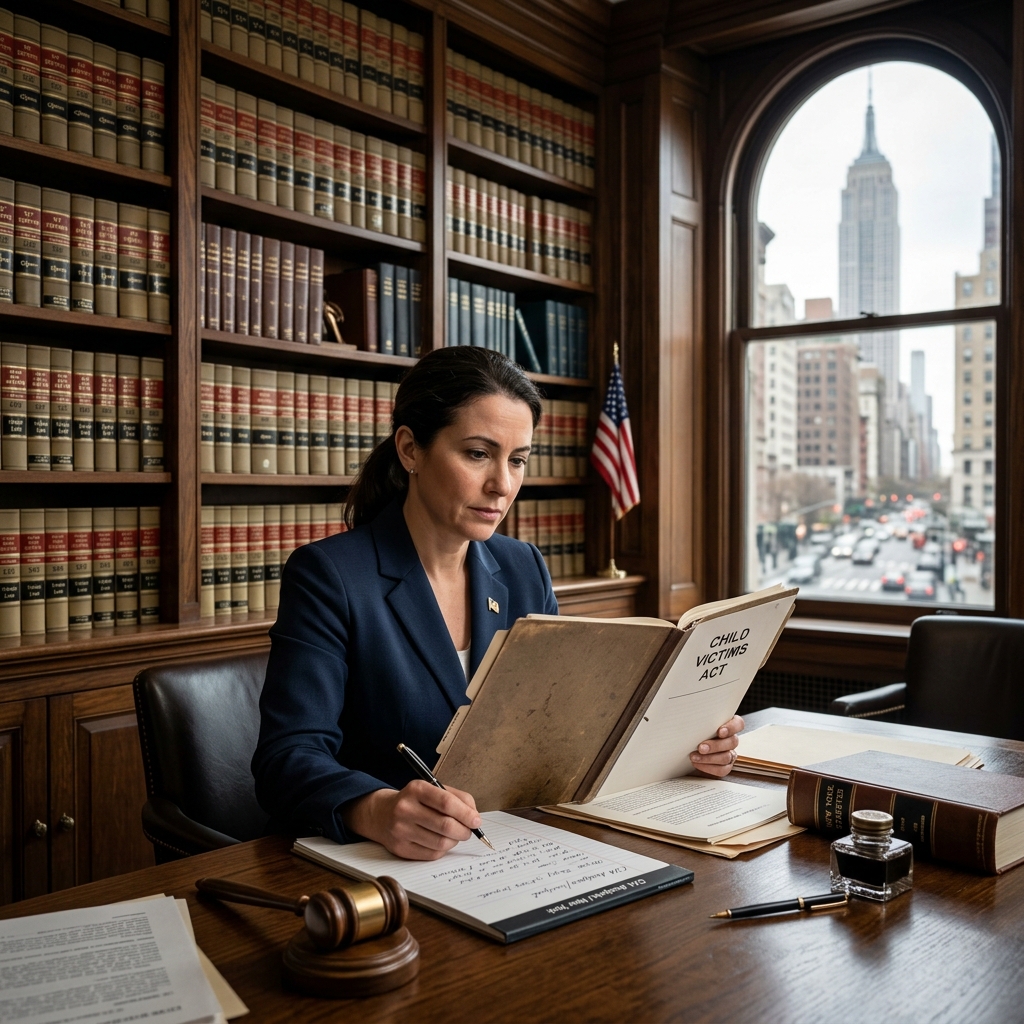
The Child Victims Act (CVA) in New York is a landmark law that reshaped how the legal system handles claims of childhood sexual abuse. It extended the time survivors have to file civil lawsuits, lengthened deadlines for criminal prosecutions, and temporarily reopened old, previously time-barred cases through a special “lookback” period.
This article explains what the Child Victims Act did, how it changed deadlines, who it covers, and what options survivors and families may still have today. It is meant as an informational guide and is not a substitute for individualized legal advice.
Background: Why New York Changed Its Law
For many years, New York had some of the shortest time limits in the United States for filing claims related to childhood sexual abuse. Survivors often had only a few years after turning 18 to bring civil cases, and criminal prosecutions were limited to relatively young adulthood. These restrictions did not reflect what research shows about the impact of child sexual abuse, including delayed reporting due to fear, trauma, shame, and dependence on the abuser.
In response to advocacy by survivors, lawmakers, and child protection organizations, the New York Legislature passed the Child Victims Act in early 2019, and the Governor signed it into law shortly afterward. The goal was to:
- Extend statutes of limitations so survivors would have more time to pursue justice.
- Reopen previously time-barred claims through a limited lookback window.
- Increase accountability for individuals and institutions that enabled abuse.
- Improve the courts’ handling of cases involving children through training and procedural rules.
Key Definitions: Statute of Limitations and Lookback Window
To understand the Child Victims Act, it helps to define two core legal concepts it changed.
Statute of Limitations
A statute of limitations is a legal deadline by which a claim must be filed or a criminal case initiated. After that deadline passes, courts generally will not hear the case. Prior to the CVA, many survivors of childhood sexual abuse were prevented from pursuing claims because these deadlines expired long before they felt able to come forward.
Lookback Window
A lookback window is a temporary period during which laws revive previously time-barred civil claims. Under the CVA, New York opened such a window so that survivors of any age could sue for childhood sexual abuse, even if the normal statute of limitations had long ago expired.
Major Changes Under the Child Victims Act
The Child Victims Act introduced several major changes to New York law. These changes fall into three broad areas: civil lawsuits, criminal prosecutions, and revived claims.
Extended Time for Civil Lawsuits
One of the most significant shifts involves the time survivors have to file civil suits against abusers and responsible institutions. Under the CVA:
- Survivors who were under 18 at the time of the abuse can file civil lawsuits until they reach 55 years of age.
- Civil claims may be brought not only against the individual abuser, but also against organizations that may bear responsibility for enabling the abuse, such as schools, religious institutions, youth organizations, or other entities.
This extended civil deadline gives survivors decades longer than under prior law to seek damages for trauma, medical costs, therapy, and other losses arising from childhood sexual abuse.
Longer Criminal Statutes of Limitations
The CVA also lengthened deadlines for criminal prosecutions:
- For many felony sexual offenses] involving children, law enforcement may pursue charges until the survivor turns 28.
- For certain misdemeanor sexual offenses, the criminal statute of limitations now extends until the survivor turns 25.
These changes give prosecutors more time to investigate and bring charges, recognizing that victims often need years to disclose abuse and that evidence may take time to surface.
The Special Lookback Window
A distinctive feature of the CVA was the creation of a civil lookback window, during which survivors could revive previously time-barred claims. This window:
- Initially opened on August 14, 2019.
- Allowed survivors of any age to file civil lawsuits for childhood sexual abuse, regardless of when the abuse occurred or whether the statute of limitations had expired.
- Was extended due in part to the COVID-19 pandemic and ultimately closed in August 2021.
During this period, thousands of lawsuits were filed across New York, targeting individuals and institutions alleged to have engaged in or enabled sexual abuse of minors.
Who the Child Victims Act Applies To
The CVA is focused on sexual abuse of children under 18. It covers a wide range of acts, including intentional and negligent wrongful conduct that causes physical, psychological, or emotional harm to a minor. The law applies to claims involving:
- Individuals accused of direct abuse.
- Organizations that employed or supervised alleged abusers.
- Entities that were responsible for the care, custody, or control of a child and may have failed to prevent or respond appropriately to abuse.
Covered organizations can include, for example, schools, religious institutions, youth sports clubs, foster care providers, and other groups or facilities that interact with children.
Comparing Deadlines Before and After the CVA
| Type of Case | Before Child Victims Act | After Child Victims Act |
|---|---|---|
| Civil lawsuits for childhood sexual abuse | Short period after turning 18; typically expired in early 20s | May be filed until survivor reaches age 55 |
| Felony criminal charges involving child sexual abuse | Generally limited to around age 23 for many offenses | Extended to survivor’s 28th birthday for many felonies |
| Misdemeanor criminal charges involving child sexual abuse | Often expired when survivor turned 20 | Extended to survivor’s 25th birthday |
| Previously time-barred civil claims | No ability to sue once statute of limitations expired | Revived for a temporary lookback window (August 2019–August 2021) |
Institutional Accountability and Notice of Claim Changes
In many cases, survivors seek justice not only from individual abusers but also from institutions that may have concealed, ignored, or facilitated abuse. The CVA addressed several procedural barriers in pursuing claims against these entities.
Among other reforms, the law:
- Eliminated certain notice-of-claim requirements for lawsuits against municipalities, the state, and school districts in child sexual abuse cases.
- Provided trial preference for CVA civil actions, meaning courts may prioritize these cases on their calendars to avoid lengthy delays.
- Required judicial training related to child abuse and created rules for handling civil actions involving sexual offenses against children.
These changes are designed to make it easier for survivors to navigate the legal system and to ensure that judges and court staff are better equipped to handle the sensitive issues involved in childhood abuse cases.
What Happened After the Lookback Window Closed?
The special lookback window under the CVA has ended, but the law’s extended statutes of limitations remain in place. This means:
- Survivors whose claims were filed during the window may still have ongoing lawsuits or settlements under the revived provisions.
- Survivors whose claims were never time-barred under the new law may still be able to file civil suits up to age 55 and seek criminal charges within the extended timelines.
Whether a specific claim is still timely depends on many factors, including the survivor’s age, the dates of abuse, the type of offense, and previous statutes of limitations. Survivors should consult an attorney or legal aid organization for individualized guidance.
Practical Steps for Survivors Considering Legal Action
Survivors of childhood sexual abuse in New York who are thinking about taking legal action can consider several practical steps:
- Seek immediate safety and support
Before any legal action, personal safety and well-being come first. Survivors can reach out to trusted friends or family, mental health professionals, or crisis hotlines. - Consult a lawyer experienced in abuse cases
Because statutes of limitations are complex and fact-dependent, an attorney who understands the CVA and related laws can help assess whether a claim is timely and what options exist. - Document information
Keeping records such as dates, locations, names of individuals involved, and any written or electronic communications can be helpful for both civil and criminal matters. - Consider criminal reporting
Survivors may report abuse to law enforcement. Officers and prosecutors can determine whether charges can still be filed within the extended deadlines. - Explore alternative dispute resolution
New York’s Department of Financial Services notes that victims may use methods like mediation or arbitration in some cases to pursue claims against certain entities.
Frequently Asked Questions (FAQs)
Is the Child Victims Act still in effect?
The core elements of the CVA extending civil and criminal statutes of limitations are still in effect. Survivors who were abused as children may, in many situations, file civil lawsuits until age 55 and may be able to seek criminal charges within the extended age limits, depending on the offense. However, the special lookback window for previously time-barred claims has closed.
Can adults sue for abuse that happened decades ago?
Yes, in many cases. Under the CVA, survivors can bring civil claims until age 55, even if the abuse occurred in childhood decades earlier, as long as the claim is not otherwise barred and falls within the applicable provisions of the law. During the lookback window, even previously time-barred claims were temporarily revived, but that specific window has ended.
Does the CVA only apply to individual abusers?
No. The CVA allows lawsuits against both individuals and institutions that may bear responsibility for the abuse. Survivors can pursue claims against organizations that employed abusers, failed to supervise them adequately, or otherwise played a role in the circumstances leading to abuse.
What if the survivor was under 11 when the abuse occurred?
New York law includes special rules for certain crimes committed against very young children. In some situations, there may be no time limit for reporting certain offenses when the victim was under 11 years old, though the exact rules depend on the specific crime and statute. Because these provisions are technical and case-dependent, legal advice is important.
How does the CVA relate to other New York abuse laws?
The CVA is part of a broader set of reforms addressing sexual abuse in New York, including later laws such as the Adult Survivors Act, which created a separate lookback window for certain adult victims. Each law has different eligibility criteria and timelines, so survivors need to understand which statute applies to their situation.
Limitations and the Need for Legal Advice
While the Child Victims Act significantly expanded opportunities for survivors, it does not guarantee success in every case. Claim viability depends on:
- Whether the abuse and claims fall within the relevant statutes.
- The survivor’s age and the time elapsed since the abuse.
- The available evidence and witnesses.
- Complex procedural rules, especially when suing public entities or large institutions.
The CVA interacts with other New York statutes, including general civil practice rules, criminal codes, and evidentiary standards. As a result, survivors and families are strongly encouraged to consult qualified legal counsel for personalized advice.
Broader Impact of the Child Victims Act
Beyond individual cases, the CVA has had a wider impact on New York’s legal and social landscape.
- Public awareness: The law has brought greater attention to childhood sexual abuse and the long-term effects it can have, encouraging earlier intervention and better prevention measures.
- Institutional reforms: Many organizations have revisited policies, training, and reporting procedures in light of legal exposure under the CVA, seeking to reduce future risks.
- Legal precedent: The CVA has contributed to a national conversation about extending or reviving statutes of limitations for child sexual abuse, reinforcing trends toward more survivor-centered laws.
For survivors, the law represents a recognition that justice should not be denied simply because trauma delayed disclosure or because the abuse occurred long ago. For institutions, it underscores a duty to protect children and respond appropriately when allegations arise.
References
- Child Victims Act (CVA) — New York State Bar Association. 2019-02-15. https://nysba.org/child-victims-act-cva/
- New York State’s Sexual Abuse Lookback Statutes — Peters, Brovner LLP. 2022-05-10. https://petersbrovner.com/new-york-states-sexual-abuse-lookback-statutes/
- New York Child Victims Act — Jeff Anderson & Associates. 2021-08-13. https://www.andersonadvocates.com/new-york-sexual-abuse/new-york-sexual-abuse-legislation/
- Child Victim’s Act: Policyholder and Victim Guidance — New York State Department of Financial Services. 2019-08-14. https://www.dfs.ny.gov/industry_guidance/policyholder_and_victim_guidance
- New York State Senate Bill S2440 (2019) — New York State Senate. 2019-02-14. https://www.nysenate.gov/legislation/bills/2019/S2440
Similar Articles








Read full bio of Sneha Tete




