
Nebraska Criminal Laws: 4 Key Sentences, Penalties, And Limits
A practical, plain‑language guide to how Nebraska defines, classifies, and punishes criminal offenses under its statewide criminal code.
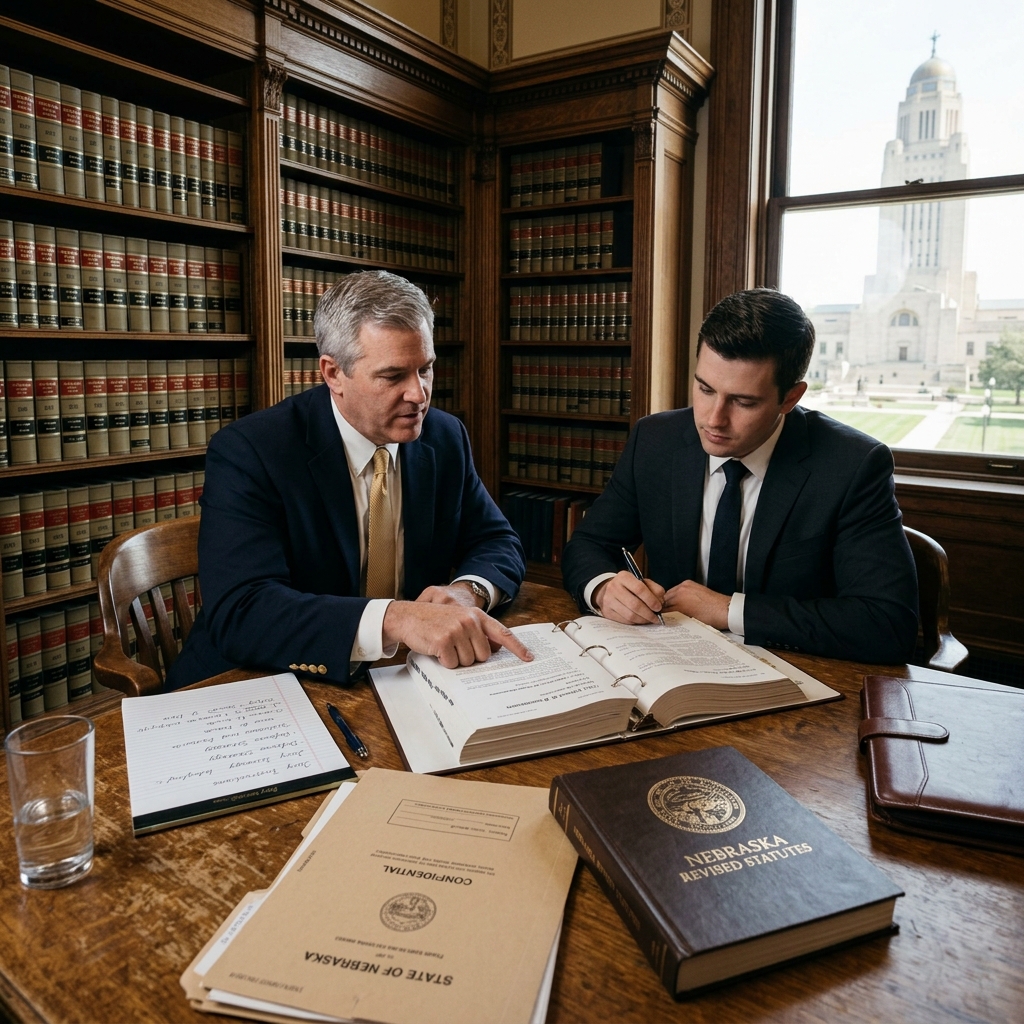
Nebraska’s criminal laws are primarily gathered in the state’s criminal code, known as Nebraska Revised Statutes Chapter 28, which defines offenses and sets out punishments across the state. The code works alongside other chapters and judicial rules to govern how crimes are classified, prosecuted, and sentenced in Nebraska’s courts.[10] This guide explains the major pieces of that framework in plain language so that residents, visitors, and businesses can better understand how criminal liability operates in Nebraska.
How Nebraska Organizes Its Criminal Code
Nebraska’s criminal rules are part of a broader system of state statutes passed by the Nebraska Legislature. The criminal code chapter focuses on defining what conduct is illegal, while other chapters cover topics such as criminal procedure, evidence, and appeals. Nebraska residents are subject both to these state rules and to federal criminal law, which applies across all 50 states.[10]
Key features of the Nebraska criminal code include:
- Statewide applicability – The same definitions and penalties apply throughout Nebraska, regardless of county.
- Numbered sections – Each offense is identified by a section number (for example, sexual assault or domestic assault) that corresponds to its text in Chapter 28.
- Integration with procedure – Substantive criminal laws work together with procedural rules that regulate arrest, charging, trial, and sentencing.
Major Types of Crimes Recognized in Nebraska
Nebraska law recognizes a wide range of criminal behavior, from property damage and theft to violent offenses and fraud. Chapter 28 includes numerous specific crimes, such as assault, stalking, sexual assault, domestic assault, identity theft, and human trafficking. These laws are grouped and labeled in ways that help courts and lawyers determine appropriate penalties and handling.
Examples of Crimes Under Nebraska Statutes
The criminal code covers many different offenses, including but not limited to:
- Violent crimes such as assault in the first or third degree, and stalking.
- Sexual offenses including sexual assault in various degrees, sexual assault of a child, and related conduct.
- Family and relationship offenses like domestic assault, violation of custody, or abandonment of a spouse or child.
- Fraud and impersonation such as criminal impersonation and identity theft.
- Human trafficking, including labor or sex trafficking and trafficking of minors.
- Weapons offenses such as possession of a deadly weapon by a prohibited person.
Each crime has its own statutory definition, which describes the conduct that must occur, any required mental state (intent, knowledge, or recklessness), and possible defenses.
Felonies and Misdemeanors: The Basic Classifications
Nebraska, like many states, divides most criminal charges into two broad categories: felonies and misdemeanors. The difference between these two groups plays a central role in determining how severe a case is, which court will handle it, and what punishments are possible.
Felony Offenses
Felonies are the more serious class of crimes in Nebraska. They generally carry potential prison sentences of at least one year and may also involve significant fines, post-release supervision, or other long-term consequences.
Nebraska law uses multiple felony classes to further sort offenses by seriousness. These classes range from lower-level felonies to the most severe crimes like first-degree murder.
- Higher felony classes can involve multi-decade sentences, and in the most extreme case, a possible death penalty for first-degree murder.
- Lower felony classes may still lead to several years in prison, large fines, and other collateral effects, such as loss of voting rights during incarceration or limits on firearm possession following conviction.
Misdemeanor Offenses
Misdemeanors are less serious than felonies but still involve criminal liability rather than simple civil penalties. In Nebraska, misdemeanor convictions typically carry a maximum of one year in a local jail, fines, or both, rather than long-term prison sentences.
Nebraska further subdivides misdemeanors into several classes of varying severity.
- More serious misdemeanor classes can involve substantial fines and jail time, and may include violent offenses such as certain assaults.
- Lower misdemeanor classes may carry only small fines and brief or no incarceration, sometimes for minor conduct such as low-level tobacco or vaping violations.
Why Classification Matters
Whether an offense is a felony or a misdemeanor affects:
- The maximum and minimum punishment a court can impose.
- Which court hears the case and whether the defendant is entitled to a jury trial.
- Long-term consequences for civil rights, employment, and immigration.
- The time limits the state has to bring charges, known as statutes of limitations.
Sentencing and Possible Penalties in Nebraska
After a person is convicted—either by pleading guilty or being found guilty at trial—Nebraska judges follow state rules to impose sentence. The sentencing process formally declares the punishment and the legal consequences of the conviction. The Nebraska Judicial Branch identifies four main types of sentence available in criminal cases.
Main Forms of Criminal Sentences
| Type of Sentence | Key Features | Typical Use |
|---|---|---|
| Incarceration | Confinement in jail (short terms) or prison (longer terms). | Used for many felonies and more serious misdemeanors. |
| Probation | Supervision in the community, with conditions such as reporting, treatment, or restitution. | May substitute for or accompany incarceration for eligible offenders. |
| Fine | Payment of money to the state; may be the primary or an additional penalty. | Used frequently in misdemeanors and minor offenses. |
| Combination | Any mix of incarceration, probation, and fines authorized by law. | Common in many criminal cases to balance punishment and rehabilitation. |
Jail vs. Prison
Nebraska distinguishes between short-term local confinement and longer state imprisonment:
- Sentences of one year or less are generally served in county jails.
- Sentences longer than one year must be served in facilities managed by the Nebraska Department of Corrections.
- If a judge imposes exactly one year, the judge must specify whether it is to be served in jail or prison.
Length of Probation
Probation offers an alternative or supplement to incarceration and is governed by statewide limits:
- For misdemeanors, probation may last up to two years.
- For felonies, probation may last up to five years.
Probation conditions can include maintaining employment, obeying all laws, avoiding contact with victims, attending counseling, or paying restitution.
Finality of Sentences
Once a Nebraska court imposes a valid sentence within legal limits, that sentence generally cannot be modified later by the trial court. The sentence takes effect from the time it is announced, although judges sometimes allow defendants to report to jail or prison at a later date in appropriate circumstances.
Time Limits to Prosecute: Nebraska Statutes of Limitations
Nebraska applies specific timelines for bringing criminal charges, known as statutes of limitations. These rules are found in Nebraska Revised Statute 29-110 and related sections and govern how long prosecutors have to file a case after an alleged offense occurs.
Basic Time Limits by Offense Type
- Misdemeanors – Most misdemeanor prosecutions must begin within 18 months of the offense.
- If a misdemeanor carries only a small fine (not more than $100) and up to three months of incarceration, the time limit is reduced to 12 months.
- Felonies – For most felony crimes, prosecution must commence within three years of the offense.
Extended or No Time Limits for Certain Crimes
Nebraska law provides longer periods—or no limit at all—for particularly serious or complex offenses:
- Five-year limits apply to crimes such as violations of the Securities Act of Nebraska, criminal impersonation, identity theft, or identity fraud.
- Six-year limits apply to knowing and intentional abuse, neglect, or exploitation of a vulnerable or senior adult.
- No statute of limitations applies to treason, murder, arson, forgery, or incest, meaning charges may be brought at any time.
Events That Pause or Change the Time Clock
Several rules alter when the statute of limitations starts or stops running:
- Age of the victim – For certain offenses involving victims under age 16, prosecution may begin within seven years after the offense or within seven years after the victim turns 16, whichever is later.
- Flight from justice – If a suspect is fleeing or intentionally avoiding detection, the limitations period is paused (tolled) during that time.
These provisions reflect Nebraska’s interest in allowing adequate time to investigate and prosecute serious crime, particularly where victims are minors or vulnerable adults.
Victims’ Rights and Support in Nebraska Criminal Cases
While the criminal code focuses on defining and punishing offenses, Nebraska also recognizes the importance of support and rights for crime victims. Multiple resources exist to help victims understand the process and seek assistance.
Victim-Oriented Crimes and Legal Protections
Many Nebraska laws are designed to protect people from abuse, exploitation, and violence, including statutes on domestic assault, stalking, sexual assault, human trafficking, and exploitation of vulnerable adults. These laws often allow protective orders, enhanced penalties, or specialized procedures to protect victim safety and privacy.
Support Services for Victims
In addition to prosecution, victims may have access to:
- Crime victim compensation for certain expenses related to the crime, through statewide reparations programs.
- Victim witness programs that explain court processes, accompany victims to hearings, and provide referrals.
- Nonprofit organizations, such as coalitions focused on victims’ rights and support, that offer information on legal protections and services.
Practical Tips for Navigating Nebraska Criminal Law
Because Nebraska’s criminal statutes are extensive, it is easy to feel overwhelmed when trying to understand charges, rights, and options. The following practical steps can help individuals and families facing criminal issues:
- Look up the statute number – Each charge corresponds to a specific section in the criminal code. Reviewing the relevant statute can clarify the elements of the offense.
- Note the offense class – Knowing whether a charge is a felony or misdemeanor—and its class within that category—provides a sense of potential penalties and long-term consequences.
- Consider sentencing ranges – Understanding whether the court might impose jail, prison, probation, or fines helps assess risk and strategy.
- Be aware of time limits – Statutes of limitations can affect whether charges are timely and whether older conduct may still lead to prosecution.
- Seek legal advice – Because criminal convictions can affect liberty, employment, housing, and more, consulting a qualified attorney is generally advisable when facing investigation or charges.
Frequently Asked Questions About Nebraska Criminal Laws
Is every unlawful act in Nebraska a felony?
No. Nebraska divides crimes into felonies and misdemeanors, with misdemeanors being less serious and generally carrying a maximum of one year in jail, while felonies involve the possibility of longer prison terms.
Who decides whether I go to jail or prison?
The sentencing judge decides the type and length of sentence within legal limits. In Nebraska, sentences of a year or less are typically served in county jails, while longer sentences are served in state prison facilities.
Can a Nebraska criminal sentence be changed after it is imposed?
Once a valid sentence has been imposed by a Nebraska court, it generally cannot be modified by the trial court later. The sentence takes effect when announced, though judges may permit delayed reporting to jail or prison in some cases.
Does Nebraska have deadlines for filing criminal charges?
Yes. Nebraska applies statutes of limitations that set deadlines for starting prosecutions. Most misdemeanors must be prosecuted within 18 months and most felonies within three years, with longer or no limits for certain serious offenses.
Where can I find the full text of Nebraska criminal statutes?
The Nebraska Legislature provides public access to its statutes, including the criminal code. Chapter 28 of the Revised Statutes contains crimes and punishments, while related chapters address procedure and other topics.
References
- Revised Statutes Chapter 28 – Crimes and Punishments — Nebraska Legislature. 2024-01-01. https://nebraskalegislature.gov/laws/browse-chapters.php?chapter=28
- Browse Statutes by Chapter — Nebraska Legislature. 2024-01-01. https://nebraskalegislature.gov/laws/browse-statutes.php
- Nebraska Criminal Laws — FindLaw. 2023-06-01. https://www.findlaw.com/state/nebraska-law/nebraska-criminal-laws.html
- Nebraska Criminal Law and Legal Issues Overview — LawInfo. 2022-09-15. https://www.lawinfo.com/resources/criminal-defense/nebraska/
- What types of criminal charges does Nebraska law recognize? — McGough Law. 2016-09-01. https://www.mcgoughlaw.com/our-blogs/2016/september/what-types-of-criminal-charges-does-nebraska-law/
- Sentencing in Criminal Cases — Nebraska Judicial Branch. 2021-05-10. https://nebraskajudicial.gov/reporters-guide-nebraska-trial-court-procedures/sentencing-criminal-cases
- Nebraska Criminal Defense Lawyer Explains the Statute of Limitations — Petersen Criminal Defense. 2019-04-02. https://www.criminaldefensene.com/nebraska-criminal-defense-lawyer-explains-statute-limitations/
- Nebraska Crimes — WomensLaw.org. 2023-02-20. https://www.womenslaw.org/laws/ne/crimes
- Nebraska Law — Justia U.S. Law. 2020-01-01. https://law.justia.com/nebraska/
Similar Articles








Read full bio of medha deb




