
Understanding Military DUI Cases and Consequences
How drunk driving allegations affect service members in both civilian courts and the military justice system.
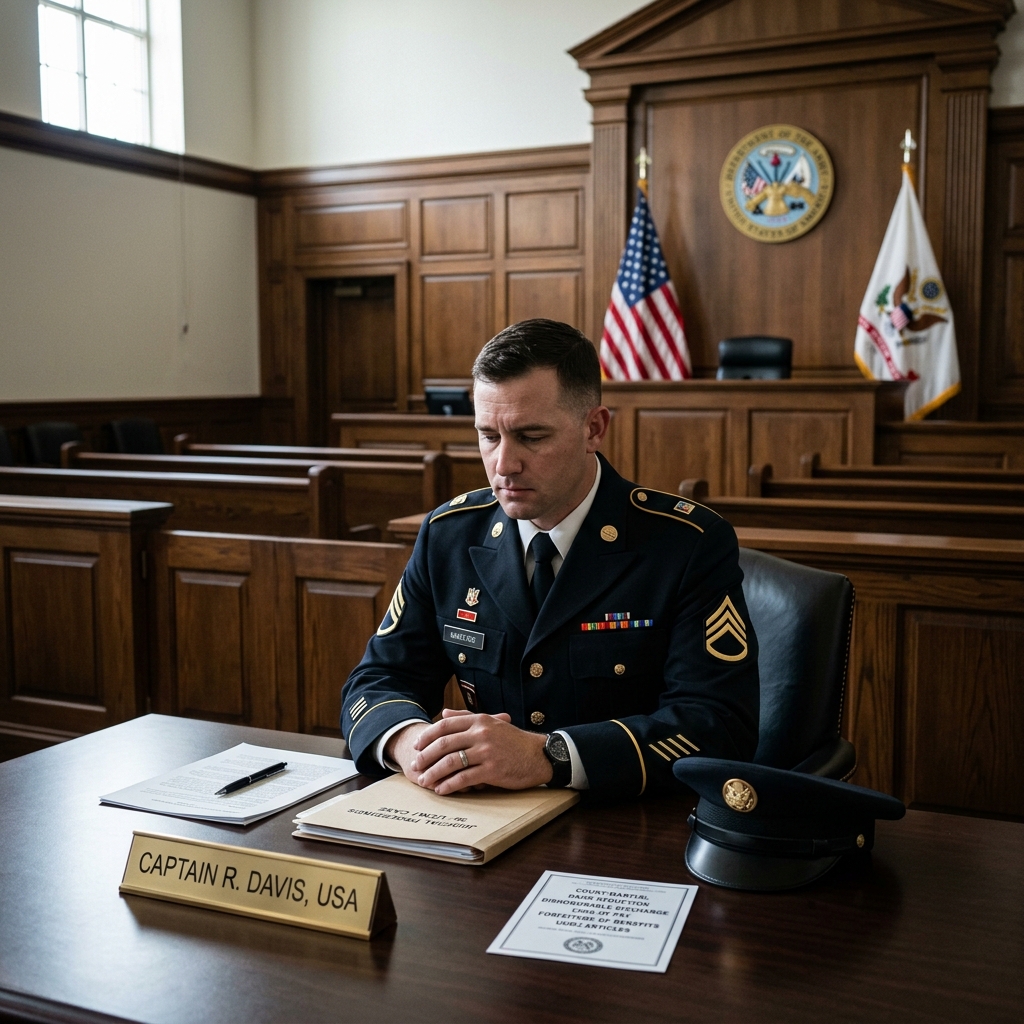
Driving under the influence is a serious offense for any driver, but for members of the armed forces it carries unique and often far-reaching consequences. A single allegation of drunk driving can trigger both civilian prosecution and separate military discipline, each operating under different rules and timelines. This article explains how military DUI cases work, what processes you may face, and how these cases can affect your future in uniform.
Why Military DUI Cases Are Different
In civilian life, a DUI is usually handled by state or local courts under the jurisdiction’s traffic and criminal laws. For service members, the same incident can be viewed through two lenses:
- Civilian criminal system, applying state or sometimes federal law.
- Military justice system, applying the Uniform Code of Military Justice (UCMJ) and service regulations.
These two systems are legally independent. The military is considered a separate sovereign, which means the armed forces can impose discipline even when a civilian court dismisses charges or finds you not guilty. As a result, a military DUI often feels like fighting two battles at the same time.
Where the DUI Happens: On Base vs. Off Base
The location of the alleged drunk driving incident plays a major role in how the case proceeds. Broadly, there are three scenarios:
| Scenario | Primary Court | Typical Military Response |
|---|---|---|
| On a military installation | Federal court (for civilians) or military process for service members. | Article 15, court-martial, and administrative measures. |
| Off base in civilian jurisdiction | State or local court under state DUI laws. | Command investigation, administrative actions, possible UCMJ charges. |
| Federal enclave applying state law | Federal court using the state’s DUI standards. | Similar military actions as on-base incidents. |
Incidents on a Military Installation
If the DUI occurs on a base or other military property, your commanding officer has substantial discretion in how to respond. Under Article 111 of the UCMJ, the military can prosecute drunk driving anywhere in the world, on or off duty. Depending on the facts, your command may:
- Impose non-judicial punishment (commonly called Article 15 or Captain’s Mast).
- Recommend or initiate a court-martial for more serious cases.
- Take administrative measures such as letters of reprimand, driving privilege restrictions, or substance abuse treatment.
Incidents Off Base in Civilian Jurisdiction
When a service member is arrested off base, state law typically governs the criminal case. You may face:
- Criminal prosecution in state court for DUI or related offenses.
- Driver’s license suspension or revocation under state administrative rules.
- Fines, probation, jail exposure, and mandatory alcohol education programs.
At the same time, your command may open a parallel military process, including interviews, evidence collection, and decisions about discipline or rehabilitation. The outcome in state court does not necessarily limit what the military can do.
The Two-Track Nature of a Military DUI Case
Most military DUI cases unfold along two tracks that may overlap but do not fully depend on each other.
Civilian Criminal Track
In the civilian system, the process typically includes:
- Initial arrest and booking.
- Formal charges under state or municipal DUI statutes.
- Arraignment, pretrial hearings, and possible plea negotiations.
- Trial or plea, followed by sentencing if convicted.
Possible penalties range from fines and license suspension to jail time and probation, with more severe consequences for aggravated cases, high blood alcohol content, or prior offenses.
Military Justice and Administrative Track
Within the armed forces, the response usually begins when the command is notified of the arrest. From there, the process can include:
- Command inquiry or formal investigation into the incident.
- Suspension of on-base driving privileges shortly after the arrest.
- Non-judicial punishment under Article 15 (restriction, extra duties, reduction in rank, forfeiture of pay).
- Referral for court-martial under Article 111 for serious or repeat cases.
- Administrative actions such as letters of reprimand, bars to reenlistment, or separation processing.
These measures focus not only on the criminal behavior but also on your suitability for continued service, adherence to military values, and impact on unit readiness.
Key Military Responses to DUI Allegations
Commanders have a range of tools available when addressing drunk driving by service members. Understanding these options helps you anticipate how a case may unfold.
Non-Judicial Punishment (Article 15)
Non-judicial punishment is often the first formal response to a first-time offense for lower-ranking personnel. Possible sanctions include:
- Reduction in rank, which may affect pay and promotion opportunities.
- Forfeiture of pay for a limited period.
- Restriction to base or specific areas for a set time.
- Extra duty, often involving labor-intensive tasks.
- A punitive letter of reprimand placed in your local or permanent file.
A permanent reprimand can remain in your record and influence evaluations, selection boards, and retention decisions for the rest of your career.
Court-Martial for DUI
For more serious DUI incidents, such as those involving injury, property damage, or aggravating factors, your case may be referred to court-martial under Article 111. Possible outcomes include:
- Forfeiture of pay for an extended period.
- Reduction in grade or dismissal from the service.
- Confinement (military imprisonment).
- A punitive discharge, such as a bad-conduct or dishonorable discharge in serious cases.
Court-martial convictions can create a criminal record and carry long-term consequences in both military and civilian life.
Administrative Actions and Career Impact
Even without court-martial, administrative measures can deeply affect a service member’s future. Common administrative actions include:
- Letters of counseling and reprimand.
- Restrictions or bans on driving privileges on base.
- Mandatory substance abuse assessments and treatment programs.
- Bars to reenlistment or early separation from the service.
- Negative performance evaluations and reduced promotion prospects.
Security clearances may be reviewed and suspended following alcohol-related incidents, which can limit assignment options and access to sensitive positions.
Consequences Beyond the Courtroom
A military DUI does not end when the court case is over. The repercussions extend to many areas of a service member’s life.
Professional and Career Consequences
- Reduced promotion opportunities and exclusion from special assignments.
- Potential loss of bonuses, special pays, and educational benefits.
- Greater scrutiny from leadership and limited trust in judgment and reliability.
- Risk of administrative separation, especially after repeated alcohol-related incidents.
In some services, two serious alcohol-related incidents within a year can trigger mandatory separation processing.
Personal and Financial Consequences
- Substantial fines and court costs.
- Higher auto insurance premiums or difficulty obtaining coverage.
- Loss of driver’s license, making daily life and commuting difficult.
- Time spent in mandatory classes, counseling, or treatment programs.
These consequences can strain family finances and relationships, particularly when combined with reduced military pay or rank.
Defending Against a Military DUI
Because a military DUI case often involves concurrent civilian and military proceedings, strategic defense must account for both systems.
Working With Civilian and Military Counsel
Service members frequently rely on both civilian defense attorneys and military legal assistance or defense counsel. Effective representation should:
- Assess the strength of the evidence, including breath or blood tests and field sobriety performance.
- Address procedural issues, such as probable cause for the stop or compliance with testing protocols.
- Consider how plea deals or trial strategies in civilian court may influence military action.
- Prepare for potential non-judicial punishment or court-martial while the civilian case is ongoing.
Mitigation and Rehabilitation
Commands often consider a service member’s overall record and efforts at rehabilitation. Positive steps may include:
- Early enrollment in alcohol education or treatment programs.
- Consistent performance and strong evaluations before and after the incident.
- Evidence of responsibility, such as compliance with all court orders and treatment requirements.
- Support from supervisors or peers highlighting character and service history.
While mitigation cannot erase a DUI, it can influence whether the command pursues separation, the severity of punishment, and long-term career prospects.
Frequently Asked Questions About Military DUI Cases
Can the military punish me if the civilian DUI case is dismissed?
Yes. The military justice system is separate from state courts. Even if a civilian prosecutor drops charges or a judge finds you not guilty, your command may still impose non-judicial punishment, initiate administrative separation, or refer the case to court-martial based on the same conduct.
Do I face double jeopardy for being punished by both the state and the military?
No. Courts have recognized that the military and states are separate sovereigns. The Double Jeopardy Clause does not typically prevent the military from disciplining a service member after a state DUI prosecution. You can therefore face consequences in both systems for one incident.
What happens to my on-base driving privileges after a DUI arrest?
Base or post leadership can suspend your on-base driving privileges soon after the arrest, often before the civilian case is resolved. This can affect your ability to commute, perform duties that require driving, and access facilities conveniently.
Will I automatically be discharged for a single DUI?
Not necessarily. A single DUI can lead to significant discipline but does not always result in discharge. The outcome depends on factors such as your rank, record, the severity of the incident, and service-specific policies. However, repeated alcohol-related misconduct or aggravating circumstances greatly increase the risk of separation.
Does a military DUI affect my security clearance?
Yes, it often does. Alcohol-related incidents may trigger a review of your security clearance due to concerns about judgment, reliability, and potential vulnerability. In some cases, clearances are suspended or revoked, limiting your eligibility for certain positions or assignments.
Can civilians be prosecuted for DUI on a military base?
Yes. Civilians accused of DUI on federal enclaves such as military installations may face charges in federal court, where judges commonly apply the DUI laws of the surrounding state. This process is separate from the military discipline applied to service members.
Practical Steps After a Military DUI Allegation
If you are a service member facing a DUI allegation, consider taking the following steps promptly:
- Consult with a qualified defense lawyer familiar with both civilian DUI law and military practice.
- Gather key documents such as the police report, charging information, and any witness statements.
- Cooperate with court orders and program requirements while following legal advice.
- Avoid further misconduct, particularly any additional alcohol-related incidents, which can significantly worsen the situation.
- Document positive performance at work and participation in rehabilitation or counseling.
Early, informed action can help protect both your legal rights and your long-term military career.
References
- What Happens If You Get a DUI in the Military? — FindLaw. 2022-04-14. https://www.findlaw.com/military/criminal-law/military-dui-court-martial-and-civilian-charges.html
- Jacksonville Military DUI Defense Lawyer — Korody Law, P.A. 2023-06-01. https://korodylaw.com/jacksonville-military-dui-defense/
- Idaho Military DUI Lawyers — John Malek Law Group. 2023-08-10. https://www.maleklawgroup.com/idaho-dui-defense/military-dui/
- What Happens After a Military DUI Off Base? — Leaders in Law. 2021-11-05. https://www.leaders-in-law.com/what-happens-after-a-military-dui-off-base/
- Oklahoma Military DUI, APC, & DWI Defense — The Urbanic Law Firm. 2023-03-15. https://www.urbanic.law/oklahoma-crimes/drunk-driving/military/
- Military DUI Defense in San Diego & Orange County — Military Law Center. 2022-09-20. https://militarylawcenter.com/military-law-areas-of-practice/military-dui/
Similar Articles








Read full bio of Sneha Tete




