
Understanding Legal Car Insurance Requirements in the U.S.
Learn which types of car insurance coverage are legally required, how state minimums work, and why buying only the minimum can be a costly mistake.
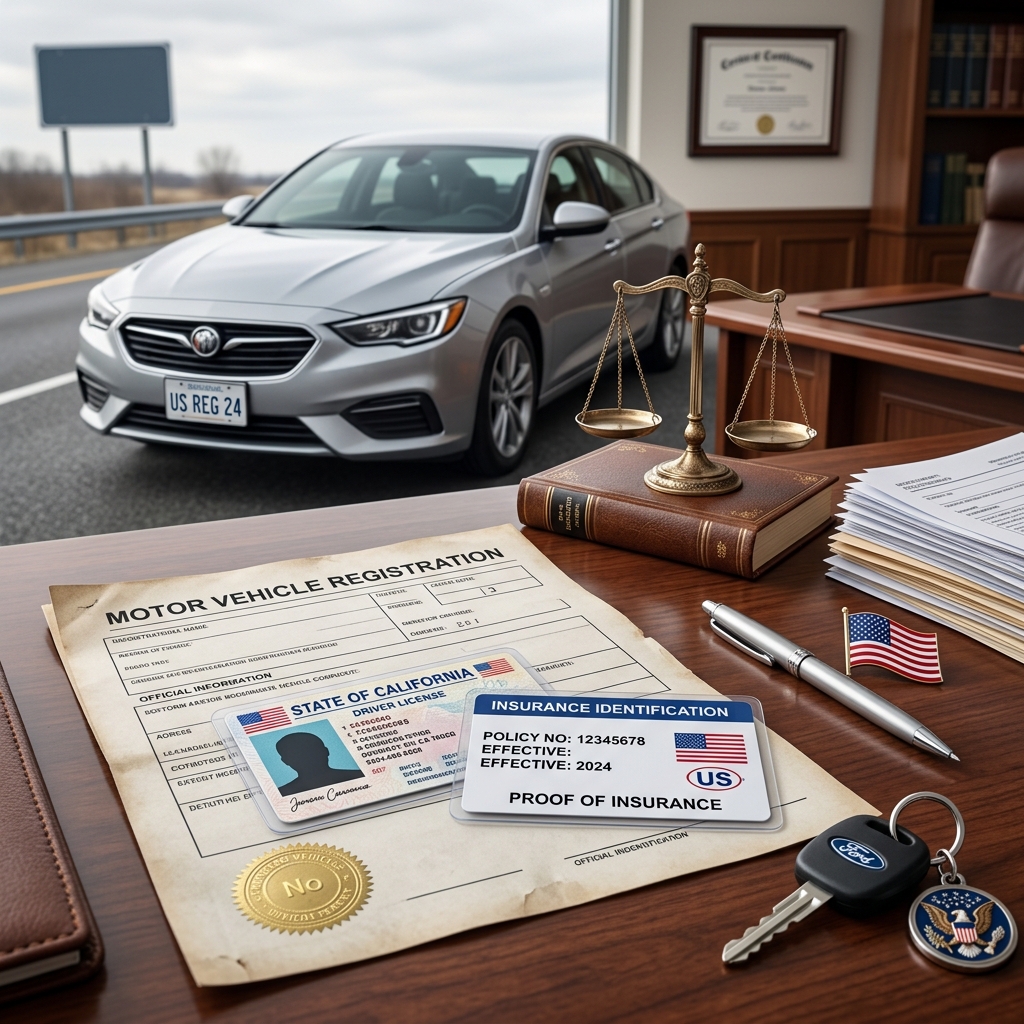
In almost every U.S. state, you cannot legally drive without some form of car insurance. The law does not require you to buy every type of coverage available, but it does set minimum standards designed to ensure you can pay for the harm you cause in a crash. Knowing what is legally required—and what is simply recommended—helps you avoid fines, license suspensions, and serious financial risk.
Why the Law Requires Car Insurance
Car insurance requirements exist primarily to make sure drivers can cover the costs they impose on others. When you cause a collision, the resulting medical bills, vehicle repairs, and legal expenses can be far more than most people can pay out of pocket. Mandatory insurance is intended to:
- Protect other road users from uncompensated injury and property loss.
- Reduce the burden on courts, hospitals, and taxpayers when crashes occur.
- Encourage financial responsibility by requiring coverage as a condition of driving.
Each state sets its own rules, but the underlying objective is the same: no one should be free to drive if they cannot pay for the damage they may cause.
States That Require Insurance vs. States That Do Not
All U.S. states except New Hampshire require drivers to carry car insurance. Even in New Hampshire, drivers must be able to demonstrate financial responsibility, and those who buy insurance must meet minimum coverage standards. In the rest of the country, car insurance is effectively mandatory for any vehicle used on public roads.
However, the details differ considerably from one jurisdiction to another. Some states focus only on liability coverage, while others also require protections like personal injury protection (PIP) or uninsured motorist benefits.
Core Types of Legally Required Coverage
Although terminology and limits vary, most state insurance laws revolve around a few key coverage types. Understanding these helps you decode your policy and evaluate whether you only meet the minimum or have broader protection.
Bodily Injury Liability
Bodily injury liability coverage pays for injuries suffered by other people when you are legally responsible for a crash. This includes:
- Medical treatment and hospital care for injured drivers and passengers.
- Some related costs, such as rehabilitation or long-term care in serious cases.
- Legal defense expenses if you are sued because of the accident.
Nearly every state that requires insurance includes bodily injury liability as a mandatory component. Minimum levels vary, but figures between $15,000 and $30,000 per injured person and a total per accident limit between $30,000 and $60,000 are common. A few states such as Alaska and Maine mandate significantly higher limits.
Property Damage Liability
Property damage liability coverage pays for harm you cause to other people’s property—primarily vehicles, but also fences, buildings, and other structures. This coverage:
- Repairs or replaces the other driver’s car when you are at fault.
- Covers damage to items like guardrails, street signs, or private property you hit with your vehicle.
Most states pair property damage liability with bodily injury liability as the basic legal requirement. Common minimums range from $10,000 to $25,000 per accident, though some states set higher thresholds.
Personal Injury Protection (PIP)
Personal injury protection, or PIP, is required primarily in no-fault insurance states. PIP pays medical bills and sometimes lost wages for you and your passengers, regardless of who caused the crash. In states like New York, PIP is mandatory for all registered vehicles.
Key features of PIP include:
- Coverage of medical costs for insured drivers and their passengers.
- Potential coverage for lost income and certain out-of-pocket expenses after an injury.
- Operation within a no-fault system, where your own policy pays first and lawsuits for minor injuries are limited.
Uninsured and Underinsured Motorist Coverage
Uninsured/underinsured motorist (UM/UIM) coverage pays for your injuries—and sometimes property damage—if you are hit by a driver who has no insurance or too little insurance. About half of U.S. states require some form of UM/UIM coverage, often focused on bodily injury.
- UM coverage responds when the at-fault driver carries no valid insurance.
- UIM coverage applies when the at-fault driver’s policy limits are lower than the costs of your injury.
- Some laws require UM/UIM only for bodily injury, while property damage coverage is optional.
Medical Payments Coverage
Medical payments coverage pays for medical expenses for you and your passengers after an accident, regardless of fault. Unlike PIP, it generally does not cover lost wages or broad non-medical benefits.
Most states treat medical payments coverage as optional. However, at least one state—such as Maine—requires drivers to carry a minimum amount of medical payments coverage. This requirement supplements liability and PIP systems by ensuring some direct medical protection for the policyholder.
Mandatory Coverage vs. Optional Add-Ons
Car insurance policies often include several types of coverage that are not required by law but may still be essential for financial protection. The most common optional coverages are collision and comprehensive insurance.
Collision Coverage
Collision coverage pays to repair or replace your own vehicle when it is damaged in a crash, regardless of who is at fault. It is particularly important if you drive a newer or higher-value vehicle.
While no state law requires collision coverage, many lenders make it a condition of financing. If you still owe money on your car loan, your lender is likely to require both collision and comprehensive coverage to protect the vehicle’s value.
Comprehensive Coverage
Comprehensive coverage pays for damage to your vehicle from non-collision events such as theft, fire, vandalism, severe weather, animal strikes, and broken glass. Like collision coverage, comprehensive is optional under state law but often mandatory under loan agreements.
Drivers sometimes drop comprehensive and collision coverage on older vehicles when the car’s value is too low to justify the premium cost.
How State Minimums Are Structured
State minimum liability requirements are usually expressed as three numbers: for example, 30/60/25. Each number represents a specific coverage limit.
| Number | Meaning | Example (Texas) |
|---|---|---|
| First | Maximum bodily injury coverage per person | $30,000 per injured person |
| Second | Maximum bodily injury coverage per accident | $60,000 total per accident |
| Third | Maximum property damage coverage per accident | $25,000 property damage limit |
Many states set similar three-part limits, though the exact numbers differ. Some states, particularly those with higher medical costs or more densely populated areas, mandate higher minimums to reflect local risk.
Illustrative State Examples
Individual state laws demonstrate how minimum requirements can diverge. The following examples show how car insurance mandates work in practice.
Texas: 30/60/25 Liability Minimum
In Texas, drivers must be able to show they can pay for the accidents they cause, typically by purchasing liability insurance. The minimum coverage, known as 30/60/25, includes:
- $30,000 for bodily injury per person.
- $60,000 total bodily injury coverage per accident.
- $25,000 for property damage per accident.
Drivers with a financed vehicle must also carry collision and comprehensive coverage under most loan agreements, even though state law does not require them.
New York: Liability, PIP, and No-Fault Rules
New York uses a no-fault insurance system that requires multiple types of coverage as a condition of vehicle registration. Requirements include:
- Liability insurance issued by a company licensed in New York, in the name of the vehicle registrant.
- Minimum liability limits, such as $10,000 for property damage and specified amounts for bodily injury and death per person and per accident.
- At least $50,000 in PIP benefits per person.
- Uninsured/underinsured motorist coverage as part of the mandatory package.
Drivers must maintain active New York liability coverage as long as the vehicle is registered, and proof of insurance must be presented at registration and upon request during traffic stops.
Illinois: Focus on Liability Coverage
Illinois law requires vehicle owners to carry minimum amounts of auto liability insurance but does not mandate physical damage coverage like collision or comprehensive. However, lenders can require such coverage as a condition of financing a vehicle.
Illinois also provides an auto insurance plan for drivers who cannot obtain coverage on the open market, ensuring that even high-risk drivers have a pathway to meet legal requirements.
Consequences of Driving Without Required Insurance
Failing to carry legally required insurance can lead to immediate and long-term consequences. Depending on the state, penalties may include:
- Suspension or revocation of your driver’s license and vehicle registration.
- Traffic court fines that can reach hundreds or thousands of dollars.
- Civil penalties to restore driving privileges.
- Potential arrest or citation when stopped without proof of insurance.
In addition to legal sanctions, uninsured drivers face personal financial exposure. If you cause a serious accident without insurance, you may be personally sued, and your assets and future earnings can be at risk.
Why Legal Minimum Coverage May Not Be Enough
State minimums are designed to create a basic safety net, not to fully protect drivers in every situation. Medical costs and vehicle prices have increased significantly in recent years, and many minimum limits are relatively low.
Consider the following risk factors:
- Major medical procedures and hospital stays can easily exceed $30,000 per person.
- Modern vehicles often cost more than $25,000 to replace, especially trucks and SUVs.
- Multi-car crashes and collisions involving several injured people can quickly exhaust per-accident limits.
When liability limits are too low, the at-fault driver can be responsible for any costs above the policy’s maximum. For many drivers, increasing liability limits and adding UM/UIM coverage provides better protection than simply meeting the statutory minimums.
Proof of Insurance and Compliance
States not only require insurance but also specify how drivers must prove they have it. Common compliance obligations include:
- Proof at registration: You typically must show proof of liability coverage to register a vehicle.
- Proof during traffic stops: You must present physical or electronic insurance documentation upon request from law enforcement.
- Continuous coverage: In many states, your insurance must remain active for as long as your vehicle is registered.
Electronic proof of insurance is increasingly accepted, allowing drivers to show digital ID cards stored on a smartphone.
Key Questions to Ask When Buying Coverage
Meeting legal requirements is the starting point, not the end, of effective risk management. When you shop for a policy, consider these questions:
- What are my state’s mandatory minimum liability limits, and are they realistically adequate for my situation?
- Does my state require PIP or UM/UIM coverage, and if so, at what levels?
- Do I have a car loan or lease that obligates me to carry collision and comprehensive coverage?
- How would my finances be affected if my liability limits were exhausted in a serious crash?
- Are there state-sponsored plans or consumer resources to help if I have difficulty obtaining insurance?
Frequently Asked Questions (FAQs)
Is full coverage car insurance required by law?
No. State laws generally require minimum liability coverage, and in some states additional protections such as PIP or uninsured motorist coverage. “Full coverage” is a marketing term that usually refers to a policy combining liability, comprehensive, and collision. The extra coverages are strongly recommended but not mandated by state law.
What happens if I move to a new state?
When you move, you must update your policy to comply with the new state’s insurance requirements. Some states, such as New York, only accept policies issued by insurers licensed in that state, in the name of the vehicle registrant. Failing to switch coverage can result in registration problems and potential penalties.
Do I need insurance if my car is not currently being driven?
In many states, insurance is required as long as the car is registered, even if you are not using it. If you plan to store a vehicle and cancel coverage, you may need to surrender the registration and license plates or follow special procedures for non-operational vehicles, depending on local law.
Are there programs to help high-risk drivers get insurance?
Yes. Some states offer assigned risk or special auto insurance plans to help drivers who cannot obtain coverage through standard markets. For example, Illinois has an auto insurance plan with specific eligibility criteria for drivers who have been turned down by other insurers.
Can I rely on health insurance instead of car insurance for injuries?
Health insurance can help pay for medical treatment after a crash, but it does not replace required auto coverages. Liability, PIP, medical payments, and UM/UIM coverage are designed specifically for traffic accidents and may cover expenses that health insurance does not, such as certain lost wages or legal liabilities.
References
- What Type of Car Insurance Is Required by Law? — Super Lawyers. 2023-08-01. https://www.superlawyers.com/resources/motor-vehicle-accidents/what-type-of-car-insurance-is-required-by-law/
- Your Guide to Car Insurance Requirements State-by-State — Mercury Insurance. 2023-05-10. https://www.mercuryinsurance.com/resources/basics-101/car-insurance-requirements-state-by-state.html
- Car Insurance Requirements by State — Progressive. 2024-02-15. https://www.progressive.com/auto/state/
- Auto Insurance Shopping Guide — Illinois Department of Insurance. 2022-11-01. https://idoi.illinois.gov/consumers/consumerinsurance/auto-insurance-shopping-guide.html
- Auto Insurance Guide — Texas Department of Insurance. 2023-06-01. https://www.tdi.texas.gov/pubs/consumer/cb020.html
- Insurance Requirements — New York State Department of Motor Vehicles. 2024-01-10. https://dmv.ny.gov/insurance/insurance-requirements
- What Are New York’s Auto Insurance Requirements? — Chopranocerino Law Firm. 2023-09-12. https://www.chopranocerino.com/faqs/new-york-auto-insurance-requirements/
Similar Articles








Read full bio of Sneha Tete




