
Understanding Grandparents’ Rights in Divorce
How grandparents can protect bonds with grandchildren when parents divorce, separate, or face serious family law disputes.
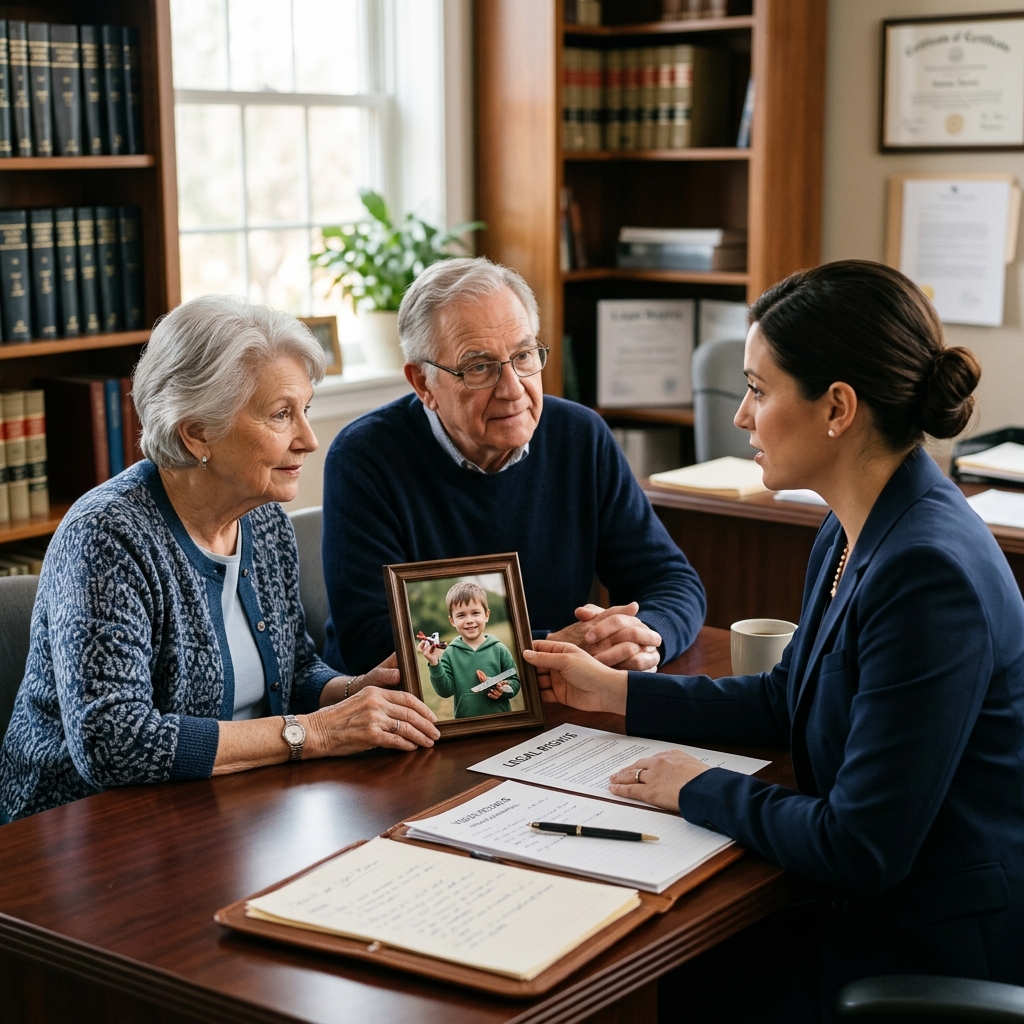
When parents separate or divorce, children are not the only ones who experience disruption. Grandparents often find themselves suddenly cut off from grandchildren or uncertain how much contact they are allowed to have. This guide explains how
grandparents’ rights
work during and after a divorce, what legal tools may be available, and how courts evaluate requests for visitation or custody in light of thechild’s best interests
.Do Grandparents Automatically Have Visitation Rights?
In most jurisdictions, grandparents
do not have automatic legal rights
to spend time with their grandchildren, regardless of whether the parents are married, separated, or divorced. Parents are generally presumed to have the constitutional right to decide who their children see and when.However, all U.S. states have some form of
grandparent visitation statute
that allows grandparents to ask the court for visitation in specific circumstances, including divorce, parental death, or parental incarceration.- Parents ordinarily control children’s contact with extended family.
- Grandparents must typically file a formal request to secure court-ordered visitation.
- Court involvement usually occurs only when informal agreements or mediation fail.
Key Legal Concepts Grandparents Need to Understand
Before taking action, it helps to understand several core legal ideas that shape how courts handle grandparent cases.
Best Interests of the Child
Family courts make custody and visitation decisions by focusing on the
best interests of the child
, not the wishes of the adults involved. When a grandparent seeks contact, judges ask whether ongoing contact genuinely supports the child’s emotional, physical, and developmental well-being.- Courts examine the strength and history of the grandparent–grandchild relationship.
- Judges consider the child’s age, health, and emotional needs.
- Parental preferences and safety concerns are weighed against the benefits of grandparent involvement.
Parental Rights and Presumptions
Parents typically have a strong legal presumption in their favor. If a fit parent decides to limit or deny grandparent visitation, courts start from the assumption that the parent’s decision is valid and should be respected.
To overcome this presumption, grandparents often must show that:
- They have an established, meaningful relationship with the child.
- Loss of contact would be harmful or significantly detrimental to the child.
- Visitation is reasonable and does not interfere with parental authority or the child’s routine.
Third-Party or Non-Parent Status
In many states, grandparents are legally treated as
third parties
when asking for custody or visitation, distinct from parents. This means they face a higher burden of proof than parents and must show why court-ordered contact is necessary and beneficial.When Divorce Opens the Door to Grandparents’ Petitions
Grandparent visitation statutes commonly list specific events that make a grandparent petition possible. A
divorce or legal separation
is one of the most common triggers.| Family Situation | Typical Legal Options for Grandparents |
|---|---|
| Parents file for divorce or legal separation | Petition the same court handling the divorce for visitation rights. |
| Parents are already divorced | Request post-divorce visitation through a new or existing case. |
| One or both parents are deceased or incarcerated | Seek visitation or, in serious cases, custody if parents cannot care for the child. |
| Parents are unmarried and involved in a custody dispute | File within juvenile or family court once paternity or legal parentage is established. |
Laws vary significantly by state, but a common pattern is that courts are more willing to hear grandparent petitions once the family is already under court supervision through divorce, separation, or custody proceedings.
Grandparents’ Options During a Pending Divorce Case
When a divorce is already before the family court, grandparents may be able to join or file a related petition asking for visitation. This often makes the process more efficient and allows the judge to consider grandparent issues at the same time as parental custody and parenting time.
Common Steps While a Divorce Is Ongoing
- Monitor the case: Learn which court is handling the divorce and whether custody or parenting time is being contested.
- Consult a family law attorney: Because rules differ widely, a local lawyer can explain whether and how grandparents may intervene.
- File a petition or motion: Request grandparent visitation within the existing divorce or custody case, if permitted by state law.
- Prepare evidence: Gather documents and testimony demonstrating the relationship and why continued contact serves the child’s best interests.
In some states, filing during the initial custody proceedings is strategically advantageous, because the court is already evaluating parenting schedules and may be more receptive to addressing grandparent involvement at the same time.
Visitation Rights After the Divorce Is Final
Once a divorce decree is entered, it does not automatically address grandparent visitation. Parents retain primary decision-making authority, and one parent may encourage contact while the other prefers to limit it.
Many statutes allow grandparents to petition for visitation
after the divorce
if they can demonstrate a meaningful relationship and show that court-ordered time would benefit the child.- Either parent can voluntarily allow grandparents to visit during their own parenting time, even if the other parent objects.
- A parent may reasonably cut off contact if there are serious safety concerns, such as abuse, neglect, or substance misuse by the grandparents.
- If contact is denied, grandparents can ask the court to restore or formalize visitation when permitted by state law.
When Grandparents Seek Custody Instead of Visitation
In rare and serious situations, grandparents may feel they must step in not just for visits, but to take over
custody
of a child. Custody requests are much more demanding than visitation petitions and often arise when parents are unable or unwilling to provide safe care due to abuse, neglect, addiction, or severe health problems.Courts are cautious about overriding parental rights, but may award custody to grandparents or treat them as “de facto” parents when they have been functioning as primary caregivers and it is essential for the child’s welfare.
- Grandparents must usually prove parental unfitness or exceptional circumstances.
- Evidence may include prior child protection investigations, medical records, criminal charges, or testimony from professionals.
- If grandparents have raised the child for an extended period, courts may recognize them as de facto or psychological parents.
Building a Strong Case for Grandparent Visitation
When formal court involvement becomes necessary, preparation is key. Grandparents need to show more than love and concern; they must demonstrate a tangible, positive impact on the child’s life.
Evidence That Can Help
- History of involvement: Photos, school records, and testimony showing regular caregiving, attendance at events, or shared activities.
- Emotional bond: Statements from teachers, counselors, or other adults who have observed the relationship.
- Stability and support: Proof that the grandparents provide a safe environment and are able to respect parental boundaries.
- Impact of lost contact: Evidence that sudden cutoff has caused distress or regression in the child’s behavior or school performance.
Legal and Practical Steps
- Research local statutes on grandparent visitation and custody to understand eligibility and procedural requirements.
- Attempt informal negotiation or mediation with the parents before going to court, if safe and realistic.
- File a petition in the appropriate court (often the same one handling divorce or custody) if informal efforts fail.
- Attend hearings prepared with documentation and witnesses to support your case.
- Follow any court orders carefully; failure to comply can undermine future requests.
Working with Parents to Avoid Litigation
Court action is not always necessary. In many families, cooperative solutions reduce conflict and protect the child from feeling caught in the middle.
- Approach parents with respect for their role as primary decision-makers.
- Offer flexible schedules and transportation to make grandparent contact easier after divorce.
- Use mediation or family counseling to address misunderstandings and build a structured visitation plan.
- Keep communication child-focused, emphasizing stability and emotional support rather than adult grievances.
Frequently Asked Questions (FAQs)
1. Can I get visitation rights just because I am the child’s grandparent?
No. Being a grandparent alone is not enough. You usually must show an existing bond with the child, demonstrate that visitation is in the child’s best interests, and meet any specific requirements in your state’s grandparent visitation law.
2. Does divorce automatically give me a legal right to see my grandchild?
Divorce may create an opportunity to petition for visitation, but it does not automatically grant rights. Parents still control contact unless a court orders otherwise. You must ask the family court for visitation and provide evidence supporting your request.
3. What if one parent supports my visits and the other objects?
Typically, each parent can allow you to see the child during their own parenting time, even if the other parent disagrees, unless a court order says otherwise or safety concerns make contact inappropriate.
4. Can I seek custody of my grandchild after a divorce?
You may request custody in extreme circumstances, such as abuse, neglect, or parental incapacity, but the legal burden is high. Courts respect parental rights and will award custody to grandparents only when it is clearly necessary for the child’s safety and welfare.
5. Do grandparent rights continue if my grandchild is adopted?
In many states, adoption by non-relatives can terminate existing grandparent rights, though adoption by a stepparent may still allow limited options. You should consult a local attorney to understand how adoption affects your situation.
References
- Grandparents’ Rights During a Divorce — Super Lawyers. 2023-01-10. https://www.superlawyers.com/resources/divorce/grandparents-rights-during-a-divorce/
- Grandparent visitation in California — California Courts Self-Help. 2022-08-15. https://selfhelp.courts.ca.gov/grandparent-visitation
- Grandparents’ Visitation Rights in a Divorce — 603 Legal Aid. 2021-06-01. https://www.603legalaid.org/grandparents-visitation-rights-in-a-divorce
- Grandparent and Non-Parents Visitation and Custody Rights — Maryland People’s Law Library. 2020-09-10. https://www.peoples-law.org/grandparent-visitation-rights
- What Are Grandparents’ Rights? — MetLife Legal Resources. 2023-05-12. https://www.metlife.com/stories/legal/grandparents-rights/
- Grandparent Rights in a Family Law Case Explained — OurFamilyWizard. 2022-04-05. https://www.ourfamilywizard.com/blog/grandparent-rights-family-law-case-explained
Similar Articles








Read full bio of Sneha Tete


