
Understanding Elder Guardianship and Conservatorship
A practical guide to how courts appoint guardians and conservators, what they do, and how families can protect vulnerable older adults.
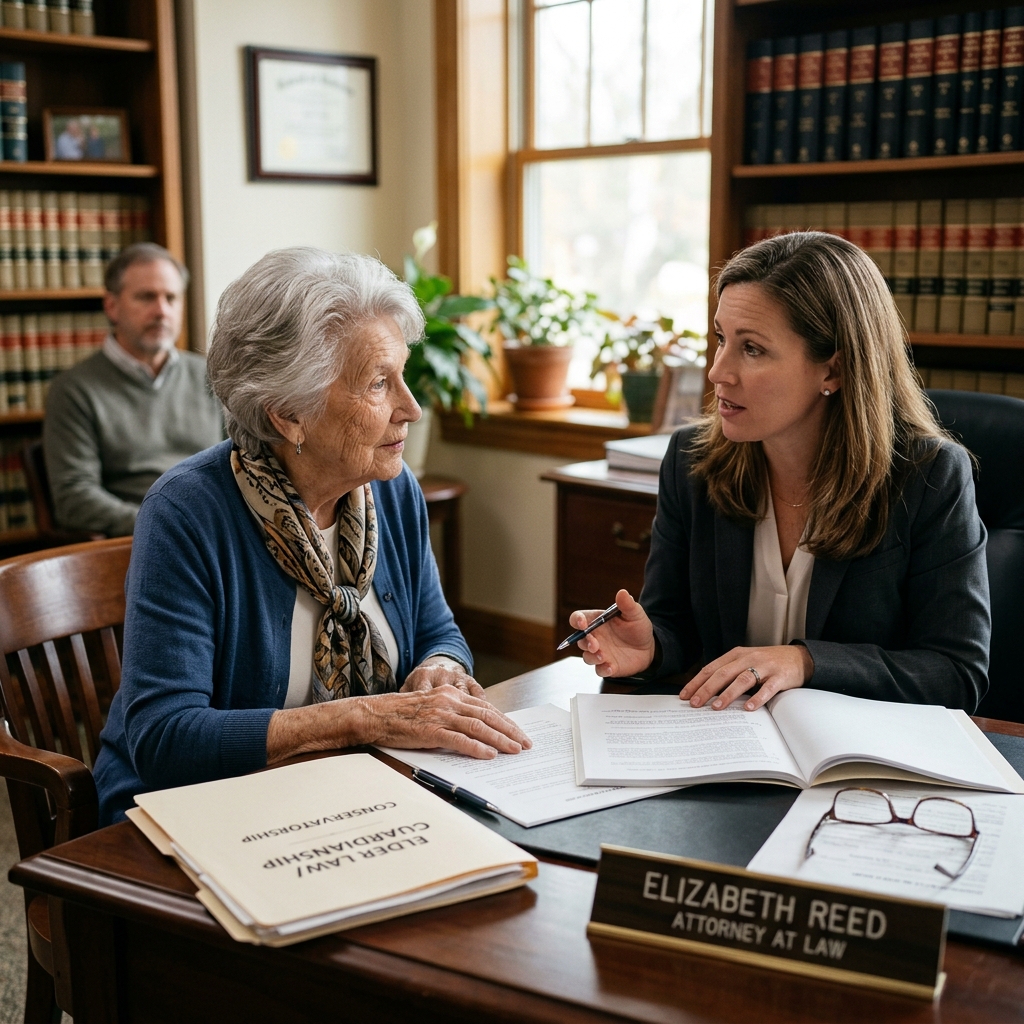
As people age, some will reach a point where they can no longer safely manage their daily life or finances on their own. In those situations, courts can appoint a guardian or conservator to step in and make decisions for the vulnerable adult. These legal arrangements are powerful tools that can protect an older person from harm, but they also involve taking away important rights, so courts generally treat them as a last resort.
This guide explains how elder guardianship and conservatorship work, what powers they grant, how a case moves through court, and what families should consider before asking for this level of control.
Core Concepts: Capacity, Guardianship, and Conservatorship
Guardianship and conservatorship are both built on the idea that an adult has become incapacitated or legally incompetent—terms used when a person can no longer make or communicate safe decisions about their own care or assets.
- Capacity: The ability to understand information, appreciate consequences, and make informed choices about personal or financial matters.
- Guardianship: A court-created relationship giving someone authority over an incapacitated person’s personal care and everyday decisions.
- Conservatorship: A court-created relationship giving someone authority over an incapacitated person’s money and property.
In some states, the term guardianship is used for both personal and financial decision-making, while in others the roles are separated into guardian (personal) and conservator (financial).
What Does a Guardian or Conservator Do?
Once appointed, a guardian or conservator has ongoing duties designed to protect the older adult—often called the ward or incapacitated person—from neglect, exploitation, or serious risk.
Typical responsibilities of a guardian
A guardian focuses on personal welfare and day-to-day needs of the older adult.
- Choosing where the person lives (home, assisted living, nursing facility).
- Overseeing medical care, including doctors, treatments, and medications.
- Monitoring health, safety, and basic self-care such as dressing, hygiene, and nutrition.
- Arranging supportive services such as home care, therapy, or transportation.
- Encouraging social contact and community participation whenever possible.
Typical responsibilities of a conservator
A conservator handles money and property for the incapacitated adult and must act in that person’s best financial interests.
- Managing bank accounts and investments.
- Paying bills, taxes, and regular expenses.
- Protecting assets from fraud or financial abuse.
- Preparing budgets and financial reports for the court when required.
- Making decisions about selling property or changing investments, with court approval when needed.
In many cases, the court may appoint the same person to serve as both guardian and conservator, but it can also split the roles or make the authority limited to specific areas.
Guardianship vs. Conservatorship: Key Differences
Although guardianship and conservatorship often arise from similar concerns, they focus on different aspects of a person’s life. Understanding this distinction helps families ask the court only for the powers that are truly needed.
| Feature | Guardianship | Conservatorship |
|---|---|---|
| Main focus | Personal care, health, safety, and living arrangements. | Money, property, and financial decisions. |
| Typical subject | Incapacitated adult or minor needing help with daily life. | Incapacitated adult who cannot manage finances. |
| Common examples | Choosing a care facility, consenting to medical treatment. | Paying bills, preventing financial exploitation, managing investments. |
| Scope | Can be full, limited, or temporary, depending on the order. | Can be full, limited, or temporary, often tailored to financial issues. |
When Courts Consider Guardianship or Conservatorship
Because these arrangements restrict fundamental rights—such as handling one’s own money, choosing where to live, or consenting to treatment—courts usually require strong evidence before intervening.
Common situations leading to a case
- A person with advanced dementia can no longer pay bills, avoid scams, or understand medical decisions.
- An older adult with serious mental illness is making unsafe choices that put health or housing at risk.
- A stroke or brain injury leaves someone unable to speak, understand information, or direct their own affairs.
- There is evidence of financial exploitation or physical neglect, and the adult cannot protect themselves.
States generally ask two questions:
- Is the person unable to meet essential needs for health, safety, self-care, or financial management without help?
- Are there less restrictive ways to meet those needs, or is a guardian or conservator truly necessary?
How an Elder Guardianship or Conservatorship Case Begins
Most cases start when someone close to the older adult asks the court for help. This person—often a relative, friend, or agency—files a formal request known as a petition.
Filing the petition
- Who can file: Any interested person such as a family member, friend, or sometimes a public agency or long-term care facility.
- Where to file: Typically in the court for the county where the older adult lives or where they are hospitalized or receiving care.
- What the petition includes:
- Basic information about the older adult and their situation.
- Facts showing why guardianship or conservatorship is needed.
- Names of close relatives and other interested parties.
- A request for specific powers (full or limited; guardian, conservator, or both).
Many states require a professional evaluation by a physician or psychologist documenting the person’s condition and functional limitations. This medical evidence helps the judge decide whether the adult truly lacks capacity.
Investigation and notice
Because rights are at stake, courts usually insist on an independent look at the situation before making a decision.
- The court notifies the older adult and key relatives, giving them a chance to respond or object.
- The judge may appoint an attorney, guardian ad litem, or other representative for the adult.
- In some states, an interdisciplinary team (such as a doctor, social worker, and psychologist) evaluates the person’s abilities and needs.
- A court visitor or investigator may interview the proposed guardian, review living conditions, and report back to the judge.
The court hearing
Ultimately, the judge holds a hearing where everyone can present evidence and arguments.
- The judge reviews medical reports, investigative findings, and testimony.
- If the adult contests the petition, their lawyer can challenge the evidence or propose less restrictive options.
- The court decides whether the person lacks capacity in specific areas and whether a guardian or conservator is needed.
- If granted, the judge issues an order describing the appointed person’s powers and any limits, such as a limited guardianship covering medical decisions only.
Types of Guardianship and Conservatorship Orders
Court orders are increasingly tailored to the person’s needs, rather than automatically giving full control over every aspect of life.
Full vs. limited authority
- Full guardianship or conservatorship: The appointed person has broad authority over most personal or financial decisions, subject to court oversight.
- Limited guardianship or conservatorship: The order specifies certain areas (for example, medical decisions or large financial transactions) while leaving other rights with the adult.
Short-term or emergency orders
Some courts can grant temporary or emergency authority when the older adult faces immediate danger, such as serious neglect, unsafe housing, or imminent financial loss. These orders are usually time-limited and followed by a more complete hearing.
Rights and Safeguards for the Older Adult
Even when the court appoints a guardian or conservator, the older adult keeps important rights and protections.
Due process protections
- Right to notice of the proceedings and information about what is being requested.
- Right to appear at the hearing, speak to the judge, and express preferences.
- Right to be represented by an attorney; in some jurisdictions, counsel is appointed if the adult cannot obtain one.
- Right to challenge the petition, offer evidence, and suggest alternatives.
Ongoing oversight
- Guardians and conservators may be required to submit regular reports to the court about the person’s condition and finances.
- The court can review complaints about neglect, misuse of funds, or failure to follow the order.
- The adult or any interested person can ask the court to change, limit, or end the arrangement if circumstances improve or problems arise.
Courts can remove a guardian or conservator who is not acting in the ward’s best interests and appoint someone else if necessary.
Alternatives to Guardianship and Conservatorship
Modern elder law encourages families and courts to consider less restrictive options before resorting to full guardianship or conservatorship. These alternatives can preserve more autonomy while still providing support.
Common alternatives
- Durable power of attorney: The older adult appoints a trusted person in advance to handle financial or healthcare decisions if they later lose capacity. When properly drafted, this often reduces the need for a court case.
- Supported decision-making agreements: The adult formally chooses supporters who help them understand options and communicate decisions, without transferring full decision-making power.
- Protective arrangements: Courts can authorize specific actions—such as obtaining medical treatment or limiting contact with an abusive person—without appointing a full guardian or conservator.
- Representative payee and limited financial tools: For public benefits or a small amount of income, appointing a representative payee or using joint accounts can help manage money with narrower authority.
- Informal family support: In some cases, family members can help with daily tasks and bill payment while the adult still makes major decisions, avoiding formal court involvement.
Considerations for Families Exploring Guardianship
Seeking guardianship or conservatorship is both an emotional and legal step. Families must balance safety with respect for the older adult’s independence.
Questions to ask before filing
- Has a healthcare professional formally evaluated the person’s decision-making abilities?
- Are specific problems limited to finances, personal care, or both?
- Could a power of attorney, supported decision-making, or other tool solve the problem without full court control?
- Is there a trusted individual willing and able to undertake the responsibilities and reporting duties?
- Are family members likely to agree, or will disputes make the process more complex?
Choosing a guardian or conservator
Courts generally prefer someone who demonstrates reliability, absence of conflicts of interest, and an understanding of the role.
- Maturity and ability to handle complex personal or financial decisions.
- Clean record, particularly with respect to crimes involving dishonesty or abuse.
- Willingness to maintain contact with the older adult and involve them in decisions whenever possible.
- Capacity to complete required training or education and submit reports to the court.
Modifying or Ending Guardianship and Conservatorship
Guardianship and conservatorship are not always permanent. If the older adult regains capacity or if the order proves too broad, the court can adjust or terminate it.
How orders can change
- Limiting authority: The court can narrow powers, turning a full guardianship into a limited one if the adult can handle some decisions independently.
- Ending the case: If evidence shows the person no longer needs a guardian or conservator, the court can revoke the order.
- Replacing the guardian or conservator: The court may appoint someone else if the current appointee fails to act in the ward’s best interests or cannot continue.
Requests to modify or terminate guardianship can be made by the older adult or any interested person, and the court will typically hold a hearing before changing the arrangement.
FAQs: Elder Guardianship and Conservatorship
Is guardianship always necessary when an older adult struggles?
No. Courts often look first at whether a power of attorney, supported decision-making, or protective arrangement can meet the adult’s needs without full guardianship or conservatorship. Guardianship is generally reserved for cases where lesser measures cannot prevent harm.
Can the older adult object to the appointment?
Yes. The person at the center of the case has the right to notice, to attend the hearing, to speak with the judge, and to challenge the petition with the help of an attorney or other representative.
Does guardianship remove all rights from the older adult?
Not necessarily. Many orders are limited to specific areas. Even under full guardianship, courts encourage guardians to involve the adult in decision-making to the greatest extent possible and to respect remaining rights such as personal preferences and social relationships.
Who oversees the guardian or conservator after appointment?
The court maintains jurisdiction over the case and can require periodic reports, accountings, or reviews. Complaints about abuse, neglect, or financial mismanagement can be brought to the court, which has the power to investigate and, if necessary, remove and replace the guardian or conservator.
Can a family member serve as guardian or conservator?
Yes. Many states allow almost any adult with sufficient ability and no disqualifying criminal history to serve, provided they can perform the required duties and complete any mandated training. Courts may appoint professional guardians or public agencies when no suitable family member is available.
Does having a power of attorney prevent guardianship?
A well-drafted power of attorney often reduces the need for guardianship, but it does not always eliminate it. If the document is too narrow, revoked, misused, or fails to cover new issues, a court may still decide that guardianship or conservatorship is necessary.
References
- Guardianship & Conservatorship — Virginia Judicial System. 2023-04-01. https://selfhelp.vacourts.gov/page/19/guardianship-conservatorship
- Guardianship and Conservatorship — National Academy of Elder Law Attorneys (NAELA). 2022-06-15. https://www.naela.org/Web/Web/Resources_Tab/Consumer_Resources/Law_Topics/Guardianship_Conservatorship.aspx
- Adult Guardianship, Conservatorship, and Other Protective Arrangements — Washington LawHelp. 2023-09-10. https://www.washingtonlawhelp.org/en/adult-guardianship-conservatorship-and-other-protective-arrangements
- Conservatorship vs. Guardianship: What's the Difference? — MetLife Legal. 2023-02-20. https://www.metlife.com/stories/legal/conservatorship-vs-guardianship/
- Adult Guardianship / Conservatorship: What Do I Need to Know? — Legal Aid of West Virginia. 2022-08-05. https://legalaidwv.org/legal-information/adult-guardianship-conservatorship-what-do-i-need-to-know/
- Guardianship/Conservatorship — Darpel Elder Law Services. 2021-11-30. https://www.darpelelderlaw.com/services/guardianship-conservatorship
- Adult Guardianship & Conservatorship — New Mexico Courts. 2020-05-01. https://adultguardianship.nmcourts.gov/
Similar Articles








Read full bio of Sneha Tete


