Washington, DC takes impaired driving very seriously. Drivers arrested for drunk or drug-impaired driving can face criminal penalties, license consequences, and long-term effects on employment and insurance. This guide explains how DC defines DUI and DWI, the legal blood alcohol concentration (BAC) limits, the penalties for first and repeat offenses, and what typically happens after a drunk driving arrest.
Key Impaired Driving Terms in Washington, DC
DC law recognizes more than one type of alcohol- or drug-related driving offense. The most common categories are:
- DWI (Driving While Intoxicated) – generally used when the driver’s BAC is at or above the per se legal limit of 0.08% or higher.
- DUI (Driving Under the Influence) – typically applies when the BAC is below 0.08% but there is evidence the driver’s ability to operate the vehicle safely is impaired.
- Other impaired driving offenses – including driving while impaired by drugs or a combination of alcohol and drugs, each covered under DC’s impaired driving statute.
Under the District of Columbia Code, it is illegal to operate or be in physical control of any vehicle while intoxicated or while under the influence of alcohol, drugs, or a combination of them. This means a person can be charged even if the car is not moving, as long as they are in control of the vehicle.
Legal BAC Limits and When Charges Apply
DC’s enforcement of drunk driving laws is centered on BAC but also considers observable impairment. Different thresholds apply depending on age and type of vehicle.
Standard Adult Drivers (Age 21 and Older)
- DWI: BAC of 0.08% or higher typically leads to a DWI charge.
- DUI: BAC readings of 0.07% or lower may still result in a DUI charge if the officer observes signs of impairment, such as poor performance on field sobriety tests or unsafe driving behavior.
- Impairment at or above 0.05%: Operating a vehicle with a BAC of 0.05 or higher can support a DUI charge when there is evidence of appreciable impairment.
For adult drivers, the usual legal limit is 0.08% BAC, but DC law allows prosecution below that level when additional evidence shows the driver cannot safely operate a vehicle.
Commercial Drivers
Drivers operating commercial vehicles are held to stricter standards:
- Commercial drivers may be arrested for drunk driving if they have a BAC of 0.04% or higher.
Because commercial vehicles often present greater risks to public safety, these lower limits aim to reduce the chance of serious collisions.
Underage Drivers (Under 21)
Washington, DC has a zero-tolerance policy for underage drinking and driving:
- Drivers under 21 cannot legally purchase, possess, or consume alcoholic beverages.
- If a person under 21 is found operating a vehicle with any measurable amount of alcohol, they may be arrested and charged with DWI.
This zero-tolerance rule reflects DC’s effort to discourage early drunk driving behavior and protect young drivers and other road users.
How DUI and DWI Are Proven
Police officers and prosecutors use different types of evidence to support impaired driving charges. Broadly, DWI is based on a statutorily prohibited BAC level, while DUI combines BAC evidence with observable impairment.
Evidence Commonly Used in DWI Cases
- Breath, blood, or urine tests showing a BAC of 0.08% or higher.
- Test results alone can be sufficient for a DWI conviction, even without field sobriety tests, if the BAC is at or above the per se limit.
Evidence Commonly Used in DUI Cases
- BAC readings below 0.08% but at or above 0.05%.
- Field sobriety test results, such as difficulty walking in a straight line or following instructions.
- Officer observations of driving behavior, including swerving, speeding, or failing to obey traffic signals.
When BAC is under the per se DWI limit, the prosecution generally needs both chemical test results and evidence of impairment to secure a DUI conviction.
Criminal Penalties for DUI and DWI in DC
The District of Columbia Code sets specific penalties for impaired driving offenses. These include fines, potential jail time, and enhanced penalties when certain aggravating factors are present.
Baseline Statutory Penalties
| Offense | Fine Range | Jail Time |
|---|---|---|
| First DUI or DWI conviction | Up to $1,000 | Up to 180 days incarceration |
| Second offense (within statutory look-back period) | $2,500 to $5,000 | Up to 1 year incarceration, mandatory minimum 10 days |
| Third or subsequent offense | $2,500 to $10,000 | Up to 1 year incarceration, mandatory minimum 15 days |
These ranges are derived from the District of Columbia Code provisions governing penalties for driving under the influence and driving while intoxicated.
Enhanced Penalties Based on BAC and Drugs
DC law imposes mandatory minimum jail terms when BAC is particularly high or specified controlled substances are present in the driver’s system.
- High BAC levels can trigger mandatory jail sentences over and above general maximums.
- If blood or urine contains a Schedule I controlled substance such as phencyclidine (PCP), cocaine, methadone, or morphine, a mandatory minimum of 20 days in jail applies for certain offenses.
- Additional mandatory incarceration can be imposed when the person has multiple prior impaired driving convictions.
Courts are required to apply these mandatory minimums whenever the statutory conditions are met, leaving judges limited discretion to reduce the minimum jail portion.
Repeat Offense Consequences
DC law treats repeat impaired driving offenses as more serious than first offenses. The penalties increase with the number of prior convictions, and mandatory minimum jail terms accumulate.
Second Offense
- Fine between $2,500 and $5,000.
- Up to 1 year in jail, with a mandatory minimum of 10 days.
- Potential license revocation by the DC Department of Motor Vehicles (DMV), often for one year.
Third and Subsequent Offenses
- Fines ranging from $2,500 to $10,000.
- Up to 1 year in jail, with at least 15 days mandatory minimum.
- Additional 30-day mandatory minimum incarceration may be imposed for each further violation when the driver has three prior offenses under the relevant impaired driving provisions.
These escalating penalties and mandatory minimums are designed to deter repeat behavior and protect the public from drivers who repeatedly offend.
License and Administrative Consequences
Criminal courts deal with fines and jail terms, but in DC, a separate administrative process governs driver’s license status. The DC DMV typically handles suspensions and revocations.
Role of the DC DMV
- License suspensions and revocations are generally imposed by the DC Department of Motor Vehicles, not directly by criminal judges.
- The DMV can impose restricted driving privileges, full suspensions, or revocations following an impaired driving arrest or conviction.
- Criminal judges in DC do not have direct power to suspend or revoke licenses as part of sentencing, although they may set no-driving conditions while a case is pending.
For many drivers, the loss or limitation of driving privileges can be one of the most disruptive consequences of a DUI or DWI case, especially when driving is required for work or family responsibilities.
Civil and Financial Impact Beyond Criminal Penalties
The effects of a drunk driving conviction extend beyond fines and jail time. There are civil liabilities, insurance consequences, and personal and professional repercussions.
Although details vary by case, typical impacts include:
- Civil liability – If an impaired driver causes an accident, they can be sued for medical costs, property damage, lost wages, and pain and suffering.
- Higher insurance premiums – Insurers often treat DUI or DWI convictions as high-risk events, leading to substantial premium increases or policy cancellations.
- Employment issues – Jobs that require driving, professional licensing, or security clearances may be jeopardized by an impaired driving conviction.
- Mandatory programs – Courts may order participation in alcohol education, treatment, or intervention programs, especially for first-time offenders.
What to Expect After an Impaired Driving Arrest
Although exact procedures can differ, most DUI or DWI cases in DC follow a common pattern. Understanding this progression may help drivers anticipate the steps ahead.
Typical Case Progression
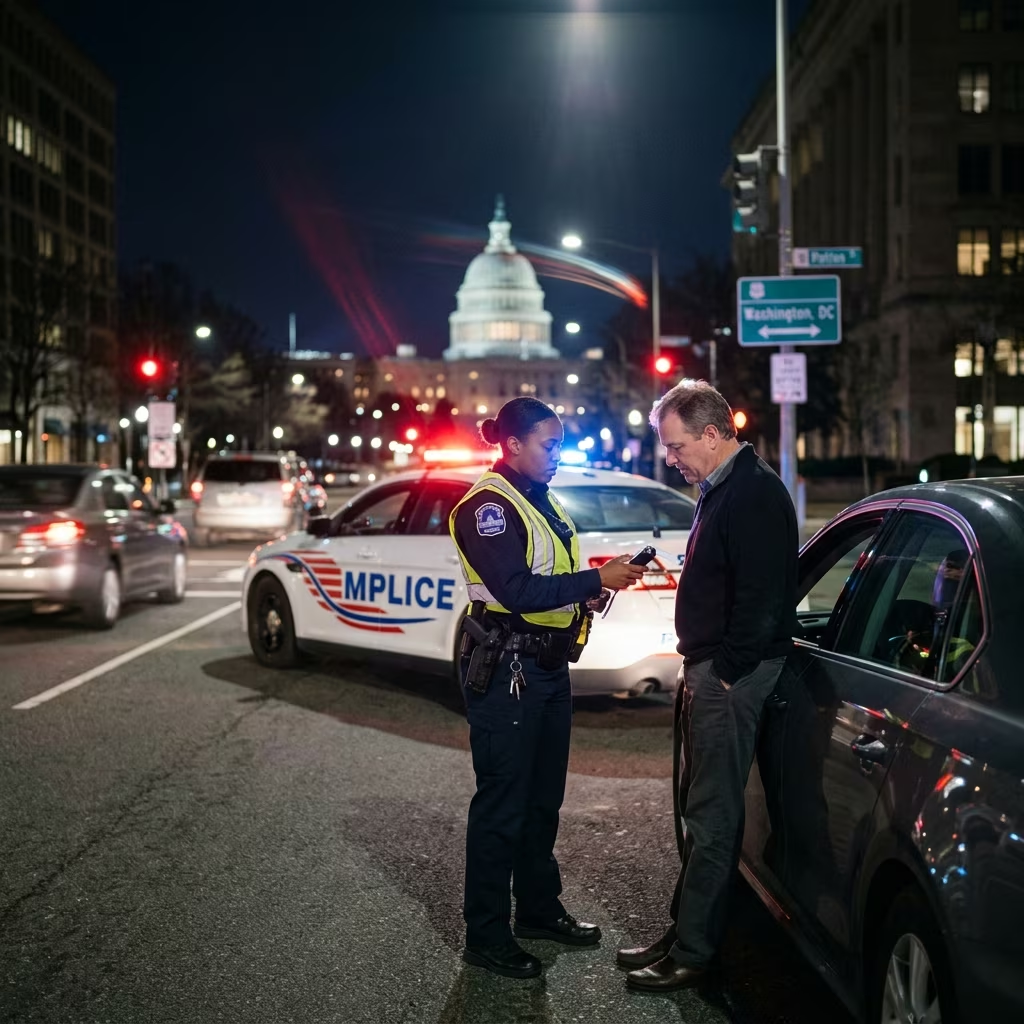
- Traffic stop and investigation – An officer observes driving behavior, conducts a stop, and may ask the driver to perform field sobriety tests or submit to a breath test.
- Arrest and testing – If the officer has probable cause, the driver is arrested and taken for chemical testing (breath, blood, or urine) to measure BAC.
- Charging decision – Based on BAC results and evidence of impairment, prosecutors determine whether to file DWI, DUI, or related charges.
- DMV action – The DC DMV may begin an administrative process to suspend or restrict driving privileges, separate from the criminal case.
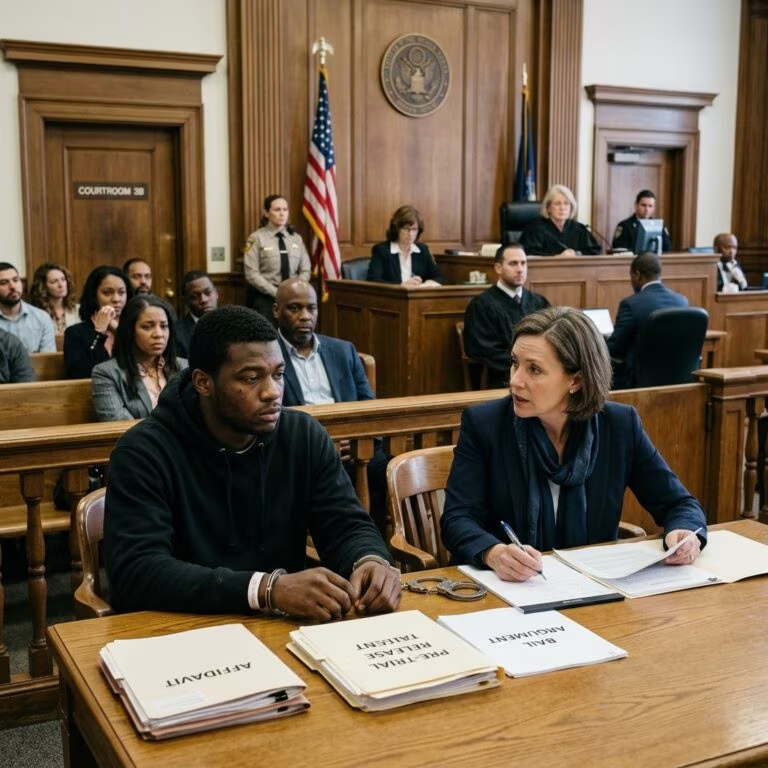
- Court appearances – The driver appears in court to enter a plea, address pretrial conditions, and ultimately resolve the case by trial, plea agreement, or diversion if available.
Because DC’s legal framework is complex and penalties can be severe, many defendants choose to consult with an attorney experienced in local DUI and DWI law for guidance through both criminal and DMV proceedings.
Practical Tips to Avoid DUI and DWI Charges
The most effective way to avoid DUI or DWI consequences is to prevent impaired driving in the first place. While this guide focuses on legal rules, a few practical precautions are worth noting:
- Plan ahead – Arrange a designated driver, public transportation, or rideshare if you expect to drink.
- Understand personal limits – BAC can rise quickly and is influenced by weight, sex, and time; it is difficult to judge accurately without testing.
- Avoid driving after using impairing drugs – Many prescription, over-the-counter, and illegal drugs can impair driving ability and lead to charges similar to alcohol-based offenses.
- Take zero-tolerance seriously – Young drivers in DC face arrest for any measurable alcohol; underage drinking and driving can cause long-term consequences.
Frequently Asked Questions (FAQs)
Is it possible to be charged with DUI in DC if my BAC is below 0.08%?
Yes. DC law allows DUI charges when BAC is below 0.08% if there is evidence of impairment, such as poor performance on field sobriety tests or unsafe driving behavior.
Who decides whether my license is suspended after a DUI or DWI arrest?
The DC Department of Motor Vehicles handles license suspensions and revocations. Criminal judges can impose no-driving conditions while a case is pending, but they do not directly control long-term license status.
What is the difference between DUI and DWI in Washington, DC?
DWI typically involves a BAC of 0.08% or higher and can be proven based solely on chemical test results. DUI usually involves lower BAC levels combined with evidence that the driver’s ability to operate the vehicle safely was impaired.
Are penalties harsher for repeat DUI or DWI offenders?
Yes. Repeat offenders face higher fines and mandatory minimum jail terms. For example, second offenses can carry fines between $2,500 and $5,000 and at least 10 days of incarceration, while third and subsequent offenses can involve fines up to $10,000 and longer mandatory jail terms.
Can drugs alone lead to an impaired driving charge in DC?
Yes. DC law prohibits operating or being in physical control of a vehicle while under the influence of any drug or a combination of alcohol and drugs. The presence of certain Schedule I substances can trigger additional mandatory jail time.
References
- 50–2206.11. Driving under the influence (DUI) of alcohol or a drug — Council of the District of Columbia. 2024-01-01. https://code.dccouncil.gov/us/dc/council/code/sections/50-2206.11
- 50–2206.13. Penalties for driving under the influence of alcohol or a drug — Council of the District of Columbia. 2024-01-01. https://code.dccouncil.gov/us/dc/council/code/sections/50-2206.13
- Drunk Driving Prevention — Metropolitan Police Department (MPD). 2023-03-15. https://mpdc.dc.gov/page/drunk-driving-prevention
- Impaired Driving — Vision Zero DC, District Department of Transportation. 2022-09-01. https://visionzero.dc.gov/pages/impaired-driving
- Penalties for Driving Under Influence in Washington DC — Bruckheim & Patel. 2023-06-10. https://www.brucklaw.com/dc-dui-penalties/
- DC DUI Penalties — David Benowitz, PLLC. 2023-05-20. https://criminallawdc.com/dc-dui-lawyer/penalties/
- DC DUI Regional Rules — Scrofano Law PC. 2022-11-05. https://washingtondccriminallawyer.net/dc-dui-lawyer/regional-rules/