
Adopting A Child In Colorado: 8 Essential Rules For Families
A detailed, plain‑language guide to who can adopt in Colorado, what the legal requirements are, and how the adoption process works from start to finish.
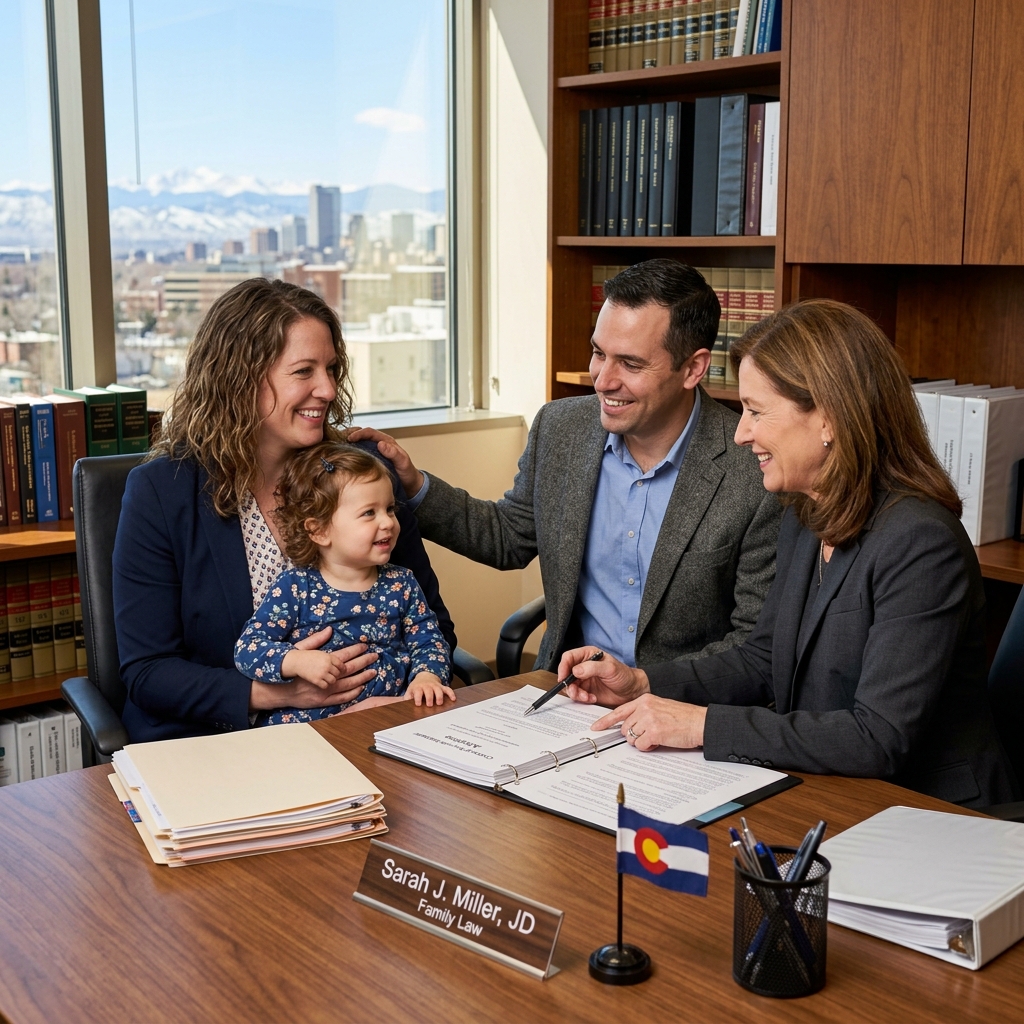
Adopting a child in Colorado is both a meaningful commitment and a formal legal process. This guide explains the core rules set out in Colorado law, what prospective parents must do, and how the court system handles different types of adoptions. It is an informational overview and not a substitute for personalized legal advice.
1. Who May Adopt a Child in Colorado?
Colorado law sets minimum requirements for anyone who wants to adopt, but it does not restrict adoption to any particular marital status, religion, or gender. The key questions are age, residency, background, and the suitability of the home.
1.1 Basic eligibility criteria
For most child adoptions within Colorado, a prospective parent must meet several baseline conditions, which are reflected in state court guidance and child welfare standards.
- Age requirement: Generally, you must be at least 21 years old to adopt. People under 21 may only proceed with court permission.
- Child’s age: In standard child adoptions, the child is usually under 18 at the time the petition is filed, though adult adoptions follow separate rules.
- Residency and jurisdiction: The child must be living in Colorado or under the jurisdiction of a Colorado court for about six months when the petition is filed, in most legal‑custody adoption scenarios.
- Legal availability: The child must be legally free for adoption, meaning parental rights have been terminated or voluntarily relinquished with court approval.
1.2 Non‑discrimination principles
According to Colorado practice and commentary, adoption is not limited by marital status, housing ownership, religion, or sexual orientation. For example:
- You do not have to be married to adopt.
- You do not need to own a home; renting is acceptable if the environment is safe and stable.
- Same‑sex couples may adopt on equal terms with opposite‑sex couples.
The central question for the court and agencies is whether the placement promotes the child’s best interests, not the applicant’s lifestyle within lawful bounds.
1.3 Criminal history and disqualifying offenses
Colorado places strict limits on who may adopt when serious criminal convictions are present. State child welfare regulations list offenses that bar approval of an adoption application.
- Absolute bars: A person cannot adopt if they have felony convictions involving child abuse, crimes of violence, or unlawful sexual behavior.
- Recent felonies: Felony convictions within the last five years for physical assault, battery, or certain drug‑related offenses, and within the last ten years for domestic violence, can prevent adoption.
- Controlled substance offenses: In regulation, certain convictions related to unlawful use, distribution, or manufacturing of controlled substances or marijuana can lead to denial of the application.
These requirements apply to the main petitioners and often to other adults living in the household, because they affect the overall safety of the child’s potential home.
2. Types of Adoption Recognized in Colorado
Colorado law recognizes several distinct forms of adoption. Each type has its own procedural nuances and, in some cases, relaxed requirements compared to agency placements.
2.1 Common adoption categories
| Type of Adoption | Typical Scenario | Key Legal Features |
|---|---|---|
| Agency or private infant adoption | Prospective parents adopt a baby or young child placed through an agency or private professional. | Requires home study, background checks, and court finalization after placement. |
| Kinship adoption | Relatives (such as grandparents, aunts, or uncles) adopt a child from within the extended family. | Home study may be simplified or not required to be filed with the petition. |
| Stepparent adoption | A stepparent adopts the child of their spouse. | Requires legal marriage to the biological parent and consent from relevant parties; home study often not required in court filings. |
| Custodial adoption | A person who already has court‑ordered custody adopts the child. | Uses legal custody adoption procedures; may not require filing a home study with the petition. |
| Adult adoption | One adult formally adopts another adult. | Different rules apply; parental rights of biological parents are not affected. |
2.2 Stepparent adoption specifics
Stepparent adoption is a frequent path when a stepparent has been raising a child and wants to formalize the relationship. Colorado typically requires:
- The stepparent and biological parent to be legally married.
- Background checks for the stepparent similar to those used in other adoptions.
- Consent forms signed by both biological parents (if living) and by the child if the child is 12 years or older.
Once the court is satisfied that consents are valid, the adoption generally proceeds with a streamlined hearing compared with agency placements.
3. Making a Child Legally Available for Adoption
Adoption cannot occur until the child’s legal status allows it. In Colorado, parental rights either must be ended by a court or voluntarily relinquished under judicial oversight.
3.1 Termination of parental rights
Termination of parental rights (TPR) is a serious step in which the court legally ends the parent‑child relationship. TPR may occur:
- In dependency and neglect cases when the court finds ongoing risk or inability to safely parent.
- After voluntary relinquishment if the court finds the decision informed and in the child’s best interests.
Once parental rights are terminated or relinquished, the parent typically cannot undo the decision, though some laws allow attempts to retract an order within a limited time frame.
3.2 Voluntary relinquishment
In some infant or private adoptions, the biological parent decides to relinquish rights voluntarily. Colorado requires court approval for relinquishment to be valid, and the court must ensure that the parent understands the consequences.
After the court accepts relinquishment, the child becomes legally available for adoption, allowing agencies or adoptive parents to move toward placement.
4. Background Checks and Home Study Requirements
Colorado places significant weight on background checks and home studies to assess whether an adoptive home is safe and appropriate. These procedures are designed to protect children and ensure compliance with state and federal law.
4.1 Mandatory background checks
Prospective adoptive parents, and in many cases other adults living in the household, must undergo multiple checks.
- Fingerprint‑based FBI check: A national criminal record review.
- Fingerprint‑based Colorado Bureau of Investigation (CBI) check: A state‑level criminal history search.
- TRAILS background check: A Colorado Department of Human Services (CDHS) review of child welfare history.
Agencies and county departments also must verify an applicant’s lawful presence in the United States before approving an adoption application.
4.2 Home study content and timing
In most domestic adoptions, a home study is required to evaluate the family’s readiness and home environment.
- Home studies are typically completed within 90 working days after background checks are finished.
- The study includes all petitioners and any adults residing in the household.
- It reviews housing safety, relationships, finances, parenting styles, and motivation for adoption.
If a child has not been placed within one year of home study approval, the assessment must be reevaluated annually for the home to remain active.
4.3 Exceptions to filing a home study
Colorado law allows certain adoption types to proceed without filing a home study alongside the petition, though safety reviews may still occur.
- Stepparent adoptions
- Kinship adoptions
- Custodial adoptions
- Cases where the court itself has made the placement for adoption
These exceptions recognize that the court or child welfare system may already have substantial information about the child’s living situation.
5. Filing the Adoption Petition in Colorado Courts
The adoption petition is the formal request asking the court to approve the adoption. Colorado statute sets detailed requirements for what must be included in the petition and when it must be filed.
5.1 Where to file
Self‑help guidance from the Colorado Judicial Branch recommends filing in:
- The district court in the county where you live, or
- The county where the adoption agency is located, if you are using an agency.
This is a practical rule that ensures the case is heard in a court with a strong connection to the family or the agency.
5.2 Time limits for filing
For child adoptions, Colorado law generally requires the petition to be filed within a specific timeframe after placement.
- The petition should be filed no later than 35 days after the child is placed in the adoptive home for the purpose of adoption.
- If filing is delayed, the court may still accept the petition if it finds reasonable cause or excusable neglect for the delay.
5.3 Required information in the petition
The adoption petition must be verified and include detailed information about the adoptive parents and the child.
- Names, dates and places of birth, race, and residence of each petitioner, including the adopting mother’s maiden name.
- Date of marriage of the petitioners, if they are married.
- Name, date and place of birth, and residence (if known) of the child.
- The relationship, if any, between the child and the petitioner.
- The full name the child will have after adoption.
- Any property the child owns.
- The length of time the child has been in the petitioner’s care and custody.
- Names of other children of the adoptive parents, both natural and adopted, living and deceased.
- Residence and occupation of each petitioner at or around the time of the child’s birth.
The petition must be accompanied by a standardized affidavit listing all fees, costs, and expenses charged in connection with the adoption.
6. Training, Foster Care, and the Path to Adoption
Many families in Colorado adopt from the foster care system. In these cases, additional training and preparation is needed before placement and adoption can move forward.
6.1 Pre‑service training requirements
Prospective foster and adoptive parents working with county departments or contracted agencies must complete pre‑service training.
- At least 27 hours of pre‑service training are required for foster and adoptive parents.
- Training often includes topics such as trauma‑informed care, child development, discipline, and navigating the child welfare system.
- Additional certifications, such as CPR and first aid, are commonly required.
6.2 Ongoing training for foster parents
In Colorado, foster parents must continue learning even after they are licensed.
- Foster parents are generally required to complete at least 20 hours of training annually.
- These hours help improve skills and keep caregivers current on best practices and legal expectations.
For families who later adopt a foster child, this training often lays the groundwork for a successful, long‑term placement.
7. Finalizing the Adoption in Court
Placement of the child into the adoptive home is not the end of the process. Colorado law requires a waiting period followed by a court hearing to finalize the adoption.
7.1 Waiting period before finalization
Colorado imposes a minimum amount of time between placement and final court approval to allow the court and professionals to observe how the placement is working.
- A waiting period of about six months generally applies before adoption can be finalized, starting from the day the adoptive parents take custody.
- During this time, post‑placement visits and reports may be required to evaluate the child’s adjustment and well‑being.
7.2 Final hearing and legal effects
At the finalization hearing:
- The court reviews the petition, home study (if applicable), consents, and any post‑placement reports.
- Judge or magistrate may ask brief questions to confirm that the adoption remains in the child’s best interests.
- If satisfied, the court issues a final decree of adoption.
Once finalized, the adopted child has the same legal rights as a biological child of the adoptive parents, including rights to support and inheritance under Colorado law. The adoptive parents assume full parental responsibilities, and the prior legal parent‑child relationships (for the relinquishing or terminated parents) are ended.
8. Frequently Asked Questions about Colorado Adoption Laws
8.1 Do I have to be married to adopt in Colorado?
No. Colorado does not require adoptive parents to be married, and single adults may adopt as long as they meet age, background, and suitability requirements.
8.2 Can same‑sex couples adopt?
Yes. Same‑sex couples may adopt on the same terms as any other couple. Colorado adoption laws and practice do not restrict adoption based on sexual orientation.
8.3 Is a home study always required?
A home study is required in most child adoptions, especially agency or foster‑care adoptions. However, Colorado law does not require filing a home study with the petition for stepparent, kinship, or custodial adoptions, or in cases where the court made the placement.
8.4 How long does the adoption process take?
Timing varies. A home study may take up to 90 working days after background checks are complete. After placement, Colorado generally requires about six months before finalization. Complex cases may take longer, especially when parental rights or interstate issues are involved.
8.5 What happens after the adoption is finalized?
After finalization, adoptive parents are the child’s legal parents for all purposes. The court’s decree allows a new birth record to be issued, reflecting the adoptive parents. Ongoing contact with birth families, if any, depends on agreements or orders in place, but from a legal perspective the adoptive family becomes the child’s permanent family.
References
- Legal Custody Adoption — Colorado Judicial Branch. 2023-04-01. https://www.coloradojudicial.gov/self-help/legal-custody-adoption
- Home Study Requirements for Prospective Parents in Domestic Adoption: Colorado — Child Welfare Information Gateway (U.S. HHS). 2021-06-01. https://www.childwelfare.gov/resources/home-study-requirements-prospective-parents-domestic-adoption-colorado/
- Colorado Revised Statutes Title 19, Children’s Code § 19-5-208 — FindLaw / State of Colorado. 2020-01-01. https://codes.findlaw.com/co/title-19-childrens-code/co-rev-st-sect-19-5-208/
- Adoption in Colorado — CO4Kids, Colorado Department of Human Services. 2022-03-15. https://co4kids.org/foster-care-adoption/adoption/
- Colorado Foster Care and Adoption Guidelines — AdoptUSKids (HHS grantee). 2022-05-10. https://adoptuskids.org/adoption-and-foster-care/how-to-adopt-and-foster/state-information/colorado
- The Must-Knows of Colorado Adoption Laws — Robinson & Henry, P.C. 2021-09-01. https://www.robinsonandhenry.com/blog/family-law/must-knows-colorado-adoption/
- Adoption | Colorado Family Law — Cline Caldwell LLP. 2020-06-01. https://www.clinecaldwell.com/practice-areas/adoptions/
Similar Articles








Read full bio of medha deb


