
Understanding BAC Tests in DUI Investigations
A clear guide to how blood alcohol concentration is tested, what results mean, and how BAC evidence is used in drunk driving cases.
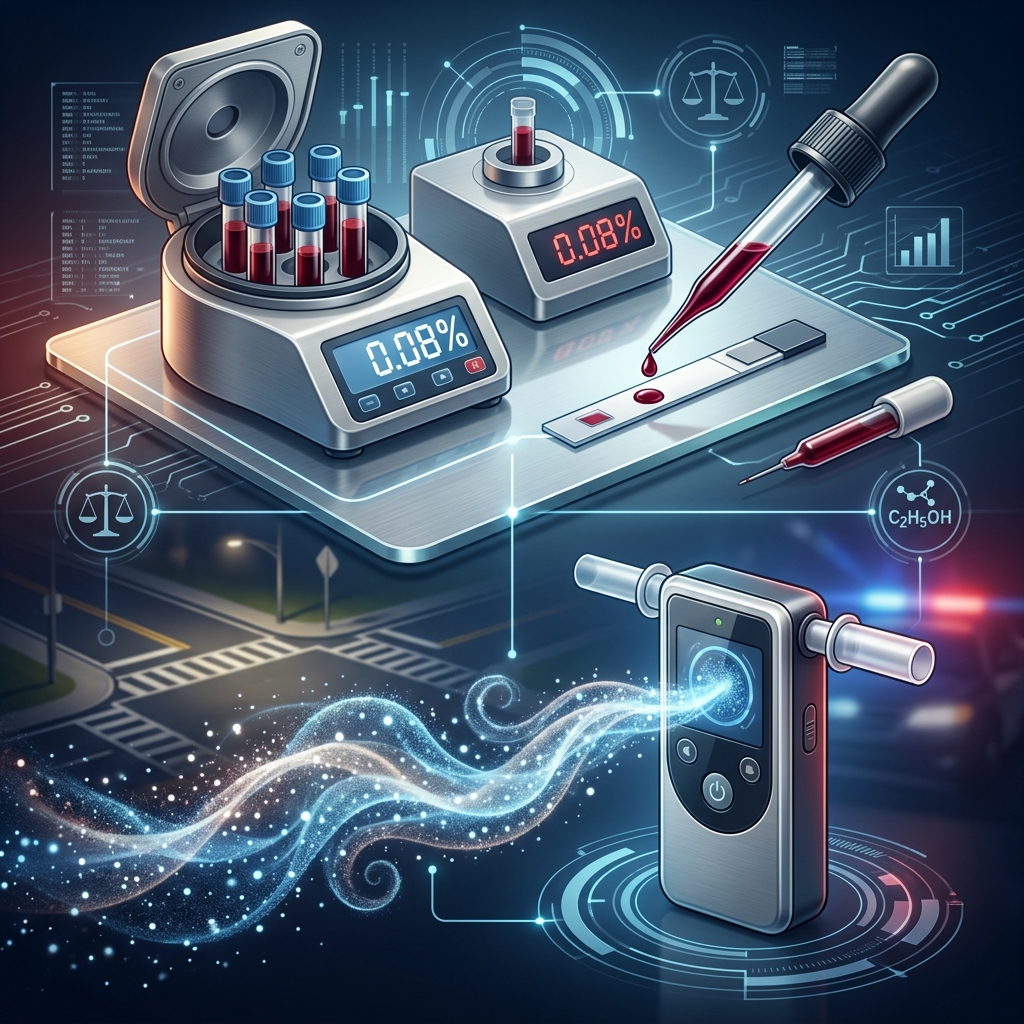
Blood alcohol concentration, commonly shortened to BAC, is a key factor in drunk driving investigations and prosecutions. Police officers, health professionals, and courts rely on BAC tests to determine how much alcohol is in a person’s system and whether that level violates legal limits for driving. BAC evidence can strongly influence whether someone is arrested, charged, or convicted of driving under the influence (DUI) or driving while intoxicated (DWI).
This guide explains how BAC is measured, the different types of tests, how results are interpreted, and what practical and legal issues arise when BAC tests are used in DUI cases.
What BAC Measures and Why It Matters
Blood alcohol concentration measures the amount of alcohol in the bloodstream. It is usually expressed as a percentage, representing grams of alcohol per 100 milliliters of blood—for example, a BAC of 0.08% means 0.08 grams of alcohol per 100 mL of blood.[10]
Alcohol spreads through the bloodstream and affects the brain, nervous system, and other organs. As BAC rises, mental and physical functions become increasingly impaired, which is why most jurisdictions set legal limits on BAC for drivers.
- Low BAC (around 0.01–0.07%) often causes mild relaxation, reduced inhibitions, and slightly impaired judgment.
- Moderate BAC (around 0.08–0.13%) typically leads to impaired motor skills, compromised balance, reduced reaction time, and clearly unsafe driving.
- High BAC (above 0.20%) can cause confusion, severe motor impairment, and risk of injury or accidents.
- Extremely high BAC (over about 0.31–0.40%) is dangerous and may result in loss of consciousness, coma, or even death.[10]
How BAC Is Tested in DUI Investigations
Police and medical professionals use several methods to estimate or directly measure BAC. In DUI and DWI cases, the most common tools are breath, blood, and, less frequently, urine or saliva tests.
Breath Tests (Breathalyzers and PAS Devices)
Breath tests are often the first choice for law enforcement because they are quick, non-invasive, and can be administered roadside. A person blows into a breath-testing device, and the machine analyzes the alcohol vapor in the breath.
Breathalyzers work on the principle that alcohol in the blood is also present in the air exhaled from the lungs. The device uses a chemical reaction or sensor to detect alcohol and converts that reading into a BAC estimate.
- Preliminary alcohol screening (PAS) devices are usually handheld instruments used during traffic stops to check whether alcohol is present and to estimate BAC.
- Stationary or evidential breathalyzers are larger, more sophisticated machines located at police stations or medical facilities and are used to produce test results that may be introduced as evidence in court.
Breath tests generally provide results immediately, allowing officers to quickly determine whether a driver’s BAC appears to exceed legal limits.
Blood Tests
Blood tests directly measure the amount of alcohol in a person’s blood. A medical professional draws a blood sample, which is then analyzed in a laboratory. Blood tests are widely considered more precise than breath tests, especially for evidentiary purposes.
Key features of blood tests include:
- They can detect alcohol in the blood for roughly 6 to 12 hours after the last drink.
- Results are reported as a percentage (e.g., 0.03% BAC) or as grams per milliliter (g/mL), which can be converted to the standard percentage format.
- They are commonly used when accurate measurement is critical, such as serious collisions, hospital treatments, or when breath tests are unavailable or disputed.
Urine and Saliva Tests
Urine and saliva tests are less common in roadside DUI enforcement but may be used in certain contexts, such as medical settings or workplace testing programs. They can detect alcohol and other substances, although they are generally considered less precise than blood tests for determining BAC at a specific moment.
Legal BAC Limits for Driving
Legal BAC limits vary by jurisdiction and sometimes by driver category. Most U.S. states set a legal limit of 0.08% BAC for drivers aged 21 and older, meaning a driver at or above that level is considered legally intoxicated.[10]
| Driver Category | Typical Legal BAC Limit (U.S.) | Notes |
|---|---|---|
| Adult drivers (21+) | 0.08% | Common limit for DUI laws in most states.[10] |
| Drivers in Utah | 0.05% | Utah currently applies a lower limit for adult drivers.[10] |
| Drivers under 21 | Often 0.02% or lower | Many states use very low limits under “zero tolerance” policies. |
| Commercial or high-risk drivers (example from Australia) | 0.00% in many cases | Learners, probationary, truck, bus, and some other drivers must maintain 0.00% BAC in most Australian jurisdictions. |
Even below these limits, alcohol can impair judgment and reaction time. Any drinking before driving can increase the risk of accidents and may still support charges if combined with unsafe driving behavior.[10]
Accuracy and Reliability of BAC Tests
While BAC tests are widely used and accepted, they are not perfect. Each method has potential sources of error, and courts often consider how the test was administered and whether proper procedures were followed.
Factors Affecting Breath Test Accuracy
Breath tests can be affected by environmental conditions, device maintenance, and the tested person’s behavior or physical state.
- Calibration and maintenance: Breathalyzer devices must be regularly calibrated and maintained. Poor calibration can produce readings significantly different from true BAC.
- Mouth alcohol: Recent drinking, mouthwash, breath sprays, or regurgitation can leave alcohol in the mouth that artificially inflates breath test results. Many protocols require a waiting period of at least 15 minutes before testing to reduce this effect.
- Smoking and airflow: Smoking just before testing, or improper breathing technique, can interfere with the device’s sensors. Test instructions usually require a single steady breath and advise against smoking immediately before the test.
- Body temperature and breathing patterns: Fever, hyperventilation, holding one’s breath, or vigorous exercise may alter how much alcohol is in exhaled air. Some reports indicate these factors can cause meaningful changes in breath readings compared to blood results.
Studies and legal cases have acknowledged that breath readings can differ from blood test results by a noticeable margin. In some instances, courts have excluded breath test evidence when procedures or device reliability are challenged.
Limitations of Blood Tests
Blood tests, while generally more precise, also have limitations. The timing of the test is critical: a blood alcohol test is typically most accurate within six to twelve hours after the last drink.
Potential issues include:
- Collection and storage errors: Mistakes during blood collection, labeling, storage, or transport can compromise the sample.
- Laboratory procedures: Improper lab techniques, contamination, or equipment malfunction may affect results.
- Rising or falling BAC: BAC changes over time as the body absorbs and eliminates alcohol. A test taken well after driving may show a level that is higher or lower than the BAC at the time of the alleged offense.
What BAC Levels Mean for Impairment and Safety
Understanding BAC is not only about legal thresholds; it also helps clarify how alcohol affects the body and why impaired driving is so dangerous.[10]
- 0.01–0.07% BAC: Mild relaxation, loosened inhibitions, and slightly impaired reasoning are common. People often feel capable of driving, but reaction time and judgment may already be diminished.
- 0.08–0.13% BAC: This is the level at which driving becomes both unsafe and illegal in many places. Motor skills worsen, balance and coordination decline, and the ability to make quick decisions is significantly impaired.[10]
- 0.14–0.19% BAC: Euphoria typically gives way to anxiety or restlessness. Blackouts, severe coordination problems, and greatly increased accident risk are possible.
- 0.20–0.30% BAC: Confusion, disorientation, and inability to stand or walk without assistance may appear. Injuries, falls, and alcohol poisoning become serious concerns.
- Above 0.31% BAC: At very high levels, alcohol can cause loss of consciousness, depressed breathing, coma, and death. Medical intervention may be required.[10]
Common Questions About BAC Tests
The use of BAC tests raises several practical and legal questions for drivers and anyone investigated for DUI or DWI. The following FAQs highlight key issues related to testing procedures and results.
FAQ 1: How soon after drinking is a BAC test valid?
A BAC test does not measure the exact moment of drinking; it measures the concentration of alcohol currently in the bloodstream. Blood alcohol tests are typically accurate within about six to twelve hours of the last drink, although the exact timing depends on individual metabolism and drinking patterns.
Because BAC rises and then falls over time, tests taken long after driving may not perfectly reflect BAC at the time of the alleged offense. That timing difference can become an important issue in legal proceedings.
FAQ 2: Can I do anything to quickly lower my BAC before a test?
No practical method can rapidly reduce BAC once alcohol is absorbed into the bloodstream. Popular myths—such as drinking coffee, taking cold showers, using breath mints, or other tricks—do not significantly change BAC. The liver needs time to metabolize alcohol, and that process generally takes hours.[10]
The safest and most effective way to keep BAC low is to limit or avoid drinking before driving and to allow enough time for the body to eliminate alcohol.
FAQ 3: Why might a breath test and blood test show different BAC levels?
Breath tests estimate BAC by measuring alcohol in exhaled air, while blood tests directly measure alcohol concentration in blood. Differences in body temperature, breathing patterns, mouth alcohol, device calibration, and timing can cause breath readings to vary from blood results. Some analyses suggest that breath readings may differ from blood test results by a notable percentage in certain circumstances.
Courts often consider these potential discrepancies when evaluating BAC evidence, especially if the person tested or their attorney challenges how the test was conducted.
FAQ 4: Does BAC testing differ for young, commercial, or high-risk drivers?
Yes. Many jurisdictions impose stricter limits on drivers who are under 21, hold commercial licenses, or perform high-risk driving tasks. For example, all U.S. states apply very low legal BAC thresholds to drivers under 21, sometimes around 0.02% or lower, and certain countries require a 0.00% BAC for learner, probationary, and heavy vehicle drivers.
The goal of these stricter limits is to reduce risk for vulnerable populations and for drivers whose work involves greater responsibility for public safety.
FAQ 5: How are BAC test results used in court?
In DUI and DWI cases, BAC results are often central evidence. A reading at or above the legal limit can support charges of per se intoxication, meaning that the BAC level itself is considered a violation regardless of specific driving behavior.
However, courts also review whether the testing device was properly calibrated, whether the officer or medical professional followed established protocols, and whether the sample was collected and processed correctly. Defendants may challenge BAC evidence if there are questions about reliability, timing, or procedural errors.
Key Takeaways for Drivers and Defendants
Anyone who drinks and drives, or is investigated for impaired driving, should be aware of how BAC tests work and what they mean. While this overview cannot substitute for legal advice, several important practical points emerge:
- Even small amounts of alcohol can impair driving ability, especially in combination with fatigue, medications, or other substances.[10]
- Breath tests provide quick estimates of BAC but can be influenced by device maintenance, physical factors, and timing, which may become legal issues.
- Blood tests are more precise but are subject to collection and laboratory procedures; errors or delays can affect the interpretation of results.
- Legal BAC limits differ by region, age, and driver type, so understanding local laws is crucial.
- BAC evidence is powerful in court, but questions about accuracy and protocol can sometimes be raised by legal counsel.
Responsible alcohol use and cautious decision-making about driving are the most reliable ways to avoid legal complications and protect personal and public safety.
References
- Blood Alcohol Content (BAC): What It Is & Levels — Cleveland Clinic. 2022-10-13. https://my.clevelandclinic.org/health/diagnostics/22689-blood-alcohol-content-bac
- Blood Alcohol Level — MedlinePlus, U.S. National Library of Medicine. 2022-02-28. https://medlineplus.gov/lab-tests/blood-alcohol-level/
- Blood Alcohol Concentration — Alcohol and Drug Foundation. 2023-05-01. https://adf.org.au/reducing-risk/alcohol/bac/
- Breath Alcohol Test — CommonSpirit Health. 2021-06-01. https://www.commonspirit.org/conditions-treatments/breath-alcohol-test
- Understanding Blood Alcohol Content (BAC) — Well Being Center, College of Saint Benedict and Saint John’s University. 2020-09-15. https://www.csbsju.edu/well-being-center/health-promotion/alcohol-guide/understanding-blood-alcohol-content-bac/
- Blood Alcohol Level Chart and Easy Guide — Healthline. 2022-03-17. https://www.healthline.com/health/alcohol/blood-alcohol-level-chart
- Five FAQs about BAC tests in Washington — Tim Kelly, Attorney at Law. 2025-02-10. https://www.timkellylaw.com/blog/2025/02/five-faqs-about-bac-tests-in-washington/
Similar Articles








Read full bio of Sneha Tete




