
Business Bankruptcy: 4 Chapters Every Owner Should Know In 2025
A practical guide to the main bankruptcy chapters businesses use, and how each one works.
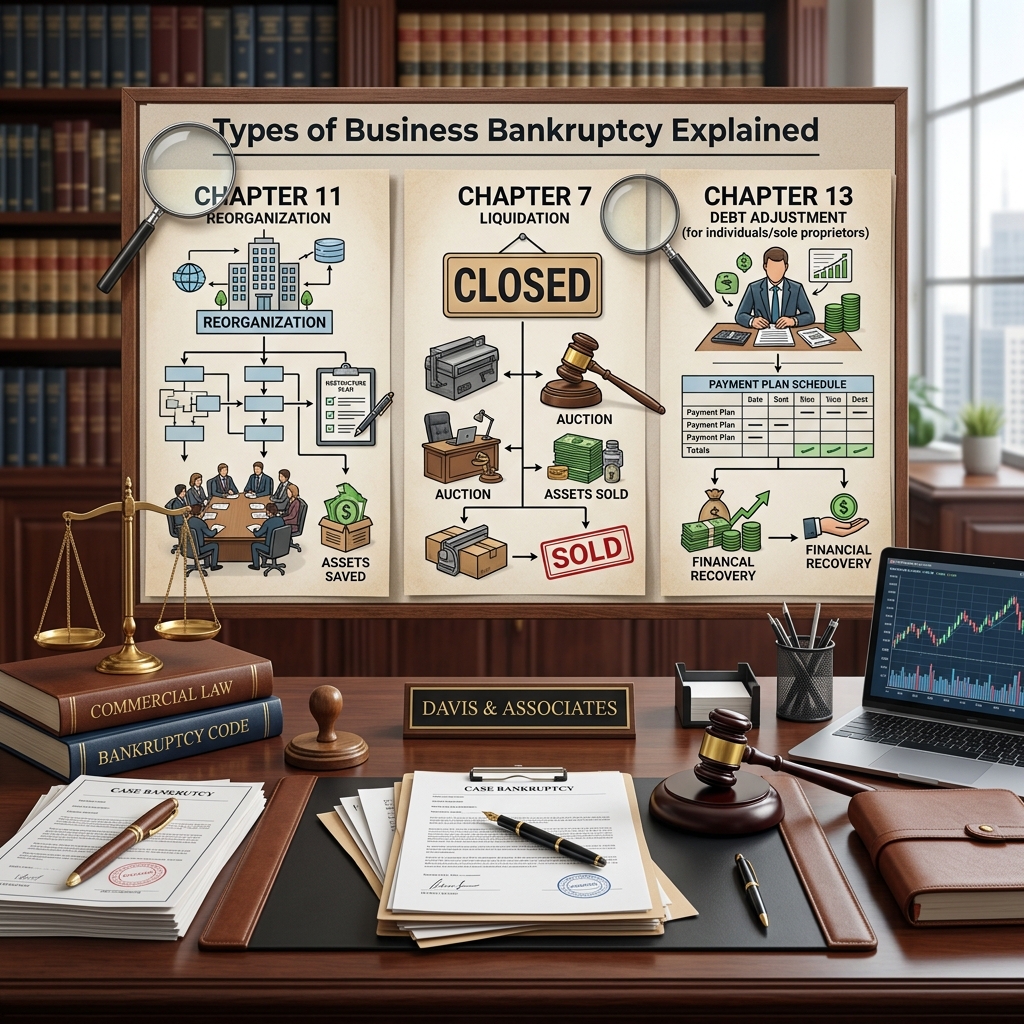
Business bankruptcy is not a single remedy. It is a set of legal tools designed to help financially distressed businesses either wind down in an orderly way or restructure debt and keep operating. The right chapter depends on the business’s legal form, its assets, its debt load, and whether there is a realistic path to recovery.
For some companies, bankruptcy means liquidation and closure. For others, it creates space to renegotiate obligations, protect assets from collection efforts, and rebuild on more stable terms. Understanding the major bankruptcy chapters can help owners see which paths are available and what each path is intended to accomplish.
What business bankruptcy is meant to do
At its core, bankruptcy is a court-supervised process that allows a debtor to address obligations it can no longer pay. In the business context, that may mean selling property and paying creditors in an orderly sequence, or it may mean developing a repayment plan that makes continued operations possible.
Bankruptcy also changes the timing and pressure of debt collection. Once a case is filed, many collection actions stop automatically, giving the business breathing room while the court process unfolds. That pause can be valuable whether the goal is to shut down in an organized way or to preserve the company through restructuring.
- Liquidation is used when the business cannot realistically continue.
- Reorganization is used when the business may survive if debt terms improve.
- Eligibility depends on who owns the business and how it is legally organized.
The main bankruptcy chapters used by businesses
Although many people think of bankruptcy in broad terms, the Bankruptcy Code contains different chapters for different situations. For businesses, the most important options are Chapter 7, Chapter 11, Chapter 12, and Chapter 13. Each chapter serves a distinct purpose and comes with different rules.
| Chapter | Typical use | Who it fits best |
|---|---|---|
| Chapter 7 | Liquidation and shutdown | Businesses that cannot recover |
| Chapter 11 | Reorganization and continued operations | Businesses that need to restructure debt |
| Chapter 12 | Specialized farm or fishing reorganization | Agricultural and fishing operations |
| Chapter 13 | Individual repayment plan | Sole proprietors who file personally |
Chapter 7: closing the business through liquidation
Chapter 7 is often the option when a business has no practical path forward. In this process, a trustee gathers nonexempt assets, sells them, and uses the proceeds to pay creditors according to bankruptcy rules. Because the focus is liquidation, Chapter 7 is usually associated with ending the business rather than saving it.
This chapter is most common when continued operations would only deepen losses. A corporation or limited liability company that files under Chapter 7 generally stops doing business and begins the process of winding down. The legal entity may still exist long enough to complete the bankruptcy administration, but the operating business usually does not continue in any meaningful form.
For owners, Chapter 7 can bring finality. It may also limit future exposure to collection activity against the business entity itself. However, it does not automatically erase every related obligation, especially if a personal guarantee, tax issue, or separate personal filing is involved.
- Best for: businesses that need to shut down.
- Main process: trustee-led sale of assets.
- Result: creditors are paid from available property and the business winds down.
Chapter 11: reorganizing while staying open
Chapter 11 is the best-known bankruptcy path for businesses that want to keep operating. Instead of selling everything off, the debtor proposes a plan to restructure debts and make payments over time. That plan may change interest rates, extend repayment terms, reject burdensome contracts, or modify certain obligations so the business can function again.
One reason Chapter 11 is widely used is its flexibility. It can be adapted to businesses of different sizes and structures, including corporations, partnerships, and some sole proprietorships. The process is more involved than Chapter 7, but it can preserve customer relationships, supply chains, and jobs that would disappear in a liquidation.
For businesses that are fundamentally viable but temporarily overwhelmed by debt, Chapter 11 can be the difference between collapse and recovery. It is often chosen when the company has strong products, a recognizable brand, valuable contracts, or a path to profitability once debt pressure is reduced.
Subchapter V and small business cases
Some smaller businesses may qualify for streamlined Chapter 11 procedures. Subchapter V was created to reduce cost and complexity for small business debtors that need to reorganize without the heavy expense of a traditional Chapter 11 case. It is especially important for owners who need a faster, more manageable route through bankruptcy court.
Traditional Chapter 11 can be expensive because it may involve extensive disclosure, creditor negotiations, and court oversight. Subchapter V aims to simplify that process by focusing on an efficient reorganization plan and giving smaller businesses a better chance to survive.
- Best for: businesses with a realistic turnaround plan.
- Main process: debt restructuring while operations continue.
- Result: the company may emerge leaner and more stable.
Chapter 12: a specialized option for farm and fishing businesses
Chapter 12 is a narrower form of bankruptcy designed for family farmers and family fishermen. It is built around the unique cash-flow patterns of agricultural and fishing operations, which often depend on seasonal income, weather, commodity prices, and market volatility.
This chapter combines features of reorganization and repayment planning. It gives eligible businesses a structured way to repay debts while continuing to operate, and it is often more practical for farming or fishing enterprises than a general Chapter 11 case. Because the rules are tailored to these industries, Chapter 12 can offer a better fit than broader bankruptcy options.
Not every distressed agricultural business qualifies. Eligibility is limited, and the business must meet the statutory requirements for this chapter. Still, for family-run operations in the right category, Chapter 12 can provide important breathing room and a more predictable repayment structure.
Chapter 13: available only through an individual filer
Chapter 13 is often mentioned in discussions of business bankruptcy, but it is not a business bankruptcy chapter in the same sense as Chapter 7 or Chapter 11. It is a personal bankruptcy chapter available to individuals with regular income. That matters because a sole proprietor may use Chapter 13, while a corporation or LLC cannot.
For a sole proprietor, the line between personal and business finances can be important. If the business is not a separate legal entity, the owner may be able to include business debts in a personal repayment plan. The court then supervises a plan that stretches over several years and requires the filer to make regular payments from income.
Chapter 13 can help a sole proprietor keep operating while catching up on arrears or reorganizing unsecured obligations. It is usually less appropriate for companies with separate legal identities because those entities are not eligible to file Chapter 13 at all.
- Best for: sole proprietors who qualify as individual debtors.
- Main process: court-approved repayment plan over time.
- Result: the filer may keep property and repay debts in installments.
How to think about the right bankruptcy chapter
Choosing the correct chapter starts with a realistic assessment of the business. If the company has no viable operating future, liquidation may be the most practical path. If the business can survive with better debt terms, reorganization may preserve value for owners, employees, and creditors alike.
The business’s legal structure also matters. A sole proprietorship is treated differently from an LLC or corporation, and that difference can determine which chapters are available. Debts secured by collateral, outstanding leases, pending litigation, and personal guarantees can all influence the analysis as well.
Owners should also consider the business’s ability to fund the process. Chapter 11 can be expensive and time-consuming, while Chapter 7 is more final but may end the enterprise. Chapter 12 and Chapter 13 can be powerful tools in the right situation, but only if the filer is eligible and the repayment plan is realistic.
Common questions business owners ask
Will bankruptcy always close the business?
No. Chapter 7 usually leads to closure, but Chapter 11 and Chapter 12 are built to preserve operations when possible. The outcome depends on the chapter filed and whether the business can support a workable plan.
Can a company choose any chapter it wants?
No. Eligibility rules limit which chapters are available. The business’s structure, size, and type of activity all matter, and some chapters are reserved for particular kinds of debtors.
Is Chapter 11 only for large corporations?
No. While large companies often use Chapter 11, smaller businesses may also use it. In some cases, a streamlined small business procedure may make the process more manageable.
Can a sole proprietor use Chapter 13 for business debt?
Yes, if the owner qualifies as an individual debtor. This option can be useful when business obligations are tied closely to the owner’s personal finances.
Why legal guidance matters in business bankruptcy
Business bankruptcy involves more than choosing a chapter number. It requires deciding how to treat creditors, property, contracts, and any personal exposure tied to business obligations. A filing that seems simple at first can become complicated quickly if there are secured loans, leased equipment, employees, or disputed claims.
Because the rules vary by chapter and by business type, legal advice is often essential before filing. The right strategy can protect value, reduce avoidable mistakes, and improve the chances of reaching the intended result, whether that means a clean shutdown or a workable reorganization.
Business owners facing insolvency usually benefit from early review of cash flow, debt priority, and legal structure. Acting before liabilities become unmanageable can preserve more options than waiting until collection pressure, lawsuits, or missed obligations have already narrowed the field.
FAQs
What is the most common type of business bankruptcy?
Chapter 7 and Chapter 11 are the most common business bankruptcy options, but the best choice depends on whether the business is closing or trying to continue operating.
What happens to business assets in Chapter 7?
A trustee generally sells nonexempt business assets and distributes the proceeds to creditors under bankruptcy priorities.
Can a small business use Chapter 11?
Yes. Small businesses may be able to use traditional Chapter 11 or a streamlined small business procedure if they meet the eligibility requirements.
Is Chapter 12 only for farmers?
Chapter 12 is designed for family farmers and family fishermen, making it much more specialized than the other chapters discussed here.
Can an LLC file Chapter 13?
No. Chapter 13 is available only to individuals, so an LLC or corporation cannot use it.
References
- Chapter 11 – Bankruptcy Basics — United States Courts. 2025-01-01. https://www.uscourts.gov/court-programs/bankruptcy/bankruptcy-basics/chapter-11-bankruptcy-basics
- Business Bankruptcy: Essential Insights & Strategies — Allianz Trade. 2025-01-01. https://www.allianz-trade.com/en_US/insights/business-bankruptcy.html
- Types of Business Bankruptcy — Super Lawyers. 2025-01-01. https://www.superlawyers.com/resources/bankruptcy/what-are-the-types-of-business-bankruptcy/
- Types of Bankruptcies Explained: Chapter 7, 11 and 13 — Debt.org. 2025-01-01. https://www.debt.org/bankruptcy/types/
- Making Heads and Tails of Small Business Bankruptcy — Patriot Software. 2025-01-01. https://www.patriotsoftware.com/blog/accounting/bankruptcy-options-small-business/
- What Are the Different Types of Business Bankruptcies? — Elro Law. 2025-01-01. https://elrolaw.com/blog/what-are-the-different-types-of-business-bankruptcies/
Similar Articles








Read full bio of Sneha Tete




